

Relying on old, heavy manufacturing methods makes cars inefficient and expensive to build. This leads to slow production, high assembly costs, and uncompetitive vehicles in a fast-moving market.
Die casting shapes modern auto parts by enabling the high-volume production of complex, lightweight components like engine blocks and motor housings. It allows manufacturers to consolidate multiple parts into one, cutting weight, lowering assembly costs, and improving structural integrity, especially for electric vehicles.
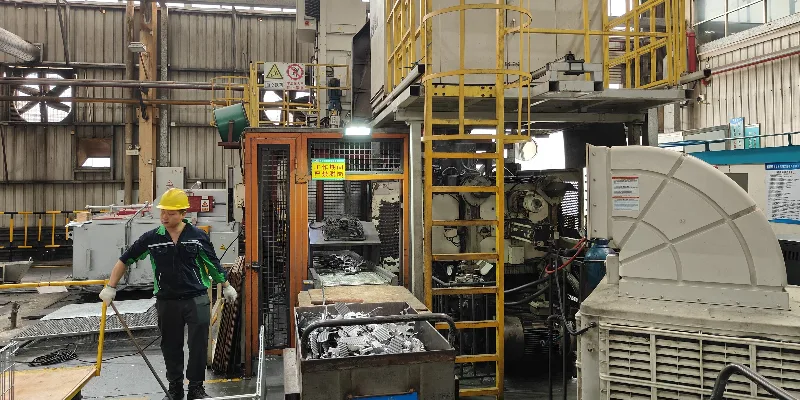
I’ve been in this industry for over two decades. I started on the workshop floor, and now I help customers design the very parts that are making cars lighter and more efficient. The shift to die casting1 isn’t just a trend; it’s a fundamental change in how we think about building a car. It is about more than just making a single part. It is about simplifying the entire assembly line2. This process allows us to create shapes and solutions that were impossible just a few years ago. Let’s look at what this process really does.
What Are the Most Common Automotive Parts Manufactured Using Die Casting?
You need complex, high-precision metal parts for your assembly line. But traditional methods are too slow or can’t make the shapes you need, holding up your production schedule.
The most common die cast auto parts are powertrain components. These include transmission cases, engine blocks, and oil pans. In electric vehicles, they are used for motor housings, inverter cases, and large, structural battery enclosures.
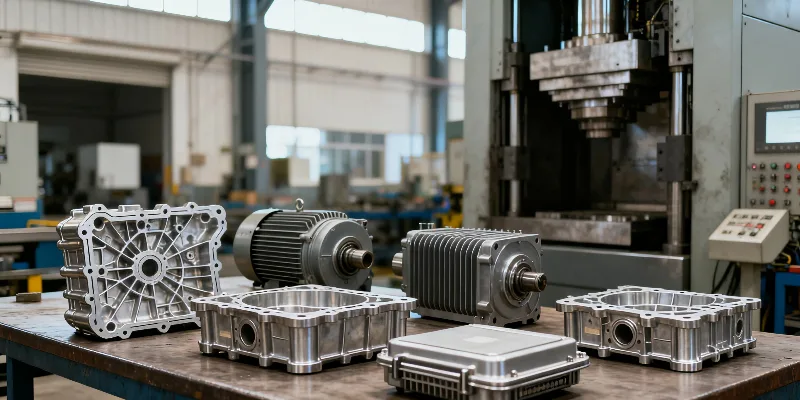
When I walk through our factory, the range of parts we produce is amazing. Die casting is the go-to process for any component that needs to be lightweight, strong, and have a complex shape. We can group these parts into a few main categories. The first is Powertrain. For decades, this meant automatic transmission housings. These are perfect examples of a die-cast part. They have intricate internal channels for hydraulic fluid, complex mounting bosses, and need to be pressure-tight. Now, this category is dominated by EV Powertrain parts, which is a huge part of my team’s work at EMP Tech. We make the housings for electric motors and inverters. These parts are critical for protecting the electronics and getting rid of heat. The second major group is Structural Components. These are parts of the car’s body, like shock towers or subframes, that need to be very strong and light.
Common Die-Cast Part Categories
| Part Category | Examples (Internal Combustion) | Examples (Electric Vehicle) |
|---|---|---|
| Powertrain | Transmission Cases, Engine Blocks | Motor Housings, Inverter Cases |
| Structural | Shock Towers, Cross-Members | Battery Enclosures, Subframes |
| Other | Steering Wheel Frames, Seat Frames | Electronic Control Unit (ECU) Housings |
How Does Die Casting Contribute to the Lightweighting of Automotive Components?
Heavy steel parts are killing your fuel economy and EV range. Your customers demand better efficiency, but you are stuck with old, heavy designs that are expensive to assemble.
Die casting contributes to lightweighting in two key ways. First, it allows the use of lightweight materials like aluminum and magnesium. Second, the process can produce complex parts with thin walls and integrated features, which consolidates multiple heavier components into one single, lighter part.
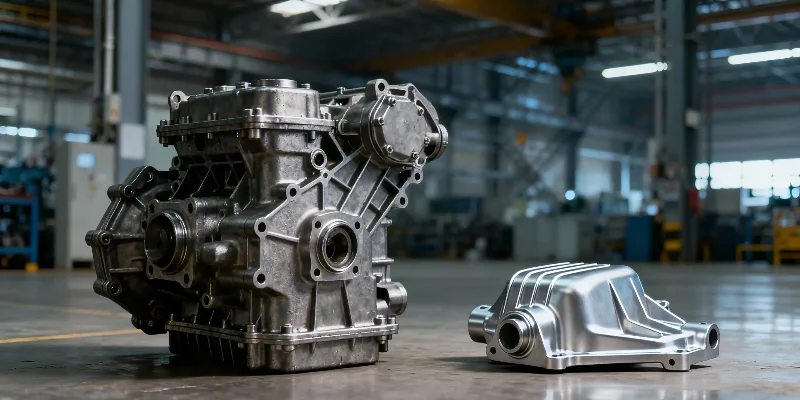
Lightweighting is the biggest challenge my customers face, and die casting is the best tool we have to solve it. The most obvious way is by replacing heavy materials. We can take a 20-kilogram stamped steel assembly and replace it with a single 7-kilogram aluminum casting. This has a huge, positive ripple effect on the vehicle’s performance. But the real engineering skill is in the design itself. Because we inject metal under such high pressure, we can design parts with very thin walls, sometimes as thin as 2mm. This removes unnecessary material and weight. We also use part consolidation3. I recently worked on a project where the customer had a bracket assembly made of seven different stamped steel pieces, all welded together. We redesigned it as one single die casting. This new part was 40% lighter and much stronger because it had no seams or welds that could fail. This is the core of modern lightweight design: using the process to create smarter, more efficient structures.
Why Is Aluminum Die Casting Dominating the Automotive Industry?
You need a material that is light, strong, and can handle heat. Steel is too heavy, and other light metals like magnesium are too expensive or difficult to process.
Aluminum dominates because it offers the best all-around balance of properties. It is lightweight, strong, corrosion-resistant, and has excellent thermal conductivity. It is also 100% recyclable, which is critical for meeting modern sustainability goals.
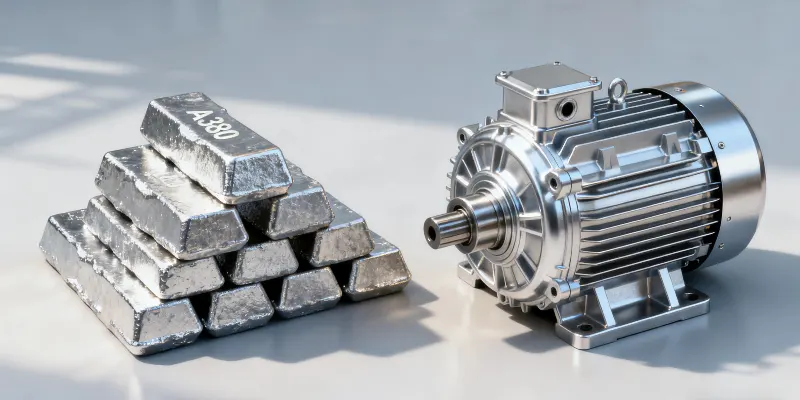
Aluminum is the material of choice for almost all new automotive projects, especially EVs. I’ve spent my entire career working with it, and its advantages are clear. First, its strength-to-weight ratio4 is fantastic. We can design strong structural parts that are half the weight of their steel counterparts. Second is its thermal conductivity5. Aluminum is about four times better at moving heat than steel. This is not a "nice to have"; it is a critical requirement for EV motor housings and inverter cases. The housing itself becomes the heat sink. Third, it is naturally corrosion-resistant. It forms its own protective oxide layer, so it doesn’t rust like steel. Finally, it’s sustainable. We can melt down and reuse 100% of our factory scrap material with no loss in quality. This combination of being light, strong, cool, and green is why aluminum has become the standard for modern automotive engineering6.
How Do Die Cast Parts Support the Performance and Safety of Electric Vehicles?
EV batteries are heavy and vulnerable. You need a way to protect them in a crash and keep them cool, without adding even more weight to the car.
Die cast parts are essential for EV safety and performance. Large aluminum castings create a rigid, lightweight "skateboard" chassis and a protective, impact-resistant battery enclosure. The material’s thermal conductivity also allows for integrated cooling channels to maintain optimal battery temperature.

Die cast components are at the very heart of EV design. The single most important part is the battery enclosure. This is a large, flat tray that holds all the battery modules. My team and I work on these constantly. This part has three jobs. First, it has to be a structural part of the car, adding stiffness to the whole chassis. Second, it has to be a safety cage. We design it to be incredibly strong to protect the batteries from any impact. Third, it’s a thermal management system. We use die casting to create intricate liquid cooling channels7 inside the tray’s floor. This allows the car to keep the batteries at their perfect operating temperature, which is key for both performance (fast charging) and safety (preventing overheating). On top of that, the aluminum motor housing provides EMI shielding8, protecting the car’s other electronics from the powerful magnetic fields the motor creates.
What Innovations in Die Casting Are Redefining Automotive Manufacturing?
Your assembly line is too complex, with hundreds of parts and robots. This complexity is expensive, slow, and creates too many potential points of failure.
The biggest innovation is "mega-casting," also called "gigacasting." This involves using enormous die casting machines to produce huge, single-piece structural parts, like the entire rear underbody of a car. This innovation can replace 70 or more individual parts with one single casting.
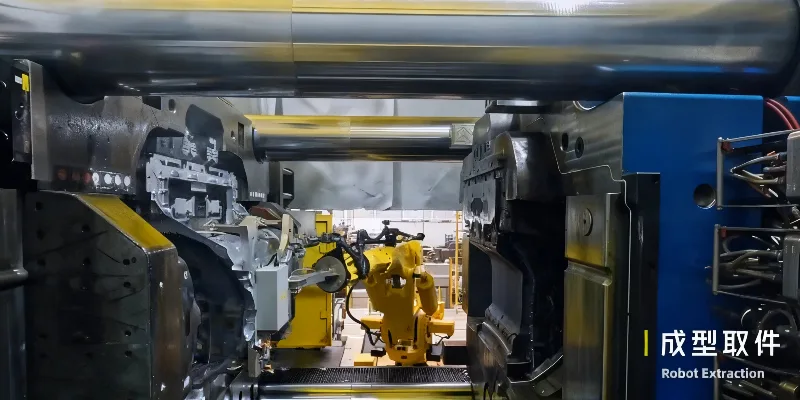
This is the most exciting development I’ve seen in my entire career. Traditionally, we would make smaller "node" castings, and the automaker would weld them to steel stampings. Now, mega-casting9 is changing the game. We are talking about machines the size of a small building, called "Giga Presses." These machines can inject over 100 kilograms of aluminum in a fraction of a second to create a massive part, like the entire front or rear structure of the vehicle. It’s incredible. It completely simplifies the factory. You can eliminate an entire assembly line of 300 robots that were just welding small steel parts together. This reduces assembly time from hours to minutes. It also creates a part that is lighter and stronger, with better dimensional consistency. This isn’t just a small step; it’s a revolutionary leap in how cars are built.
How Do OEMs Choose Between Die Casting and Other Manufacturing Processes for Auto Parts?
You need to select a manufacturing process for a new part. The wrong choice can lead to high costs, low quality, or a component that simply cannot be made efficiently.
OEMs choose a process based on three factors: part complexity, production volume, and total cost. Die casting is the clear winner when you need a complex, precise, lightweight part produced in high volumes (tens of thousands to millions) at a low unit price.
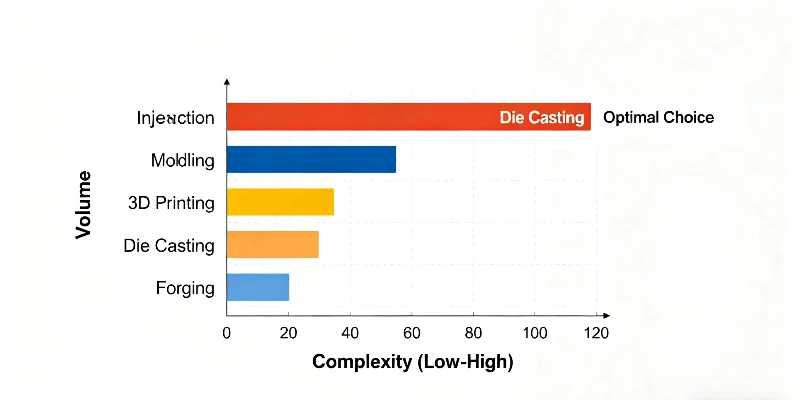
This is a conversation I have with my customers every day. The choice comes down to a trade-off. If you only need a few simple prototypes, we would just CNC machine them from a solid block of aluminum. It’s slow and expensive per part, but there is no tooling cost. If you need a very simple, high-strength part like a suspension arm, forging10 might be better. But forging can’t create complex internal features or thin walls. Die casting is the solution when you need to balance complexity, volume, and cost. The upfront investment in the steel mold (the tool) is high. But this tool allows us to produce millions of parts at a very high speed. This makes the price per part extremely low. For a purchasing director, die casting is the best long-term investment for a high-volume program.
Process Selection Guide
| Process | Best for… | Key Limitation |
|---|---|---|
| CNC Machining | Prototypes, low volume, ultra-precision | Very high cost per part, slow |
| Forging | Simple shapes, extreme strength | Cannot make complex shapes or thin walls |
| Die Casting | High volume, complex shapes, lightweight | High initial tooling cost |
Conclusion
Die casting is no longer just one option; it is a core automotive strategy. It is the key to making cars lighter, safer, more efficient, and simpler to build.
Explore the fundamentals of die casting to understand its significance in modern automotive production. ↩
Discover strategies to enhance assembly line efficiency and reduce production costs. ↩
Learn how part consolidation can streamline production and reduce costs. ↩
Learn about the significance of strength-to-weight ratio in enhancing vehicle performance. ↩
Discover how thermal conductivity affects the performance and safety of automotive components. ↩
Stay updated on the latest innovations and trends shaping the future of automotive engineering. ↩
Discover the technology behind liquid cooling channels and their importance in EV performance. ↩
Explore the necessity of EMI shielding in protecting vehicle electronics. ↩
Explore the revolutionary impact of mega-casting on the efficiency of automotive production. ↩
Learn about forging and its advantages and limitations compared to die casting. ↩


