

Choosing the wrong material for a motor housing1 can lead to overheating, vibration, or excessive weight. These issues can cause premature motor failure, reduce overall efficiency, and lead to costly field problems.
Electric motor housings are most commonly made from aluminum alloys, cast iron, and steel. Aluminum is favored for its light weight and excellent heat dissipation, especially in modern electric vehicles. Cast iron offers superior strength for heavy-duty applications, while steel provides a cost-effective, durable solution.
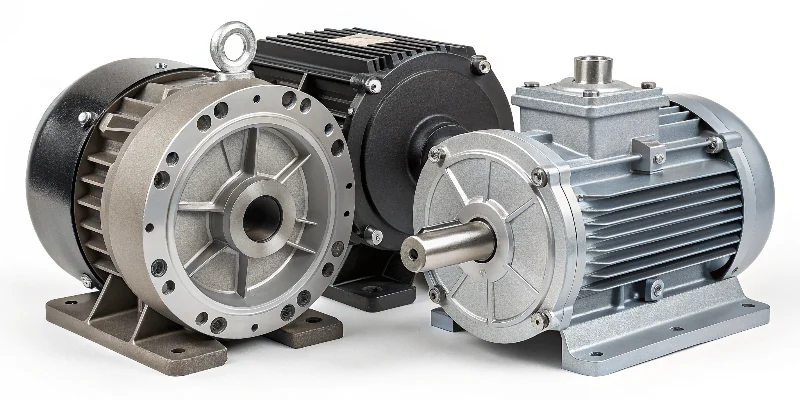
In my two decades in the die casting2 industry, I have seen firsthand how critical the right material choice is for a motor’s performance. The housing is much more than just a protective cover; it’s a structural component, a heat sink, and a shield. The "best" material depends entirely on the job the motor has to do. A massive industrial motor has very different needs than a high-performance motor in an electric car. Understanding the strengths and weaknesses of each material is the first step in engineering a reliable and efficient final product. Let’s explore the most common choices.
Why Is Aluminum Alloy Commonly Used for Motor Housings?
You need to design a motor that is both lightweight and efficient. Using a heavy material will compromise performance, while poor thermal management will cause the motor to overheat and fail under load.
Aluminum alloy is the preferred material for modern motor housing1s because it offers the best combination of light weight and high thermal conductivity. Its excellent castability also allows for complex designs with integrated cooling fins, further enhancing performance.
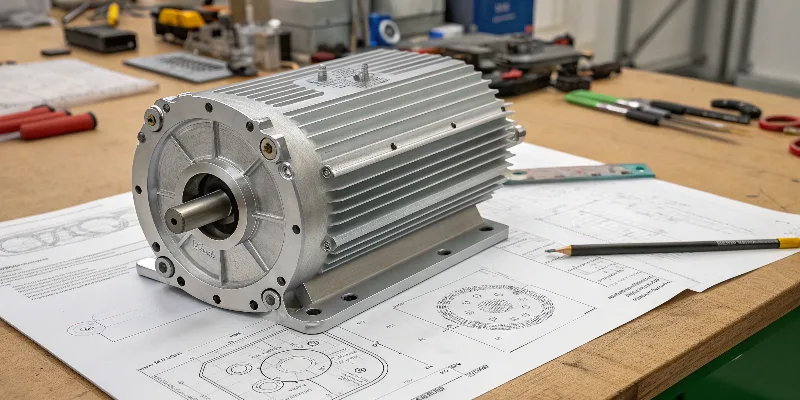
At my company, the vast majority of new motor housing projects we work on are for aluminum die castings, and there’s a clear reason why. The push for electrification3, especially in the automotive industry, has made weight and thermal management top priorities. I recently worked with a Tier 1 supplier for a new EV program. Their goal was to increase the motor’s power density4 without increasing its size. We helped them design a liquid-cooled housing using a high-strength aluminum5 alloy. By die casting intricate cooling channels directly into the housing walls, we created a part that was not only incredibly light but could also pull heat away from the motor windings far more effectively than their previous design. This allowed them to run the motor at a higher output, directly improving the vehicle’s performance and range. This is a perfect example of why aluminum is leading the charge in modern motor design.
How Does Cast Iron Provide Strength in Motor Housing Applications?
You are developing a motor for a heavy industrial application like a rock crusher or a large conveyor system. The motor will be exposed to extreme vibrations and high mechanical stress, and failure is not an option.
Cast iron is used for motor housings in heavy-duty applications because of its exceptional strength, rigidity, and superior vibration-damping characteristics. Its mass and stiffness provide a stable platform for the motor’s rotating components, ensuring long-term durability.
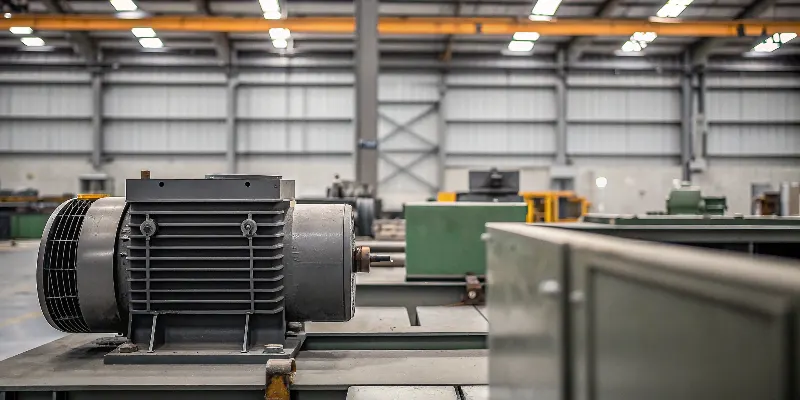
While much of my current work focuses on lightweight aluminum, I have a deep respect for the sheer toughness of cast iron. Early in my career, I worked in a facility that produced large industrial motors. For these applications, weight is often an advantage. The sheer mass of a cast iron housing helps to dampen vibrations that would shake a lighter motor apart. Its compressive strength is immense, protecting the internal components from external impacts and the high torque stresses generated during operation. A cast iron housing can withstand decades of abuse in the harshest environments. While it lacks the thermal conductivity6 and lightweight properties of aluminum, for a stationary, high-stress industrial motor, there is often no better choice for ensuring maximum reliability and operational stability. It is the definition of heavy-duty.
What Role Does Steel Play in Electric Motor Housing Design?
You need a durable and cost-effective housing for a general-purpose motor. The application does not require the absolute lightest weight or the highest thermal performance, but it does demand reliability at a competitive price.
Steel is often used for motor housings where cost and durability are the primary concerns. Fabricated steel housings, made from rolled steel sheets and welded together, are common in standardized NEMA and IEC frame motors, offering a good balance of strength and manufacturability.
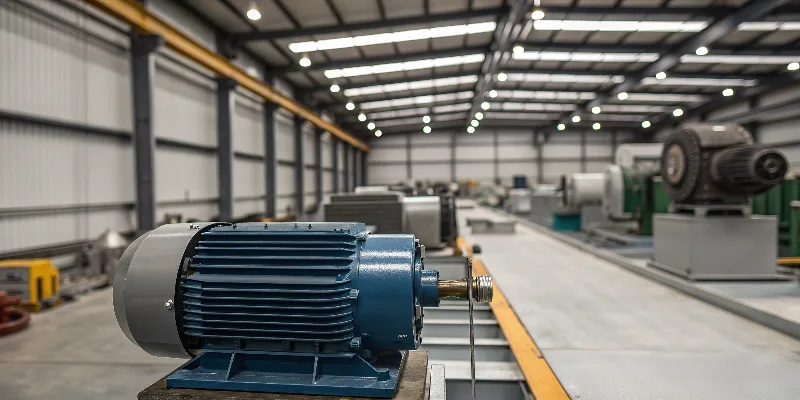
Think of steel as the practical workhorse of the motor world. While it’s not as lightweight as aluminum or as vibration-damping as cast iron, it is strong, widely available, and very economical. Many of the general-purpose motors you see in factories, powering things like fans, pumps, and conveyors, use a fabricated steel housing. This manufacturing method is very different from casting. It involves rolling a sheet of steel into a cylinder, stamping the mounting feet, and then welding the pieces together. This process is highly efficient for producing standard motor sizes in very high volumes. While it doesn’t offer the geometric complexity of a casting, it provides more than enough protection and structural support for a huge range of applications where weight and thermal management are not the most critical design factors. It’s a reliable, no-frills solution that gets the job done.
Can Composites or Plastics Be Used for Lightweight Motor Housings?
Your product requires an extremely lightweight and corrosion-proof motor, perhaps for a portable device or a marine application. Metallic housings are still too heavy, and you need to explore alternative materials.
Engineered plastics and composites are emerging as viable materials for smaller motor housings. They offer the lowest weight, excellent corrosion resistance7, and the ability to integrate features like electrical insulation directly into the housing. However, their lower strength and thermal conductivity limit their use.
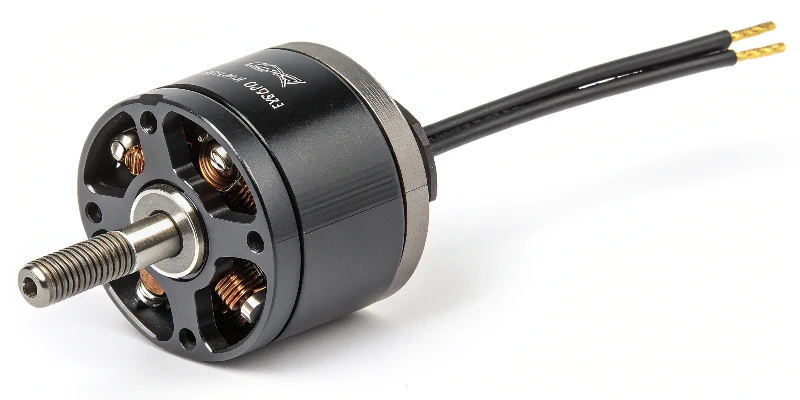
This is an area where we are seeing a lot of innovation, especially for specialized, lower-power motors. While you won’t see a plastic housing on a 200kW EV motor anytime soon, it can be a perfect fit for other applications. For example, in power tools, medical devices, or drones, every gram counts. Using an injection-molded, fiber-reinforced plastic allows designers to create very complex, lightweight shapes. A key advantage is part consolidation. You can mold in brackets, connectors, and even gearboxes as part of the housing itself, reducing assembly steps and costs. The main challenge, from my perspective, is heat. Plastics are insulators, not conductors. This makes them unsuitable for motors that generate significant heat. However, as plastic formulations and motor efficiencies improve, I expect to see these materials used in more and more applications where weight and integration are the most important factors.
How Does the Choice of Housing Material Affect Heat Dissipation?
Your motor’s performance is limited by heat. You need to understand how the housing itself can be used as a tool to keep the motor cool, improve its efficiency, and increase its lifespan.
The housing material is critical for heat dissipation because it acts as the primary path for heat to escape the motor. Aluminum’s high thermal conductivity allows it to draw heat away from the internal windings far more effectively than steel or cast iron, enabling higher performance.
A motor housing is fundamentally a heat sink. The electrical energy that doesn’t convert into rotational force becomes waste heat in the stator windings. If that heat isn’t removed, the winding insulation will degrade, and the motor will fail. This is where material choice makes a huge difference. When we design a die-cast aluminum housing, we leverage its excellent thermal properties. We use simulation software to design cooling fins with the optimal size, shape, and spacing to maximize the surface area exposed to the air. This turns the entire housing into a radiator. For a given motor size, an aluminum housing can dissipate significantly more heat than a steel or cast iron one. This allows engineers to either run the motor at a higher power output or make the motor smaller and lighter while maintaining the same performance.
Thermal Conductivity Comparison
| Material | Thermal Conductivity (W/mK) | Heat Dissipation Capability |
|---|---|---|
| Aluminum Alloy | ~150-200 | Excellent |
| Cast Iron | ~50 | Fair |
| Steel | ~45 | Fair to Poor |
| Plastics | <1 | Very Poor |
What Global Trends Influence the Future of Motor Housing Materials?
You are responsible for your company’s long-term sourcing strategy. You need to know which material trends are gaining momentum so you can build resilient supply chains and partner with suppliers who are investing in the future.
The dominant global trend is the shift to electrification, particularly in the automotive industry. This is driving massive demand for lightweight, thermally efficient materials, making aluminum die casting the leading choice for future motor housings. Sustainability and material recyclability are also becoming key considerations.
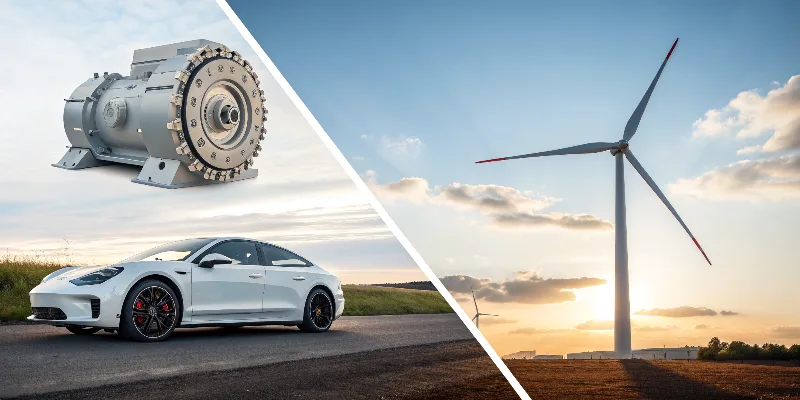
Looking at the industry from my perspective in September 2025, everything is being driven by efficiency and sustainability8. The global push to reduce emissions means vehicles need to be lighter to extend battery range. Factory equipment needs to be more efficient to reduce energy consumption. These trends all point directly toward advanced aluminum alloys9. The ability to cast complex, thin-walled, and lightweight housings that also provide superior thermal management is a capability that no other material can match at scale. Furthermore, as companies face increasing pressure to improve their environmental footprint, the recyclability of aluminum is a major advantage. It can be recycled over and over again using a fraction of the energy needed to produce new metal. This combination of performance and sustainability is why I am confident that aluminum will continue to be the dominant material for high-performance motor housings for many years to come.
Conclusion
The choice of a motor housing material is a critical engineering decision that balances weight, strength, thermal performance, and cost. While cast iron and steel remain vital, aluminum alloys increasingly dominate, especially in high-performance and EV applications.
Explore this link to understand the various materials used in motor housing and their benefits. ↩ ↩
Discover the die casting process and its advantages for creating complex motor housings. ↩
Discover how the shift to electrification is driving changes in motor housing material choices. ↩
Explore the concept of power density and its significance in modern motor design. ↩
Discover the advantages of high-strength aluminum for enhancing motor housing performance. ↩
Understand how thermal conductivity affects motor performance and longevity. ↩
Understand the importance of corrosion resistance in extending the lifespan of motor housings. ↩
Learn how sustainability trends are shaping the future of motor housing materials. ↩
Learn why aluminum alloys are favored for their lightweight and thermal properties in motor design. ↩


