

Using traditional manufacturing methods for modern car parts creates heavy, complex assemblies. This hurts vehicle efficiency, increases production costs, and slows down your time to market, letting competitors get ahead.
Die casting is transforming the auto industry by enabling the high-volume production of lightweight, complex, and precise aluminum components. It is the key technology that allows for part consolidation, improved thermal management, and the creation of large structural parts essential for electric vehicles.
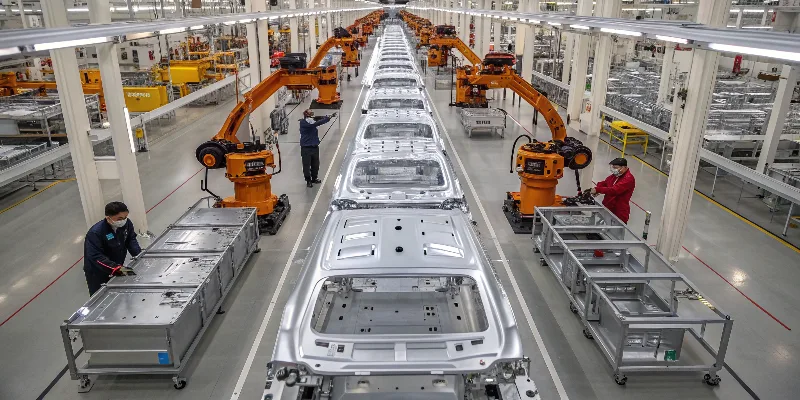
For more than two decades, I’ve had a front-row seat to the evolution of automotive manufacturing1. What was once a process for making smaller, non-critical parts has now become the central technology for building the core of modern vehicles. The shift is driven by a simple need: to make cars lighter, stronger, and more efficient. Die casting is the answer. It allows us to combine what used to be dozens of stamped steel parts into a single, elegant aluminum casting. This isn’t just an incremental improvement; it’s a fundamental change in how cars are designed and built.
What Auto Parts Are Most Commonly Produced by Die Casting?
You need to know which components are best suited for this process. Misapplying the technology can lead to unnecessary costs or a part that doesn’t meet its performance requirements.
The most common die cast auto parts include powertrain components like transmission cases and motor housings, electronic enclosures for controllers and inverters, and increasingly, large structural parts like shock towers and subframes. These parts require a combination of complexity, precision, and lightweight strength.
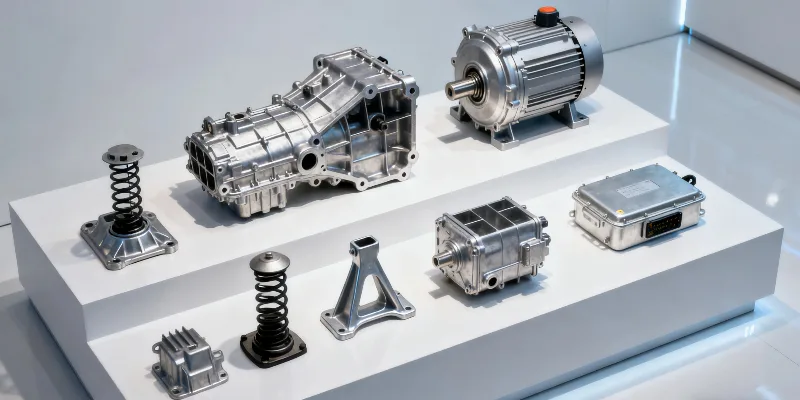
In our facility, a walk through the quality control lab tells the whole story. On one table, you’ll see a gearbox cover with intricate internal channels for fluid flow. Next to it is a motor housing for a new electric vehicle, complete with thin, deep cooling fins. And over on the large inspection plate is a structural shock tower, a critical part of the car’s chassis. What do they all have in common? They are all complex shapes that need to be strong, lightweight, and produced in the tens of thousands with perfect consistency. I once worked on converting a multi-piece steel assembly for an electronics bracket into a single aluminum die casting2. We were able to integrate all the mounting points and support ribs into one part, making it lighter, stronger, and much faster to assemble on the production line. This is the sweet spot for die casting: complexity and volume.
Why Is Aluminum Die Casting Growing Faster in the Automotive Sector?
You see the trend toward aluminum but need to understand the specific reasons. Without knowing the "why," you can’t make informed strategic decisions about your own supply chain and material choices.
Aluminum die casting is growing rapidly because it is essential for vehicle electrification. Its light weight directly increases an EV’s range, and its excellent thermal conductivity is critical for cooling batteries, motors, and power electronics, enabling higher performance.
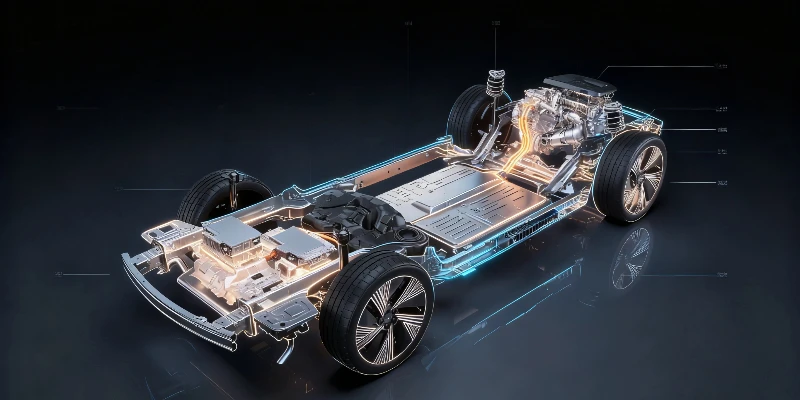
The electric vehicle revolution is the single biggest driver of aluminum die casting today. For my team at EMP Tech, EV components3 are now the core of our business. The reason is simple and comes down to two key factors: weight and heat. In an EV, weight is the enemy of range. Every kilogram we can save by using a lightweight aluminum part instead of a steel one means the car can travel farther on a single charge. Automakers are obsessed with this, and industry data shows the amount of aluminum per vehicle is increasing every year. The second factor is heat. High-performance motors and power inverters generate a ton of heat. Aluminum is a fantastic thermal conductor, about four times better than steel. This allows us to design housings that act as giant heat sinks, pulling heat away from the sensitive electronics and keeping the system running at peak efficiency.
How Are Gigacasting and Mega-Casting Changing Vehicle Structure Production?
You hear terms like "gigacasting" but they seem like buzzwords. You need to understand how this new scale of die casting is fundamentally changing the way car bodies are made.
Gigacasting uses enormous die casting machines to produce huge, single-piece structural parts, like the entire rear underbody of a car. This can replace an assembly of 70 or more stamped steel parts with just one casting, dramatically simplifying production.
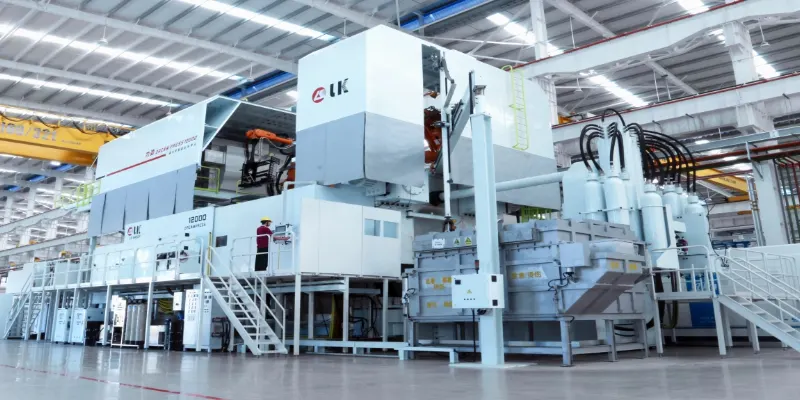
This is the most exciting and disruptive trend in the industry right now, in October 2025. Think about how a car’s rear structure is normally built. It’s a complex puzzle of dozens of individual stamped steel pieces that have to be precisely welded together by an army of robots. It’s a slow, complex, and capital-intensive process. Gigacasting throws that entire playbook out the window. A single massive machine injects a huge shot of aluminum—over 100 kg—into a die to create the entire rear third of the car in one piece. The benefits are incredible: you reduce the number of parts, eliminate hundreds of welds, and shrink the factory footprint needed for body assembly. However, it’s not a simple switch. It requires a massive upfront investment in the machine and the tooling, and it forces engineers to design the car around the casting from day one. It is a fundamental shift in manufacturing philosophy.
What Roles Do Zinc and Magnesium Die Casting Still Play in Auto Parts?
With all the focus on large aluminum parts, you wonder if other die cast materials are still relevant. You need to know where these specialized alloys fit into modern vehicle design.
Zinc and magnesium are used for specific, targeted applications. Zinc is excellent for small, intricate parts requiring high precision and a smooth surface finish, like connectors or emblems. Magnesium is used when ultra-light weight is the absolute top priority, such as in steering wheel frames.
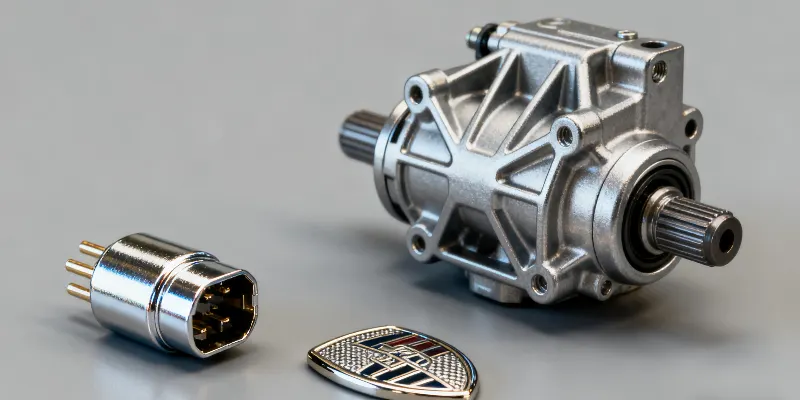
While aluminum gets most of the attention, zinc and magnesium are like specialist tools in our toolbox. Zinc alloys are fantastic when you need fine detail and a beautiful surface finish right out of the die. Because it has a lower melting point, it is very gentle on the tooling, so a zinc die can last for millions of cycles. You see it in things like chrome-plated interior handles, decorative trim, and the housings for small electronic sensors. Magnesium is all about one thing: being the lightest structural metal available. It’s about 33% lighter than aluminum. When an automotive engineer is trying to save every last gram in a critical area, they will turn to magnesium. I’ve seen it used for instrument panel support beams and steering wheel armatures. It’s more expensive and can be more challenging to process, but for those applications where weight is the number one priority, it can be the perfect solution.
How Can Tier-2/3 Suppliers Balance Tooling Cost and Production Volume for Die Cast Parts?
As a purchasing or quality professional, you are often faced with a high upfront tooling cost4 for a die cast part. You need a strategy to justify this investment and ensure a good return.
The key is to view tooling not as a cost, but as an investment in a low unit price. By partnering with a supplier on Design for Manufacturability (DFM) and using simulation upfront, you create a highly efficient tool that minimizes scrap and maximizes production speed.

This is a conversation I have with my customers every single week. The die casting tool, the steel mold, is the most expensive part of the initial project. A complex tool can cost hundreds of thousands of dollars. It can be a shock if you’re not prepared for it. But here’s how we approach it: that tool is the key to a very low price for every part that comes out of it. A good tool that is designed correctly can run for hundreds of thousands of cycles with minimal maintenance. The way to balance the cost is to get the design right from the very beginning. This is where my team adds the most value. We use DFM and advanced mold-flow simulation5 to perfect the part design and the tool design before we ever cut a piece of steel. This prevents costly rework and ensures the tool will run efficiently from day one. By amortizing that initial investment over the life of the project, the total cost of ownership for a die cast part is often far lower than a multi-piece assembly.
Conclusion
Die casting is no longer just a manufacturing process; it is a core strategic enabler for the automotive industry, driving the transition to lighter, more efficient, and simpler-to-build electric vehicles6.
Stay updated on the innovations shaping the future of automotive manufacturing. ↩
Explore how die casting revolutionizes auto manufacturing by enabling lightweight and complex parts. ↩
Explore the key components that make electric vehicles efficient and effective. ↩
Learn strategies to balance tooling costs with production volume for die cast parts. ↩
Discover how mold-flow simulation enhances die casting efficiency and reduces waste. ↩
Explore the advantages of electric vehicles in terms of efficiency and sustainability. ↩


