

🌟 IATF 16949 Certified | 30+ Years OEM Experience
Custom Aluminum Die Casting Manufacturer
Delivering complex, tight-tolerance, and leak-proof aluminum components. From predictive DFM and in-house tooling to high-volume HPDC (350T-3050T) and 5-axis CNC machining.
Trusted by Leading Global Innovators in EU & North America
Automotive OEM
Tier 2 Supplier
Industrial Corp
Telecom Giant
One-Stop Manufacturing Process
End-to-End HPDC Capabilities. Engineering-driven production to mitigate porosity, reduce tooling iterations, and guarantee geometric precision.
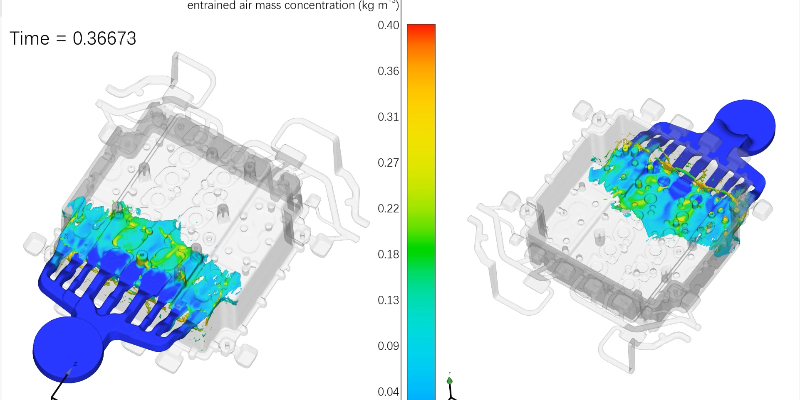
Engineering & DFM
Proactive Moldflow simulation to optimize wall thickness and prevent casting defects before cutting steel.

Tooling Fabrication
In-house mold building for extended tool life, strict dimensional control, and faster T1 sample delivery.

High-Pressure Die Casting
Advanced Vacuum HPDC cells focusing on dense, high-strength structural parts for automotive and industrial sectors.

Friction Stir Welding (FSW)
Solid-state joining for liquid cooling plates and motor housings, enabling 100% leak-proof assemblies.

Precision CNC Machining
150+ machining centers guaranteeing micron-level positional tolerances and coaxiality on critical mating surfaces.

Surface Finishing
Shot blasting, hard anodizing, and powder coating for cosmetic perfection and severe corrosion resistance.
Die Casting Solutions for Your Industry
We understand the strict requirements of leaking tests, cleanliness grades, and lightweight structures.
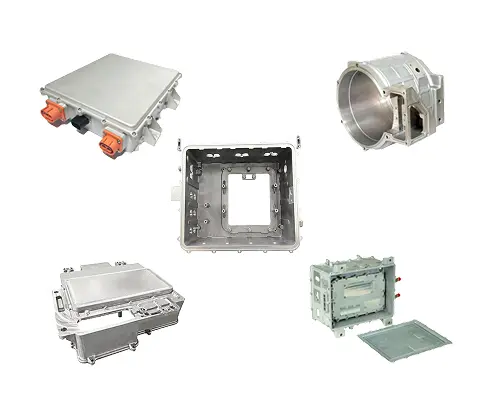
EV Component Die Casting
Structural and thermal enclosures (Motor housings, PDU, Battery trays) tailored for lightweight architectures and strict NVH control.
✅ 100% Inline Leak Testing
✅ Ready for FSW & Liquid Cooling
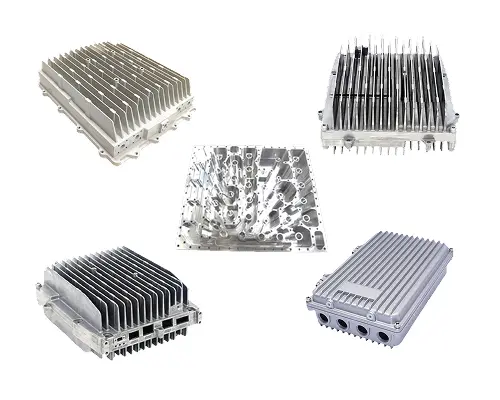
Telecom & Infrastructure Die Casting
Resistant to rain and sun Aluminum shells and electromagnetic shielding housings with complex heat dissipation fins.
✅ Deep Cooling Fin Integration
✅ IP68 Weatherproof Sealing Support

Industrial & Robotics Die Casting
High-sealing control housings and heavy-duty parts for robotics, elevators, and power equipment.
✅ High Strength-to-Weight Ratio
✅ Strict CNC Bearing Coaxiality
Why Global Sourcing Managers Choose EMP Tech
We don’t just manufacture, we offer engineering synergy and robust supply chain security.
30+
Years Experience
500+
Skilled Workforce
13
Die Casting Machines (350T-3050T)
150+

Hardware Capacity for Large Scale Projects
Our facility is equipped to handle the most demanding automotive orders. With 13 die casting units up to 3050T, Equipped with 13 high-tonnage die casting cells (up to 3050T), we have the capacity to successfully cast large-format structural components (battery trays, shock towers) with uniform material density and minimal thermal distortion.
One-Stop Manufacturing
From Mold Design → Die Casting → Friction Stir Welding → CNC → Surface Treatment.
High Precision CNC
150+ sets of CNC equipment ensuring micron-level tolerance for critical mating surfaces.
The Quality Guarantee
IATF 16949 Traceability & Control. Every production batch is validated against your exact geometric dimensions and tolerances (GD&T) supported by raw laboratory data and PPAP Level 3 documentation.
IATF
16949:2016
ISO
9001:2015
ISO
14001:2015
In-House Laboratory Capabilities:
- X-Ray Flaw Detection
- Air Tightness/Leak Testing
- Spectrum Analysis
- CMM (Zeiss) Measurement
- Cleanliness Lab (VDA 19)
- Clean Room Assembly
“EMP Tech passed our VDA 6.3 audit with an ‘A’ rating on the first visit. Their traceability system gives us total peace of mind.”
– Sourcing Director, German Tier 2 Automotive Supplier
Trusted by Global Customers



What we cast, and what each industry asks of it
The same 1,250 tonne cell makes an EV inverter housing in the morning and a telecom heat sink in the afternoon. What changes is not the machine but the acceptance criterion, and that is the thing worth agreeing on before tooling starts.
| Industry | Typical parts | The acceptance criterion that matters |
|---|---|---|
| Electric vehicles | Battery tray frames, motor and inverter housings, structural nodes | Leak tightness after machining and X-ray acceptance in the load path |
| Powertrain and transmission | Clutch and transmission housings, covers, bearing retainers | Bore geometry, face flatness and a documented capability study |
| Industrial equipment | Pump and gearbox housings, frames, mounting brackets | Dimensional repeatability over long production runs |
| Telecom and power electronics | Heat sinks, RF housings, enclosures | Fin fill and flatness at the thermal interface |
| Lighting and consumer hardware | Lamp housings, bezels, decorative frames | Surface finish and colour consistency after coating |
If your part sits in two columns at once, the stricter criterion wins, and it should be written into the inspection plan rather than assumed. Most disputes we see are not about a bad casting; they are about a drawing that never said which of the two mattered.
The cell is the same; the acceptance criteria are not. ISO 8062-3 sets the general casting tolerance grades and machining allowances, and the NADCA Product Specification Standards set what die casting can hold on standard features — which is why a telecom heat sink and an EV inverter housing leave the same press with different inspection plans.
Frequently asked questions
What does a typical project start with?
A drawing and an annual volume. From those two we can size the machine, sketch the tooling concept, and give a piece price range within a few days. A firm quotation needs the alloy, the machining content and the inspection requirement, because those three decide most of the cost.
How long does tooling and first article take?
Eight to twelve weeks for most two-cavity tools, plus two to three weeks for T1 corrections. Complex slides, conformal cooling or tight flatness on a thin part extend that. Machining fixtures are built in parallel and are usually ready before the die is.
Do you machine, finish and assemble in house?
Yes. Machining, deburring, impregnation, leak testing, powder coating and sub-assembly with pressed inserts are all done here, which means the leak test happens after machining rather than on a rough casting.
Which alloys do you cast?
ADC12, A380, AlSi10Mg and AlSi9Cu3 cover almost every enquiry. The choice is driven by wall thickness, thermal duty and whether the part will be impregnated, not by the strength figure on a data sheet.
Ready to Start Your Next Project?
Tell us your requirements. Our engineering team will provide a free, no-obligation quote and DFM analysis, typically within 24 hours.
- Email: [email protected]
- Tel: +86 18033163576
- Address: NO.38 Duanzhou 3rd Road, Zhaoqing, Guangdong, China