

The drive motor housing is more than just a protective shell; it’s a critical enabler of an electric vehicle’s performance, efficiency, and longevity. As a linchpin component in the EV powertrain, it demands a sophisticated approach to design, material selection, and manufacturing. For procurement and quality engineering leaders at Tier 1 suppliers and OEMs, sourcing a high-quality motor housing is non-negotiable. It requires a partner with deep expertise in managing the intricate balance of structural integrity, thermal dynamics, and manufacturing precision.
With over two decades of hands-on experience in aluminum die casting and automotive parts, I’ve seen firsthand how a well-engineered housing directly impacts the reliability of the entire drive unit. This article breaks down the essential technical considerations for producing a world-class EV drive motor housing, from initial design to final testing.
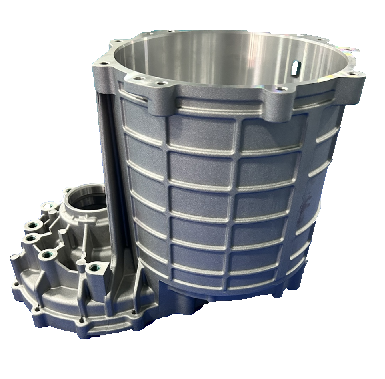
Structural Role of the Drive Motor Housing in EV Systems
The drive motor housing serves as the foundational structure of the electric drive unit. Its primary function is to protect sensitive internal components—like the stator, rotor, and bearings—from physical impact, moisture, and contaminants. But its role extends far beyond simple protection. It must provide rigid structural support to maintain the precise alignment of the rotor and stator, which is crucial for optimal motor efficiency and noise reduction.
Key structural functions include:
- Component Protection: Shielding the motor’s core components from road debris, vibration, and environmental hazards.
- Mechanical Support: Maintaining the critical air gap between the rotor and stator under high torque loads and vibrations.
- System Integration: Serving as the mounting point for the motor, inverter, and transmission, often integrating them into a single, compact unit.
Material Selection: Aluminum Alloys for Strength and Heat Dissipation
The choice of material is arguably the most critical decision in housing design. Aluminum alloys have become the industry standard for EV motor housings, and for good reason. They offer an unparalleled combination of low weight, high strength, and excellent thermal conductivity. This trifecta of properties directly addresses the core challenges of EV design: maximizing range through lightweighting and ensuring reliability through effective thermal management.
| Material Property | Importance for EV Motor Housing | Common Aluminum Alloys |
|---|---|---|
| High Thermal Conductivity | Crucial for dissipating the immense heat generated by the motor, preventing overheating and power loss. | Al-Si-Cu family (e.g., A380, ADC12) |
| Low Density (Lightweight) | Reduces overall vehicle weight, directly contributing to extended driving range and better performance. | AlSi10Mg, A356 |
| Excellent Castability | Allows for the creation of complex, thin-walled geometries with integrated features like cooling channels. | High-silicon alloys |
| Good Mechanical Strength | Ensures the housing can withstand vibrations and high torque loads without deformation. | A356, 6061-T6 (for machined parts) |
While steel and cast iron are durable, their weight makes them less suitable for modern EVs where every gram counts. Aluminum’s ability to act as a heat sink is fundamental to the motor’s performance and service life.
Die Casting Process and Thermal Management Design
High-pressure die casting (HPDC) is the dominant manufacturing process for aluminum motor housings due to its ability to produce complex, near-net-shape parts at high volumes. The process allows for the integration of sophisticated features directly into the casting, which is key for advanced thermal management.
The primary enemy of an electric motor is heat. Inefficient heat dissipation leads to reduced motor efficiency, magnet degradation, and potential failure. Modern motor housings tackle this challenge by integrating liquid cooling channels, often called "water jackets," directly into the housing design.
Advanced die casting techniques are essential to ensure these channels are leak-proof and effective:
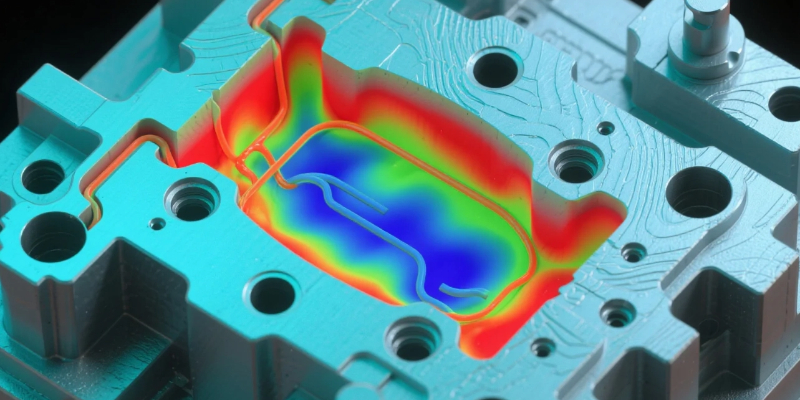
- Mold Flow Simulation: Used in the design phase to predict how molten aluminum will fill the mold, identifying potential defects like porosity before tooling is ever cut.
- Vacuum Die Casting: Evacuating air from the mold cavity just before injection minimizes gas porosity. This is critical for parts requiring high airtightness and allows for subsequent heat treatment (like T6) to maximize strength.
By casting these cooling channels directly into the structure, we create a highly efficient thermal path to draw heat away from the stator, maintaining optimal operating temperatures even under high loads.
Machining, Sealing, and Surface Finishing Requirements
Even the most precise casting requires secondary operations to meet final specifications. For a component as critical as a motor housing, these post-casting processes are vital for functionality and reliability.
- CNC Machining: While die casting provides the basic shape, CNC machining is required to create features with tight tolerances that cannot be cast. This includes bearing seats, precision mating surfaces for the inverter and transmission, and threaded holes. Successfully machining die-cast aluminum requires careful management of tool wear (due to the material’s abrasive silicon content) and prevention of defects like burrs.
- Sealing and Airtightness: The housing must be perfectly sealed to prevent coolant leaks and protect internals from the environment. Machined surfaces often require specific roughness profiles to work with gaskets or liquid seals. For applications with zero tolerance for leaks, a process called vacuum impregnation is used. This process seals any microscopic porosity within the casting, ensuring the part is pressure-tight.
- Surface Finishing: To protect against corrosion from road salt and environmental exposure, a durable surface coating is essential. E-coating or powder coating provides a robust barrier, sealing the aluminum and preventing galvanic corrosion where it meets other metals.
Quality Standards and Testing for Durability and Airtightness
For any supplier to the automotive industry, adherence to strict quality management systems is mandatory. IATF 16949 is the global standard, ensuring a process-oriented approach focused on continuous improvement, defect prevention, and the reduction of waste in the supply chain. As a Tier 2 supplier, my team operates within this framework to deliver parts that meet the rigorous demands of our Tier 1 and OEM customers.
Validation and testing are integral to our quality assurance process. Every motor housing must pass a series of stringent tests to guarantee its performance and durability:
| Test Type | Purpose | Common Method |
|---|---|---|
| Leak Testing | To verify the integrity of cooling channels and ensure overall airtightness. | Pressure decay testing is the most common method. The part is pressurized with air, and the rate of pressure loss is measured to detect even microscopic leaks. |
| Dimensional Inspection | To ensure all critical features meet the precise tolerances specified in the design. | Coordinate Measuring Machine (CMM) inspection provides highly accurate measurements of the part’s geometry. |
| Material Analysis | To verify the chemical composition and mechanical properties of the aluminum alloy. | Spectrometer analysis and tensile strength testing. |
| Durability Testing | To simulate the lifecycle of the component and evaluate its resistance to vibration, thermal cycling, and mechanical stress. | Environmental chambers and vibration rigs are used to subject the housing to accelerated aging and stress conditions. |
Integration with Motor, Inverter, and Cooling Systems
The drive motor housing is the central hub connecting several critical EV systems. A successful design ensures seamless integration and optimal performance of the entire Electric Drive Unit (EDU).
- Motor & Transmission: The housing must provide precise mounting points and maintain rigid alignment between the motor and the gearbox to ensure efficient power transfer and minimize noise, vibration, and harshness (NVH).
- Inverter/Power Electronics: Often, the inverter is mounted directly onto the motor housing. This close proximity reduces the length of high-voltage cables but requires the housing to also help cool the power electronics, making integrated thermal management even more critical.
- Vehicle Cooling System: The housing’s internal cooling channels are a key node in the vehicle’s overall thermal management system. It must connect reliably to the main coolant lines, contributing to the temperature regulation of not just the motor, but potentially the battery and cabin as well.
This high level of integration demands a collaborative approach. At EMP Tech, we work closely with customer engineering teams from the earliest stages, using DFM analysis and mold flow simulation to ensure our housing design is optimized for manufacturing, performance, and seamless assembly.
Conclusion: Your Expert Partner for EV Motor Housings
The EV drive motor housing is a highly engineered component where structural mechanics, thermodynamics, and manufacturing precision converge. Success demands a supplier who understands the intricate interplay between material science, advanced die casting processes, and rigorous quality control. For Supplier Quality Engineers and Purchasing Directors, partnering with an experienced team means mitigating risks, ensuring stable supply, and meeting tight project deadlines.
With deep, hands-on experience in both the workshop and customer-facing engineering, my team and I are equipped to provide a one-stop solution—from DFM analysis to mass production and final inspection. We are dedicated to solving the challenges of lightweighting, airtightness, and rapid development cycles that are crucial to the success of your new energy vehicle projects.
If you are facing challenges with your current die casting projects or planning a new one, let’s connect. Contact us at [email protected] to discuss how we can bring our expertise to your team.


