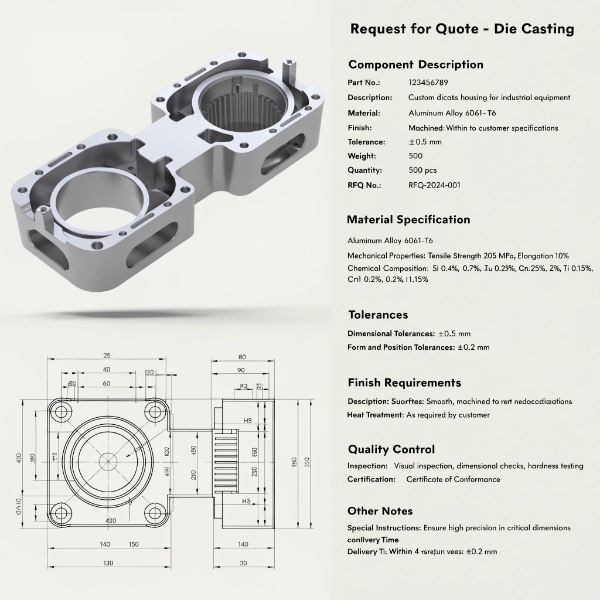
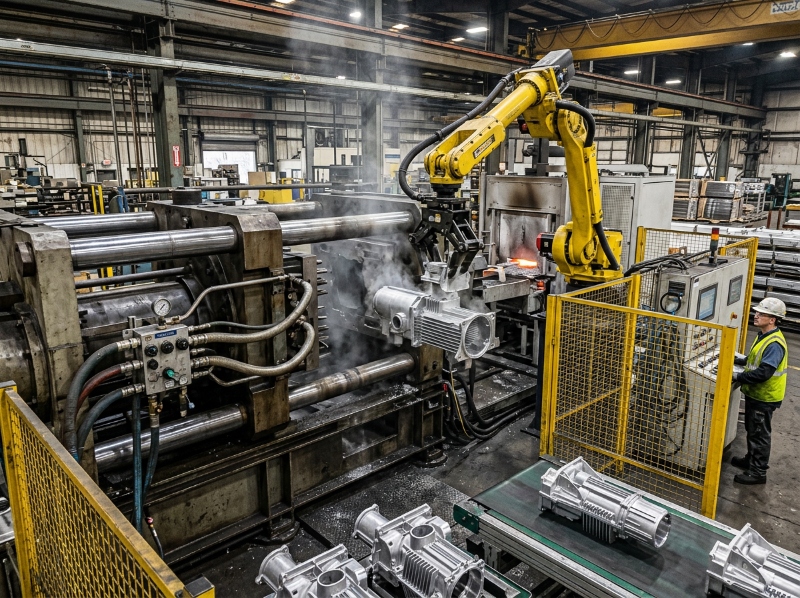
Critical Aluminum Die Casting Requirements for EV Components: Lightweight & Thermal Solutions

EV structural components impose stricter process demands than traditional powertrain castings. Motor housings, inverter cases, battery trays and suspension mounts must combine low mass, high stiffness, effective heat dissipation and reliable sealing under continuous thermal cycling. For Tier 2 suppliers, the real exposure lies in secondary supply-chain risk: dimensional drift after machining, porosity intersecting functional […]

Why EV Housings Require High-Precision Die Casting (An Engineer’s Perspective)

The transition from internal combustion engines (ICE) to electric vehicles (EVs) has radically altered the expectations placed on the die casting supply chain. Ten years ago, an aluminum foundry could survive by pouring simple transmission brackets and oil pans with relatively loose tolerances. Today, that same foundry will face catastrophic scrap rates if tasked with

Die Casting vs CNC Machining for Automotive Parts: Cost & Performance Analysis

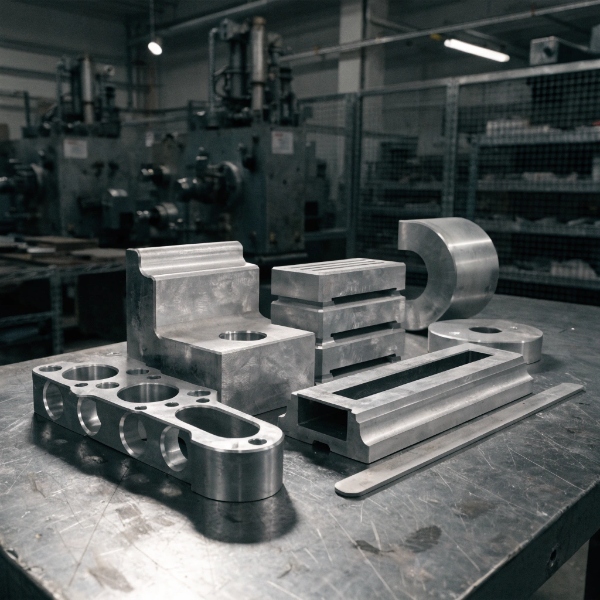
When developing structural or thermal management components for modern automotive architectures, engineering teams eventually hit a critical crossroad: should we CNC machine this part from a solid billet, or invest in tooling for High-Pressure Die Casting (HPDC)? For Tier 1 system integrators, making the wrong choice here doesn’t just inflate the piece price; it jeopardizes

Key Considerations for Post-Processing of Die-Cast Parts

Key Considerations for Post-Processing of Die-Cast Parts Post-processing of high-pressure die casting (HPDC) components is where many projects succeed or fail under OEM scrutiny. For Tier 2 suppliers delivering structural aluminum parts—particularly motor housing die casting or large EV structural castings—the casting itself is only the starting point. Dimensional capability, sealing integrity, and surface condition

Design of Large and Complex Aluminum Alloy Gearbox Housing Die Casting Mold

In high-volume automotive die casting applications, gearbox housings rank among the most demanding structural components. These large, thin-walled parts with intricate oil channels, mounting bosses, and sealing surfaces must deliver precise dimensional stability under thermal cycling while maintaining leak-tightness. For Tier 2 suppliers squeezed between OEM requirements and machining partners, mold design decisions made early