

The automotive world is changing faster than ever. For decades, the industry perfected the art of mass-producing internal combustion engines1. Now, a wave of new demands—from electric power to autonomous driving and sustainability—is forcing everyone, from global procurement directors to on-the-ground quality engineers, to rethink their entire strategy. Sticking to old methods means falling behind, risking supply chain disruptions2, and failing to meet the complex quality standards of tomorrow’s vehicles. As a technical expert who has spent over 20 years in the trenches of automotive manufacturing, I’ve seen this shift firsthand. This article breaks down the five critical goals shaping our industry and provides practical insights to help you navigate this new landscape.
The future automotive industry is being redefined by five key goals: electrification for greater energy efficiency, the adoption of lightweight and sustainable materials, the integration of autonomous and connected technologies, the pursuit of a resilient global supply chain, and the implementation of a circular economy for vehicle end-of-life.
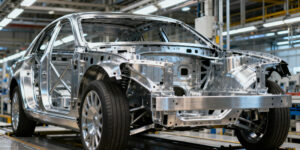
These five goals are not separate challenges; they are deeply connected. You cannot achieve efficient electrification without lightweight materials. You cannot build a resilient supply chain without embracing sustainable practices. As an engineer who works daily on solving these interconnected problems for Tier 1 suppliers, I understand that success requires a holistic view. It’s about seeing the big picture while also mastering the technical details. Let’s explore each of these goals and what they mean for us on a practical level.
Electrification and Energy Efficiency
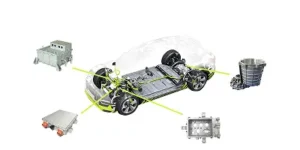
The global push towards electric vehicles (EVs)3 is the most visible change in the automotive industry. But this isn’t just about swapping a gas tank for a battery. It’s about a complete re-engineering of the vehicle to maximize range and performance. Every gram of weight and every watt of energy counts. For those of us in manufacturing, this translates into new and complex challenges. We are no longer just making simple brackets or covers; we are producing mission-critical components for electric powertrains.
My team and I work on these challenges every day. We develop and manufacture parts like motor controller housings, On-Board Charger (OBC) enclosures, and battery pack components. These parts have incredibly demanding requirements. For example, a motor housing must be lightweight to improve vehicle range4, but it also needs to be strong enough to withstand vibrations and protect sensitive electronics. More importantly, it must have excellent thermal conductivity to dissipate the immense heat generated by the motor.
One of the biggest hurdles we face is airtightness. A German Tier 1 supplier we work with needed an OBC housing with a leakage rate of less than 1cc/min under pressure. This is a very strict standard, as any moisture intrusion could lead to catastrophic failure. Achieving this required us to go back to the drawing board. We used DFM (Design for Manufacturability) analysis and mold flow simulations to optimize the part design and the die-casting process. By carefully controlling casting parameters like injection speed, pressure, and temperature, we were able to minimize porosity and ensure a dense, leak-proof aluminum structure. This kind of deep process control5 is the new standard for quality in the age of electrification.
Lightweight Materials and Sustainable Manufacturing
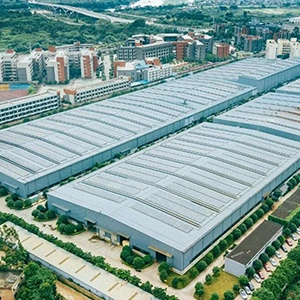
Weight is the enemy of efficiency, especially in an electric vehicle where it directly impacts range. This has accelerated the shift from traditional steel to lightweight materials like aluminum alloys6, magnesium, and composites. As a specialist in aluminum alloy die casting, I’ve been at the forefront of this transition. High-pressure die casting (HPDC) allows us to produce large, complex, and thin-walled structural parts that were once impossible to make. Think of the "giga-casting" approach used for chassis components—it reduces weight, simplifies assembly, and lowers the number of individual parts.
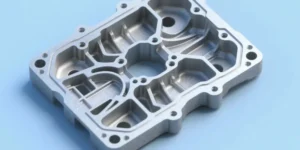
But using lightweight materials is only half the story. The how of manufacturing is becoming just as important as the what. Our customers, particularly those in Europe, are increasingly focused on sustainability. They want to see that their suppliers are minimizing their environmental footprint. This is where sustainable manufacturing practices come into play. In our die-casting facility, we’ve implemented several key initiatives to address this.
| Sustainability Initiative | Impact on Manufacturing | Benefit for the Customer |
|---|---|---|
| Material Recycling | We remelt and reuse nearly 100% of our in-house aluminum scrap. | Reduces raw material consumption and lowers part cost. |
| Energy Optimization | We use modern, energy-efficient die-casting machines and optimize furnace temperatures. | Lowers the carbon footprint of the manufacturing process. |
| Process Improvement | Better process control reduces the scrap rate, meaning less wasted energy and material. | Ensures higher quality and more consistent parts. |
| Life Cycle Thinking | We select alloys that are not only high-performance but also easily recyclable at end-of-life. | Supports the customer’s circular economy goals. |
These practices aren’t just for show; they deliver real business value. A stable, efficient process leads to higher quality and lower costs. For a procurement director, this means a more reliable and cost-effective supply chain. For a quality engineer, it means a supplier with a process that is under control and consistently delivering good parts.
Autonomous and Connected Vehicle Technologies
The move towards self-driving and connected cars is turning vehicles into powerful computers on wheels. This introduces a whole new set of engineering challenges that go far beyond traditional mechanics. These vehicles are packed with sensors, cameras, radar, LiDAR, and powerful electronic control units (ECUs). All of this technology needs to be housed, protected, and kept cool.
This is where precision die casting becomes critical once again. The housings for these advanced electronic systems must meet a unique combination of requirements. They need to be lightweight, structurally rigid, and capable of dissipating heat effectively. Perhaps most importantly, they must provide electromagnetic interference (EMI) shielding7 to prevent signals from interfering with each other. A small amount of electronic "noise" could disrupt a critical function of an autonomous system.
I remember a project with a North American client who was developing a central computing module for a Level 3 autonomous vehicle. The housing design was incredibly complex, with dozens of compartments, thin walls, and tight tolerances. The primary concern was EMI shielding. We worked closely with their design team from the very beginning. Using mold flow simulation, we predicted how the molten aluminum would fill the die, identifying potential areas of porosity that could compromise the shielding effectiveness. We designed the mold with specific overflows and venting to ensure the cavity filled completely, resulting in a dense, uniform casting. The final part provided the necessary protection for the sensitive electronics, helping our client meet their strict performance and safety targets.
Supply Chain Resilience and Global Collaboration
The past few years have taught us a hard lesson: global supply chains are fragile. A single disruption—whether it’s a pandemic, a trade dispute, or a natural disaster—can bring production to a halt. As a result, Tier 1s and OEMs are rethinking their procurement strategies. They are moving away from relying on a single, low-cost source and are instead building more resilient, regionalized supply networks8.
Building this resilience requires a new level of collaboration between customers and suppliers. It’s no longer a simple transactional relationship. As a supplier, we are now seen as a strategic partner. Our customers want transparency, reliability, and proactive problem-solving. They need to know that we have a robust quality system (like IATF 16949), a stable manufacturing process, and a plan to handle unforeseen disruptions.
My role has shifted significantly because of this. I spend more time communicating with customers, providing DFM reports, sharing mold flow simulation results, and giving them regular updates on production progress. When we work with a new customer, like a Tier 1 supplier in Italy, we establish a clear project management framework from day one. We have weekly meetings to review progress, identify risks, and make decisions together. This open communication builds trust and ensures that we are aligned on every detail, from part design to the final inspection plan. This collaborative approach9 allows us to anticipate problems before they happen and deliver on tight project schedules, which is exactly what our customers need to compete.
Circular Economy and End-of-Life Recycling
The responsibility of an automaker no longer ends when a car is sold. There is growing pressure from regulators and consumers to design vehicles for a "circular economy." This means thinking about the entire lifecycle of the car, from raw material extraction to what happens to it at the end of its useful life. The goal is to design products and systems that allow for easy disassembly, reuse, and recycling of components and materials.
For those of us in the die-casting industry, this is a significant opportunity. Aluminum is infinitely recyclable without losing its properties. This makes it an ideal material for a circular economy. When we manufacture an aluminum part, we are not just creating a component for a car; we are creating a material resource that can be used again in the future.
We contribute to the circular economy in two main ways. First, as mentioned earlier, we operate a highly efficient internal recycling loop for our production scrap. This is the first step. Second, we are deeply involved in the material selection process with our customers. We help them choose aluminum alloys that not only meet the performance requirements of the part but are also part of a common recycling stream. Using a standard, well-understood alloy makes it much easier and more economical to recycle the part at the end of the vehicle’s life. This forward-thinking approach helps our customers design more sustainable products and meet their corporate environmental goals. It’s a clear win-win that delivers value today while planning for a better tomorrow.
Conclusion
The automotive industry’s future is driven by electrification, lightweighting, intelligence, and sustainability. These goals require a deep integration of design, materials science, and advanced manufacturing processes to succeed.
Investigate the evolving role of internal combustion engines amidst the rise of electric vehicles. ↩
Gain insights into the factors that lead to supply chain disruptions and how to mitigate them. ↩
Gain insights into the challenges and advantages of adopting electric vehicles in today’s market. ↩
Explore the relationship between vehicle weight and range, crucial for electric vehicle design. ↩
Discover how effective process control leads to higher quality and consistency in automotive parts. ↩
Discover why aluminum alloys are preferred for lightweight and sustainable automotive components. ↩
Understand the importance of EMI shielding in protecting sensitive electronics in modern vehicles. ↩
Investigate the latest trends in creating robust supply networks to enhance automotive manufacturing resilience. ↩
Explore the benefits of collaboration in building trust and improving project outcomes in the automotive sector. ↩


