Aluminum Die Casting: Why It’s Widely Used in the Automotive and Electronics Industries

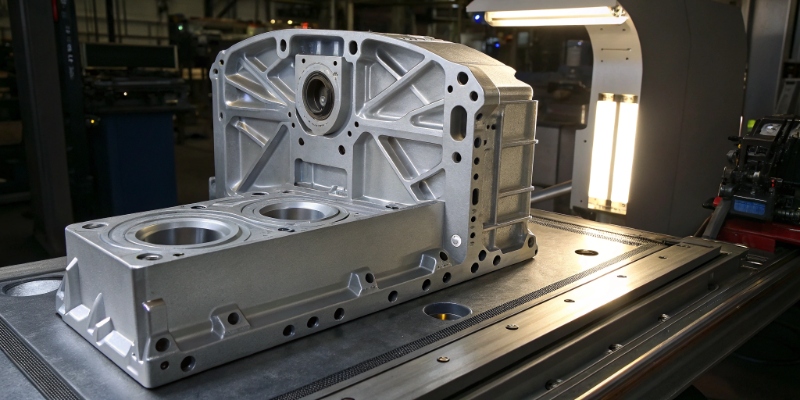
Aluminum die-casting technology is widely used in the automotive and electronics industries due to its unique advantages. The light-weight, high strength, and corrosion resistance of aluminum alloy make it an ideal choice for manufacturing various parts. In the automotive industry, as energy conservation and emission reduction standards are raised, light-weight has become an important direction […]

Surface Treatment Techniques for Automotive Aluminum Alloy Parts

In modern manufacturing, aluminum die-cast products are favored for their excellent performance and diverse applications. Aluminum die-cast parts are not only lightweight and strong but also have good corrosion resistance and thermal conductivity, making them an ideal choice for automotive and other high-precision industrial fields. However, in addition to their mechanical properties, the surface treatment

Future Directions for Aluminum Die Casting in Industrial Applications

While the spotlight often shines on automotive innovations, the industrial sector presents its own demanding and evolving landscape for aluminum die casting. For applications in robotics, power equipment, heavy machinery, and telecommunications, the trends are geared towards achieving extreme durability, precision, and functional integration under challenging operational conditions. A primary driver is the need for

Case Study: Manufacturing High-Integrity PDU Housings for Commercial Vehicles (Al Alloy 43400)

In the commercial vehicle sector, power distribution units (PDUs) are the nervous system of heavy-duty electrification. They require housing that offers exceptional electromagnetic shielding, thermal dissipation, and structural durability against constant road vibration. At EMP Casting, we recently optimized a high-volume production line for a Tier 1 commercial vehicle client. By leveraging 1,000T High-Pressure Die

Vacuum High-Pressure Die Casting: The Ultimate Solution to Reduce Porosity in Automotive Aluminum Parts

In the competitive world of automotive manufacturing, component integrity is non-negotiable. As vehicles move toward lightweight designs to improve fuel efficiency and EV range, the demand for automotive aluminum parts has surged. However, one persistent challenge remains in the manufacturing process: porosity. For engineers and procurement managers, finding a way to reduce porosity is critical

Mastering Part Design for Die Casting: Drafts, Fillets, and Wall Thickness

Meta Description: essential guide to part design for die casting. Learn expert guidelines on draft angles, fillets, and uniform wall thickness for high-quality automotive aluminum parts. In the competitive world of automotive aluminum die casting, the difference between a high-performance component and a failed production run often lies in the design phase. Design for Manufacturing