

In the fast‑evolving world of automotive manufacturing, die casting remains a cornerstone process for producing lightweight, high‑strength components—from engine blocks and transmission housings to structural nodes and battery enclosures for electric vehicles. Yet, as part geometries grow more complex and performance demands tighten, casting defects such as porosity, cold shuts, and shrinkage cavities become critical risks. For automotive engineers, the most effective way to prevent these defects is not merely optimizing the casting process itself, but intervening earlier: at the design stage. This is where Design for Manufacturability (DFM) analysis proves indispensable.
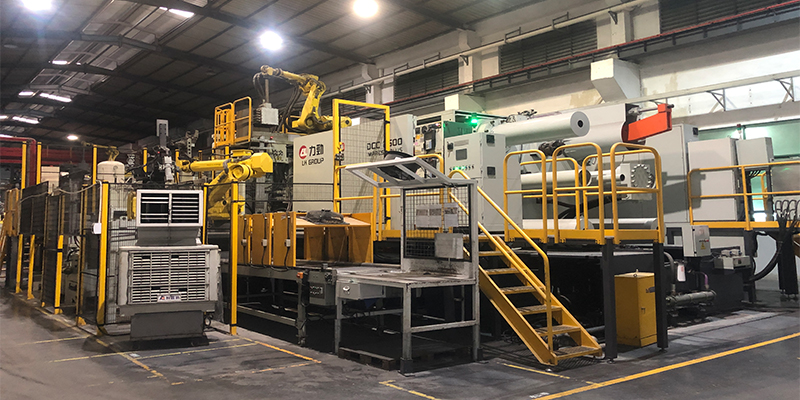
The Cost of Defects in Automotive Die Casting
Defects in die cast parts do more than increase scrap rates. They can lead to costly rework, delayed production schedules, and—most critically—field failures that compromise safety and durability. In high‑pressure die casting (HPDC), common defects include gas porosity (caused by entrapped air or lubricant vapor), cold shuts (where two metal fronts fail to fuse), shrinkage voids (due to inadequate feeding during solidification), and soldering or erosion of the die. Each of these defects has root causes that trace back to design decisions: uneven wall thickness, sharp corners, poorly placed gates, or insufficient draft angles.
Traditional approaches often treat design and manufacturing as sequential steps—designers create the part, then manufacturing engineers struggle to make it castable. DFM analysis flips this sequence, bringing manufacturing constraints into the design phase.
What DFM Analysis Brings to the Table
DFM analysis is a systematic review of a part’s geometry, material selection, and tooling requirements against the capabilities of the die casting process. When applied early in product development, it identifies potential failure modes before steel is cut for the die. Modern DFM often integrates simulation tools such as flow analysis, thermal modeling, and stress prediction, but even a rigorous rule‑based evaluation can dramatically reduce defect risks.
For automotive engineers, DFM analysis typically focuses on four key areas: wall thickness consistency, rib and boss design, draft angles, and gating/sprue architecture.
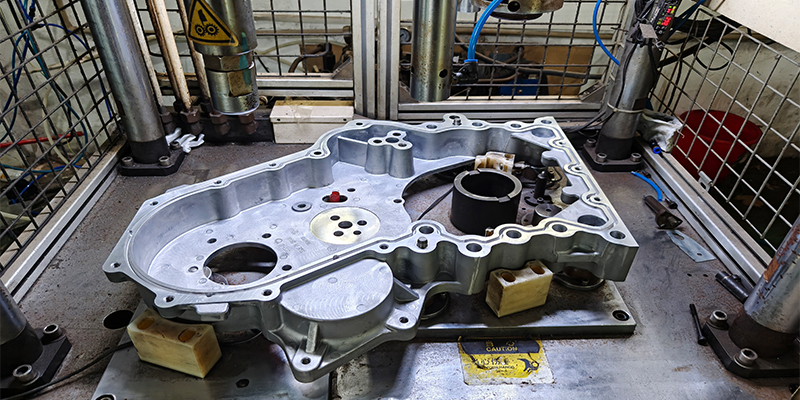
1. Wall Thickness: The Foundation of Integrity
Non‑uniform wall thickness is one of the biggest contributors to shrinkage porosity and warpage. In die casting, thicker sections solidify more slowly, acting as “hot spots” that draw molten metal from adjacent thinner areas, creating internal voids. DFM analysis flags abrupt transitions and recommends gradual tapering or the use of cores to maintain a nominal wall thickness. For structural automotive components, staying within 2.5 mm to 4 mm (depending on alloy and size) and ensuring thickness variations do not exceed 2:1 can drastically reduce internal porosity.
2. Ribs and Bosses: Strength Without Defects
Ribs are essential for stiffness, but if they are too thick, they create localized mass concentrations that lead to shrinkage defects. DFM analysis ensures that rib thickness does not exceed 60–80% of the adjacent wall thickness. Similarly, bosses—used for fasteners or assembly—should be designed with cored holes rather than being solid, and they should be connected to the main wall with generous radii to avoid stress concentration and surface sinks.
3. Draft Angles: Releasing the Part Without Damage
Insufficient draft angles can cause surface drag, scoring, and even die lock. While a standard recommendation is 1° to 2° for external surfaces and 2° to 3° for internal surfaces, complex automotive parts with deep ribs or textured finishes may require more. A thorough DFM analysis examines ejection direction, surface finish, and depth of features to recommend draft that ensures clean release without distorting the casting.
4. Gating and Overflows: Controlling Metal Flow
Even a perfectly shaped part will suffer defects if the metal does not fill the cavity correctly. Poor gate placement can cause turbulent flow, which entraps air and produces gas porosity. DFM analysis, often supported by simulation, determines the optimal gate location, gate thickness, and runner design to achieve laminar filling. It also positions overflows to capture cold metal and air pockets, preventing them from ending up in critical areas such as machined surfaces or high‑load zones.
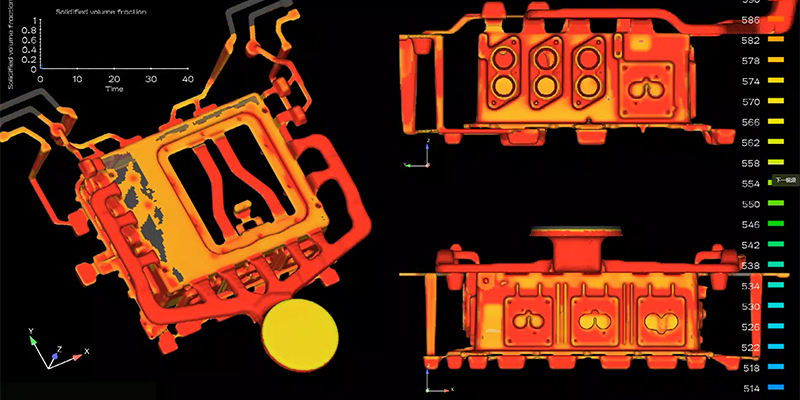
DFM as the Foundation of a One‑Stop Manufacturing Solution
For a manufacturer like EMP Tech, DFM analysis is not a standalone activity—it is the first and most critical step in a fully integrated process. With in‑house tooling fabrication, high‑pressure die casting machines ranging from 350T to 3050T, and advanced post‑casting capabilities such as friction stir welding (FSW), precision CNC machining, and surface finishing, DFM insights flow directly into every downstream operation. This closed‑loop approach ensures that design improvements are not lost in translation between suppliers or departments.
This integrated model is especially vital for new energy vehicle (NEV) components—such as motor housings, battery pack shells, and structural parts—where requirements for airtightness, cleanliness, and lightweight performance are non‑negotiable. By conducting early DFM analysis alongside mold flow simulation, potential defects like leakage paths or thermal distortion can be eliminated before the first prototype is cast, dramatically reducing development risk and accelerating time to market.
Conclusion
For automotive engineers tasked with delivering high‑integrity die cast components under tight cost and weight targets, DFM analysis is not a luxury—it is a necessity. Defects such as porosity, cold shuts, and shrinkage are not inevitable; they are often the consequence of design decisions made without full consideration of the casting process. By systematically applying DFM principles—uniform wall thickness, optimized ribs and bosses, adequate draft, and scientifically designed gating—engineers can transform die casting from a reactive troubleshooting exercise into a predictable, high‑yield manufacturing process.
In the competitive landscape of automotive manufacturing, where electric vehicles demand ever more complex and lightweight structures, the question is no longer whether to perform DFM analysis, but how early and how thoroughly. Those who embed DFM at the outset do not just reduce defects—they build the foundation for scalable, cost‑effective quality.


