

The automotive industry’s shift toward electrification and lightweight construction has fundamentally changed what manufacturers expect from their suppliers. Today, producing aluminum die cast components for vehicles—especially new energy vehicles (NEV)—is no longer just about delivering parts. It demands engineering collaboration, process integration, and rigorous quality systems.
At EMP Tech, we approach these challenges through a one-stop manufacturing model that combines design optimization, in-house tooling, high-pressure die casting, friction stir welding (FSW), precision CNC machining, and surface finishing. The following outlines the core requirements of modern automotive components and how our capabilities address them.
1. Lightweight Structural Integrity with Large-Tonnage Capacity
Electric vehicles require significant weight reduction to maximize range. This has led to the widespread adoption of large aluminum structural castings—battery trays, shock towers, rear underbodies—that replace multiple stamped steel components.
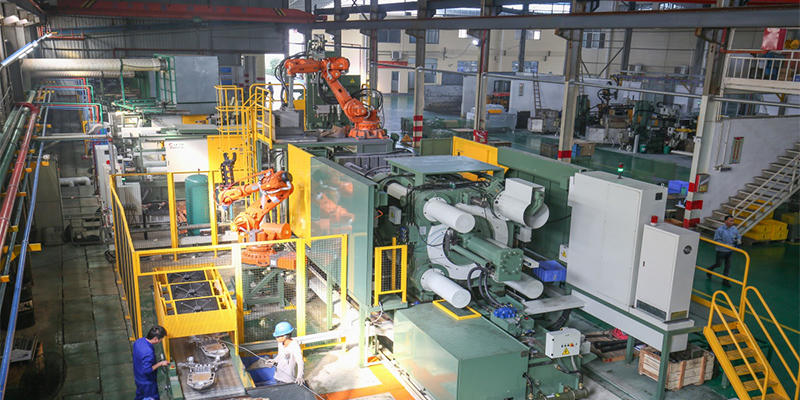
Producing these parts demands high locking force and process stability. With 13 die casting machines ranging from 350T to 3050T, we can manufacture large-scale NEV components such as battery pack shells and motor housings that smaller facilities cannot handle. The result is a monolithic structure that reduces weight, improves rigidity, and simplifies assembly.
2. High Airtightness for Thermal Management Systems
EV powertrains introduce components with stringent sealing requirements. Motor controller housings, liquid cooling plates, and battery enclosures must maintain hermetic seals to protect sensitive electronics and manage heat effectively.
Achieving this level of sealing performance requires more than precision casting. We integrate Friction Stir Welding (FSW) —a solid-state joining process—to create leak-free bonds without porosity or thermal distortion. This technology is essential for the airtightness demanded by modern EV thermal management systems. Combined with in-house air tightness and leak testing, we ensure that every component meets or exceeds customer specifications.
3. Component Cleanliness for High-Voltage Reliability
In electric vehicles, contamination control is critical. Conductive particles inside motor housings or power electronics enclosures can lead to short circuits and system failures. Leading automotive manufacturers therefore enforce strict cleanliness standards such as VDA 19.
Our facility includes a dedicated cleanliness lab and clean room assembly areas to verify and maintain component cleanliness throughout production. This infrastructure allows us to meet the technical cleanliness requirements of European and North American Tier 1 suppliers—a capability that has become a prerequisite for high-reliability EV components.
4. Micron-Level Precision Through In-House CNC Machining
Die casting creates near-net shapes, but functional surfaces—sealing grooves, bearing bores, mounting interfaces—require secondary machining to achieve final tolerances. For critical automotive components, these features often demand accuracy measured in microns.
With over 150 CNC machining centers, we perform precision finishing in-house. This eliminates the coordination risks and quality variability that arise when machining is outsourced. By controlling the entire process from casting to finished component, we deliver parts with consistent dimensional accuracy and surface finish suitable for demanding assembly requirements.
5. Zero Defect Quality Culture and Full Traceability
Automotive manufacturers, particularly those serving European and American markets, expect a zero-defect approach built on process control rather than sorting. This is reflected in our IATF 16949 certification and our commitment to VDA 6.3 process audit standards—which we passed with an “A” rating on the first visit.
Our quality infrastructure includes:
X-ray flaw detection for internal integrity verification
CMM (Zeiss) measurement for dimensional validation
Spectrum analysis for alloy composition confirmation
Full traceability linking each component to its production parameters
These capabilities provide customers with the assurance required for high-volume automotive programs.
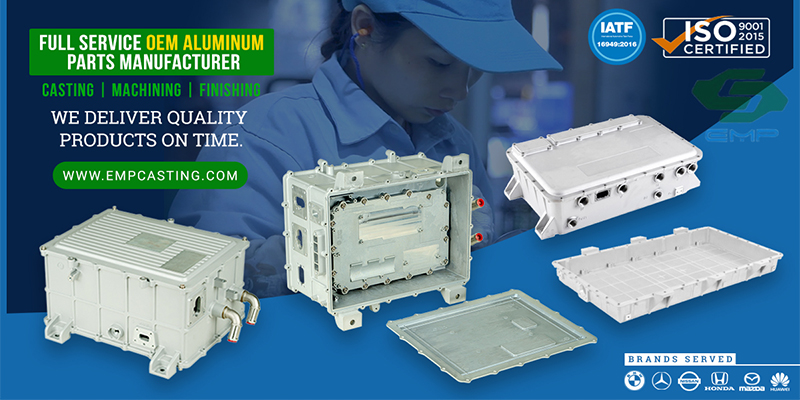
6. One-Stop Manufacturing for Supply Chain Security
Recent global disruptions have demonstrated that supply chain stability is as critical as cost. Automotive companies increasingly seek partners who can consolidate multiple process steps under one roof.
Our one-stop approach covers:
Engineering & DFM analysis to optimize designs before tooling
In-house tooling fabrication for mold durability and consistency
High-pressure die casting for lightweight structural parts
Friction stir welding for hermetic sealing
Precision CNC machining for final tolerances
Surface finishing including shot blasting, powder coating, and plating
Byintegrating these capabilities, we reduce the number of interfaces in our customers’ supply chains, accelerate problem resolution, and provide greater operational stability.
Conclusion
The modern automotive industry requires die casting partners that offer more than production capacity. Engineering expertise, process integration, advanced joining technologies, cleanliness control, and a zero-defect quality culture have become essential.
At EMP Tech, our facility and processes are built specifically to meet these demands—from 3050T large-scale structural castings to VDA 19 cleanliness compliance and FSW-enabled airtightness. For sourcing managers and engineers seeking a partner ready for the requirements of electrification and lightweight vehicle platforms, we provide the capabilities and experience to deliver.
Ready to discuss your next project?
Contact our engineering team for a free DFM analysis and quote, typically within 24 hours.
📧 [email protected] | 📞 +86 18033163576


