

Using the wrong motor housing1 can lead to overheating, poor alignment, and component failure2. This not only kills motor efficiency3 and reliability but also risks costly recalls and damages your brand’s reputation.
A well-designed motor housing casting, typically made from die-cast aluminum, is critical for EV performance. It ensures reliability by providing structural protection and precise alignment for internal components, and it boosts efficiency by enabling superior thermal management to keep the motor cool.
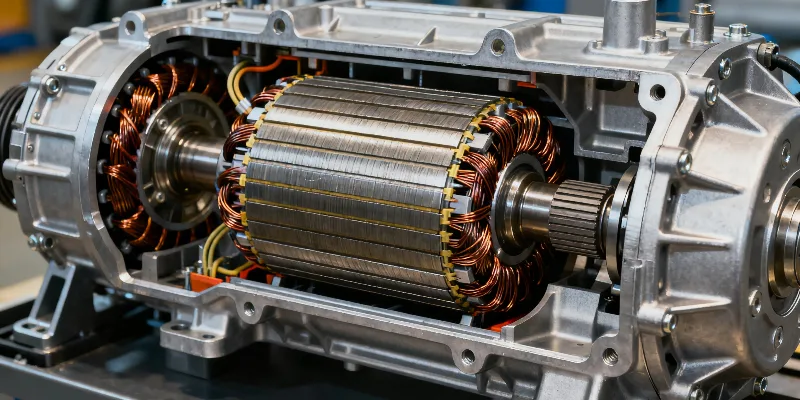
As an engineer who has specialized in aluminum die casting for over 20 years, I’ve seen the EV revolution firsthand. The motor housing is one of the most critical components we produce. It’s not just a "box"; it’s an active, high-performance system. A housing that is off by a fraction of a millimeter can lead to catastrophic failure, while a well-designed one is the key to unlocking more power and a longer life for the motor. The demands of e-mobility4 have pushed us to innovate in materials, design, and manufacturing to deliver the performance these advanced drivetrains require.
What Is a Motor Housing Casting and Why Is It Essential for EV Motors?
You might think the housing is just a simple cover. This dangerous assumption overlooks its three most critical functions: protection, alignment, and thermal management5, all of which are essential for a reliable motor.
A motor housing casting is the engineered outer shell of an electric motor. It is essential because it shields the internal stator and rotor from contaminants, provides the rigid structural frame for the entire assembly, and acts as the primary heat sink to cool the motor.
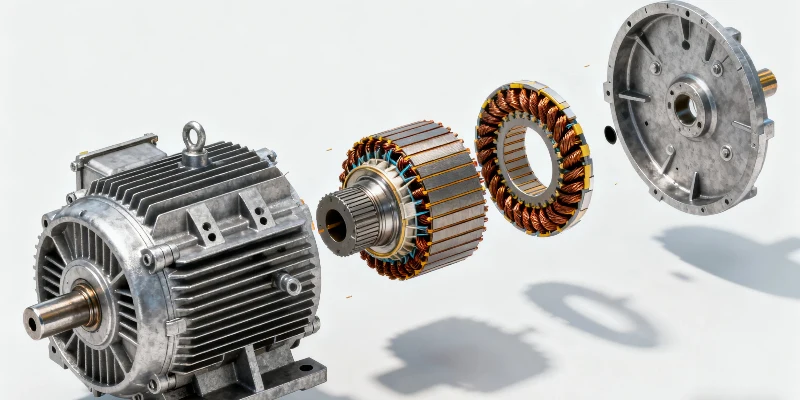
The motor housing is the motor’s skeleton and its shield. Its first job is protection—it seals the sensitive, high-voltage windings and spinning rotor away from water, dust, and road debris. Its second job is structural. The housing provides the rigid frame that holds the stator perfectly in place and, most importantly, provides the precision-machined seats for the rotor bearings. Without this perfect alignment, the motor would vibrate itself to pieces. Finally, the housing is the motor’s radiator. It’s the primary path for all the waste heat to escape. In an EV, these three functions are non-negotiable and are the foundation of the motor’s long-term reliability.
How Does Aluminum Die Casting Enhance Thermal Management in Motor Housings?
Your EV motor is overheating, forcing the system to reduce power. This "derating" disappoints drivers and can be traced back to a housing that can’t get rid of heat fast enough.
Aluminum die casting is the ideal process for thermal management. Aluminum alloys like A380 and AlSi10Mg have excellent thermal conductivity, drawing heat away from the stator. The die casting process allows for the creation of complex cooling fins or integrated liquid-cooling channels.
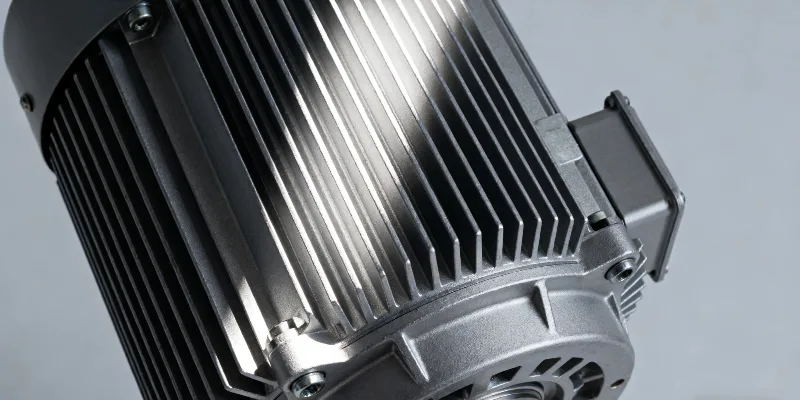
This is where aluminum truly outshines other materials. Cast iron is heavy and a poor conductor of heat. Aluminum is the perfect combination of light weight and high thermal conductivity. When we design a motor housing, we don’t just design a box; we design a heat exchanger. The high-pressure die casting process allows us to cast in very thin, deep fins that dramatically increase the surface area for air cooling. For high-performance motors6, we take it a step further. I’ve worked on many projects where we die-cast complex channels directly into the housing walls. The customer then pumps liquid coolant through these channels, pulling heat away from the motor with incredible efficiency. This superior cooling is what allows automakers to build smaller, lighter motors that can produce enormous amounts of power without overheating.
What Are the Key Design Factors Affecting Motor Housing Durability?
A housing fails a durability test, cracking under vibration or stress. The problem isn’t the material; it’s a design flaw that created a weak point, costing you weeks of rework.
The key design factors for durability are uniform wall thickness, the strategic use of ribs, and generous fillets and radii. These elements work together to manage stress, prevent warping, and eliminate the sharp corners where cracks love to form.
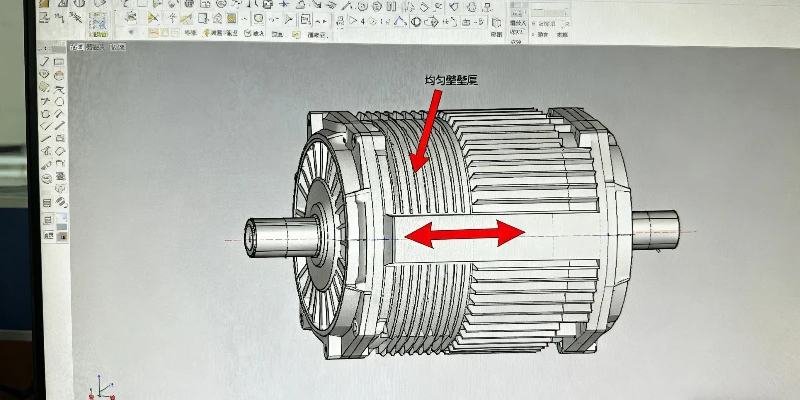
When I review a new design with a customer, I immediately look for these three things. First, we aim for a uniform wall thickness, typically between 2.5mm and 4mm. If a part has a very thick section next to a very thin one, it will cool at different rates, creating internal stress that can lead to warping or micro-cracks. Second, instead of making a wall thicker (and heavier) for strength, we add ribs. These structural supports add immense rigidity and help disperse vibration and load, all while using minimal material. Third, we eliminate sharp internal corners. A sharp 90-degree corner is a massive stress concentration point. By adding a smooth, rounded fillet (radius), we distribute that stress over a wider area, dramatically improving the part’s fatigue life and resistance to cracking.
How Do Precision Machining and Tolerance Control Impact Motor Performance?
Your motor is noisy and inefficient. The cause is a microscopic misalignment between the rotor and stator, which creates vibration, wastes energy, and will lead to premature bearing failure.
High-precision CNC machining is essential after casting to create the final, critical tolerances. This machining guarantees the bearing pockets and stator mount are perfectly aligned, maintaining the precise air gap (often just 0.1-0.3mm) between the rotor and stator, which is crucial for high efficiency.
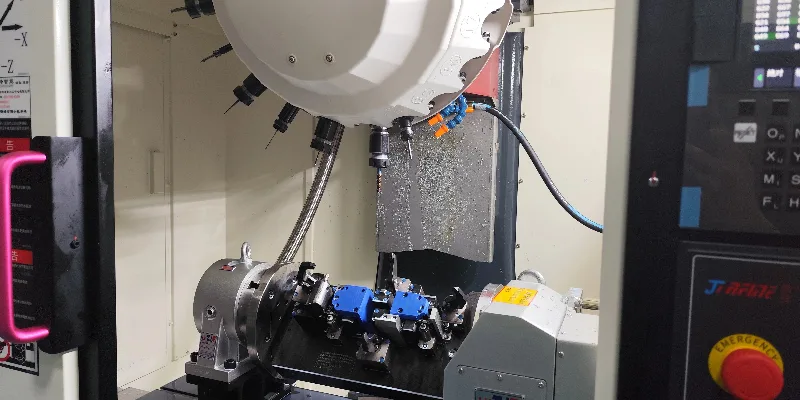
Die casting gets us 95% of the way there, creating the complex "near-net shape." But it’s the final 5%—the precision CNC machining7—that defines the motor’s performance. A die casting can hold a tolerance of about ±0.05mm. But the bearing pocket for a high-speed rotor needs to be accurate to ±0.01mm or less. This is a level of precision you can’t see, but it’s the single most important factor for motor reliability. This perfect alignment, achieved only through machining, ensures the rotor spins perfectly in the center of the stator. This stable air gap maximizes torque, eliminates efficiency-robbing vibration, and is the key to a quiet, long-lasting motor.
What Role Does Surface Treatment Play in Corrosion and Vibration Resistance?
Your motor housings are corroding in testing, or you’re fighting noise issues. You need to protect the part from the environment without adding unnecessary cost or complexity.
Surface treatments are critical for protection. E-coating or chromate conversion creates a robust barrier against corrosion. Vibration, however, is managed by mechanical design and specialized damping materials, not by standard anti-corrosion coatings.
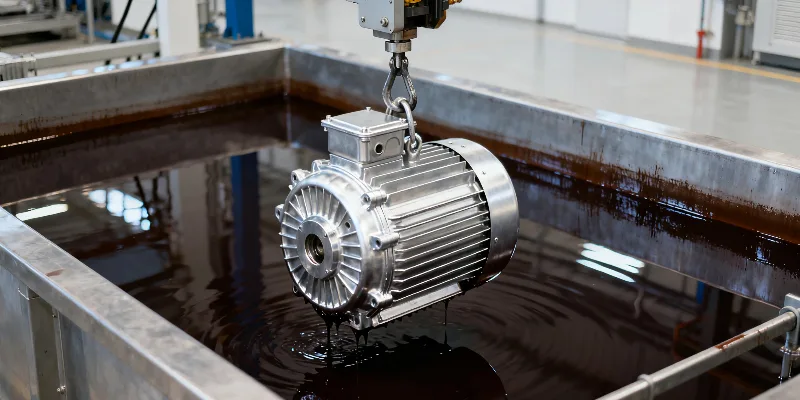
This is a point that often causes confusion. Let’s be clear: corrosion protection8 and vibration damping are two separate problems with two different solutions. For corrosion resistance, we almost always apply a surface treatment. An e-coat (electro-deposition coating) is fantastic because it electrically bonds paint to the part, covering every single surface, inside and out, with a tough, uniform layer. This seals the aluminum from salt and water. Vibration resistance (or more accurately, noise and vibration damping) is a mechanical issue. It’s solved with good structural design9 (like adding ribs) or by applying specialized materials like Liquid Applied Sound Damping (LASD) sprays or constrained-layer damping pads. These are thick, rubbery materials that absorb vibration energy, and they are a completely separate step from the anti-corrosion coating.
How Are Chinese Suppliers Advancing in Motor Housing Casting Technology?
You need to source high-quality, complex castings at a competitive price. You are not sure if global suppliers have the technology to meet the tight specifications required for modern EV components.
Top-tier Chinese suppliers are heavily invested in advanced technology. They use simulation software like MagmaSoft to perfect mold designs and deploy advanced manufacturing like vacuum-assisted die casting to produce denser, higher-integrity parts with minimal porosity, meeting the strictest OEM standards.
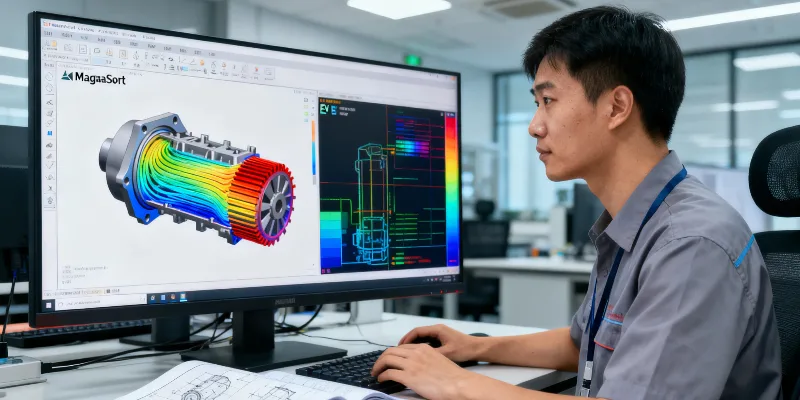
As someone who works with global customers, I can tell you the technology gap has closed. The best Chinese suppliers my team and I partner with are using the same world-class tools as anyone in Europe or North America. Before we cut any steel, we use simulation software like MagmaSoft to create a "digital twin" of the casting process. We can predict exactly how the molten aluminum will flow, where it will cool, and where porosity might form. This allows us to perfect the mold design on the computer, saving weeks of trial and error. In production, we use advanced techniques like vacuum-assisted die casting10. Just milliseconds before injecting the metal, we use a powerful vacuum to suck all the air out of the mold. This prevents air from getting trapped, resulting in a part that is incredibly dense, strong, and pressure-tight—all critical requirements for a reliable EV motor housing.
Conclusion
The motor housing casting is a cornerstone of EV reliability and efficiency. Through the smart use of aluminum die casting, precision machining11, and advanced simulation, we create a lightweight, thermally efficient, and structurally rigid component essential for modern e-mobility.
Understanding motor housing is crucial for grasping its role in EV performance and reliability. ↩
Identify the common causes of component failure to improve reliability in electric vehicles. ↩
Learn about the key factors that affect motor efficiency and how to optimize it. ↩
Explore the concept of e-mobility and its influence on the design and performance of electric vehicles. ↩
Learn about effective thermal management strategies to optimize EV performance and longevity. ↩
Learn what characteristics make motors high-performance and how they impact EV efficiency. ↩
Discover how CNC machining ensures high-quality and precise components for electric vehicles. ↩
Discover effective methods for protecting EV components from corrosion and extending their lifespan. ↩
Gain insights into structural design principles that enhance the durability of motor housings. ↩
Explore how vacuum-assisted die casting improves the quality and integrity of EV components. ↩
Understand the significance of precision machining in achieving optimal motor efficiency and reliability. ↩


