

As a technical engineer with over 20 years in aluminum die casting1, I’ve seen firsthand how the demands of the automotive industry have evolved. Nowhere is this more apparent than in the production of electric vehicle2 (EV) components. For purchasing directors and supplier quality engineers (SQEs), the challenge is immense: sourcing critical parts like motor controller3 or OBC housings4 that are lightweight, flawlessly sealed, and delivered on an aggressive timeline. A single failure in a housing’s integrity can lead to catastrophic system malfunctions, costly recalls, and significant project delays.
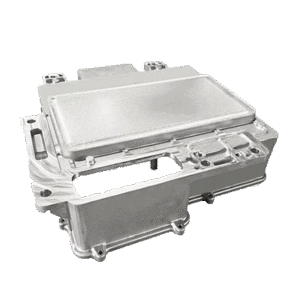
The pressure to meet stringent standards like IP67/IP6k9k5 for airtightness and IATF 169496 for quality is relentless. You’re not just buying a part; you’re securing a component central to the vehicle’s reliability and safety. How can you be confident that a supplier’s process will deliver on these non-negotiable requirements every single time?
The answer lies in a robust, transparent, and meticulously controlled manufacturing process flow. At EMP Tech, my team and I have refined this process to turn complex designs into mass-produced, zero-defect realities. This article breaks down our proven seven-step journey, showing you how each stage contributes to the final product’s quality, reliability, and performance.
Design and DFM Analysis for Structural and Thermal Requirements
The foundation of a successful EV control housing is laid long before any metal is melted. It begins with collaborative engineering. Success here isn’t just about creating a CAD model; it’s about creating a part that is optimized for manufacturing.
This initial phase is where we address critical challenges like lightweighting and thermal management head-on. Using Design for Manufacturability7 (DFM) analysis, we work with your engineering team to:
- Optimize Wall Thickness: Ensure structural integrity without adding unnecessary weight or creating casting defects like hotspots.
- Refine Rib and Boss Designs: Enhance component strength and provide secure mounting points while ensuring proper metal flow.
- Analyze Draft Angles: Guarantee the part can be smoothly ejected from the mold, preventing stress marks and cracks.
- Simulate Heat Dissipation: Through mold flow simulation, we predict and optimize the housing’s ability to manage heat generated by the electronics, a critical factor for EV performance and longevity.
This proactive approach prevents costly mold modifications and production issues down the line, ensuring a smoother path to mass production.

Mold Fabrication and Vacuum Die Casting Process
With a finalized design, we move to mold fabrication—a process of pure precision. The mold is the heart of the die casting operation. We use high-grade H13 steel and advanced CNC machining8 to craft molds with tolerances measured in microns.
For components like EV control housings, standard die casting is often insufficient. High airtightness requirements demand a more advanced technique: vacuum die casting9.
Why Vacuum Die Casting?
By extracting air from the mold cavity before injecting the molten aluminum alloy (typically A380 or ADC12), we achieve:
- Reduced Porosity: Eliminates trapped gases, the primary cause of internal porosity that leads to leaks.
- Improved Mechanical Properties: The resulting parts are denser, stronger, and more ductile.
- Enhanced Surface Finish: Parts are ready for high-quality surface treatments without extensive preparation.
This method is essential for producing housings that can consistently pass stringent IP67 leak tests.
CNC Machining and Dimensional Accuracy Control
A raw casting is only the halfway point. To meet the precise fitment requirements of an automotive assembly line, the cast housing must undergo multi-axis CNC machining. This is a critical step where key features are machined to perfection.
Our process includes:
- Fixture Design: Creating custom fixtures that hold the part securely and repeatably, eliminating variance between parts.
- Machining Mating Surfaces: Achieving flatness tolerances crucial for creating a tight seal with gaskets.
- Drilling and Tapping Holes: Precisely locating and threading mounting points for connectors, circuit boards, and the lid.
- In-Process Probing: Using automated probes within the CNC machine to verify critical dimensions in real-time, allowing for immediate adjustments.
This strict control ensures that every housing will interface perfectly with other components, simplifying your final assembly process.
Surface Treatment: Cleaning, Coating, and Corrosion Protection
EV control housings are exposed to harsh environments, from road salt to extreme temperatures. Effective surface treatment is not optional—it’s a requirement for long-term reliability.
Our typical surface treatment workflow includes:
- Ultrasonic Cleaning: A multi-stage cleaning process removes all oils, debris, and microscopic contaminants from the machining process, ensuring a pure surface for coating.
- Chromate Conversion Coating (or Trivalent Passivation): This chemical process creates a passivation layer on the aluminum surface. It serves two key purposes:
- It provides excellent corrosion resistance.
- It creates a perfect primer for subsequent painting or powder coating, ensuring strong adhesion.
- Powder Coating/E-Coating: Depending on customer specifications, a final protective layer is applied for maximum durability against physical and environmental damage.
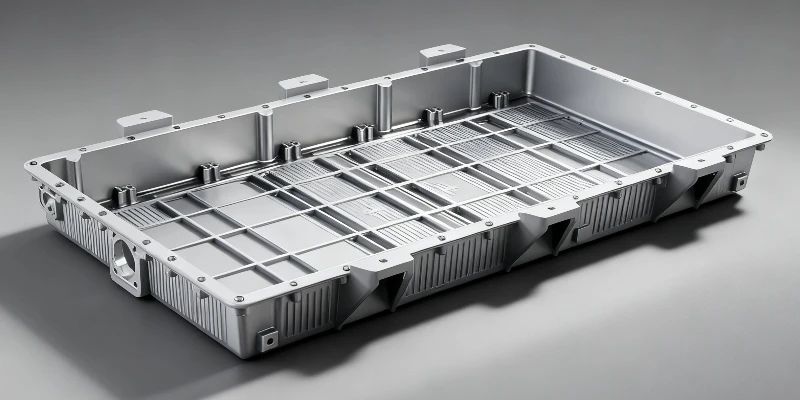
Assembly, Sealing, and Leak Testing Procedures
This is where the housing’s primary function—protecting sensitive electronics from the elements—is validated. Proper assembly and sealing are paramount.
Our process focuses on precision and repeatability:
- Automated Gasket Application: For Formed-In-Place (FIP) gaskets, robotic applicators dispense the sealing material with perfect consistency. For pre-formed gaskets, fixtures ensure exact placement.
- Torque-Controlled Fastening: Screws for the lid and connectors are fastened using automated drivers with precise torque control, ensuring even pressure on the gasket without warping the housing.
- 100% Leak Testing: Every single assembled unit undergoes a leak test. Using air pressure decay or helium mass spectrometry, we verify that each housing meets or exceeds the specified IP rating (e.g., IP67). There is no "batch testing" for this critical parameter; every part is confirmed.
| Test Method | Application | Advantage |
|---|---|---|
| Air Pressure Decay | Standard for IP67 validation | Fast, reliable, and cost-effective for high-volume production. |
| Helium Mass Spectrometry | For highest-spec IP68/IP6k9k | Extremely sensitive; can detect microscopic leaks that air pressure testing might miss. |
Quality Inspection: CMM, X-Ray, and Functional Validation
Quality cannot be inspected into a part; it must be built in. However, rigorous validation is the final guarantee we provide. Our quality lab is equipped with the tools needed to verify every aspect of the housing.
- CMM (Coordinate Measuring Machine): For geometric dimensioning and tolerancing (GD&T) validation. The CMM measures hundreds of points to create a detailed dimensional report, ensuring compliance with the print. This is core to our PPAP submissions.
- X-Ray Inspection: We use X-ray to look inside the casting, verifying internal integrity and ensuring there is no hidden porosity in critical sealing areas that could compromise the housing over its lifecycle.
- Functional Validation: This includes checks for surface roughness, coating thickness, and thread gauge checks to confirm that every feature is within spec.
This multi-pronged approach provides the comprehensive data needed to satisfy the strictest supplier quality requirements.
Packaging and Delivery for OEM Production Lines
The final step is to ensure these precision-made parts arrive at your facility in perfect condition, ready for the assembly line.
Our packaging is engineered to prevent damage during transit. We design custom dunnage and trays that secure each housing, preventing contact and abrasion. Each container is clearly labeled with part numbers, quantity, and traceability information, integrating seamlessly with your inventory management system. We understand the pace of automotive production10, and our logistics are designed to support Just-In-Time (JIT) delivery schedules, ensuring you have the parts you need, exactly when you need them.
From initial DFM to final packaging, every step in the process is designed with one goal: to deliver a flawless EV control housing that meets the highest standards of strength, sealing, and reliability. This attention to detail is how we build trust and become a reliable partner in your supply chain.
If you are facing challenges with lightweighting, airtightness, or tight project cycles for your EV components, my team and I are ready to help. Contact us at [email protected] to discuss your project and see how our proven process can work for you.
Explore how aluminum die casting enhances the performance and durability of automotive components. ↩
Learn about the essential parts that make electric vehicles efficient and reliable. ↩
Understand how motor controllers contribute to the performance of electric vehicles. ↩
Discover the significance of onboard charger housings in EV technology. ↩
Find out how these ratings ensure the reliability of electronic parts in harsh environments. ↩
Learn about the quality management standards that enhance automotive supply chain reliability. ↩
Explore how DFM optimizes product design for efficient manufacturing processes. ↩
Understand how CNC machining ensures precision in manufacturing processes. ↩
Learn about the innovative techniques that enhance the quality of die-cast parts. ↩
Learn about the current challenges and innovations in the automotive manufacturing industry. ↩


