

Struggling to find a reliable EV parts supplier? Imagine a partner who delivers precision-engineered components that meet strict quality standards, on time and within budget, accelerating your project’s success.
A top electric vehicle (EV) parts manufacturer specializes in producing critical components like motor housings and battery enclosures using advanced processes. They focus on lightweight materials, thermal management, and strict quality standards like IATF 16949 to support the rapidly growing e-mobility industry.
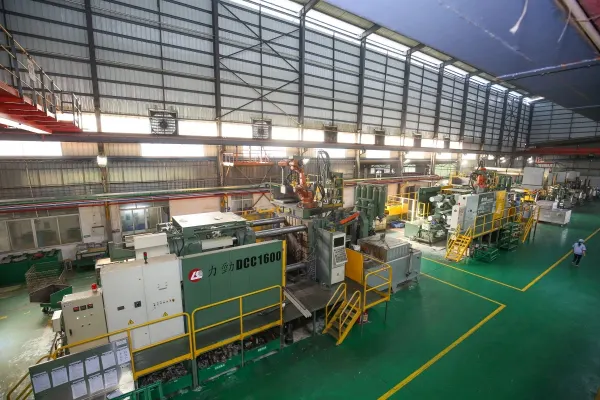
Over my 20 years in die casting, I’ve seen the automotive industry transform. The shift to electric mobility is the biggest change yet. It brings new challenges, especially for components that didn’t exist a decade ago. As an engineer who started on the factory floor and now consults with global Tier 1 suppliers, I’ve learned that success in this new era isn’t just about making a part. It’s about engineering a complete solution. Let’s explore what makes a manufacturer a true partner in the EV supply chain.
Key Components We Manufacture for Electric Mobility
Need a single source for critical EV parts? We produce motor housings, battery enclosures, and control units, which simplifies your supply chain with our specialized expertise and experience.
We specialize in high-pressure die casting for essential EV components. These include motor controller housings, onboard charger (OBC) housings, battery pack enclosures, and complex structural parts that are crucial for vehicle performance, safety, and efficiency in modern electric vehicles.
In my work leading new energy vehicle projects, the demand is always for parts that are lighter, stronger, and more complex. We don’t just cast metal; we create the protective shells for the brains and hearts of the vehicle. For a German customer, we developed a motor controller housing with integrated cooling channels and high airtightness to protect sensitive electronics. For another project in Canada, the focus was a lightweight yet robust battery enclosure. Each part has a unique job, and our process is tailored to meet those specific demands. The goal is always to deliver a component that integrates perfectly into the final assembly, ready for mass production without any surprises.
From Powertrain to Chassis Components
| Component | Primary Function | Key Manufacturing Requirement |
|---|---|---|
| Motor Controller Housing | Protects electronics, dissipates heat | High Airtightness, EMI Shielding |
| Battery Enclosure | Protects battery cells, provides structural integrity | Lightweight, High Impact Resistance |
| Onboard Charger (OBC) Housing | Manages charging, protects internal circuits | Excellent Thermal Management, Durability |
| Cast Structural Parts | Provides chassis strength and support | High Strength-to-Weight Ratio, Dimensional Accuracy |
Advantages of Aluminum Die Casting in EV Part Production
Tired of heavy, costly parts? Aluminum die casting delivers a lightweight, strong, and cost-effective solution for complex EV components, helping improve vehicle range and performance significantly.
Aluminum die casting is ideal for EVs because it produces lightweight, strong, and complex parts with excellent thermal conductivity. This method allows for high-volume production, tight tolerances, and integrated features like cooling channels, which reduces vehicle weight and improves efficiency.
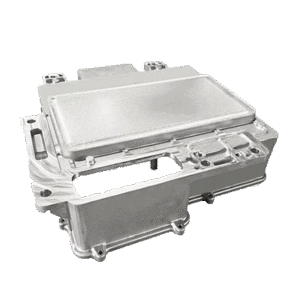
I remember working with a client who was struggling with the weight of a powertrain component. The original design was too heavy, which negatively impacted the vehicle’s projected range. By switching to high-pressure aluminum die casting, we were able to redesign the part completely. We integrated features that were previously separate pieces, which reduced assembly steps and potential points of failure. The final part was not only 30% lighter but also stronger and had better heat dissipation. This process is a game-changer for EVs, where every gram saved extends range and every watt of heat managed improves performance. It allows us to create intricate geometries that are impossible with other methods, giving designers the freedom to innovate.
Quality Standards: IATF 16949 and ISO-Certified Processes
Is your supply chain plagued by inconsistent quality? Working with an IATF 16949 certified partner ensures every component meets the strictest automotive standards for reliability and performance.
Compliance with IATF 16949 is non-negotiable for any serious EV parts manufacturer. This standard ensures robust quality management systems are in place, covering everything from design and development (APQP) to production (PPAP) and continuous improvement, guaranteeing part consistency and traceability.
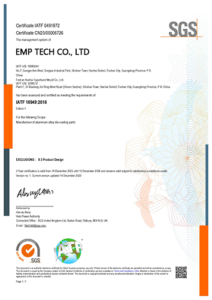
For Supplier Quality Engineers, documentation and process control are everything. I’ve been on both sides of the audit, and I know that a certificate on the wall is meaningless without a culture of quality on the factory floor. Our processes are built around the IATF 16949 framework. This means we use tools like DFM analysis, mold flow simulation, and rigorous control plans from day one. When a customer from the US needed a part with zero-leakage requirements, we established specific testing protocols and traceability for every single unit. This level of control isn’t extra work; it’s fundamental to what we do. It builds trust and ensures that the parts you receive today are identical to the ones you’ll get a year from now.
Integration of Lightweight Design and Thermal Management
Are your EV components overheating or adding too much weight? A skilled manufacturing partner integrates lightweighting and thermal management directly into the design, solving both problems at once.
In electric vehicles, lightweight design and thermal management are linked. Using thermally conductive aluminum alloys in die casting allows manufacturers to create parts with thin walls and integrated cooling channels, effectively managing heat from batteries and electronics without adding unnecessary mass.
A few years ago, we helped an Italian Tier 1 supplier develop an onboard charger housing. The challenge was to keep the electronics cool during fast charging while keeping the unit as compact and light as possible. My team and I used mold flow simulation to model how we could integrate thin, winding cooling channels directly into the housing’s structure. The final design was a single, complex aluminum part that served as both a structural casing and a highly efficient heat sink. This eliminated the need for a separate cooling plate, saving weight, cost, and assembly time. It’s this kind of integrated engineering—thinking about heat and weight from the very first design review—that unlocks major performance gains in electric mobility.
Collaboration with OEM and Tier 1 Supply Chains
Facing tight project deadlines and communication gaps with suppliers? True partnership means early collaboration, where your manufacturer works with your team from design to delivery.
Effective collaboration involves the EV parts manufacturer acting as an extension of the customer’s engineering team. This partnership starts with early DFM analysis to optimize design for manufacturability, ensuring a smooth transition from prototype to high-volume production, meeting tight project cycles.
From my experience, the most successful projects are the ones where we are involved early. I often visit customer sites to work directly with their design and procurement teams. This direct line of communication prevents costly mistakes. I recall a project where a preliminary design had features that were impossible to die cast effectively. By collaborating on a DFM analysis, we adjusted wall thicknesses and draft angles before any tooling was made. This saved the customer weeks of delays and thousands in tool modifications. For Purchasing Directors, this approach provides cost and timeline certainty. For engineers, it ensures the final part functions as intended. We see ourselves not just as a supplier, but as a trusted consultant committed to the project’s success.
Sustainability Practices and Recyclable Materials in Manufacturing
Concerned about the environmental impact of your supply chain? Leading manufacturers prioritize sustainability by using highly recyclable materials and optimizing processes to reduce waste and energy consumption.
Aluminum is a cornerstone of sustainable EV manufacturing because it can be recycled repeatedly without losing its properties. Responsible manufacturers supplement this by implementing energy-efficient casting processes, minimizing material waste, and using closed-loop systems to manage resources.
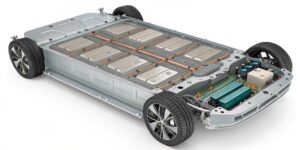
Sustainability is no longer an afterthought; it’s a core business requirement. The good news for our industry is that aluminum is one of the most sustainable materials available. The energy required to recycle aluminum is only about 5% of the energy needed to produce it from raw ore. At our facility, we are constantly working to improve our processes to be more efficient. This includes optimizing our furnace temperatures, reducing scrap rates through advanced process controls, and ensuring all excess material is captured for recycling. For our customers, this commitment means they are sourcing parts that not only improve vehicle efficiency but also contribute to a circular economy, helping them meet their own corporate sustainability goals.
Future Trends in Electric Vehicle Component Development
Wondering what’s next for EV components? The future lies in advanced alloys, larger and more integrated structural castings (gigacasting), and smarter manufacturing processes that deliver even greater performance.
Future EV components will be defined by larger, single-piece structural castings (gigacastings) that replace dozens of smaller parts. This trend, combined with new high-strength, high-conductivity aluminum alloys, will further reduce vehicle weight, simplify assembly, and lower overall production costs.
The pace of innovation is not slowing down. We are closely watching the rise of "gigacasting," where large sections of a car’s body are made from a single die-cast part. This simplifies manufacturing and improves structural rigidity. To support this, my team and I are exploring new aluminum alloys that offer higher strength and better thermal properties. Another area of focus is digitalization—using sensors and data analytics to create a "digital twin" of our die-casting process. This allows us to predict and prevent defects in real time, pushing quality and consistency to new levels. Staying ahead of these trends is how we will continue to provide value to our partners as the electric vehicle continues to evolve.
Conclusion
A top EV parts manufacturer combines deep technical expertise with a collaborative spirit, delivering lightweight, high-quality, and sustainable components that accelerate the future of electric mobility.


