What Automobile Parts Are Manufactured Using Die Casting?

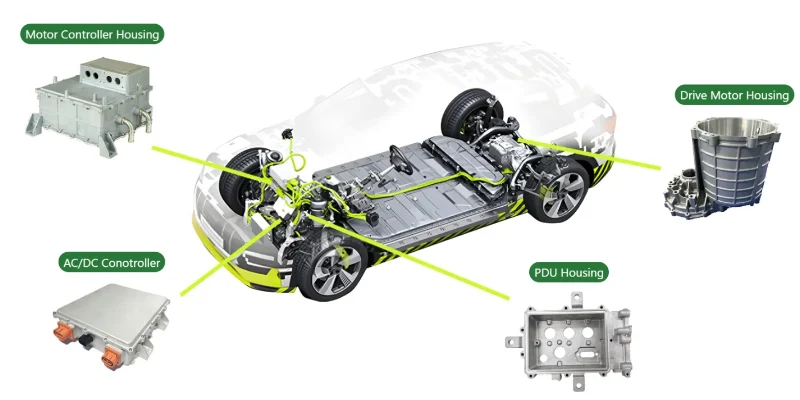
What Automobile Parts Are Manufactured Using Die Casting? Trying to choose the right manufacturing process for every part in a modern vehicle is a huge challenge. Make the wrong choice, and you end up with components that are too heavy or too expensive. Die casting1 is used to manufacture a wide range of automotive parts2, […]

What is the Role of Friction Stir Welding in Aluminum Die Casting for Electric Vehicles?

Your EV design requires large, leak-proof aluminum structures, but traditional welding creates weak points. These potential failures in battery trays and chassis components are a risk you cannot afford. Friction Stir Welding (FSW) joins die-cast aluminum1 parts without melting them, creating a solid-state bond2. This produces strong, leak-proof, and lightweight assemblies, which are essential for

How Do You Choose the Right Polishing Method for Aluminum Die Castings?

Your die-cast parts look rough and unfinished. This poor appearance can lead to customer rejection and hurt your brand’s reputation. Choosing the right polishing method1 is the solution. Selecting the right method depends on your needs. For cosmetics, manual or mechanical polishing2 is common. For a high shine, use electrolytic or chemical processes. For a

What Core Systems Define an Electric Vehicle’s Performance?

Evaluating EV suppliers is complex. Picking the wrong partner for a single component can undermine the entire vehicle’s performance. Understanding the core systems is the key to making smart decisions. The three core systems defining EV performance are the battery pack1, which provides energy; the electric motor2, which creates motion; and the power electronics3, which

How Do You Master Mold Temperature for Flawless Die Castings?

Incorrect mold temperature1 causes defects2 and ruins expensive tools. This instability costs you time and money, putting your entire project schedule at serious risk. Mastering mold temperature requires a balanced strategy. You must preheat the mold to an optimal starting temperature (around 180-280°C) and then use strategically designed cooling channels3 to extract heat consistently. This

How Can You Effectively Solve Porosity in Aluminum Die Castings?

Porosity1 in your die castings causes leaks and structural failures. These hidden voids force you to scrap expensive parts, threatening your entire project timeline and creating massive production headaches. Solving porosity requires a combination of strategies: optimizing mold venting2 and a vacuum system3, tightly controlling injection parameters4 and metal temperature5, using high-quality degassed aluminum6, and