

Using traditional heavy materials like steel in modern cars leads to lower fuel efficiency and sluggish performance. This results in higher running costs for drivers and makes it much harder for automakers to meet strict emissions and economy standards.
Many car parts are made of aluminum, including engine blocks, cylinder heads, and pistons to save weight and improve cooling. It is also used for body panels and structural frames to increase fuel efficiency. In EVs, it is essential for battery housings, and it is the standard material for radiators, wheels, and suspension components.
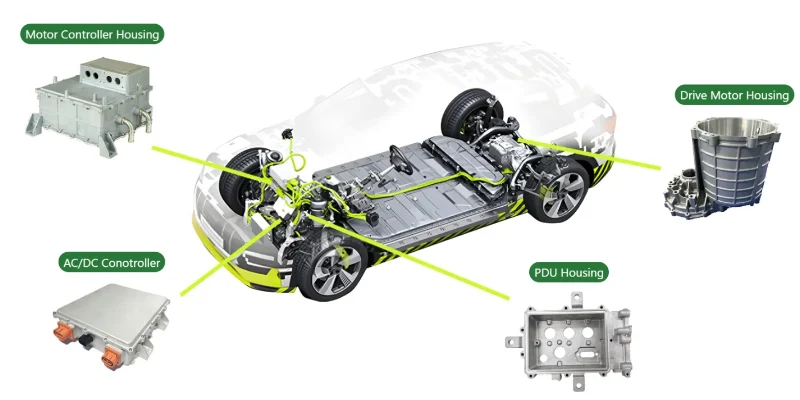
If you could peel back the skin of a modern car, you would find aluminum everywhere. Over my two decades in the die casting industry, I have had a front-row seat to this transformation. We’ve gone from aluminum being a specialty material to it being a fundamental building block of high-performance, efficient vehicles. It’s in the heart of the engine, it forms the structure of the car, and it’s absolutely critical to the electric vehicle revolution. Let’s take a tour of a modern car and look at exactly where you’ll find this lightweight, versatile metal and why it’s used there.
Why Is Aluminum Used for Car Engine Components?
Your engine design is too heavy, which hurts the car’s fuel economy and handling balance. The traditional cast iron block is durable but adds excessive weight over the front axle, compromising vehicle dynamics.
Aluminum is used for engine blocks, cylinder heads, and pistons primarily for weight reduction. An aluminum engine block can be up to 50% lighter than a cast iron equivalent. Its superior thermal conductivity also helps the engine cool more efficiently.
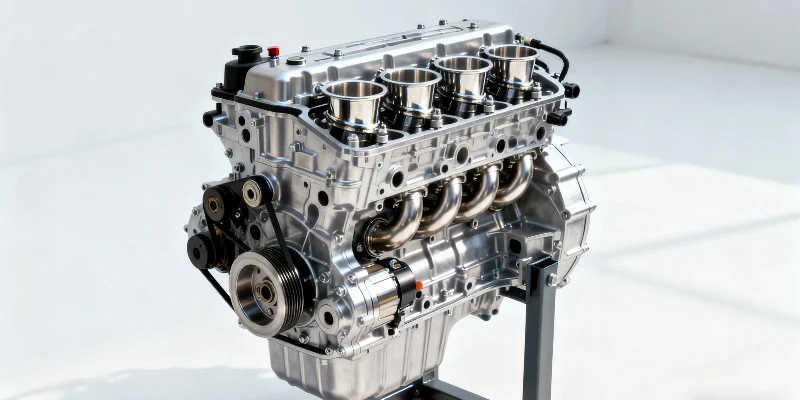
The move from cast iron to aluminum engine blocks was one of the biggest shifts I’ve witnessed. I remember working on one of the first high-volume V6 engine blocks1 to be made with high-pressure die casting2. It was an incredible challenge. The tool was massive and complex, with intricate water jackets and oil passages that all had to be perfectly formed. But the result was revolutionary. We created an engine block that was significantly lighter than its predecessor. This didn’t just improve fuel economy; it completely changed the car’s handling by reducing the weight over the front wheels3. On top of that, aluminum is much better at transferring heat than iron. This allowed the engineers to design a more efficient cooling system4, which in turn enabled them to get more performance out of the engine. Today, the aluminum engine block is a standard component of modern, efficient powertrain design.
How Is Aluminum Used in Car Body Panels and Frames?
You are tasked with reducing the overall weight of a new vehicle platform. The powertrain is already optimized, so you must now find weight savings in the vehicle’s core structure—the body and frame.
Aluminum is used for stamped body panels like hoods, doors, and trunk lids to reduce weight. More advanced vehicles use aluminum for the entire underlying structure, or "space frame," employing a mix of castings, extrusions, and sheets to create a light yet rigid chassis.
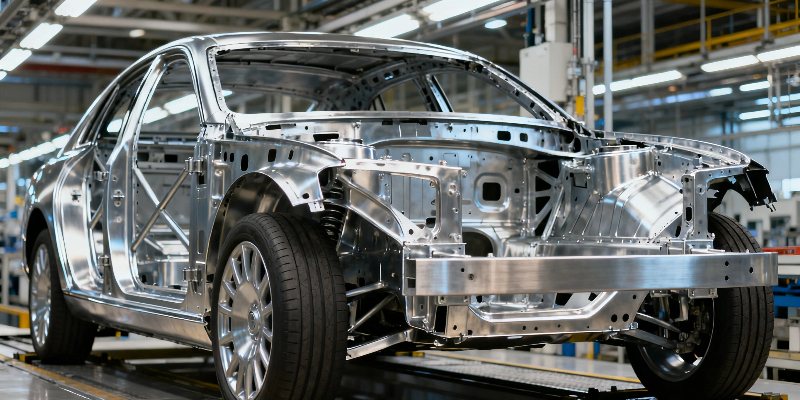
This is where you see the true versatility of aluminum. It’s not just one thing; it’s a whole system of materials. Automakers use large sheets of aluminum alloy5 to stamp out body panels6. A simple switch from steel to aluminum for the hood can save 10-15 kilograms immediately. But the real innovation is in the structure itself, what we call the "Body in White." In high-performance and luxury vehicles, you will often find a space frame7 made almost entirely of aluminum. This structure is like a skeleton, built from different aluminum forms. Extrusions are used for straight sections like rails, sheets are used for floors, and, in my area of expertise, complex castings8 and laser cutting are used for the connection points, or nodes, like the shock towers or engine cradles. These cast nodes are critical because they can be formed into complex shapes to join multiple extrusions at once, creating a very strong and stiff joint. This approach allows engineers to build a vehicle that is incredibly light, safe, and has superior handling dynamics.
What Role Does Aluminum Play in Electric Vehicle (EV) Battery Housings?
You are designing an electric vehicle, and the battery pack is the largest, heaviest, and most critical component. You need an enclosure that is lightweight, strong enough to protect the cells in a crash, and able to manage heat.
In EVs, aluminum is the essential material for battery housings. Large, die-cast aluminum trays provide structural protection for the battery cells, act as a crucial heat sink to manage temperature, and are lightweight to help maximize the vehicle’s range.
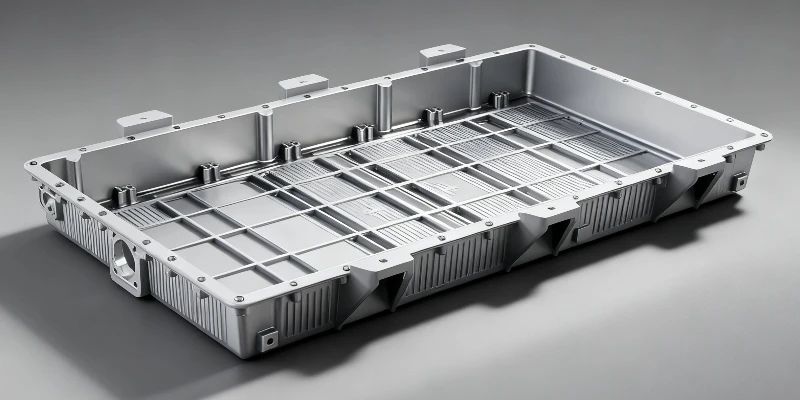
From my perspective as a die casting expert in September 2025, the EV battery enclosure is one of the most complex and critical parts we produce. This component has three jobs. First, it’s a safety cage for the battery cells, and it must be incredibly strong and rigid to protect them from impact. Second, it’s a key part of the vehicle’s structure, often forming the floor of the car. Third, and perhaps most importantly, it’s a thermal management system. I recently worked on a project to develop a liquid-cooled battery housing. We used advanced simulations to design a large, single-piece casting with intricate cooling channels running directly underneath the battery modules. This design allowed our customer to keep their battery at the optimal temperature, which is critical for both performance and long-term battery life. Steel is too heavy for this application, and plastics don’t offer the necessary strength or thermal conductivity9. Aluminum is the only material that can do all three jobs effectively.
Why Is Aluminum the Preferred Material for Car Radiators and Heat Exchangers?
Your vehicle’s cooling system needs to be highly efficient, reliable, and lightweight. You need a material that can quickly transfer heat from the coolant to the air without adding unnecessary weight.
Aluminum is the preferred material for radiators because of its excellent thermal conductivity, light weight, and corrosion resistance. Modern aluminum radiators are made using a brazing process that creates a strong, efficient, and compact heat exchanger.
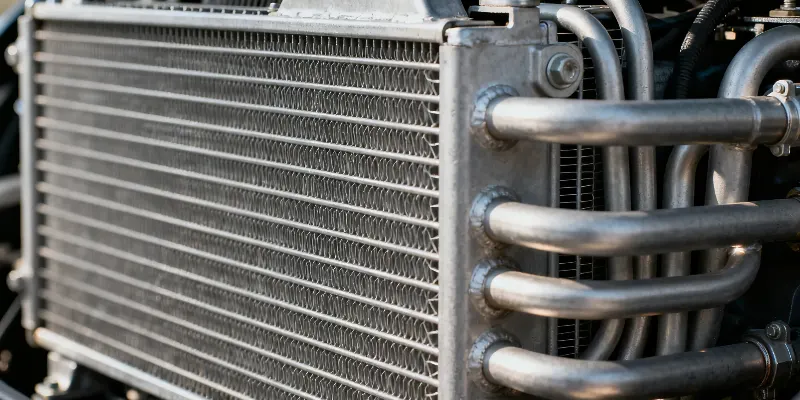
Heat exchangers are all about surface area and heat transfer, and this is another area where aluminum shines. For decades, car radiators were made of copper and brass. They worked well, but they were very heavy. The switch to aluminum in the 1980s and 90s was a game-changer. An aluminum radiator can provide the same or even better cooling performance at a fraction of the weight and often at a lower cost. The manufacturing process is fascinating. Thin aluminum fins are precisely stacked between aluminum tubes, and the entire assembly is put through a high-temperature oven in a process called brazing. This melts a thin layer of cladding on the aluminum, which flows into every joint and solidifies, creating a single, strong, and highly conductive unit. This technology is not just for the main engine radiator; it’s also used for heater cores, air conditioning condensers, and the coolers for transmission fluid and oil. In EVs, this same technology is used to cool the batteries and power electronics.
What Other Automotive Parts Benefit from Aluminum’s Lightweight Properties?
You are looking for every possible opportunity to reduce vehicle mass, especially "unsprung mass," to improve handling and ride quality. You have already addressed the engine and body; now you need to look at the chassis and wheels.
Many other parts benefit from aluminum, especially wheels and suspension components. Lightweight aluminum wheels reduce unsprung mass, which improves handling and ride comfort. Suspension parts like control arms and steering knuckles are also often made of forged or cast aluminum.
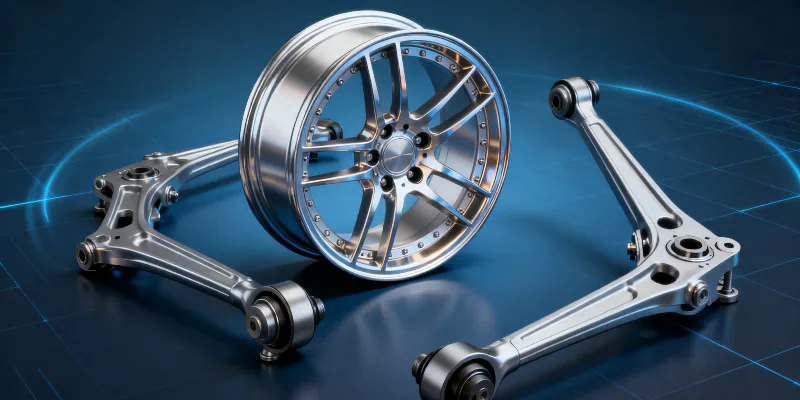
Reducing weight is always good, but reducing "unsprung mass"—the weight of everything not supported by the springs, like wheels, tires, and brakes—pays extra dividends. Lighter wheels are easier for the suspension to control, so they stay in better contact with the road. This improves grip, braking, and the overall ride quality. This is why aluminum alloy wheels are a standard feature on most modern cars, and high-performance vehicles often use even lighter forged aluminum wheels. The same principle applies to suspension components10. Switching from a stamped steel or cast iron control arm to a forged or cast aluminum one can save several kilograms per corner. This further improves the suspension’s responsiveness. Even brake calipers, traditionally made of heavy cast iron, are now often made from aluminum on performance and luxury vehicles to save weight and improve heat dissipation.
Conclusion
From the engine block to the body panels, and from the wheels to the critical battery housings11 in EVs, aluminum is a fundamental material in modern automotive design. Its use is key to creating lighter, safer, and more efficient vehicles.
Explore how aluminum engine blocks enhance performance and fuel efficiency in modern vehicles. ↩
Learn about the innovative manufacturing process that enables lightweight aluminum components. ↩
Find out how lightweight aluminum wheels improve handling and ride quality. ↩
Understand the critical role of cooling systems in maintaining engine efficiency. ↩
Explore the advantages of aluminum alloys for lightweight and durable automotive parts. ↩
Find out how aluminum body panels reduce weight and enhance vehicle efficiency. ↩
Understand the advantages of using a space frame structure in modern cars. ↩
Learn how complex castings improve the strength and efficiency of vehicle structures. ↩
Explore the importance of thermal conductivity in engine design and efficiency. ↩
Learn how aluminum suspension parts enhance responsiveness and reduce weight. ↩
Explore the critical role of aluminum in ensuring safety and efficiency in electric vehicles. ↩


