

Are you struggling to meet the intense demands for lighter, stronger, and more complex car parts? Outdated manufacturing methods just can’t keep up with the fast pace of the EV revolution.
In 2025, aluminum die casting will define car parts by enabling the mass production of lightweight structural components and complex thermal management systems. It combines strength, heat dissipation, and design flexibility into a single, cost-effective process.
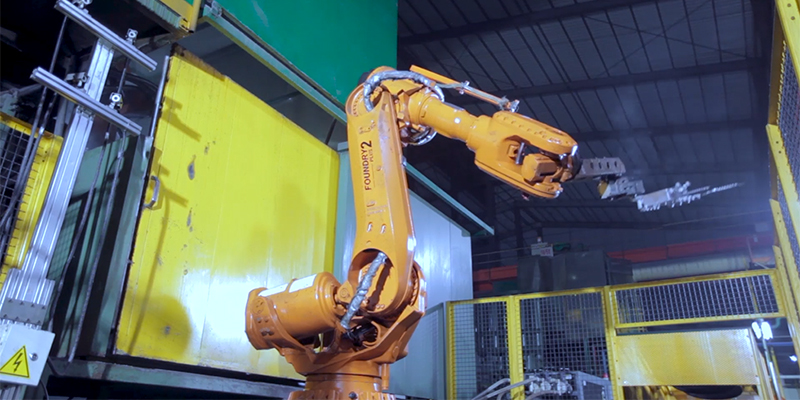
I have seen the automotive industry1 change more in the last five years than in the fifteen years before that. The push for electric vehicles2 has completely rewritten the rulebook. In the past, a part just had to be strong enough. Now, it has to be strong, incredibly lightweight to maximize battery range, and often serve multiple functions, like providing structure and cooling sensitive electronics at the same time. This is where modern die casting shines, and it’s where my team and I focus all of our energy. We help our customers make these new, challenging parts a reality.
Why is precision aluminum die casting so vital for automotive excellence?
Are inconsistent part dimensions causing major headaches and delays in your assembly line? These small errors can snowball into huge downstream costs, production halts, and even damaging product recalls.
Precision die casting is vital because it guarantees tight tolerances across millions of parts. This is essential for modern EV components where perfect fit is non-negotiable for safety, performance, and efficiency.
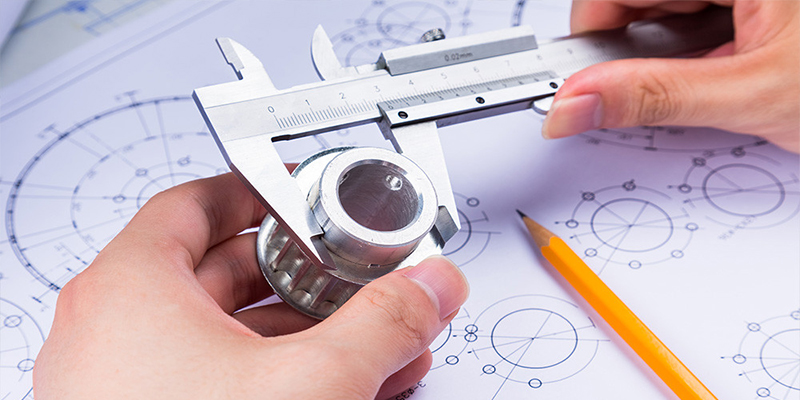
For a purchasing director or a quality engineer, precision is everything. It is the difference between a smooth assembly process and a production line nightmare. In the world of EVs, the stakes are even higher. I worked with an Italian customer on a motor controller housing where the flatness of the mounting surface for the circuit board had to be held to an incredibly tight tolerance. A slight deviation would compromise the thermal transfer, leading to overheating and failure. This is not just about parts fitting together; it is about the system performing reliably for the life of the vehicle.
The Link Between Precision and Function
| Component | Critical Precision Feature | Impact of Failure |
|---|---|---|
| Motor Housing | Bearing seat alignment | Premature bearing wear, noise, motor failure |
| Battery Enclosure | Flatness of sealing surfaces | Loss of IP rating, water ingress, fire risk |
| OBC Housing | Parallelism of coolant ports | Coolant leaks, electronic failure |
This level of precision comes from rigorous process control at every step—from monitoring the aluminum’s temperature to precisely managing the injection speed and pressure.
What makes mold design and die cast tooling advanced in 2025?
Are slow tooling development times putting your critical project schedules at risk? Falling behind in the fast-moving automotive market means losing your competitive advantage and missing key production deadlines.
Advanced tooling in 2025 uses extensive mold flow simulation to predict and solve potential casting defects before any steel is ever cut. This "digital twin" approach gets it right the first time, saving months of rework.
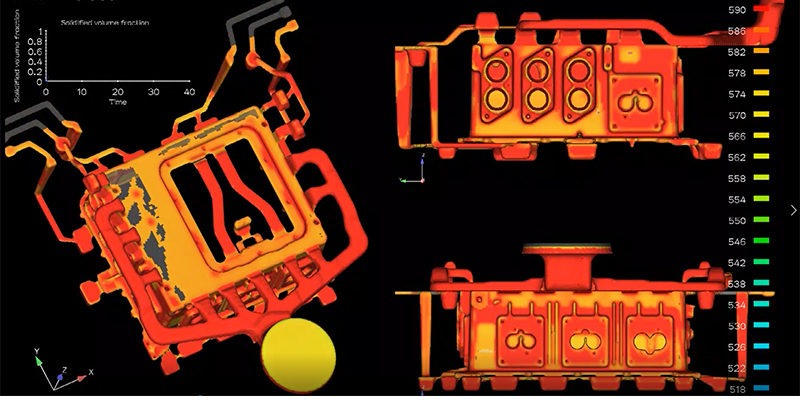
I remember earlier in my career when making a new die was a long process of trial and error. We would design the tool based on experience, run a sample, see the defects, and then spend weeks grinding and welding to fix the mold. Today, that approach is too slow and expensive. Before we order a single block of H13 tool steel, we build a complete digital version of the mold and the casting process.
The Simulation-Driven Approach
Using advanced software, we can simulate exactly how the molten aluminum will flow into the die. We can see:
- Where air might get trapped, causing porosity. We can then add vents or overflows in the design to prevent it.
- How the part will cool and shrink. This allows us to design the mold to compensate for shrinkage and avoid dimensional issues.
- If there are hot spots that will slow down the cycle time. We can then engineer more effective cooling channels right into the die to solve this.
This shift from a reactive to a predictive approach is what allows us to support the tight project cycles common in the EV industry.
Why aren’t CNC machining and surface treatment just afterthoughts?
Is your current supplier treating critical post-processing steps like an afterthought? This dangerous oversight can lead to parts that look fine but fail to meet critical tolerances or corrosion requirements in the real world.
They are not afterthoughts because they define the final fit, function, and durability of the component. CNC machining guarantees critical tolerances, while surface treatments provide essential protection against corrosion and wear.
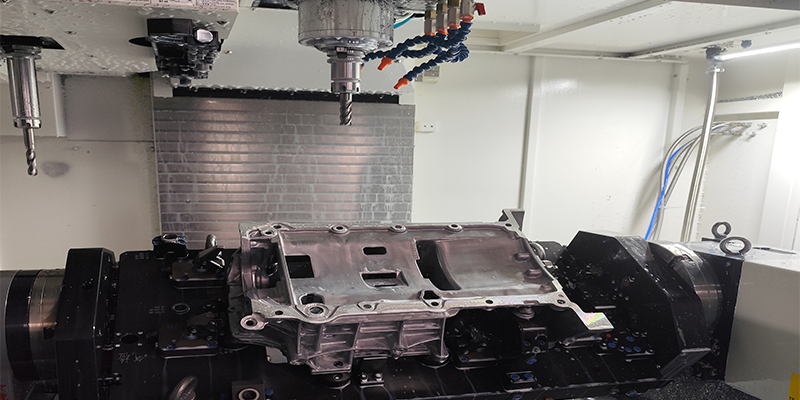
The casting process creates the near-net shape of the part, but the job is not finished. For almost every part we make, further processing is needed to make it ready for the assembly line. I always tell my customers that we need to plan the finishing steps from the very first DFM review3. For example, if a part needs a chromate conversion coating for corrosion resistance, we have to design features that allow it to hang properly on the coating line and drain completely.
An Integrated Finishing Process
Thinking about these steps from the beginning is key. They are an integral part of the manufacturing plan.
| Post-Process | Purpose | Common Application |
|---|---|---|
| CNC Machining | Achieve tight tolerances for critical features. | Sealing faces, bearing bores, threaded holes. |
| Anodizing | Improve hardness and corrosion resistance. | Parts exposed to harsh exterior environments. |
| Chromate Coating | Excellent corrosion protection and paint adhesion. | Housings, structural components, brackets. |
| Leak Testing | Ensure integrity for fluid or air containment. | Coolant housings, OBCs, inverter cases. |
A great casting can be ruined by poor machining or coating. We manage these processes as part of a single, integrated workflow.
How is friction welding enhancing automotive component durability?
Do you need to create complex hollow parts or join aluminum to steel? Traditional welding methods can create weak spots and are often unreliable for creating leak-proof seals on die castings.
Friction welding creates a solid-state, forged bond that is much stronger and more reliable than a traditional weld. This allows us to securely join different materials or create hollow parts without compromising strength or creating leak paths.
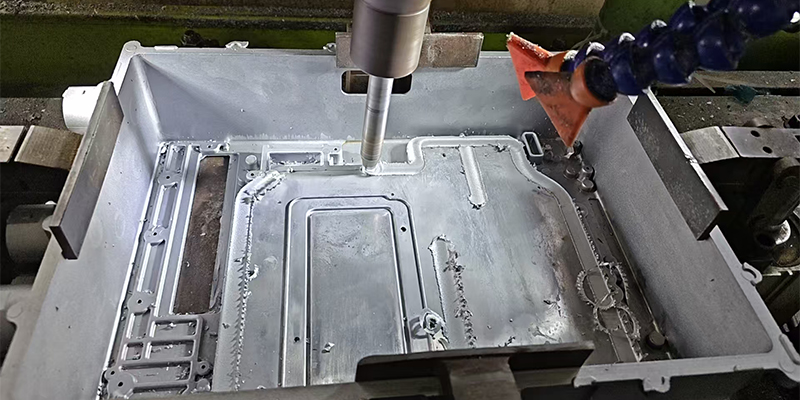
This is a technology that truly excites me as an engineer. Instead of melting two pieces of metal together, which can introduce all sorts of problems like porosity and cracking in the heat-affected zone, friction welding4 uses pressure and rotation. This generates intense heat right at the joint, making the metal soft and plastic-like. The two pieces are then forged together, creating a bond at the molecular level. The result is a joint that is as strong as the parent material itself.
The Advantage of a Solid-State Bond
I worked on a project with a Canadian customer who needed to produce a complex cooling component. It required a high-strength steel port to be permanently joined to a die-cast aluminum housing. They were worried about leaks and long-term durability. Traditional welding was not an option. We proposed using friction welding, and it was a complete success. The parts passed every single pressure and vibration test, and the bond was 100% reliable. This process opens up new design possibilities for creating lighter, stronger, and more complex multi-material components.
Why is round-the-clock support so critical for automotive OEMs?
Have you ever had a critical issue stop your production line while you desperately wait for a supplier in another time zone to wake up? The financial losses from those delays can be staggering.
It is critical because automotive production runs 24/7 across the globe. Immediate access to engineering expertise is essential to solve problems in real-time, keep assembly lines moving, and meet project deadlines without any costly delays.
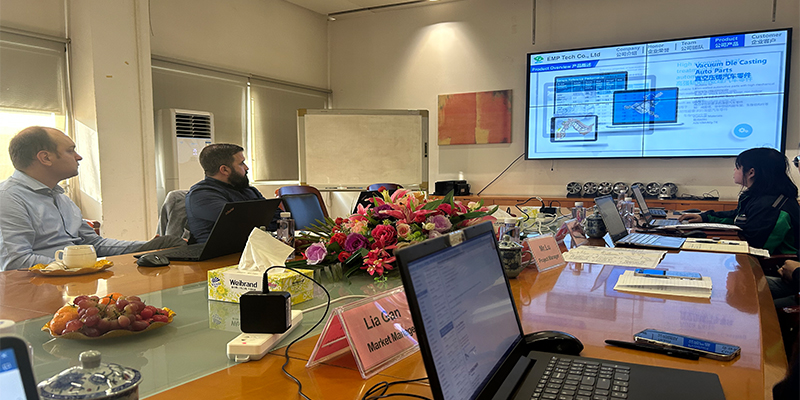
For the global Tier 1s and OEMs I work with, this is not a luxury; it is a basic requirement. Supply chains are complex and interconnected. A small quality question or a design clarification can bring a multi-million-dollar assembly line to a halt. My role often goes beyond just technical engineering; I act as a trusted point of contact who understands their urgency. When a customer in Germany sends me a file at the end of their day, it is the start of my morning. I can analyze their DFM, run a quick simulation, and have actionable feedback in their inbox before their team even arrives at the office the next day.
More Than a Supplier, We Are a Partner
This constant communication is about being proactive, not just reactive. It means sharing weekly progress reports, providing real-time access to quality data, and ensuring that the engineering and procurement teams are always perfectly aligned. This seamless flow of information across continents and time zones is what builds the trust necessary to handle the most demanding automotive projects.
Conclusion
Success in 2025 requires a partner who delivers precision parts with advanced technology and provides constant expert support, ensuring your project succeeds from the first design to the final assembly.
Stay updated on the latest trends shaping the future of automotive manufacturing. ↩
Explore the impact of electric vehicles on manufacturing processes and technologies. ↩
Learn how Design for Manufacturing (DFM) reviews can streamline production processes. ↩
Explore how friction welding creates stronger, more reliable joints in complex components. ↩


