

Your electric vehicle’s power inverter1 gets incredibly hot. If that heat isn’t managed, performance drops, reliability is compromised, and you risk a catastrophic failure on the road, a constant worry for engineers.
Die casting is the best choice because it produces lightweight, strong aluminum enclosures2 with integrated cooling features3. This process is perfect for dissipating heat, shielding electronics, and enabling cost-effective mass production, meeting all key requirements for modern electric vehicles.
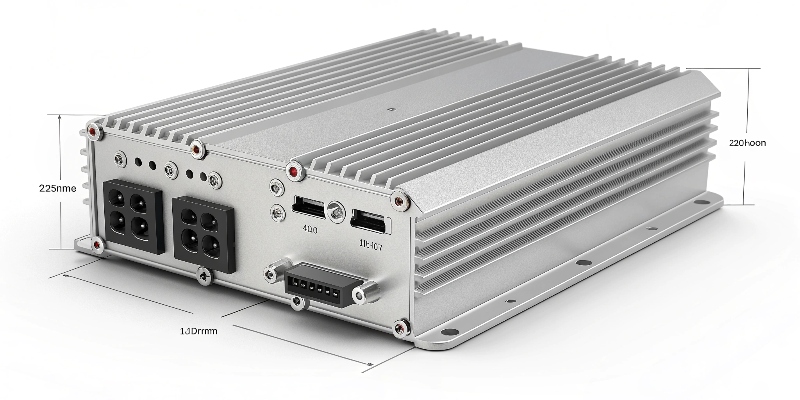
In my work helping Tier 1 automotive suppliers, the power inverter enclosure is one of the most critical components we develop. It’s far more than just a metal box. It’s a high-performance system that has to protect, cool, and support some of the most expensive and sensitive electronics in the entire vehicle. The design and manufacturing process must be perfect. Aluminum die casting has become the go-to solution because it uniquely satisfies all the demanding, and often conflicting, requirements of this application. Let’s break down exactly what makes this combination of material and process so successful.
What Does a Power Inverter Enclosure Actually Do?
The power inverter is the electronic brain of the EV motor. Without a proper enclosure, these sensitive, high-voltage components4 are exposed to vibration, water, and interference, which can cause total system failure.
A power inverter enclosure physically protects the electronics, provides crucial electromagnetic (EMI) shielding, dissipates waste heat, and ensures a watertight seal (IP67 rating5). It also acts as the rigid mounting structure for the entire assembly within the vehicle.
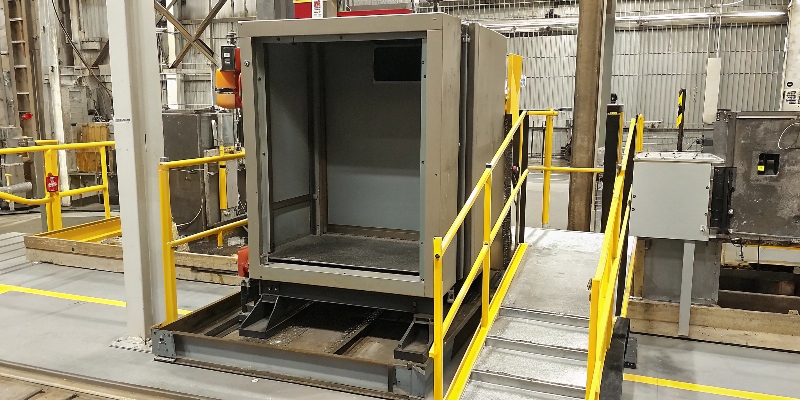
The enclosure serves multiple critical functions simultaneously. First, it’s a suit of armor. It provides robust structural protection against the constant vibration and shock of the road environment. Second, it’s a sealed container. We design precise grooves for gaskets that ensure the enclosure meets stringent IP67 or even IP69K ratings, keeping dust and high-pressure water out. Third, it acts as a Faraday cage. The high-frequency switching of the power modules inside creates a storm of electromagnetic interference6 (EMI). The conductive aluminum enclosure contains this noise, preventing it from disrupting other sensitive electronics in the vehicle, like the radio or control systems. Finally, and perhaps most importantly, it acts as a heat sink. It draws damaging heat away from the power electronics, ensuring the system operates reliably. A failure in any of these roles would lead to a breakdown, and that’s a scenario my customers cannot afford.
Why Use Aluminum Die Casting for These Enclosures?
You need a manufacturing process that can deliver strength, complex features, and high thermal conductivity7. Fabricating from sheet metal is too slow, heavy, and can’t integrate the features you need for a modern inverter.
Aluminum die casting creates strong, lightweight parts with complex integrated features—like cooling channels, sealing grooves, and mounting bosses—in a single, fast process. It combines excellent thermal conductivity with the repeatability needed for mass production.
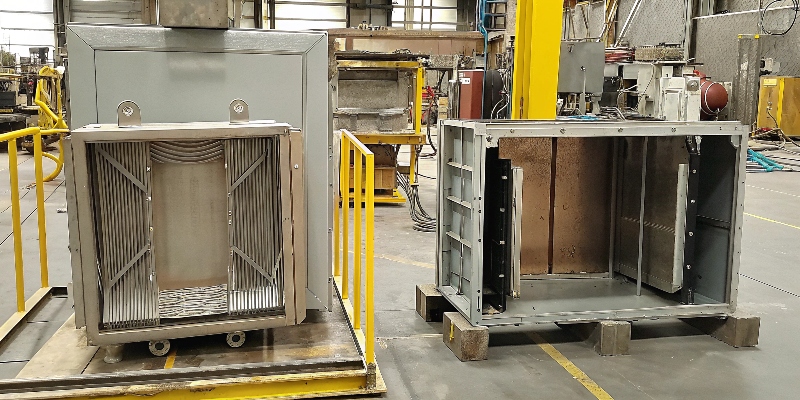
Die casting is the perfect match for this application because it solves so many problems at once. The biggest advantage is integration. Instead of having a separate housing, a bolted-on heat sink, and multiple brackets, we can design and cast a single, unified component that does everything. This reduces the part count, simplifies the assembly line, and eliminates potential points of failure, like loose bolts or leaking seals. The high-pressure process allows us to produce parts with excellent "net-shape" capability, meaning they come out of the tool very close to their final form. This drastically reduces the need for expensive and time-consuming CNC machining8. We only need to machine the most critical surfaces, like the gasket grooves or the mounting pads for the electronics. For a purchasing director, this combination of integration and reduced secondary operations translates directly to a lower total cost and a more reliable supply chain.
How Do These Enclosures Manage So Much Heat?
The power modules inside an inverter generate intense, localized heat. If this heat isn’t removed quickly, the electronics will overheat and fail, leaving the vehicle stranded on the side of the road.
Die-cast aluminum enclosures manage heat through their excellent thermal conductivity, combined with integrated cooling features. These can be external fins for air cooling or, more commonly, complex internal channels for high-efficiency liquid cooling systems.
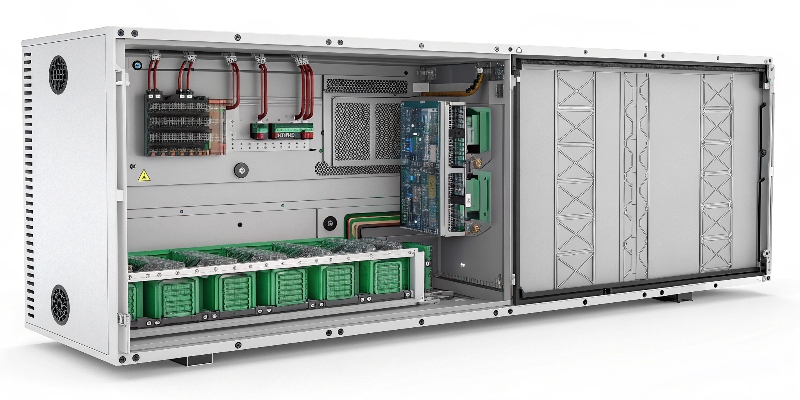
This is where the engineering gets really interesting. The power modules, often IGBTs or SiC modules, are the source of the heat. They are mounted directly onto a flat, precision-machined surface inside the die-cast enclosure. The aluminum’s natural thermal conductivity then pulls the heat away from these components. For simpler, lower-power inverters, a set of cast-in fins on the outside of the enclosure might be enough to dissipate this heat into the surrounding air. However, for most modern, high-performance EVs, we need liquid cooling. Using advanced die casting techniques, we can cast complex, snake-like channels directly into the base of the enclosure. Coolant is then pumped through these channels, providing a highly efficient way to absorb and carry away large amounts of heat. This level of thermal integration is a core focus of my work; it’s a design challenge that die casting is uniquely equipped to solve.
What Are the Design Keys for Thin Walls and Sealing?
You need a lightweight enclosure, but the walls can’t be so thin that they become weak or difficult to cast. At the same time, the sealing surfaces must be perfectly flat and precise to guarantee a waterproof seal.
Successful design involves using mold flow simulation to ensure thin walls (typically 2.5-3.0mm) fill completely. For sealing, we design robust flanges with gasket grooves that can be post-machined to achieve the required flatness for a reliable IP67 seal.
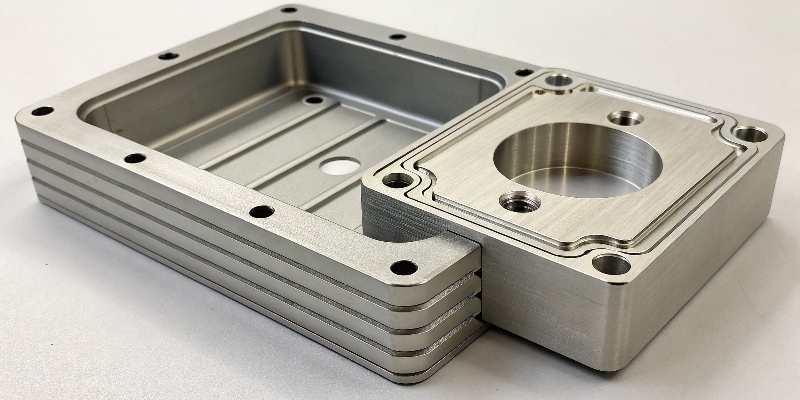
Balancing weight reduction with manufacturability is a constant discussion I have with our customers’ design engineers. They want the lightest part possible, which means thin walls. We use sophisticated mold flow simulation software to predict exactly how the molten aluminum will flow into the die. This allows us to optimize the wall thickness, typically in the 2.5mm to 3.0mm range, ensuring the cavity fills completely without defects. We also add small ribs and radiused corners to add strength exactly where it’s needed without adding unnecessary mass. For sealing, precision is everything. While die casting is very accurate, the high pressures involved can cause minor distortion over a large flange. To guarantee a perfect seal, we design a solid, stable flange with a well-defined U-shaped groove for the gasket. After casting, this entire flange surface is lightly machined in a single CNC pass to achieve a flatness tolerance of within 0.1mm, ensuring the gasket compresses evenly and creates a perfect, life-long seal.
How Do You Protect the Enclosure from Corrosion?
The enclosure is often mounted low on the vehicle, where it is constantly exposed to road salt, water, and gravel. You need a surface finish that can withstand this brutal environment for the entire life of the vehicle.
We protect the enclosure using a multi-stage surface treatment process. This typically involves a chromate conversion coating for adhesion and primary corrosion resistance, followed by a durable powder coat or e-coat for a tough, protective outer layer.
A raw aluminum casting has good natural corrosion resistance9, but it’s not enough for the harsh underbody environment of a modern car. Supplier Quality Engineers I work with are very strict about meeting OEM salt spray test requirements, which can be up to 1,000 hours. To meet these standards, we specify a robust coating system. The first step is a chemical pre-treatment, usually a chromate or non-chrome conversion coating. This microscopically etches the surface and deposits a thin, inert layer that provides excellent corrosion resistance and acts as a perfect primer for the topcoat. The second step is applying the final protective layer. Most often, this is a tough powder coat, which is electrostatically applied as a dry powder and then baked to form a hard, durable, plastic-like shell. This combination provides a two-layer defense that easily withstands corrosion, chemical exposure, and stone chipping, ensuring the enclosure protects the electronics for decades.
How Efficient Is Die Casting for Mass Production?
Your project requires producing 200,000 inverter units per year at a competitive price. You need a manufacturing process that is fast, highly repeatable, and minimizes labor to meet your cost and volume targets.
High-pressure die casting is extremely efficient for mass production. With automated cells and fast cycle times (often 60-120 seconds per part), it can produce hundreds of thousands of identical units annually with very low ongoing labor costs.
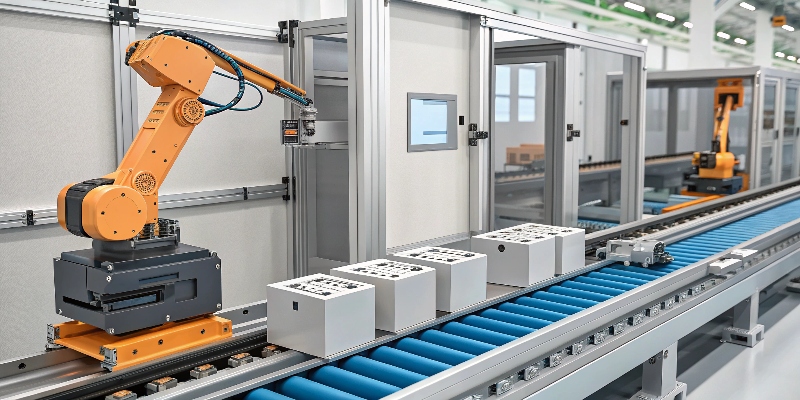
This is where die casting really excels and why it’s the standard for the automotive industry. Once the initial investment in the hardened steel tool is made, the per-part cost becomes very low at high volumes. Our production cells are highly automated. A large robot extracts the hot casting from the machine, a second robot sprays the die with lubricant to prepare it for the next shot, and a third robot might handle trimming or place the part on a conveyor. This level of automation allows a single cell to run 24/7 with minimal human intervention. The cycle time for a complex inverter housing can be as fast as 90 seconds. When you do the math, a single tool can produce over 250,000 parts per year. This speed, repeatability, and low labor content are exactly what an OEM’s procurement department needs to build a business case for a new high-volume vehicle platform. It’s a scalable and predictable process.
How Do You Ensure Every Enclosure is Perfect?
An invisible crack or a tiny porous spot in a single enclosure could lead to a leak and a multi-thousand-dollar warranty claim. You need a process with strict quality control to ensure 100% reliability.
We ensure quality through a multi-layered approach: in-process monitoring of casting parameters, 100% leak testing for every part, CMM dimensional checks, and X-ray inspection of critical areas to guarantee structural integrity and prevent porosity defects.
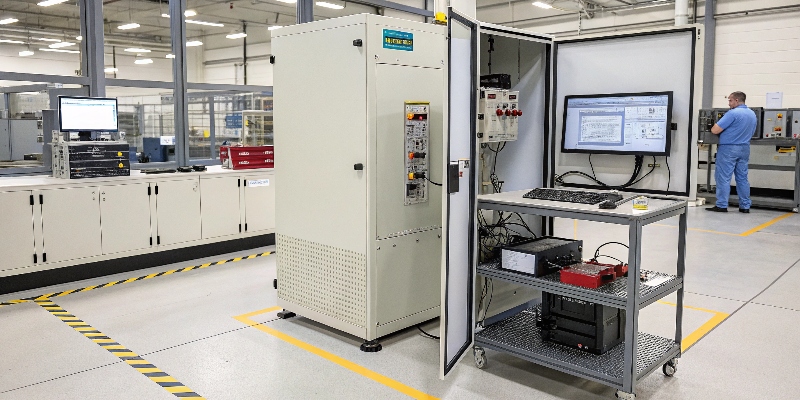
For a critical component like a power inverter enclosure, there is no room for error. Quality cannot be an afterthought; it must be built into every step of the process. For me and my team, this starts with process control. We monitor over 50 parameters on the die casting machine in real-time for every single shot—metal temperature, injection speed, pressure, and so on. Any deviation outside our control limits triggers an alarm. After casting, every single enclosure goes through a 100% automated leak test. The part is sealed in a fixture, pressurized with air, and sensitive instruments detect any drop in pressure, which would indicate a leak. We perform regular dimensional checks on a Coordinate Measuring Machine (CMM) to ensure all features are within the specified tolerances. Finally, for critical structural areas, we use X-ray inspection to look inside the casting for any hidden porosity. This comprehensive testing is non-negotiable for my automotive customers. It provides the documented proof they need to trust that every part is perfect.
Conclusion
Aluminum die casting is the definitive solution for EV power inverter enclosures. It delivers the essential combination of thermal management, lightweight strength, precise sealing, and the high-volume efficiency required by global OEMs.
Understanding the function of a power inverter is crucial for grasping its importance in EVs. ↩
Learn about the properties of aluminum that make it ideal for electronic enclosures. ↩
Find out about innovative cooling solutions that enhance electronic performance. ↩
Understand the significance of high-voltage components in modern electronics. ↩
Learn about the significance of IP ratings in protecting electronic devices. ↩
Understanding EMI is key to ensuring the reliability of electronic systems. ↩
Discover how thermal conductivity affects the performance of electronic components. ↩
Understand the role of CNC machining in achieving precision in manufacturing. ↩
Discover methods to enhance corrosion resistance for longevity in harsh environments. ↩


