

Ignoring the motor housing cover1‘s design can lead to overheating2, contamination3, and premature failure. This oversight jeopardizes the motor’s reliability, increases warranty claims, and ultimately harms your product’s reputation.
The motor housing cover is critical because it protects internal components, provides structural integrity, and plays a vital role in heat dissipation. A well-designed cover, often made from die-cast aluminum, is essential for the motor’s efficiency, longevity, and overall performance.
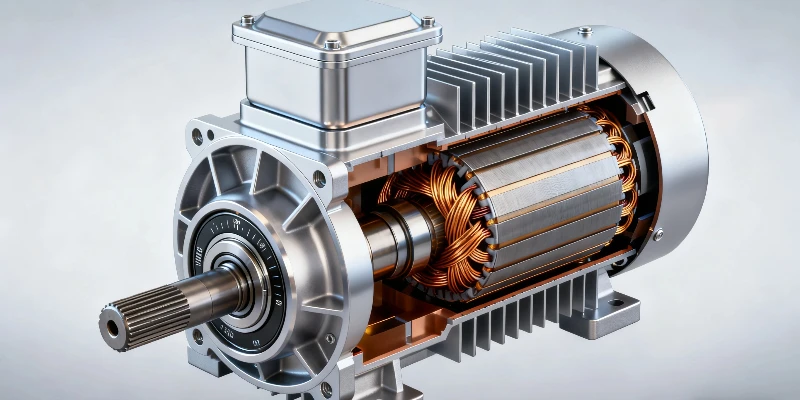
Over my two decades in the automotive and die casting industries, I’ve seen firsthand that the "box" a motor comes in is just as important as the electronics inside. The housing cover, often called an end bell or end shield, isn’t just a lid. It’s an engineered component with multiple critical jobs. A poorly designed cover can cause a perfectly good motor to fail, while a great one can unlock higher levels of performance and reliability4. Especially in the demanding world of electric vehicles5, the housing cover has evolved into a sophisticated, multifunctional system. Let’s dive into why this component is so much more than just a simple cover.
What Is the Purpose of a Motor Housing Cover in Electric Motors?
You assume the motor cover is just a simple shield, overlooking its more critical functions. This can lead to design choices that fail to account for bearing alignment6, sealing, and structural support, causing reliability issues down the line.
The primary purpose of a motor housing cover is to protect the internal components from contaminants like dust and moisture. It also provides precise mounting for the rotor bearings, ensures structural rigidity, and often serves as a mounting point for the entire motor.
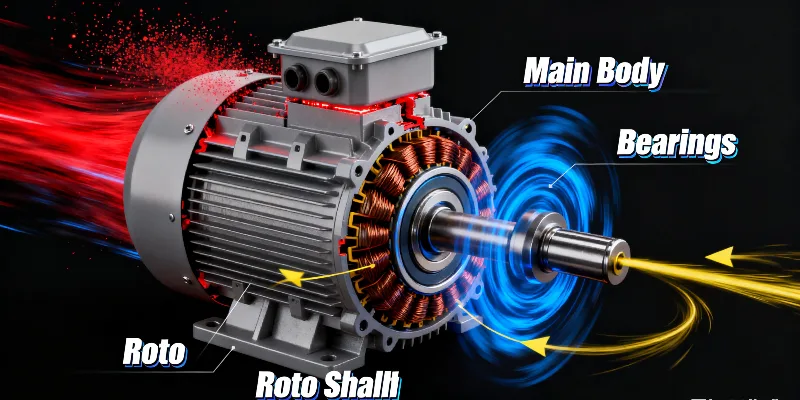
When I started as a technician, I learned quickly that the motor cover is a high-precision part. Its most basic job is to seal the motor. It keeps dirt, water, and other contaminants out, which would quickly destroy the sensitive windings and bearings inside. But its mechanical role is arguably more important. The cover houses the bearing that supports one end of the spinning rotor. The location and alignment of this bearing pocket must be perfect, controlled to within a few microns. Any misalignment will cause vibration, noise, and rapid wear, leading to motor failure. I once worked on a case where a motor was failing prematurely in the field. After a detailed analysis, we traced the problem back to a tiny dimensional error in the bearing pocket on the housing cover. That small flaw created a massive reliability problem. This is why we hold the geometric tolerances7 on these covers so tightly; the long-term performance of the motor depends on it.
Which Materials Are Commonly Used for Motor Housing Covers?
You need to select a material for a motor cover, but the choices seem overwhelming. Picking a material that is too heavy, corrodes easily, or can’t handle heat will compromise the motor’s performance and durability.
The most common materials are aluminum alloys, cast iron, and steel. Aluminum is favored for modern, high-performance applications due to its light weight and excellent thermal conductivity. Cast iron is used for heavy-duty industrial motors requiring high strength and vibration damping.
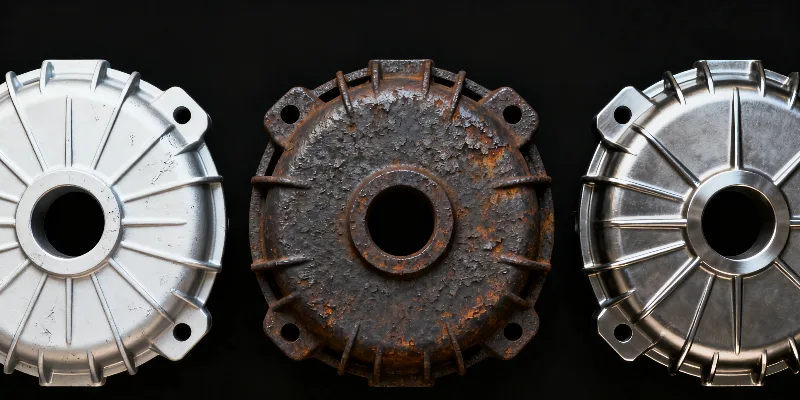
The material choice tells you a lot about the motor’s intended job. For the heavy-duty industrial motors that are bolted to a factory floor, cast iron is a fantastic choice. It’s incredibly strong, rigid, and its sheer mass helps to dampen vibrations, leading to quieter operation. You’ll also see fabricated steel covers on some general-purpose motors where cost is the primary driver. However, in my world of automotive and high-performance applications8, aluminum is king. The aluminum alloys9 we use in die casting are nearly three times lighter than cast iron and have four times the thermal conductivity. For an electric vehicle, where every kilogram of weight affects the battery range and every watt of waste heat must be removed, aluminum isn’t just a good choice; it’s the only logical choice. It provides the necessary strength and protection at the lowest possible weight while actively helping to keep the motor cool.
How Does Aluminum Die Casting Improve Motor Housing Cover Quality?
Your current manufacturing process10 for motor covers results in inconsistent quality, high scrap rates, and costly secondary operations. You need a process that can deliver complex, precise parts at a high volume and a competitive cost.
Aluminum die casting produces lightweight, complex, and highly precise motor housing covers with excellent repeatability. The high-pressure process allows for thin walls, integrated features like cooling fins, and a smooth surface finish, minimizing the need for secondary machining.
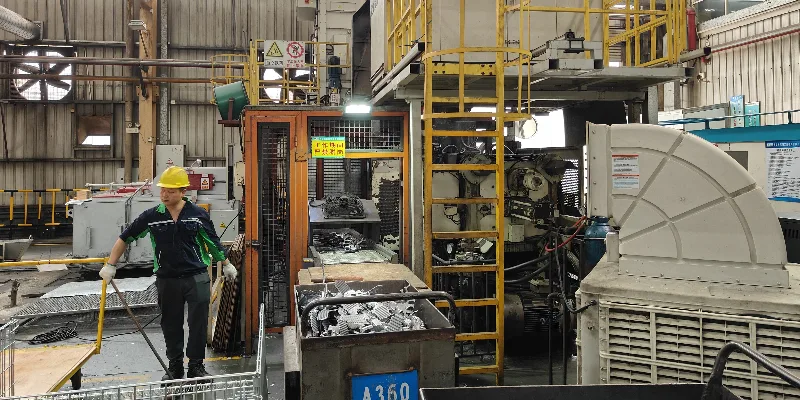
Die casting is the perfect manufacturing process for modern motor covers, and it’s where my team and I specialize. The process allows us to combine multiple features into a single, elegant part. For example, instead of a simple, flat cover, we can cast one with intricate external fins to increase the surface area for air cooling. We can integrate mounting bosses, support ribs, and even shielding walls directly into the casting. I recently worked on a cover for an EV motor where we were able to cast in the channels for a liquid cooling circuit. This level of geometric complexity would be incredibly expensive and time-consuming to achieve with machining alone. Because we inject the molten aluminum under extreme pressure, it fills every tiny detail of the steel die. This gives us exceptional dimensional accuracy and part-to-part consistency, which is critical for features like the bearing pocket and sealing surfaces. It’s the key to making millions of high-quality, lightweight, and thermally efficient motor covers.
What Role Does the Motor Housing Cover Play in Heat Dissipation?
Your motor is overheating, limiting its performance and threatening its lifespan. You are looking for ways to improve cooling, but you’ve overlooked the housing cover as part of the solution.
The motor housing cover acts as a critical heat sink. It conducts heat away from the front-end windings and bearings and dissipates it into the surrounding air. In many designs, the cover features cooling fins or integrated liquid cooling channels to maximize this effect.
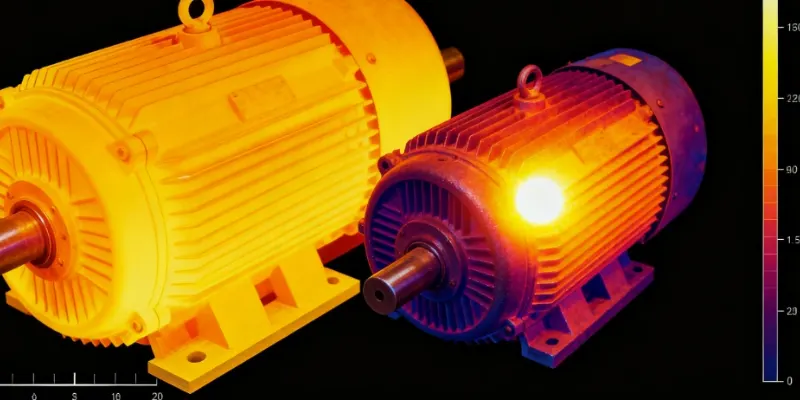
Waste heat is the enemy of an electric motor. It degrades the winding insulation and can cause the bearings to fail. While the main body of the motor housing does the heavy lifting for cooling, the cover plays a vital supporting role. It’s in direct contact with the main housing and is often located near the front-end windings, which are a major source of heat. By making the cover from a highly conductive material like aluminum, we turn it into another radiator for the motor. I worked with an engineering team that was trying to get more power out of a compact motor for an electric motorcycle. The motor was hitting its thermal limit. We redesigned the simple, flat housing cover into a new die-cast version with deep, optimized cooling fins. This change alone increased the surface area of the motor by nearly 15% and dropped the peak operating temperature by 10 degrees Celsius. This allowed them to increase the motor’s power output without changing any of the internal components.
What Future Trends Are Influencing Motor Housing Cover Development?
You are designing the next generation of electric motors and need to stay ahead of the curve. You need to know how materials, manufacturing, and design trends are evolving to meet future performance and sustainability demands.
As of late 2025, the key trends are lightweighting, thermal management, and integration. This is driving the development of advanced, high-strength aluminum alloys, an increased use of liquid-cooled covers, and designs that integrate mounting and electronic features directly into the casting.
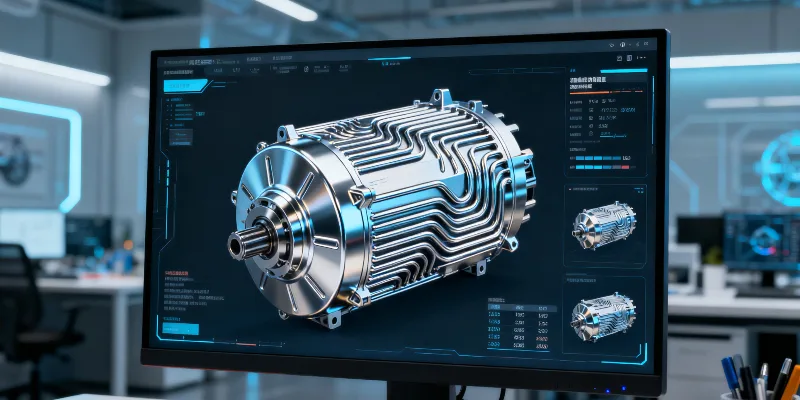
The motor housing cover of the future will be an even more sophisticated and integrated component. The push for higher power density in EVs means we need to manage more heat in smaller spaces. This is leading to a major shift from air cooling to liquid cooling, and we are seeing more and more designs where the cooling channels are cast directly into the cover itself. Material science is also playing a huge role. We are working with new aluminum alloys that are stronger and lighter than ever before, some of which don’t even require traditional heat treatment, which simplifies the supply chain and saves energy. The other major trend is integration. Why have a separate bracket to mount the motor when you can design the mounting features directly into the cover? Why have a separate shield for the electronics when you can cast it in? The goal is to create a single, multifunctional component that is lighter, stronger, and more cost-effective11 than an assembly of separate parts. This approach, enabled by advanced die casting and simulation, is the future of motor design.
Conclusion
The motor housing cover is far more than a simple lid; it is a critical engineering component that ensures protection, provides structural precision, and is essential for thermal management12, directly impacting an electric motor’s performance and reliability.
Understanding the significance of the motor housing cover can enhance your knowledge of electric motor performance. ↩
Explore how overheating can lead to motor failure and ways to prevent it. ↩
Learn about the risks contamination poses to motor longevity and reliability. ↩
Explore the connection between performance and reliability for electric motor success. ↩
Explore the critical role of motor housing covers in the performance of electric vehicles. ↩
Understanding bearing alignment can help improve motor reliability and efficiency. ↩
Understanding geometric tolerances can help ensure the reliability of motor components. ↩
Learn about the requirements and challenges of high-performance electric motor applications. ↩
Explore the benefits of aluminum alloys for lightweight and efficient motor designs. ↩
Learn about the most effective manufacturing processes for high-quality motor components. ↩
Discover strategies for reducing costs while maintaining quality in motor housing design. ↩
Understanding thermal management is crucial for optimizing motor performance and lifespan. ↩


