

Are your die-cast parts failing to meet expectations? A single mistake in the process can lead to costly defects, delays, and project failure. Understanding the core factors is essential.
Success in aluminum die casting hinges on three pillars: selecting the right alloy, engineering a smart mold with precise thermal management, and maintaining strict control over injection parameters. These elements together determine the part’s final quality, performance, and cost.
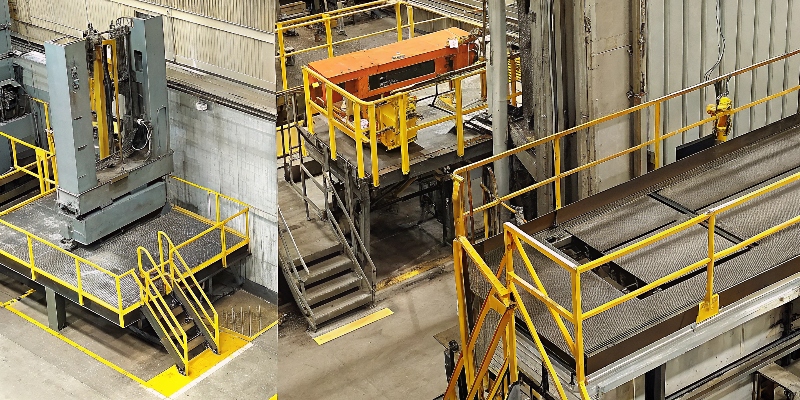
After more than 20 years on the shop floor and in meeting rooms with clients, I’ve seen projects succeed brilliantly and fail spectacularly. The difference almost always comes down to how well these fundamental factors were managed from the very beginning. A Tier 1 supplier from Germany once came to us with a part that was cracking under stress. Their previous supplier blamed the design. We looked at the material certificate and found they were using the wrong alloy for the application. A simple but costly mistake. At EMP Tech, my team and I start every project by reviewing these key considerations to build a solid foundation. This avoids problems later and ensures we deliver parts that work, every time.
How does alloy selection affect mechanical properties?
Choosing the wrong alloy means your parts could fail in the field. This leads to warranty claims, recalls, and serious safety concerns. Making an informed choice is your first line of defense.
The alloy directly determines a part’s strength, ductility, corrosion resistance, and thermal conductivity. For example, A380 is a versatile, cost-effective choice for many applications, while AlSi10Mg offers superior elongation for structural parts requiring strength.
The selection of the aluminum alloy is the starting point that defines the part’s entire lifecycle. It’s not a one-size-fits-all decision. The most common alloy you’ll see is A380 (or its Japanese equivalent, ADC12). It is the workhorse of our industry because it flows well in the mold, has good mechanical properties1, and is very cost-effective2. It’s perfect for housings and general-purpose components. However, for a structural part on an electric vehicle that needs to absorb energy in a crash, A380 would be too brittle. In that case, we would recommend an alloy like AlSi10Mg3. This alloy has excellent ductility and can be heat-treated to achieve very high strength, making it ideal for safety-critical components. The right choice depends entirely on the part’s function.
| Alloy | Key Characteristic | Typical Application |
|---|---|---|
| A380 / ADC12 | Excellent castability, cost | General housings, engine parts |
| AlSi10Mg | High ductility, heat-treatable | Structural parts, chassis components |
| AlSi9Cu3 | Good balance of properties | Complex automotive parts |
Why is mold design so critical for thermal management?
A poorly designed mold leads to defects like porosity and shrinkage. This results in weak, leaky parts and high scrap rates. Intelligent thermal management is the solution to this problem.
Mold design is not just about the part’s shape. It controls how the molten aluminum cools. Proper cooling channel placement ensures uniform solidification, preventing internal stress, warping, and porosity. It is essential for dimensional stability and mechanical strength.
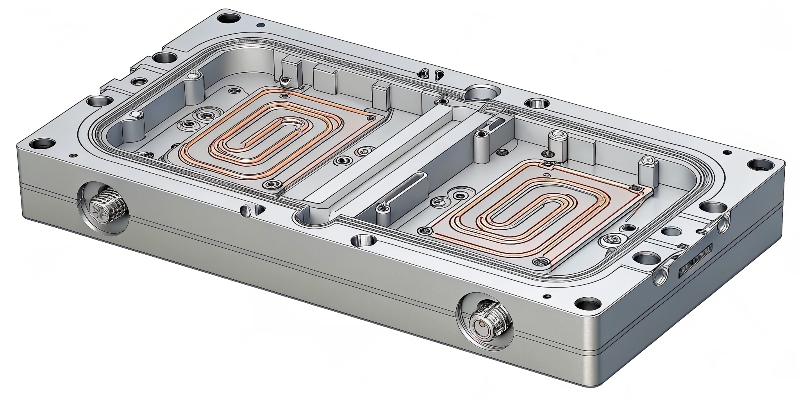
I often tell our junior engineers that we are not just casting a part; we are managing heat. A die casting mold is a sophisticated heat exchanger. The goal is to remove heat from the molten aluminum as quickly and uniformly as possible. If one area of the part cools much faster than another, it creates internal stresses that can lead to cracks or warping. We use Moldflow simulation software to predict exactly how the metal will flow and cool inside the cavity before we cut any steel. Based on this simulation, we design a complex network of cooling channels within the mold. We can place these channels close to hot spots to extract more heat and further away from thin sections to prevent them from freezing too early. This precise thermal control is what allows us to produce complex, dimensionally stable parts with minimal internal defects. Without it, you are just guessing.
What role do process control and injection parameters play?
You can have the best alloy and mold, but inconsistent process control will still produce bad parts. This variability drives up costs and creates unreliable components. Stable processes are the key.
Injection parameters like speed, pressure, and temperature determine how the mold cavity is filled. Strict process control ensures every single part is produced under identical conditions. This is fundamental for achieving consistent part quality and mechanical properties.
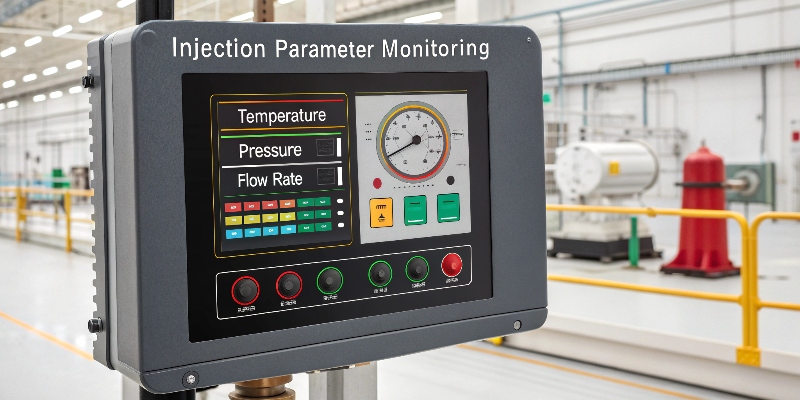
Die casting is a game of milliseconds. The injection process, where molten aluminum is forced into the mold, happens incredibly fast. We have precise control over this "shot profile." The first phase is a slow injection to push the air out of the cavity without trapping it. The second phase is a high-speed injection to fill the entire cavity before the metal starts to solidify. The final phase is intensification, where high pressure is applied to compress the metal, feed any shrinkage, and create a dense part. Each of these parameters—the speed of each phase, the switch-over points, the final pressure, and the temperatures of the metal and mold—is critical. At our facility, these parameters are all monitored and controlled in real-time for every shot. This data is logged, allowing us to ensure perfect consistency from the first part to the millionth. It is this discipline that separates professional die casters from simple workshops.
How does surface quality relate to post-treatment needs?
A poor surface finish right out of the mold creates extra work. It requires expensive and time-consuming secondary operations like grinding or polishing. A good finish starts in the die.
Surface quality is largely determined by the mold’s finish and the casting process itself. A smooth, defect-free surface ("as-cast") reduces the need for costly post-treatments. Requirements like painting or chroming demand a higher initial surface quality.
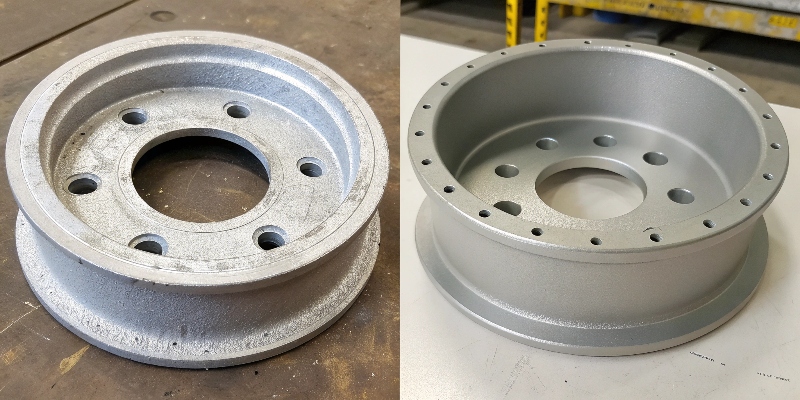
The final look and feel of a part often start with the surface of the mold steel itself. If a customer needs a part with a very smooth, Class-A finish for a visible component, the mold cavity must be polished to a mirror-like finish. But even with a perfect mold, process issues can ruin the surface. If the injection speed is too high, it can cause erosion on the mold surface, which transfers to the part. If the mold temperature is too low, it can lead to flow lines and other visual defects. We always discuss the final post-treatment requirements with our customers at the DFM (Design for Manufacturability4) stage. If a part needs to be powder-coated, we know we need to produce a very clean surface to ensure good adhesion. If it needs to be leak-proof, we focus on eliminating porosity. Planning for the final finish from the start saves a lot of time and money later on.
What is the key to achieving high dimensional accuracy?
Parts that are out of tolerance cause assembly problems down the line. This can shut down your production line. Consistent dimensional control is not optional; it is a necessity.
Achieving tight tolerances (e.g., ±0.05 mm) requires a combination of a high-precision mold, a highly stable process, and a deep understanding of how the aluminum alloy shrinks as it cools. It is a systematic approach, not a lucky accident.
Controlling dimensions in die casting is a science. People often forget that the mold cavity is not built to the exact size of the final part. We have to build it slightly larger to account for the fact that aluminum shrinks when it cools from a liquid to a solid. The shrinkage rate depends on the specific alloy and the geometry of the part. This is where experience and simulation are vital. We must predict this shrinkage with extreme accuracy. Furthermore, we must ensure the mold itself is built to the highest precision. Finally, the casting process must be incredibly stable. Any variation in metal temperature, mold temperature, or injection pressure will cause the shrinkage rate to change slightly, which in turn affects the final dimensions. We achieve tight tolerances by controlling all these factors systematically and verifying our results with coordinate measuring machines (CMM).
How do cost efficiency and production volume influence the process?
Choosing the wrong process for your volume leads to wasted money. High tooling costs are only justified for large production runs. You must match the process to your project’s scale.
Die casting involves high initial tooling costs but very low per-part costs at high volumes. The economic break-even point is crucial. For large volumes, optimizing the mold for speed (e.g., multi-cavity molds) is key to maximizing cost efficiency.
This is a conversation I have with every purchasing director. Aluminum die casting is a mass-production process. The steel mold is a significant investment, often costing tens of thousands of dollars. That cost only makes sense if you can spread it over a large number of parts—typically 50,000 pieces or more. If you only need a few thousand parts, a process like sand casting or machining from a solid block might be cheaper overall, even if the per-part price is higher. Once you commit to high-volume die casting, the focus shifts to maximizing efficiency. Can we design a mold with multiple cavities to produce two, four, or even eight parts with a single shot? Can we optimize the cycle time by improving the cooling and part ejection? These small improvements, when multiplied by hundreds of thousands of parts, result in huge cost savings for our customers over the life of the project.
Conclusion
Mastering die casting means balancing alloy, mold, and process. Aligning these factors ensures you get precise, durable, and cost-effective2 parts that meet your exact requirements every time.
Explore the key mechanical properties that determine the suitability of different aluminum alloys. ↩
Discover the economic advantages of aluminum die casting for large-scale production. ↩ ↩
Understand the advantages of AlSi10Mg for applications requiring high strength and ductility. ↩
Understand how DFM principles can streamline the die casting process and improve outcomes. ↩


