Why Do My Aluminum Die Castings Fail Leak Tests?

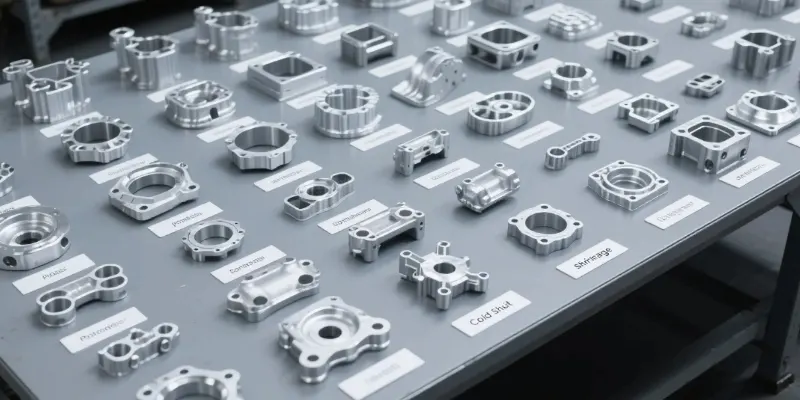
Your EV components keep failing air leakage tests, delaying projects and creating tension. Finding the root cause is a frustrating hunt, often ending in a blame game between departments. The most common reasons for air leakage in aluminum die casting1s are gas porosity2, cold shuts3, cracks, machining damage4, poor flatness5, bad mold venting6, and improper […]

What Is the Aluminum Die Casting Tolerance Standard?

Your parts don’t fit together during assembly or fail critical leak tests1. This is a frustrating problem often caused by a misunderstanding of what dimensional tolerances2 are achievable in die casting. The aluminum die casting tolerance standard3 is a set of guidelines, like ISO 8062-34 or NADCA standards5, that define the achievable dimensional accuracy for

What Are the Most Common Metals Used in Die Casting?

Choosing the wrong metal for your component can be a costly mistake. It leads to parts that are too heavy, too weak, or unable to withstand their operating environment, sending you back to the drawing board. The most common metals for die casting1 are aluminum2, zinc3, and magnesium4. Aluminum dominates automotive and industrial applications for

Is the Die Casting Mold Directly Related to Product Quality?

Seeing inconsistent part quality and not knowing why? It’s frustrating to blame the machine or the alloy when the root cause might be the tool itself. The mold is where quality begins. Yes, the die casting mold1 is the single most critical factor determining product quality2. It dictates the final part’s dimensional accuracy3, surface finish4,

What Automobile Parts Are Manufactured Using Die Casting?

What Automobile Parts Are Manufactured Using Die Casting? Trying to choose the right manufacturing process for every part in a modern vehicle is a huge challenge. Make the wrong choice, and you end up with components that are too heavy or too expensive. Die casting1 is used to manufacture a wide range of automotive parts2,

What is the Role of Friction Stir Welding in Aluminum Die Casting for Electric Vehicles?

Your EV design requires large, leak-proof aluminum structures, but traditional welding creates weak points. These potential failures in battery trays and chassis components are a risk you cannot afford. Friction Stir Welding (FSW) joins die-cast aluminum1 parts without melting them, creating a solid-state bond2. This produces strong, leak-proof, and lightweight assemblies, which are essential for