

You need a strong, lightweight metal for your automotive parts, but the terminology is confusing. You hear about "aluminum" and "die-cast aluminum" and wonder if there is a real difference.
Yes, die-cast aluminum is significantly stronger than pure aluminum. Die-cast parts are made from specific aluminum alloys, which are mixtures of aluminum and other elements that dramatically increase strength, hardness, and performance for demanding engineering applications.
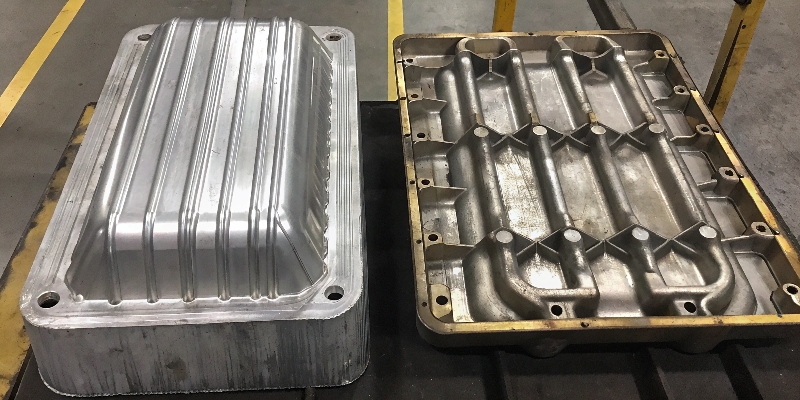
This is one of the most common questions I get from engineers who are new to casting. It’s a great question because the answer gets to the heart of what makes die casting so valuable. In my 20+ years in this industry, I’ve never used pure aluminum to make a structural automotive part. It’s simply too soft. The magic comes from the specific "recipes," or alloys, we use and the process itself. Let’s break down why the "die-cast aluminum" on your car is much more capable than the "aluminum" in your kitchen foil.
What’s the Difference Between Aluminum Alloys and Pure Aluminum?
Your project requires the light weight of aluminum, but the material needs to withstand stress and high temperatures. Pure aluminum just won’t hold up, leaving you searching for a better option.
Pure aluminum is a soft, ductile metal. Aluminum alloys are "recipes" where elements like silicon, copper, and magnesium are added to the pure aluminum. This creates a new material with superior properties like high strength, hardness, and better castability.
Think of it like baking. Flour on its own is not a cake. You have to add sugar, eggs, and other ingredients to get the texture and flavor you want. It’s the same with aluminum. I explain to my customers that pure aluminum1 is our base "flour." It’s lightweight and corrosion-resistant, which is a great start. But to make a motor housing that can handle vibration or a structural part that needs to be rigid, we need to add other elements. This turns the soft metal into a high-performance engineering material. The specific alloy we choose depends entirely on the part’s final application. Is it a purely structural part? Does it need to dissipate heat? Does it require high corrosion resistance? The alloy recipe determines these final characteristics.
Pure Aluminum vs. a Common Alloy
The difference in basic mechanical properties is huge. Let’s compare pure aluminum to A380, one of the most common die-casting alloys we use.
| Property | Pure Aluminum (99.5%) | A380 Aluminum Alloy |
|---|---|---|
| Tensile Strength | ~90 MPa (13,000 psi) | ~330 MPa (48,000 psi) |
| Hardness (Brinell) | ~20 HB | ~80 HB |
| Primary Use | Foil, packaging, electrical wiring | Automotive parts, electronics housings |
Is Die-Cast Aluminum Stronger Than Wrought Aluminum?
You see that some parts are made from extruded or machined "wrought" aluminum and wonder if it’s better. This creates uncertainty when choosing the right manufacturing process for your design.
It’s a trade-off. Wrought aluminum alloys often have higher tensile strength and ductility. However, die-cast alloys offer superior compressive strength, excellent stiffness, and the ability to form complex, net-shape parts that would be impossible or too expensive to machine.
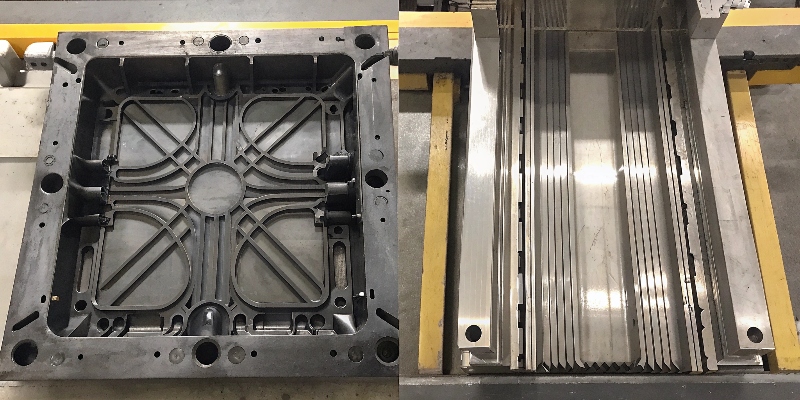
This is another great question my team and I often discuss with our customers. "Wrought" refers to aluminum that is formed by mechanical processes like rolling or extrusion (think of an aluminum bar or plate). This process elongates the grain structure, which typically gives it higher tensile strength. However, die casting shines in creating complex, three-dimensional parts with incredible dimensional accuracy. For a part like an EV controller housing, with all its integrated cooling fins, mounting bosses, and thin walls, machining it from a solid block of wrought aluminum would be incredibly wasteful and expensive. Die casting creates that complex shape in about 60 seconds. While the die-cast part might have slightly lower tensile strength than a high-end wrought alloy, its rigidity and ability to be produced as a net-shape part make it the clear winner for these applications.
Strength Profile Comparison
Let’s look at the properties of a common die-cast alloy versus a common wrought alloy.
| Property | Die-Cast Alloy (A380) | Wrought Alloy (6061-T6) |
|---|---|---|
| Tensile Strength | ~330 MPa | ~310 MPa |
| Yield Strength | ~165 MPa | ~275 MPa |
| Elongation (% in 2") | ~3.5% | ~17% |
| Best Application | Complex housings, structural parts | Machined components, simple profiles |
How Do Alloying Elements Like Silicon and Copper Affect Strength?
You know that die-cast parts are made from alloys, but you’re not sure why specific elements are chosen. Understanding this helps you communicate your part’s requirements to your supplier more effectively.
Each alloying element serves a specific purpose. Silicon (Si) is the most important, as it improves fluidity for casting. Copper (Cu) increases hardness and strength. Magnesium (Mg) improves both strength and corrosion resistance.
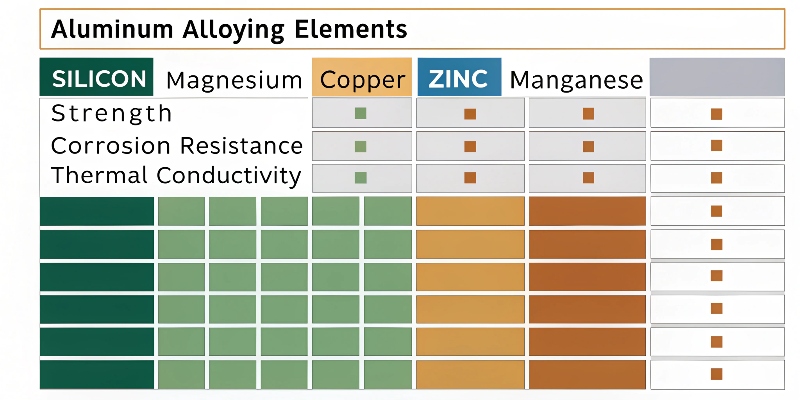
When a customer comes to us with a new project, one of the first things we discuss is the choice of alloy. This is where my team’s expertise really comes into play. For over 90% of the parts we produce, like motor housings and structural components for our European and North American customers, we rely on aluminum-silicon alloys. Silicon is the hero of castability. It lowers the melting point and makes the molten metal flow like water, allowing it to fill every tiny detail of the mold. Without enough silicon, we would get defects like misruns and cold shuts. After silicon, we look at other elements to fine-tune the properties. If the customer needs higher hardness for a wear surface, we might suggest an alloy with a higher copper content. If the part will be exposed to a corrosive environment, an alloy with higher magnesium might be a better choice.
The Role of Key Alloying Elements
Here’s a quick summary of what the three most common elements bring to the table.
| Alloying Element | Primary Benefit | Secondary Effect |
|---|---|---|
| Silicon (Si) | Improves fluidity and castability. | Reduces shrinkage and cracking. |
| Copper (Cu) | Increases hardness and strength. | Reduces corrosion resistance and ductility. |
| Magnesium (Mg) | Increases strength and hardness. | Improves corrosion resistance. |
How Does the Die Casting Process Itself Add Strength?
You understand that alloys are stronger, but you wonder if the manufacturing method also contributes. The process seems aggressive and you’re not sure how it impacts the final part’s integrity.
The high-pressure die casting process creates a unique microstructure that enhances strength. The rapid cooling of the molten metal forms a very fine-grained "skin" on the part’s surface, which is harder and stronger than the core material, adding significant rigidity.
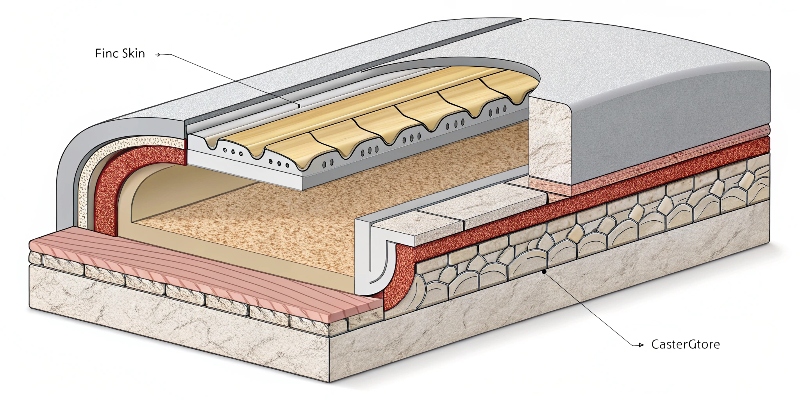
This is a subtle but very important point. The strength of a die-cast part comes from both the material and the process. When we inject molten aluminum into the steel mold at high speed and pressure, the metal that touches the cooler mold walls solidifies almost instantly. This rapid solidification prevents large metal crystals from forming, creating an ultra-fine-grained surface layer. We call this the "skin effect2." This skin is denser and harder than the aluminum in the core of the part, which cools more slowly. This acts like a natural case-hardening, making the part very stiff and resistant to surface damage. It’s one of the reasons why a well-designed die-cast part can be so lightweight yet so rigid. The process naturally creates a composite-like structure.
Where Do We Need This Strong, Lightweight Aluminum?
You understand the benefits of die-cast aluminum, but you want to see where it truly excels. Knowing its common applications helps you identify opportunities for its use in your own projects.
High-strength, lightweight die-cast aluminum is essential in modern automotive applications. It’s used for EV motor housings, battery enclosures, powertrain components, and large structural parts like shock towers, where reducing weight without sacrificing strength is critical.
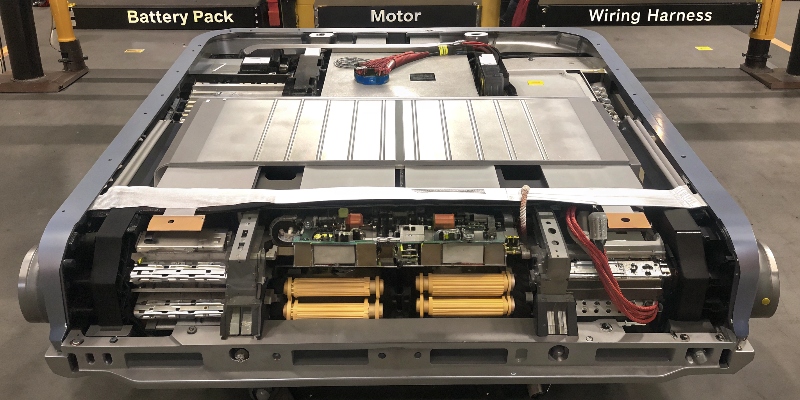
Every day, my team and I work on parts that are pushing the boundaries of what vehicles can do, and die-cast aluminum is at the center of it all. The push for electric vehicles has made these materials more important than ever. For an EV motor housing, we need a material that is lightweight (to maximize range), strong (to handle torque and vibration), and has excellent thermal conductivity3 (to dissipate heat). Die-cast aluminum alloys are the perfect fit. For large structural parts, like the entire rear underbody of a vehicle, we use die casting to create a single, massive "gigacasting." This one part replaces what used to be 70 different stamped and welded steel pieces. This reduces weight, simplifies assembly, and creates a more rigid and safer vehicle structure. From complex electronic housings to massive body components, high-strength die-cast aluminum is the enabling technology.
Conclusion
Die-cast aluminum is not just aluminum; it’s a high-performance alloy transformed by a precision process. This combination delivers the strength, rigidity, and complexity needed for modern industrial and automotive parts.


