

Choosing the wrong manufacturing process limits your design and can lead to costly, unreliable parts. This compromises performance and causes major production delays that put your entire project at risk.
Die casting is capable of producing intricate, near-net-shape parts with high dimensional accuracy and excellent repeatability. Its key capabilities include forming complex geometries with thin walls, holding tight tolerances, supporting high-volume production with consistent quality, and offering diverse material and finishing options.
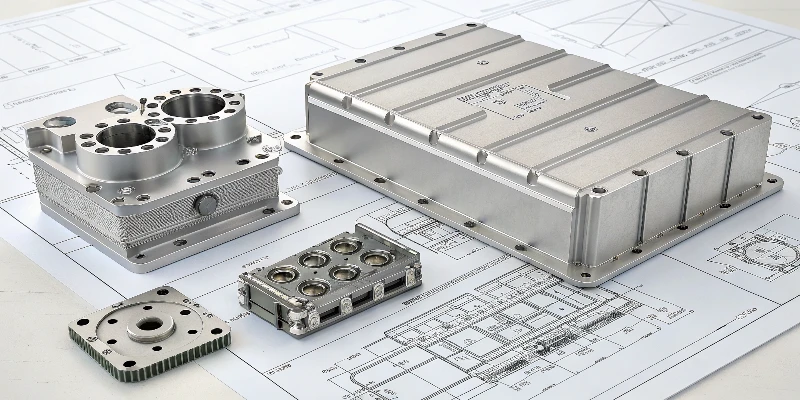
Over the last two decades, I have seen die casting1 evolve from a simple manufacturing method into a highly engineered process. The core capability has always been the unique blend of design freedom2 and mass-production efficiency3. You can design a complex part that would otherwise require multiple components and extensive machining, and we can produce thousands of them, each one nearly identical to the last. This is why it has become so essential for industries where performance and scale are critical, like the automotive world. Let’s break down exactly what this process can do for your components.
What complex geometries can be achieved with aluminum die casting?
Your design includes thin walls4, sharp corners, and integrated features, but you’re worried it’s impossible to manufacture at scale. You are facing pressure to simplify the design, which could compromise its function and performance.
High-pressure die casting excels at producing parts with complex geometries, including thin walls down to 1.5mm, intricate internal features, fine details like logos, and cast-in inserts such as steel bushings or threaded studs. This allows for significant part consolidation.
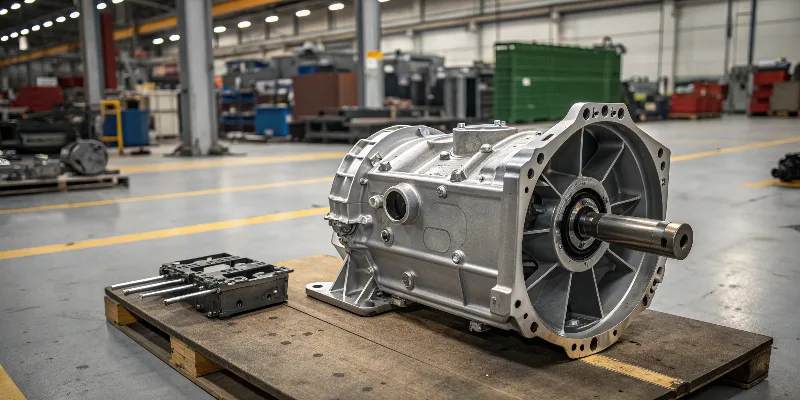
One of the most rewarding parts of my job is helping a customer realize their design is not only possible but practical. I remember working on an inverter housing for a new electric vehicle. The initial concept was an assembly of a machined block, a stamped cover, and several brackets. We worked with their engineering team to redesign it as a single die casting. The new part had integrated cooling fins, complex internal walls for EMI shielding, and all the mounting bosses cast in place. We created a lighter, stronger, more reliable part with fewer failure points and a lower total cost. This is the true power of die casting’s geometric capability: it allows you to think of the component as a single, optimized system rather than an assembly of separate pieces. It turns a complex problem into an elegant, integrated solution.
How does die casting ensure tight tolerances and dimensional accuracy?
Your components must fit perfectly into a larger assembly every single time. Even small variations can halt your production line, leading to costly delays and quality control issues.
Die casting achieves tight tolerances and high accuracy through the use of robust, precision-machined steel dies. The high pressure of the injection process forces the molten metal to conform precisely to the mold cavity, ensuring exceptional part-to-part repeatability.
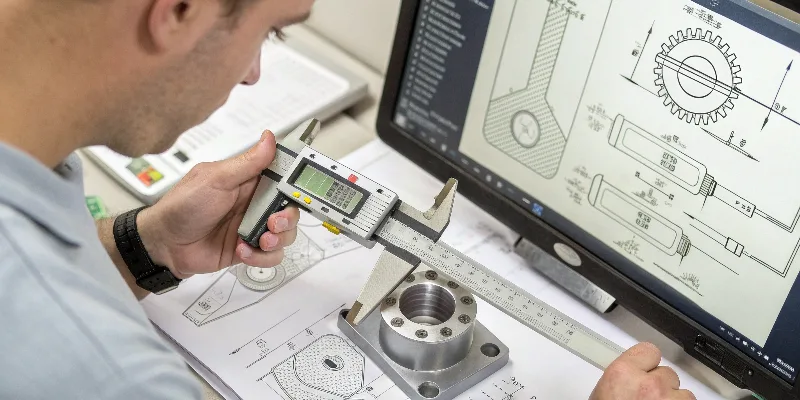
Dimensional accuracy is not an accident; it is engineered into the process from the very beginning. The steel tool is the heart of this capability. Because the die is a permanent, non-expendable tool, we can invest in machining it to incredible levels of precision. Once that tool is locked into a machine, the process is highly repeatable. I worked on a project for a communications chassis where a bearing had to be press-fit into a cast bore. The customer wanted to avoid a secondary machining operation to control costs. The required tolerance was extremely tight, around ±0.05mm. By carefully controlling the die temperature and injection parameters, we were able to hold that tolerance directly out of the die. We produced over 200,000 units, and the customer never had an issue with the bearing fit. This level of consistency is a fundamental capability of the die casting process.
How does die casting support high-volume production with consistent quality?
You have a forecast for hundreds of thousands of parts per year. You need a manufacturing process that can scale up quickly without sacrificing quality, ensuring a stable and reliable supply chain.
Die casting is designed for high-volume production. The automated process and durable steel dies allow for rapid cycle times, often less than 60 seconds per part. A single die can produce hundreds of thousands of components with minimal variation, ensuring consistent quality.
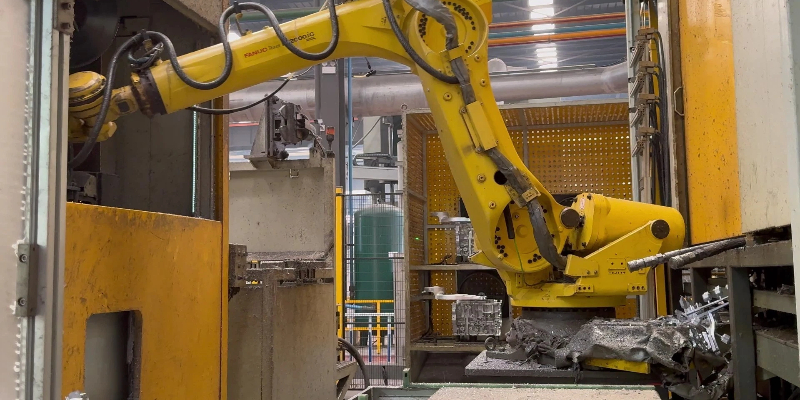
When a major automotive client needs to launch a new vehicle, they talk in terms of thousands of parts per week. The ability to meet that demand is what separates a capable supplier from the rest. The key is the synergy between the durable die and automation. Once a process is dialed in, robots can perform every step—from ladling the metal to extracting the part and cooling it—in a perfectly repeatable sequence, 24 hours a day. I was part of a team that launched a structural component for a popular SUV. The initial demand was 5,000 parts per week. Because we had built a robust, automated process, we were able to meet that demand from the first week of production. The first part and the 100,000th part were virtually identical in every critical dimension. This is the capability that gives procurement directors and quality engineers peace of mind; they know they will get the parts they need, when they need them, with the quality they expect.
What are the material and surface finishing options available in die casting?
Your part needs to be lightweight, strong, and corrosion-resistant5, and it also needs a specific look and feel. You are looking for a process that offers flexibility in both material selection and final appearance.
Aluminum die casting supports a wide range of alloys, like the versatile ADC12, the balanced A380, or the high-strength AlSi10Mg. It also offers numerous surface finishing options, including shot blasting for texture, powder coating for color, and chromating for corrosion protection.
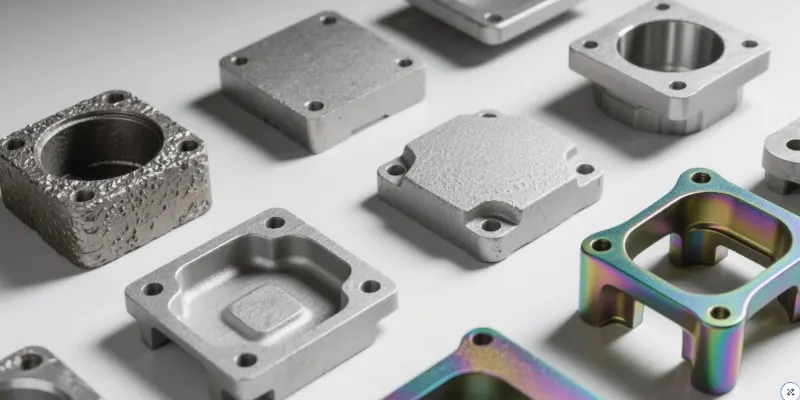
The conversation about capabilities isn’t complete without talking about materials and finishes. The part’s function dictates the alloy we choose. For a general-purpose housing, the cost-effective and highly castable ADC12 is a great choice. For a structural part in an EV, we would select an alloy like AlSi10Mg and add a T6 heat treatment to maximize its strength. The finish is just as important. For many of the parts we make, a simple shot blast provides a clean, uniform surface that is ready for assembly. For components exposed to the elements, we often apply a powder coat or a chemical conversion coating. I recall a project for an outdoor telecommunications enclosure. The client needed excellent corrosion resistance. We used a marine-grade alloy and applied a multi-layer finish of chromate conversion followed by a durable powder coat. The final part was not only functional and precise but also able to withstand years of harsh weather.
How are modern technologies expanding the design and performance capabilities of die casting?
You are designing next-generation products and need a manufacturing process that is evolving. You want to partner with suppliers who are investing in technology to push the boundaries of what is possible.
Modern technologies like advanced simulation software, vacuum-assisted casting, and real-time process monitoring are dramatically expanding die casting’s capabilities. Simulation allows for more complex designs, vacuum casting creates stronger parts with thinner walls, and digital monitoring ensures higher quality and reliability.
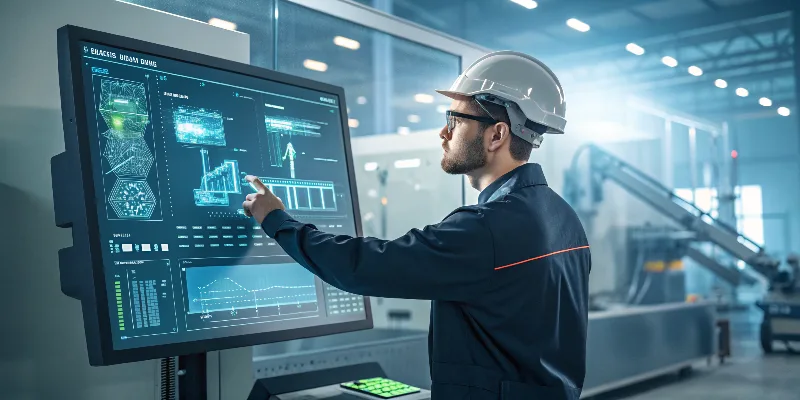
The die casting I do today, in September 2025, is far more advanced than the process I learned 20 years ago. The biggest change is the move from reactive to predictive manufacturing6. We use sophisticated simulation software to create a "digital twin" of the casting process. This allows us to perfect the mold design and process parameters on a computer, predicting and eliminating defects before any steel is cut. In production, vacuum-assisted casting7 is a game-changer. By removing air from the die cavity before injection, we can produce parts that are weldable, heat-treatable, and have superior mechanical properties—essential for high-performance EV structural components. Real-time shot monitoring gives us data on every single cycle, allowing us to ensure the process never deviates from its optimal window. These technologies are not just incremental improvements; they are fundamentally expanding the capability of die casting to produce lighter, stronger, and more complex parts than ever before.
Conclusion
Die casting’s core capability lies in its unique fusion of design freedom and mass production efficiency. It delivers complex, precise, and consistent components at scale, making it an essential process for modern manufacturing challenges.
Explore the advantages of die casting, including efficiency and precision, to understand its role in modern manufacturing. ↩
Understand the concept of design freedom and its importance in modern manufacturing processes. ↩
Explore the methods that enable die casting to produce large quantities of parts efficiently. ↩
Find out the methods used to create thin-walled components and their benefits in design. ↩
Discover the materials that provide corrosion resistance in die casting applications. ↩
Explore the concept of predictive manufacturing and its impact on the future of die casting. ↩
Explore the advantages of vacuum-assisted casting in producing stronger and more reliable parts. ↩


