

The transition from internal combustion engines (ICE) to electric vehicles (EVs) has radically altered the expectations placed on the die casting supply chain. Ten years ago, an aluminum foundry could survive by pouring simple transmission brackets and oil pans with relatively loose tolerances. Today, that same foundry will face catastrophic scrap rates if tasked with manufacturing an 800V EV motor controller housing1.
In modern EV architectures, aluminum enclosures are no longer just protective covers. They are highly integrated convergence points for high-voltage power distribution, active liquid cooling, and extreme dynamic loads.
Based on our daily operations on the CNC floor and high-pressure die casting (HPDC) cells, here is an objective, floor-level breakdown of why high precision is non-negotiable for EV housings, and the specific engineering strategies required to prevent assembly line failures.
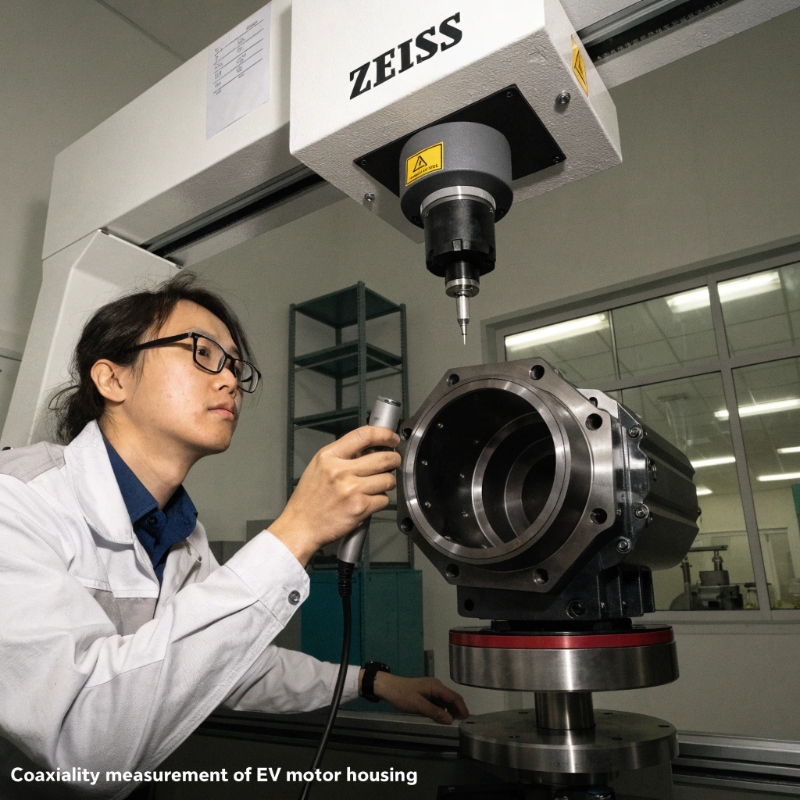
1. The Reality of IP67 Sealing and Micro-Porosity
EV power electronics and stators are hyper-sensitive to moisture. Coolant leaks or environmental ingress will instantly short-circuit a high-voltage board, leading to a thermal runaway event. To achieve strict IP67 or IP68 ratings, the mating flanges and O-ring grooves on the housing must be machined to exact surface roughness (Ra) and flatness tolerances.
The Original Insight:
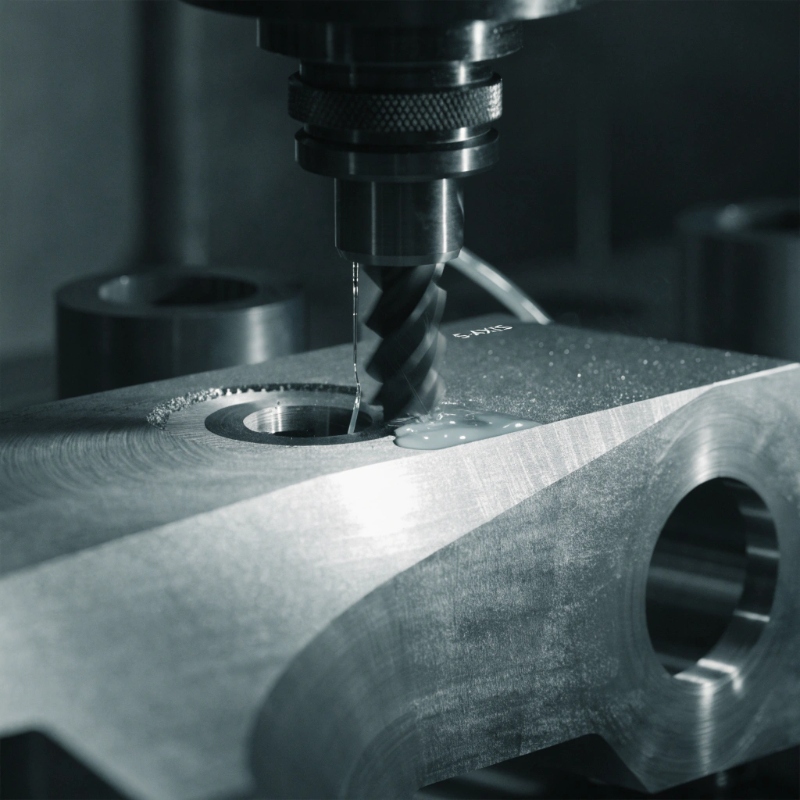
Many design engineers assume that specifying a thick sealing flange guarantees a watertight joint. In reality, thick flanges are a metallurgical trap. The center of a thick wall cools last during the automotive die casting2 process, making it a magnet for shrinkage porosity. When a 5-axis CNC machine cuts an O-ring groove directly into the center of that thick flange, it removes the dense outer "skin" and exposes the interconnected micro-voids hidden inside. The O-ring cannot seal against a spongy surface, and coolant will inevitably weep through.
The Precision Solution:
We cannot magically eliminate porosity—physics dictates that liquid metal will shrink as it cools. Instead, we use Vacuum HPDC to evacuate air from the mold milliseconds before injection. By running thermodynamic Moldflow simulations in accordance with strict NADCA design guidelines3, we intentionally direct the remaining unavoidable porosity into overflow wells or non-machined areas, ensuring the CNC tool only cuts into dense, void-free aluminum.
2. Bearing Coaxiality for NVH Control
Drive motor housings house rotors spinning at 15,000 to 20,000 RPM. At these extreme velocities, the dimensional relationship between the front and rear bearing bores is critical.
If a housing lacks precision and the bearing bores are misaligned by even a fraction of a millimeter, the motor will suffer from severe gear whine, accelerated bearing wear, and massive NVH (Noise, Vibration, and Harshness) failures.
The Precision Solution:
As-cast tolerances will never meet these requirements. The raw casting must be designed to minimize thermal warpage upon ejection so that it seats perfectly into the machining fixture. Once clamped, we utilize single-setup 4-axis or 5-axis CNC machining. Milling opposing bearing bores and stator press-fit diameters in one continuous operation without unclamping the part is the only way to guarantee absolute concentricity and true position.
Legacy ICE Castings vs. Precision EV Housings
To illustrate the shift in manufacturing difficulty, compare the requirements of a legacy ICE component with a modern EV housing:
| Engineering Metric | Legacy ICE Oil Pan | Modern EV Inverter Housing |
|---|---|---|
| Primary Function | Fluid containment, debris protection | Active heat dissipation, EMI shielding, high-voltage isolation |
| Cooling Features | None | Deep internal water jackets, dense pin-fin structures |
| Sealing Requirement | RTV silicone or basic gasket | Strict IP67/IP68 O-ring grooves (Ra controlled) |
| Machining Tolerance | Loose (±0.1 mm to ±0.5 mm) | Micron-level (Up to ±0.01 mm for stator bores and bearing seats) |
| Defect Tolerance | Minor surface porosity acceptable | Micro-porosity in sealing zones causes fatal coolant leaks |
3. Inherent EMI Shielding and Wall Thickness
EV inverters and Power Distribution Units (PDUs) emit aggressive Electromagnetic Interference (EMI) due to high-frequency switching. Rather than adding heavy, expensive secondary shielding materials, OEMs rely on the aluminum housing itself to act as a Faraday cage.
However, EMI shielding is only effective if the material density is uniform. Severe internal voids or cold shuts (where metal flows fail to fuse completely) create pathways for electromagnetic noise to leak out, disrupting the vehicle’s low-voltage ADAS sensors. High-precision die casting, utilizing optimized gating speeds and dynamic mold temperature control, ensures a dense, homogenous cross-section even when casting walls as thin as 1.5mm to reduce vehicle weight.
4. Technical Cleanliness (The Invisible Threat)
High-precision manufacturing does not end when the CNC machine stops. EV housings contain numerous blind tapped holes for mounting internal busbars and circuit boards.
During machining, these holes trap cutting fluids and microscopic aluminum chips. If a supplier simply blows the part off with compressed air, those chips remain. Later, during vehicle operation, road vibration will shake those conductive aluminum burrs loose, dropping them directly onto a high-voltage PCB and causing a catastrophic short.
Executing high-precision manufacturing means operating dedicated ultrasonic washing and vacuum drying lines, validated by an automotive-grade quality control4 laboratory that extracts particles and weighs them to strictly comply with VDA 19 technical cleanliness standards5.
Securing Your EV Supply Chain
Manufacturing EV motor and controller housings is an unforgiving process. You cannot inspect quality into a part that was cast with a flawed thermal design, nor can you rely on foundries that split their supply chain by outsourcing CNC machining.
At EMP Tech, we mitigate Tier 2 supply chain risks by keeping mold design, Vacuum HPDC, 5-axis machining, and CMM metrology under one roof. Operating strictly under IATF 169496, we provide the objective data and PPAP Level 3 documentation required to pass stringent OEM audits.
If you are currently facing high scrap rates or developing a new thermal management housing, upload your 3D CAD (STEP/IGES) via our contact form today. Our engineering team will run a ruthless DFM analysis, identify potential shrink porosity traps, and deliver a pragmatic manufacturing quote within 24 hours.
References & Footnotes
EMP Tech. EV Motor Controller Housing Engineering Specifications. ↩
EMP Tech. Automotive Aluminum Die Casting Solutions & Capabilities. ↩
North American Die Casting Association (NADCA). Engineering & Design Standards. ↩
EMP Tech. Automotive-Grade Quality Control & Inspection Laboratory. ↩
Verband der Automobilindustrie (VDA). VDA 19.1: Inspection of Technical Cleanliness. ↩
International Automotive Task Force. IATF 16949:2016 Quality Management System Requirements. ↩


