

As an engineer or procurement director for a Tier 1 automotive supplier, your success hinges on the quality, reliability, and cost-effectiveness of your components. High-pressure die casting is a critical process for producing lightweight, complex, and durable parts essential for modern vehicles, especially in the e-mobility sector. However, not all die casting suppliers are created equal.
Choosing the right partner is a strategic decision that impacts project timelines, production stability, and your final product’s performance. This guide, drawing from over 20 years of hands-on experience in aluminum die casting, will walk you through the essential capabilities and qualifications to look for in a world-class supplier.
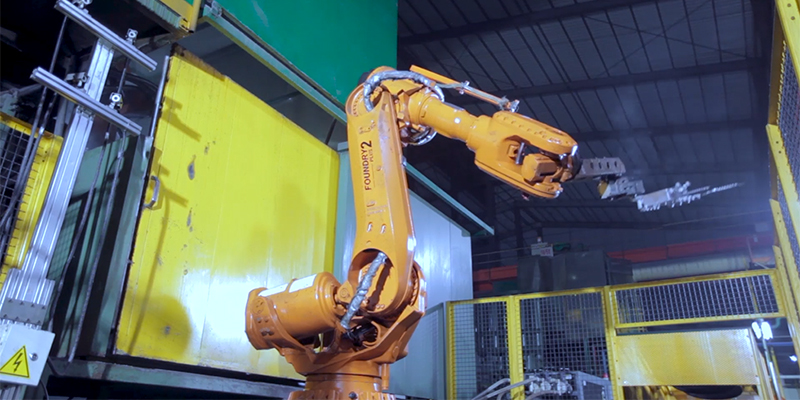
Core Capabilities in Aluminum, Zinc, and Magnesium Die Casting
The material you choose directly influences the part’s performance, weight, and cost. A top-tier supplier should have deep expertise in the three primary non-ferrous alloys used in die casting: aluminum, zinc, and magnesium.
- Aluminum Alloys: As the most frequently used material in die casting, aluminum offers an excellent combination of strength, light weight, corrosion resistance, and thermal conductivity. It’s ideal for a wide range of applications, from motor controller housings to structural components. The A380 alloy is a popular choice for its balance of properties and castability.
- Zinc Alloys: Known for their exceptional strength, hardness, and ductility, zinc alloys are perfect for parts requiring intricate details, thin walls, and a high-quality surface finish. They also offer superior tool life, which can lead to long-term cost savings.
- Magnesium Alloys: As the lightest of the common structural metals, magnesium is the champion for applications where weight reduction is paramount. It boasts a high strength-to-weight ratio and excellent dimensional stability.
Here’s a quick comparison to guide your material selection:
| Feature | Aluminum Alloys | Zinc Alloys | Magnesium Alloys |
|---|---|---|---|
| Density / Weight | Lightweight (2.7 g/cm³) | Heavy (5 g/cm³) | Ultra-Lightweight (1.74 g/cm³) |
| Strength | Good strength-to-weight ratio | High strength and hardness | Highest strength-to-weight ratio |
| Corrosion Resistance | Excellent | Good (can be improved) | Fair (requires coating) |
| Thermal Conductivity | Excellent | Fair | Good |
| Casting Process | Cold Chamber | Hot Chamber | Cold Chamber |
| Tool Life | Good (approx. 100,000 shots) | Excellent (>1,000,000 shots) | Good |
| Best For | Structural parts, housings, heat sinks | Small, complex parts, hardware | Maximum weight reduction, electronics |
A capable supplier will not just offer these materials but will partner with you to select the optimal alloy based on your specific functional requirements, operating environment, and cost targets.
Engineering Support: DFM, Mold Design, and Simulation
The most significant opportunities to optimize cost, quality, and production speed occur during the initial design phase. An expert die casting partner provides more than just manufacturing; they offer comprehensive engineering support to ensure your part is designed for manufacturability (DFM) from day one.
Design for Manufacturability (DFM) Analysis:
DFM is a collaborative process where the supplier’s engineers review your part design to identify and resolve potential production issues before a single piece of steel is cut for the mold. This proactive approach prevents costly redesigns and delays. Key DFM considerations include:
- Draft Angles: Ensuring surfaces are tapered to allow for easy ejection from the mold.
- Uniform Wall Thickness: Promoting consistent metal flow and cooling to prevent defects like porosity.
- Fillets and Radii: Adding curves to corners to reduce stress concentration and improve metal flow.
- Parting Line Optimization: Strategically placing the line where the two mold halves meet for better aesthetics and functionality.
- Undercut Elimination: Simplifying the design to avoid complex and expensive mold mechanisms like sliders.
Mold Flow Simulation:
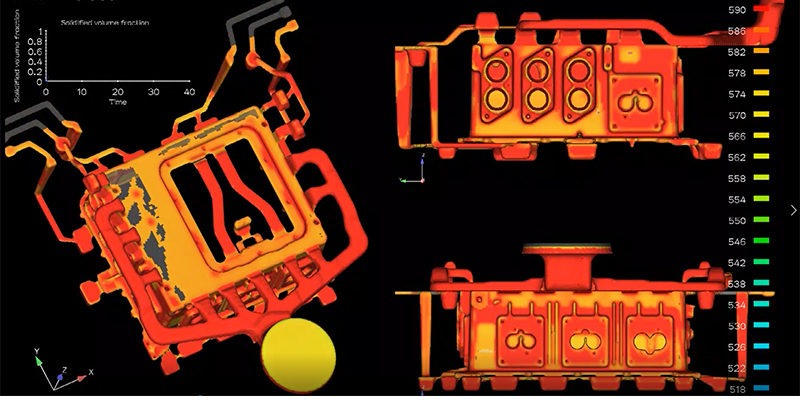
Modern die casters use advanced software to simulate how molten metal will flow into, fill, and solidify within the mold cavity. This powerful tool predicts potential defects such as air entrapment, cold laps, and porosity before the mold is even built. By optimizing gate locations, runner designs, and cooling channels in a virtual environment, engineers ensure higher part quality and a more efficient process, significantly reducing the time needed for trial-and-error adjustments.
Quality Certifications: IATF 16949, ISO 9001, and PPAP Compliance
For the automotive industry, quality is non-negotiable. Certifications are not just badges; they are proof that a supplier has a robust, documented, and audited quality management system (QMS) capable of meeting the sector’s stringent demands.
- IATF 16949: This is the global quality management standard for the automotive industry. A supplier certified to IATF 16949 demonstrates a commitment to continuous improvement, defect prevention, and the reduction of waste and variation in the supply chain. It is often a mandatory requirement for Tier 1 suppliers and OEMs.
- ISO 9001: This is the foundational standard for quality management systems across all industries. It ensures processes are consistent and that the focus remains on customer satisfaction.
- PPAP (Production Part Approval Process): This standardized process is used in the automotive supply chain to ensure that a supplier’s production processes can consistently produce parts that meet the customer’s design and quality requirements. Your supplier must be proficient in managing the entire PPAP submission, from process flow diagrams to measurement system analysis.
A supplier committed to these standards will have rigorous quality control processes at every stage, from raw material inspection using spectrometers to in-process monitoring and final part validation with Coordinate Measuring Machines (CMM) and X-ray inspections.
Surface Treatment and Secondary Machining Capabilities
Die casting is a near-net-shape process, but many components require secondary operations to meet final specifications. A supplier that offers these services in-house provides a one-stop-shop solution, which simplifies your supply chain, reduces lead times, and ensures accountability.
Precision CNC Machining:
Many die-cast parts require post-machining to achieve tight tolerances on critical features, drill and tap holes, or create surfaces that casting cannot produce. An integrated machine shop with modern CNC equipment ensures that these operations are performed efficiently and accurately, resulting in assembly-ready parts.
Surface Treatment and Finishing:
Surface finishes are applied to enhance a part’s appearance, durability, and corrosion resistance. A comprehensive supplier should offer a variety of finishing options, including:
- Powder Coating: Provides a durable, protective, and decorative finish in a wide range of colors.
- Anodizing: An electrochemical process for aluminum that creates a hard, corrosion-resistant oxide layer.
- Shot Blasting: Creates a uniform matte texture and prepares the surface for subsequent coatings.
- Electroplating: Applies a metallic coating (like zinc or nickel) to improve corrosion resistance or conductivity.
Supply Chain Integration with OEM and Tier 1 Manufacturers
In today’s fast-paced automotive market, a supplier must be more than a parts producer; they must be an integrated partner in your supply chain. They need to understand the unique pressures faced by Tier 1 suppliers, such as intense global competition, fluctuating demand, and the need for just-in-time delivery.
Look for a supplier who demonstrates:
- Project Management Expertise: The ability to manage complex projects from concept to mass production, meeting tight deadlines.
- Logistical Competence: Experience shipping globally and navigating the complexities of international supply chains.
- Collaborative Spirit: A willingness to work closely with your engineering and procurement teams to overcome challenges and achieve shared goals.
Advantages of Partnering with a Reliable Die Casting Supplier
Choosing the right supplier delivers tangible benefits that go straight to your bottom line and enhance your competitive edge.
| Advantage | Description |
|---|---|
| Reduced Total Cost of Ownership | Early DFM collaboration minimizes redesigns. In-house machining and finishing reduce logistical costs and supplier management overhead. Economies of scale from a high-volume producer can lower per-part costs. |
| Accelerated Time-to-Market | Integrated engineering support speeds up the design phase. Simulation prevents lengthy tooling adjustments. A streamlined supply chain with a single-source partner reduces overall lead time. |
| Enhanced Product Quality & Reliability | Adherence to IATF 16949 ensures robust process controls and defect prevention. Expertise in alloy selection and process optimization leads to stronger, more reliable parts. |
| Supply Chain Stability | Partnering with a financially stable and experienced supplier mitigates risks of disruption. Clear communication and project management prevent unexpected delays. |
| Access to Expertise | Leverage decades of specialized knowledge in die casting to solve complex design challenges, especially for lightweighting and high-performance applications like in EV components. |
Global Market Trends and Future Outlook
The global die casting market is on a growth trajectory, projected to expand significantly by 2033. This growth is largely driven by the automotive industry’s push for lightweighting to improve fuel efficiency and battery range in electric vehicles. Aluminum die casting is the dominant material, accounting for a majority of the market share due to its ideal properties for these applications.
The Asia-Pacific region, particularly China, remains the largest manufacturing hub, offering a strong base and advanced capabilities. As a procurement director or SQE, partnering with an expert supplier who understands these global dynamics is key to securing a competitive and resilient supply chain for the future.
At EMP Tech, my team and I combine decades of front-line experience with advanced engineering capabilities to provide a seamless, one-stop solution for our Tier 1 partners. We thrive on tackling challenges related to lightweighting, high airtightness requirements, and aggressive project timelines.
If you are looking for a reliable die casting partner to support your next project, let’s connect.
Contact me at [email protected] to discuss how we can help you achieve your manufacturing goals.


