

If you are sourcing aluminum components for automotive or industrial applications, you already know the reality of the 2026 supply chain: a basic ISO 9001 certificate and a factory tour are no longer enough to guarantee a reliable partner.
With the industry shifting toward complex EV architectures, lightweighting, and integrated structural parts, the demands placed on die casting foundries have skyrocketed. A supplier that could adequately cast a simple bracket five years ago may completely fail when tasked with a thin-walled, leak-proof liquid cooling housing today.
So, how do you separate the actual engineering partners from the mere metal pourers? Based on decades of experience walking foundry floors, here is a pragmatic, step-by-step guide to auditing and choosing your next die casting supplier.
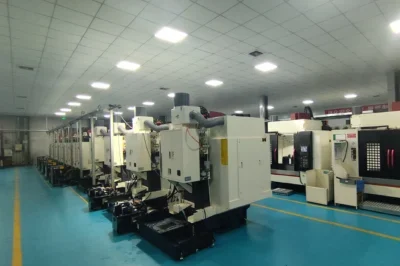
1. Look Beyond the Tonnage: Tooling is the Real Differentiator
When you ask a foundry about their capabilities, they will usually boast about the tonnage of their High-Pressure Die Casting (HPDC) machines. While having large 3,000T or 4,500T presses is necessary for large parts like EV Battery Trays, tonnage only represents brute force.
The Real Test: Ask about their in-house tooling and predictive engineering.
A seasoned supplier knows that 80% of casting defects (like cold shuts or excessive porosity) are baked in during the mold design phase.
- Do they run comprehensive Moldflow simulations before cutting steel?
- Do they design conformal cooling channels to manage thermal warpage?
Pro Tip: A foundry that outsources its mold-making loses control over its timeline. When T1 samples fail to meet dimensional specs, you want a supplier who can modify the tool in-house within days, rather than engaging in a weeks-long blame game with a third-party toolmaker.
2. Scrutinize the CNC Machining Floor
Here is a hard truth in the die casting industry: most critical failures happen in the machining phase, not the casting phase.
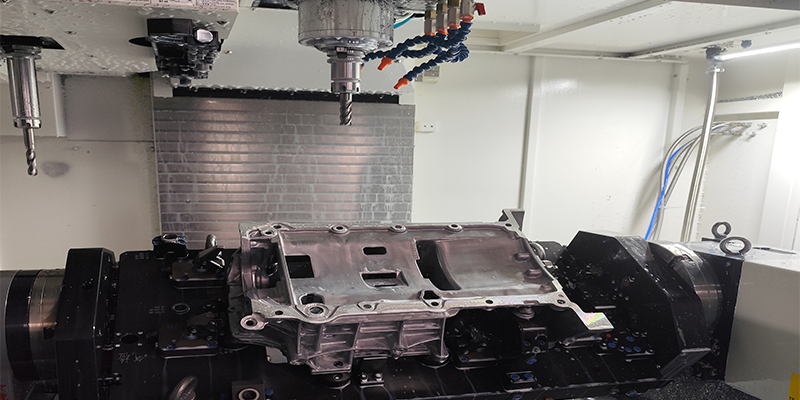
Die casting yields a near-net shape, but the critical tolerances required for O-ring sealing grooves, bearing bores, and mating flanges are entirely dependent on secondary CNC machining. If a supplier has great casting cells but outdated CNC equipment, the final assembly will fail.
What to look for:
- Single-Setup Machining: Look for 4-axis and 5-axis CNC centers. If a Transmission Housing requires multiple setups on a 3-axis machine to bore holes on different sides, coaxiality errors will inevitably creep in. Single-setup machining guarantees strict true position and concentricity.
- Custom Fixturing: Ask how they secure thin-walled parts during machining. Clamping a part too hard will distort it; once the clamp is released, the machined surface springs out of tolerance. Good suppliers design proprietary, low-distortion CNC fixtures.
3. Demand Raw Data, Not Just "Zero Defect" Promises
Every sales brochure claims "Zero Defects" and "100% Quality." When auditing a supplier, ignore the marketing and ask to see the data. A true automotive-grade foundry operates underIATF 16949 standards and relies on objective metrology.
The Audit Checklist for the Quality Lab:
- Internal Void Verification: Do they have an in-house X-Ray flaw detector? Ask them how they establish their porosity baseline for structural parts.
- Geometric Dimensioning and Tolerancing (GD&T): Do they use Zeiss (or equivalent) Coordinate Measuring Machines (CMM)? Ask to see a recent capability study (Cpk/Ppk) from a PPAP Level 3 submission.
- Leak Testing: If you are sourcing fluid enclosures, visual inspection is useless. Ensure they have automated, inline air-decay leak testing stations immediately following the CNC line.
4. Evaluate Traceability and Technical Cleanliness
In the modern automotive supply chain, if a part fails in the field, the OEM will demand a root cause analysis immediately.
A reliable supplier should have an absolute traceability system. By scanning a laser-etched QR code or batch number on the part, they should be able to tell you the exact date of the cast, the specific aluminum melt batch chemistry (verified by spectrometer), and the CNC operator on duty.
Furthermore, with the rise of sensitive electronics in EVs, Technical Cleanliness has become a critical metric. A stray aluminum burr left inside a Motor Controller Housing can cause a fatal short circuit. Check if the supplier complies with strict cleanliness standards like VDA 19 or ISO 16232, utilizing dedicated ultrasonic washing and gravimetric particle extraction labs.
Conclusion: Partnering with EMP Tech
Choosing a die casting supplier is about mitigating risk. You need a partner who understands that managing thermal dynamics, controlling GD&T, and maintaining strict traceability are just as important as pouring the metal.
At EMP Tech, we have spent decades building an engineering-first culture. From our in-house tooling division to our 150+ CNC centers and VDA 6.3 "A" rated quality lab, we provide global Tier 1 and Tier 2 suppliers with the hard data and reliable execution they need.
Are you evaluating suppliers for a new project?
Upload your 3D CAD (STEP/IGES) today. Our engineering team will provide a transparent, objective Design for Manufacturability (DFM) review and a pragmatic quote within 24 hours.


