

Are you struggling to produce automotive shock towers that meet the stringent demands of electric vehicles for lightweighting, structural integrity, and noise-vibration-harshness (NVH) control? Traditional manufacturing methods often fall short.
Optimizing the aluminum alloy die casting process for automotive shock towers involves fine-tuning parameters for maximum lightweighting, superior structural integrity, excellent NVH control, and consistent production quality, crucial for modern EVs.
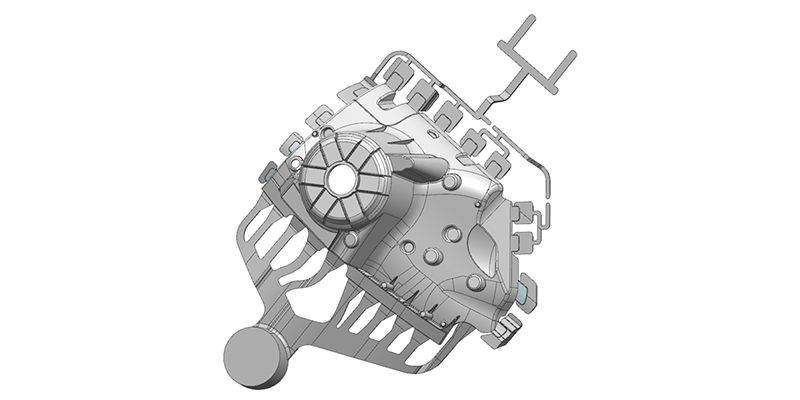
In my twenty years in aluminum alloy die casting, integrating product design, mold development, and process optimization has always been my focus. For electric vehicle shock towers, this integrated approach is paramount. I remember a project where a customer, a Tier 1 supplier, needed a significant weight reduction for their new EV platform’s front shock tower without compromising structural performance or crashworthiness. The initial design, if made with conventional methods, would have been too heavy and expensive. That’s where high-pressure die casting, combined with advanced simulation and process control, became the game-changer. My team and I worked closely with them, ensuring that every aspect, from the alloy selection to the gate design and cooling channels in the mold, was optimized. The result was a lighter, stronger, and more cost-effective shock tower that seamlessly met their stringent performance requirements, showcasing the power of a holistic, optimized die casting process.
Why are shock towers critical in EVs and ideal for HPDC?
Are you underestimating the critical role shock towers play in electric vehicles, or questioning why High-Pressure Die Casting (HPDC) is the ideal manufacturing process for them? Misjudgment here can impact cost, weight, and safety.
Shock towers are critical in EVs for supporting heavy battery loads, ensuring vehicle dynamics, and crash energy absorption. HPDC is ideal for their production due to its ability to create complex, lightweight, high-strength parts with excellent dimensional accuracy.
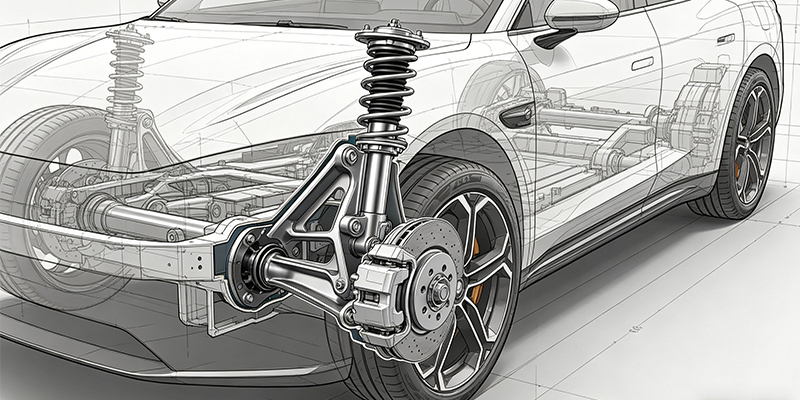
In any vehicle, the shock towers are fundamental structural components. They form the upper mounting point for the suspension system, absorbing road impacts, supporting vehicle weight, and transferring forces to the chassis. In electric vehicles, their role becomes even more critical. EVs often carry much heavier battery packs than internal combustion engine vehicles, which significantly increases the loads on the suspension and chassis. Therefore, EV shock towers must be exceptionally robust, dimensionally stable, and capable of effectively absorbing crash energy. High-Pressure Die Casting (HPDC) is uniquely suited for manufacturing these components. HPDC allows for the creation of complex geometries with thin walls, intricate ribbing for stiffness, and integrated mounting points, all in a single shot. This means we can achieve precise design intent for optimal load distribution and energy absorption characteristics. The process also yields excellent surface finish for aesthetic and functional requirements, and tight dimensional tolerances for exact fit and assembly, which are non-negotiable for safety-critical parts like shock towers.
How can we achieve enhanced shock tower performance with advanced HPDC?
Are you still relying on conventional HPDC methods that might not unleash the full performance potential of your shock tower designs? Failing to leverage advanced techniques can lead to suboptimal weight, strength, and cost.
Advanced HPDC for shock towers involves using optimized alloys for heat treatment, meticulous mold design for intricate features, precise vacuum die casting to eliminate porosity, and real-time process control for consistent quality.
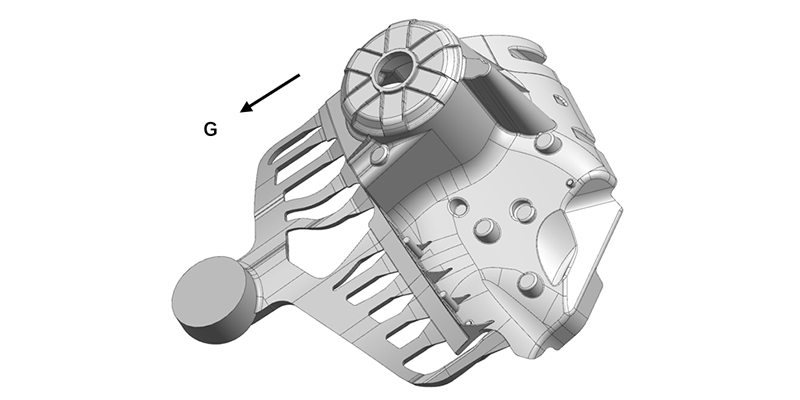
Achieving peak performance for an EV shock tower through HPDC is not a simple task; it requires a deep dive into every aspect of the process. My experience has shown me that optimization begins long before the actual casting.
Key Optimization Strategies
| Strategy | Description | Impact on Shock Tower Performance |
|---|---|---|
| Optimized Alloy Selection | Moving beyond standard alloys to specific, heat-treatable aluminum alloys (e.g., A356, A357, or specialized high-ductility alloys) known for their ability to achieve higher mechanical properties after T5 or T6 heat treatment. | Enhances yield and tensile strength, improves ductility for better crash performance, and allows for further weight reduction by enabling thinner wall sections. |
| Advanced Mold Design | Utilizing sophisticated CAD/CAE tools for mold design, focusing on optimal gating, runner systems, and cooling channel layouts. This includes multi-cavity designs for high volume and robust vent systems to prevent air entrapment. | Ensures complete and uniform mold filling even in complex areas, minimizes stress concentrations, reduces cycle times, improves dimensional stability, and extends mold life. |
| Vacuum Die Casting | Implementing vacuum assistance in the die casting machine to evacuate air and gases from the mold cavity prior to metal injection. | Virtually eliminates trapped gas porosity, enabling the production of welds (for assembly) and heat-treatable parts with superior mechanical properties and surface finish. |
| Real-time Process Control | Employing advanced sensors and control systems to monitor and adjust critical process parameters (temperature, pressure, speed, lubrication) in real-time during each shot. | Ensures consistent part quality, reduces scrap rates, minimizes variations in mechanical properties, and optimizes efficiency for high-volume production. |
What challenges must we address for HPDC of critical safety components like shock towers?
Are you aware of the specific challenges that arise when applying HPDC to safety-critical components such as shock towers? Overlooking these can lead to compromised structural integrity and compliance issues.
Addressing HPDC challenges for shock towers involves meticulously managing potential defects like porosity, cold shuts, and cracks, ensuring material integrity through advanced simulation and inspection, and maintaining strict dimensional precision.
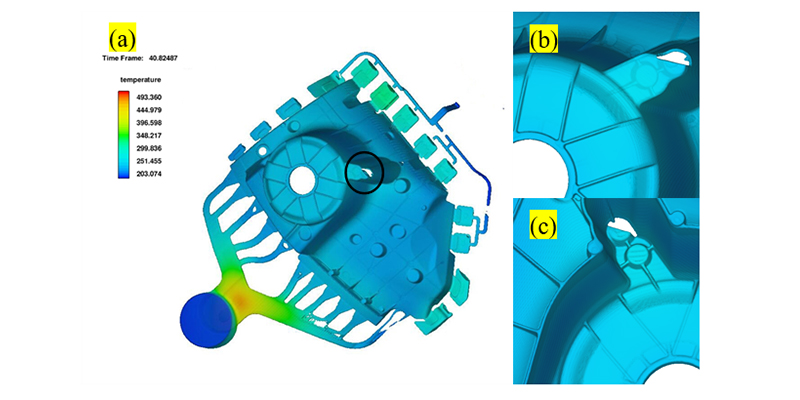
Manufacturing safety-critical components like shock towers with HPDC definitely presents specific hurdles that demand rigorous attention. My team frequently deals with these challenges head-on.
One primary concern is porosity. While vacuum die casting helps, complete elimination is difficult. Any trapped gas bubbles or shrinkage porosity can act as stress concentrators, drastically reducing the part’s fatigue life and crash performance. We counter this with advanced mold flow simulation to predict and mitigate common areas for porosity, coupled with stringent X-ray or CT inspection.
Another challenge is cold shuts, where two streams of molten metal meet but don’t fully fuse due to prematurely cooling. This creates a weak line in the part. Our DFM analysis carefully optimizes gate locations and metal flow paths, along with precise temperature control, to prevent cold shuts.
Cracking, especially hot tearing, can occur during solidification if the part geometry creates excessive internal stresses as it shrinks. Mold and part design, including optimized cooling rates and larger draft angles, are crucial for prevention.
Finally, dimensional precision is non-negotiable. Shock towers interface with multiple complex assemblies. Even slight deviations can cause assembly issues or negatively impact suspension geometry. We achieve this through robust mold design (considering thermal expansion and shrinkage), precise machine calibration, and strict quality control with CMM measurements. For our customers, especially those with tight project schedules from places like Canada and the US, proactively addressing these challenges is key to successful project delivery.
What are the future trends and innovations for EV shock towers via HPDC?
Are you wondering how High-Pressure Die Casting for EV shock towers will evolve to meet future demands for lighter, stronger, and more integrated automotive structures? The industry is on the cusp of significant breakthroughs.
Future trends in HPDC for EV shock towers include advanced giga casting techniques for single-piece body structures, integrated multi-material designs, smart manufacturing with AI/IoT for predictive quality, and continuous material innovation.
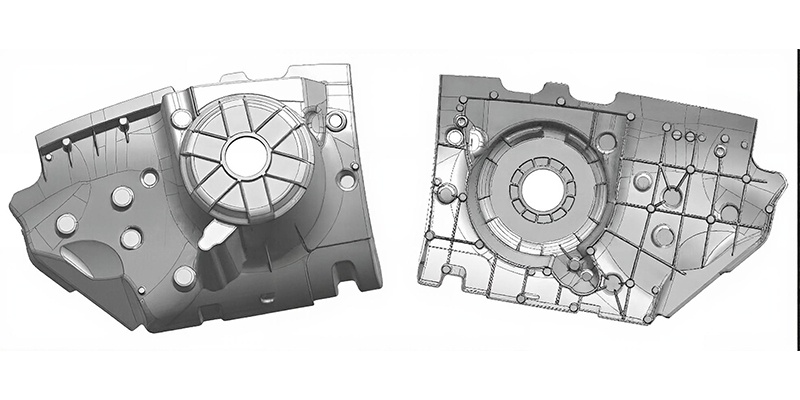
The future of HPDC for EV shock towers is incredibly exciting, driven by the relentless pursuit of efficiency and performance. I see several key trends shaping how these critical components will be designed and manufactured.
Emerging Technologies and Innovations
| Trend | Description | Potential Impact on EV Shock Towers |
|---|---|---|
| Giga Casting & Mega Casting | The use of extremely large die casting machines (up to 6,000-9,000 tons) to produce entire sections of a vehicle’s underbody or chassis, integrating multiple structural components, including shock towers, into a single casting. | Drastically reduces part count and assembly complexity, leading to significant weight savings, potentially lower manufacturing costs, and enhanced structural rigidity for the entire vehicle front/rear end. |
| Multi-Material Integration | Developing processes to cast aluminum directly onto or around dissimilar materials (e.g., steel inserts, carbon fiber composites) to combine the best properties of each material. | Enables localized strengthening in high-stress areas or specific functional requirements (e.g., wear resistance, specific damping properties) while retaining overall lightweight aluminum design for the shock tower. |
| Smart Manufacturing (AI/IoT) | Integrating Artificial Intelligence and Internet of Things sensors into the die casting process for real-time monitoring, predictive maintenance, and adaptive process control. | Leads to even higher quality consistency, reduced scrap rates, optimized energy consumption, and the ability to fine-tune production based on real-time feedback, making the shock tower manufacturing process more robust and efficient. |
| Advanced Alloys & Surface Treatments | Continuous development of new aluminum alloys with improved mechanical properties (higher ductility, strength), better castability, and novel surface treatments for enhanced corrosion and wear resistance. | Allows for further lightweighting without compromising safety, provides superior performance in extreme environments, and extends the lifespan of shock tower components, crucial for the long-term durability of electric vehicles. |
Conclusion
Optimizing the aluminum die casting process for EV shock towers is vital, balancing lightweighting, structural integrity, and NVH. Continuous innovation in materials, large-scale casting, and smart manufacturing will drive the next generation of safe, efficient, and high-performance electric vehicles.


