

The electric motor is the heart of an electric vehicle (EV), and its performance, efficiency, and longevity depend heavily on a critical, often-overlooked component: the electric motor housing. As a leading die-casting manufacturer specializing in automotive aluminum parts, we understand that this isn’t just a simple cover. It’s a multi-functional, high-performance piece of engineering crucial to the EV revolution.
This guide explores everything you need to know about EV motor housings, from their core functions and material choices to why aluminum die-casting has become the gold standard for manufacturing these essential EV parts.
What is an Electric Motor Housing?
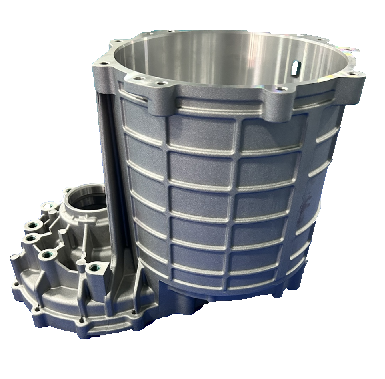
An electric motor housing is the protective outer casing that encloses the motor’s internal components, such as the stator, rotor, and windings. But its role goes far beyond simple protection. It is a structural component that performs several vital functions simultaneously.
Key Functions of an EV Motor Housing:
- Structural Support: It provides a rigid frame for mounting the motor securely to the vehicle’s chassis or transaxle and aligns internal components with precision.
- Protection: It shields sensitive electronics and mechanical parts from environmental hazards like water, dust, dirt, and road debris (Ingress Protection).
- Thermal Management: It acts as a heat sink, dissipating the immense heat generated by the motor during operation to prevent overheating and ensure optimal performance.
- Electromagnetic Interference (EMI) Shielding: The housing helps contain electromagnetic fields generated by the motor, preventing interference with other electronic systems in the vehicle.
- Noise, Vibration, and Harshness (NVH) Reduction: A well-designed housing helps dampen motor vibrations and noise, contributing to a smoother and quieter ride.
Material Matters: Why Aluminum is the Top Choice
The material used for an EV motor housing directly impacts the vehicle’s range, performance, and durability. While various materials could be used, aluminum alloys have emerged as the superior choice for high-performance EV applications.
Material Comparison for Motor Housings
| Feature | Aluminum Alloys | Cast Iron / Steel | Magnesium Alloys |
|---|---|---|---|
| Weight | Lightweight | Heavy | Very Lightweight |
| Thermal Conductivity | Excellent | Poor | Good |
| Strength-to-Weight Ratio | Excellent | Good | Good |
| Corrosion Resistance | Very Good | Poor (requires coatings) | Moderate (requires coatings) |
| Cost | Cost-Effective | Low | High |
| Manufacturability | Excellent for complex shapes (Die-Casting) | Good (Casting/Stamping) | Challenging |
As the table shows, aluminum provides the best all-around balance of lightweighting, thermal performance, strength, and cost-effectiveness, making it the ideal material for modern EV parts.
The Power of Die-Casting for EV Motor Housings
Choosing the right material is only half the battle; the manufacturing process is equally critical. High-Pressure Die-Casting (HPDC) is the premier manufacturing method for producing aluminum electric motor housings for several compelling reasons.
1. Lightweighting for Extended Range
Every gram saved in an EV translates to increased battery range. Aluminum die-casting produces strong yet lightweight parts, reducing the overall vehicle weight and improving energy efficiency.
2. Superior Thermal Management
The die-casting process allows for the integration of complex features like thin-walled cooling channels directly into the housing design. This enables highly efficient liquid-cooling systems that are essential for managing the heat from high-power electric motors.
An infographic showing heat dissipating from an EV motor through the housing’s cooling channels.
alt text: Diagram showing arrows representing heat flow away from an electric motor core into the integrated liquid cooling channels of the aluminum housing.
3. Complex Geometry and Part Integration
EV design requires compact and efficient packaging. Die-casting enables the creation of intricate, near-net-shape parts. This means features like mounting brackets, fluid ports, and strengthening ribs can be integrated into a single, complex component, reducing the need for assembly and potential points of failure.
4. Scalability and Cost-Effectiveness
For the high volumes required by the automotive industry, HPDC is an incredibly efficient and repeatable process. It offers rapid cycle times and minimal material waste, making it highly cost-effective for mass production without compromising on quality or precision.
5. Exceptional Strength and Durability
Modern aluminum alloys, combined with the die-casting process, produce robust and durable housings that can withstand the harsh vibrations, temperatures, and structural loads of an automotive environment.
Key Design Considerations for a High-Performance Motor Housing
As an experienced automotive parts manufacturer, we collaborate with engineers to optimize housing designs for performance and manufacturability. Key considerations include:
- Wall Thickness: Balancing strength requirements with the need for lightweighting and effective heat transfer.
- Rib & Gusset Design: Adding structural ribs to enhance rigidity and strength without significantly increasing weight.
- Draft Angles: Incorporating slight tapers to ensure the part can be easily ejected from the casting mold.
- Cooling Channel Layout: Optimizing the path of the cooling fluid for maximum heat dissipation from critical areas.
- Machining Tolerances: Identifying critical surfaces that require post-casting CNC machining for precise mounting and sealing.
- Sealing Surfaces: Designing robust grooves for gaskets or O-rings to ensure a high Ingress Protection (IP) rating, like IP67 or higher.
Partner with an Expert in Automotive Die-Casting
The electric motor housing is a testament to the advancements in EV technology and manufacturing. Its evolution from a simple cover to a complex, thermally-managed structural component highlights the need for specialized expertise.
Choosing a manufacturing partner with deep experience in automotive aluminum die-casting is crucial for success. An expert partner brings:
- Design for Manufacturability (DFM) insights to optimize your design for cost and quality.
- Advanced Simulation Software to predict casting flow and thermal performance.
- In-house CNC Machining for finishing parts to tight tolerances.
- Rigorous Quality Control and IATF 16949 certification to meet stringent automotive standards.
If you are developing the next generation of electric vehicles, your motor deserves a housing that enhances its performance, reliability, and efficiency.
Ready to build a better EV? Contact our engineering team today to discuss your electric motor housing project and discover how our aluminum die-casting expertise can drive your success.


