

As a leading manufacturer of automotive aluminum die-cast parts, we are constantly pushing the boundaries of what’s possible in lightweighting, strength, and performance. The challenge has always been joining aluminum components—especially high-integrity die-castings—without compromising their structural properties. Traditional welding methods often introduce heat-related defects like porosity and cracking.
Enter Friction Stir Welding (FSW), a revolutionary solid-state joining process that is transforming automotive manufacturing. This article explores what FSW is, how it compares to traditional methods, and why it’s a critical technology for the future of aluminum automotive components.
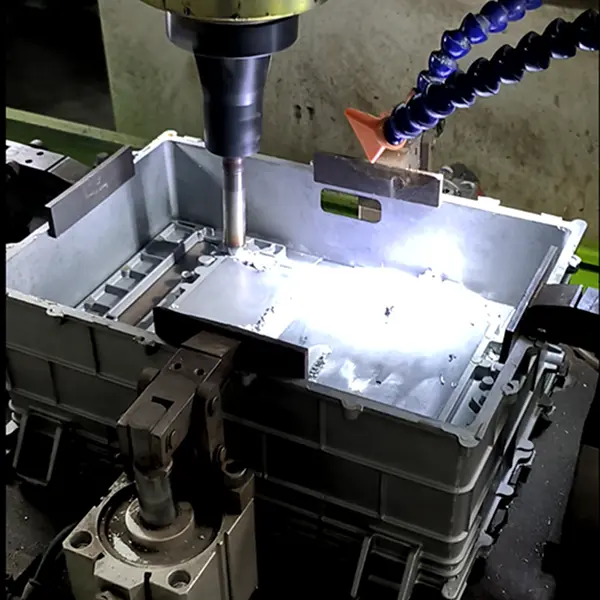
What is Friction Stir Welding? A Simple Explanation
Friction Stir Welding is a solid-state joining technique, meaning the metal is not melted to create the weld. Instead, a non-consumable, rotating tool is plunged into the interface of two workpieces.
The tool has two primary parts: a shoulder and a pin.
- Friction & Heating: The rotation of the shoulder against the top surface of the material generates significant frictional heat.
- Softening & Stirring: This heat plasticizes (softens, but doesn’t melt) the material around the pin.
- Forging: As the tool traverses along the joint line, the softened material is "stirred" together and forged under immense pressure from the tool shoulder.
The result is a high-integrity, solid-state weld with a fine-grained microstructure, often exhibiting mechanical properties superior to the parent material itself.
FSW vs. Traditional Fusion Welding: A Comparison for Die-Casters
For manufacturers familiar with MIG or TIG welding aluminum, the differences with FSW are stark. The primary advantage lies in avoiding the liquid-to-solid phase transition, which is the source of most welding defects in cast aluminum.
Here’s a breakdown of the key differences:
| Feature | Friction Stir Welding (FSW) | Traditional Fusion Welding (MIG/TIG) |
|---|---|---|
| Process State | Solid-State (No Melting) | Fusion (Melting Required) |
| Heat Input | Low and Localized | High and Widespread |
| Weld Quality | Excellent, fine-grained microstructure | Variable, depends heavily on operator skill |
| Porosity & Cracking | Virtually eliminated | Common risk, especially in cast aluminum |
| Material Distortion | Minimal due to low heat | Significant, often requires post-weld straightening |
| Post-Weld Treatment | Generally not required | Often requires grinding, heat treatment |
| Fumes & Spatter | None | Produces hazardous fumes, spatter, and UV radiation |
| Filler Material | Not required | Consumable filler wire or rod is necessary |
| Dissimilar Materials | Excellent for joining cast to wrought aluminum | Challenging, often requires special filler metals |
Key Benefits of Friction Stir Welding for Automotive Aluminum Parts
Adopting FSW technology for joining die-cast components unlocks several powerful advantages for automotive applications.
1. Unmatched Weld Integrity and Strength
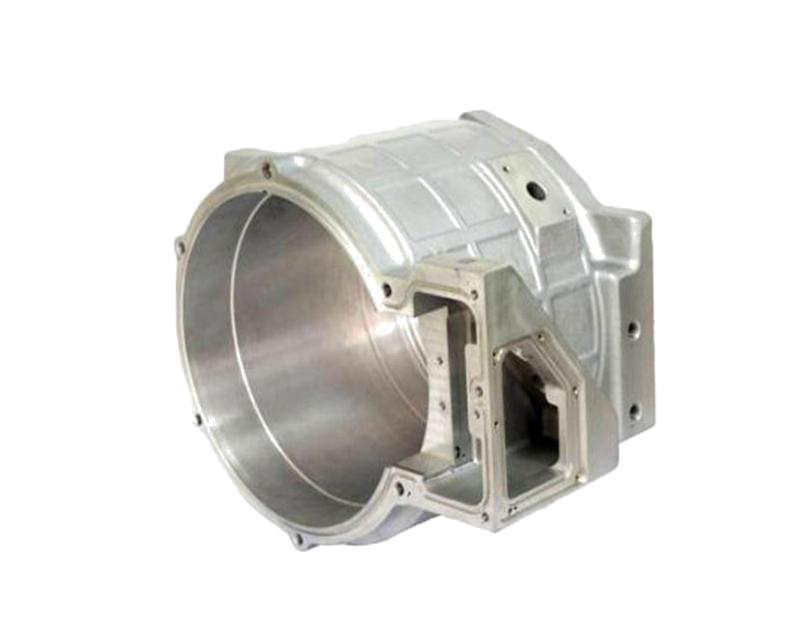
Because the material never melts, FSW avoids common fusion welding defects like porosity, solidification cracking, and segregation. This results in a mechanically superior joint that is void-free and leak-proof—critical for components like battery trays and fluid reservoirs.
2. Ideal for High-Integrity Die-Cast Aluminum
Die-cast aluminum alloys, particularly those with high silicon content, are notoriously difficult to weld using traditional methods due to their susceptibility to hot cracking. FSW bypasses this issue entirely, making it possible to create strong, reliable joints in high-pressure die-cast (HPDC) parts.
3. Minimal Distortion and Dimensional Stability
The low heat input of FSW means minimal thermal distortion. This is a huge benefit for complex automotive assemblies with tight tolerances, such as chassis components, engine cradles, and space frames, reducing the need for costly post-weld machining or straightening.
4. Enables Innovative Multi-Material Designs
FSW excels at joining dissimilar materials, such as a die-cast aluminum node to a wrought aluminum extrusion. This allows engineers to design hybrid structures that optimize weight, cost, and performance by using the right material form in the right place.
5. Environmentally Friendly and Safe Process
FSW is a clean manufacturing process. It produces no welding fumes, no spatter, and no harmful UV radiation, creating a safer work environment. It also eliminates the need for shielding gases and consumable filler wires, reducing operational costs and environmental impact.
Automotive Applications Where FSW Is Leading the Way
The unique benefits of FSW make it the perfect solution for some of the most demanding automotive applications:
- Electric Vehicle (EV) Battery Trays: FSW provides the leak-proof, high-strength, and dimensionally stable welds needed to protect sensitive battery modules.
- Chassis and Space Frames: Joining cast nodes to extruded rails creates lightweight, rigid frames with exceptional crash performance.
- Engine Cradles and Suspension Components: The high fatigue resistance of FSW joints is ideal for parts subjected to constant vibration and stress.
- Wheels: Some high-performance forged aluminum wheels use FSW to join separate rim and hub pieces.
- Heat Exchangers and Cooling Plates: FSW ensures leak-proof channels for thermal management systems in EVs and internal combustion engines.
Is FSW the Right Choice for Your Die-Casting Operation?
While FSW requires a significant initial investment in equipment and fixturing, the return on investment for the right application is undeniable. The process delivers unparalleled quality, enables innovative designs, and reduces downstream correction costs.
For high-performance automotive components where weld integrity cannot be compromised, Friction Stir Welding is not just an alternative—it is the superior solution.
As a leader in automotive aluminum die-casting, we are committed to leveraging cutting-edge technologies like FSW to deliver lighter, stronger, and more reliable components for our partners.
Ready to discuss how our expertise in aluminum die-casting and advanced joining technologies can elevate your next project? Contact our engineering team today.


