

Are your die-casting molds1 failing far earlier than expected? This unplanned downtime destroys production schedules and inflates your costs, forcing you to pay for constant repairs and early replacements.
Improve mold life by using high-quality steel like H13, optimizing the design to reduce stress, managing thermal shock through proper preheating, applying protective coatings, and performing disciplined, regular maintenance.
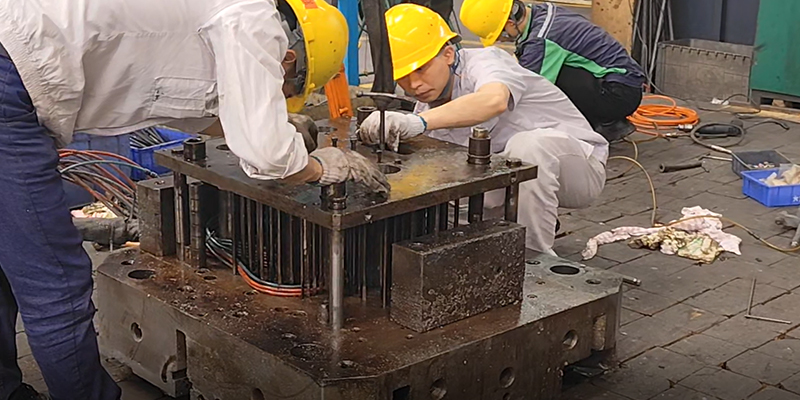
I’ve seen this problem countless times. I once visited a customer’s plant where a critical mold for a transmission housing was failing every 30,000 shots, causing major line stoppages. The purchasing director was under pressure for the constant repair costs, and the quality engineer was dealing with inconsistent parts. We found two main culprits: aggressive thermal shock from insufficient preheating and a complete lack of a preventive maintenance log. By implementing a strict preheating protocol and a simple daily maintenance checklist, we got that same tool to run well past 100,000 shots. It’s not magic; it’s a disciplined process that transforms a liability into a reliable asset.
Why is selecting high-quality materials the first step for a durable mold?
Does choosing cheaper mold steel seem like an easy way to save money upfront? This false economy always leads to early cracks and failures, costing you far more in repairs and replacements.
High-quality tool steels, like premium-grade H13, offer superior thermal fatigue resistance and toughness. This is the essential foundation for a long-lasting mold that can withstand the harsh die-casting environment.
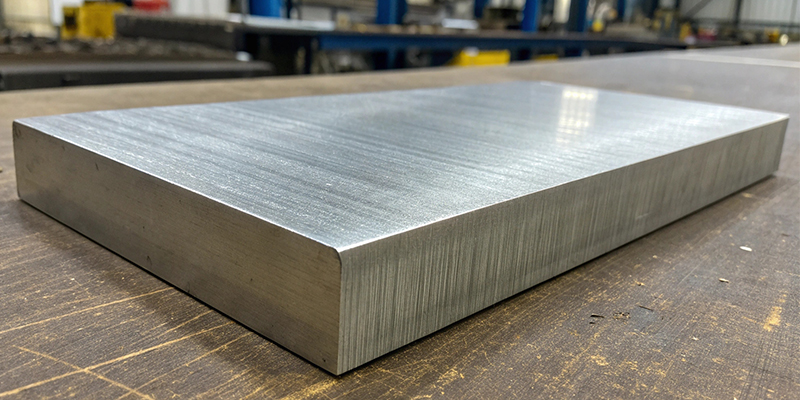
You can’t build a strong house on a weak foundation. The same is true for a die-casting mold. The constant cycle of being hit with 700°C molten aluminum and then cooled causes immense stress. Standard-grade steel just cannot handle this for long. For my clients, especially those in demanding markets like Germany and the US, specifying premium steel is a non-negotiable starting point.
Beyond the Grade: What Matters Most
"High-quality" means more than just the name of the steel. It’s about its purity. Impurities in the steel, known as inclusions, act as tiny starting points for cracks.
| Steel Type | Production Method | Purity Level | Performance Impact |
|---|---|---|---|
| Standard H13 | Conventional | Standard | Prone to early cracking under high thermal stress. |
| Premium H13 | ESR / VAR* | High | Fewer inclusions, leading to significantly better fatigue life and toughness. |
*ESR (Electro-Slag Remelting) and VAR (Vacuum-Arc Remelting) are secondary refining processes that create much cleaner, more uniform steel. Insisting on this quality level is the single best investment you can make in your mold’s lifespan.
How does optimizing the mold design reduce wear and stress?
Is your mold design cracking at sharp corners or eroding near the gate? These design flaws are hidden stress points that drastically shorten your tool’s operational life, no matter how good the steel is.
Optimized design minimizes stress concentration by using generous radii and fillets instead of sharp internal corners. It also ensures proper gating to prevent erosion from high-velocity metal flow.
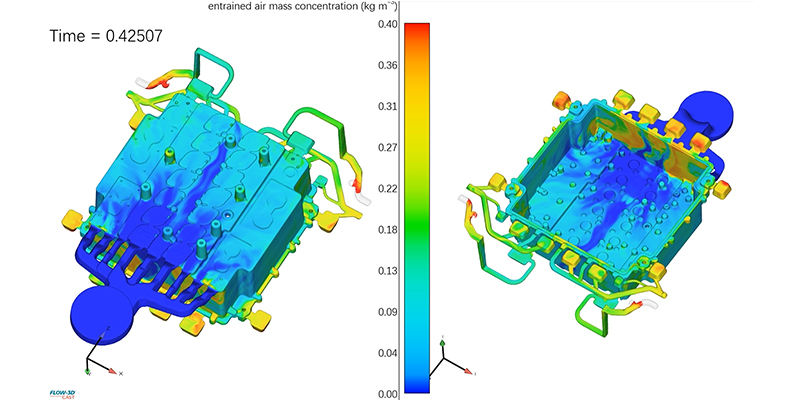
This is where engineering experience really pays off. A part drawing only tells you the final shape; it doesn’t tell you how to make a durable tool. Before we cut any steel, my team and I spend hours running mold flow simulations. This lets us build a "digital twin" of the mold to see exactly where the potential problems are. We can predict where the tool will get too hot, where the molten metal will act like a sandblaster, and most importantly, where stress will build up.
Using Simulation to Prevent Failure
- Predicting Hot Spots: Simulation shows us areas that will stay hot, which weakens the steel over time. We can then design targeted cooling channels to extract heat efficiently and keep the mold at a stable temperature.
- Minimizing Erosion: We can see the velocity of the molten aluminum as it enters the cavity. If the speed is too high in one area, it will erode the steel. We can then redesign the gate and runner system to create a smoother, less aggressive fill.
- Eliminating Sharp Corners: A sharp internal corner concentrates stress, like bending a paperclip in the same spot over and over. By changing a sharp corner to a smooth, generous radius, we can distribute that stress over a larger area, dramatically improving fatigue life.
How does proper preheating and temperature management extend mold life?
Are operators on the floor skipping the preheating step just to start production faster? This common shortcut subjects your expensive tool to massive thermal shock, causing surface cracks and catastrophic failures.
Proper preheating slowly and evenly brings the mold to its optimal operating temperature. This prevents the extreme thermal shock that occurs when hot molten aluminum hits a cold steel die, which is a primary cause of cracking.
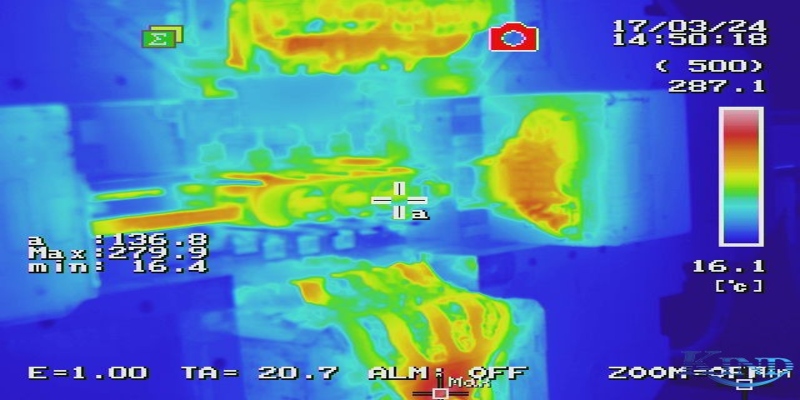
Think about pouring boiling water into a cold glass—it can shatter. The same principle applies to your mold, but on a much more extreme scale. Your mold might be at 25°C in the factory, and suddenly it’s hit with a 700°C shot of aluminum. The surface of the steel wants to expand instantly, but the cold steel just beneath it resists. This battle creates immense stress and microscopic cracks on the surface. After thousands of cycles, these cracks grow and lead to failure. Proper preheating is absolutely non-negotiable.
Best Practices for Thermal Management
- Slow and Steady Preheating: The goal is to bring the entire mold block to a uniform temperature, typically around 150°C to 250°C, depending on the alloy. This should be done slowly over an hour or two using built-in cartridge heaters or external preheaters.
- In-Process Temperature Control: The job isn’t done after preheating. We use a thermal control unit to circulate oil or water through the mold’s cooling channels during production. This actively removes heat and keeps the a stable, an even a temperature, preventing hot or cold spots from developing during the run.
Why apply heat treatments and protective coatings?
Even with great material and design, is the surface of your mold still showing signs of wear and heat checking? Over time, the raw steel surface will inevitably soften and degrade.
Heat treatments optimize the steel’s core properties for toughness, while protective surface coatings like nitriding or PVD provide a hard, wear-resistant "skin." This combination creates a mold that is both strong and durable.
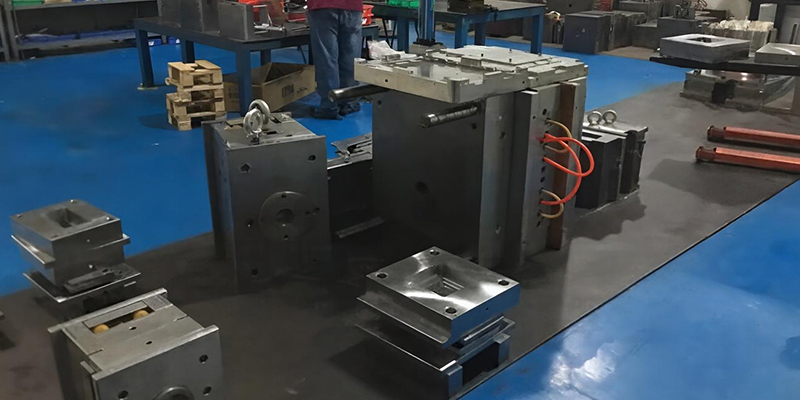
Let’s break this down. The mold needs two different properties to survive. The core of the tool needs to be tough and resilient so it can absorb the shock of clamping and injection without breaking. The surface, however, needs to be extremely hard to resist wear, erosion, and soldering (when aluminum sticks to the die). You cannot achieve both with a single piece of untreated steel. This is why we use a multi-stage approach.
The Core and the Skin
- Heat Treatment (The Core): After the mold is machined, it goes through a precise heat treatment process. This involves heating it to a very high temperature in a vacuum furnace, quenching it, and then tempering it multiple times. This carefully controlled process develops the ideal microstructure within the steel, giving it the toughness needed to handle millions of cycles.
- Surface Coating (The Skin): After heat treatment, we apply a a very hard surface coating.
- Nitriding: This treatment diffuses nitrogen into the steel’s surface, creating a hard case that is excellent at resisting wear and heat checking.
- PVD (Physical Vapor Deposition) Coatings: These are ultra-thin ceramic coatings that are even harder than nitrided surfaces. They provide exceptional resistance to both wear and soldering.
Why is regular maintenance the key to sustained performance?
Are you only looking at your molds when something breaks? This reactive approach is inefficient and costly. A disciplined maintenance plan is the key to maximizing the life of every tool in your factory.
Regular maintenance catches small problems before they become catastrophic failures. Simple daily practices like cleaning, lubricating, and inspecting for wear are the most effective ways to ensure a long and productive mold life.
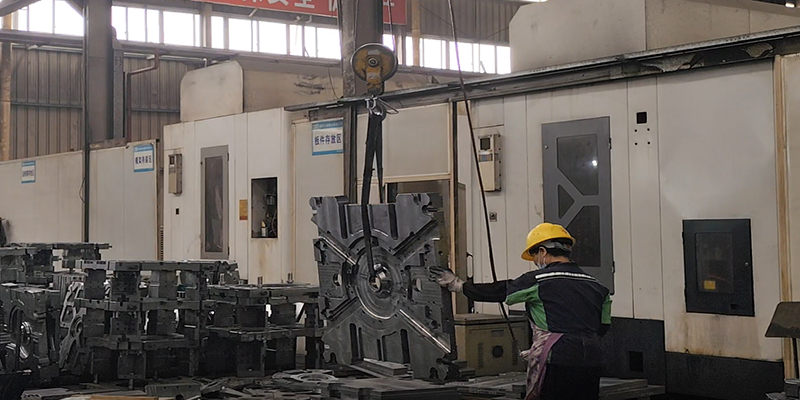
A die-casting mold is a high-performance machine, not a simple block of steel. Just like a race car, it needs constant attention to perform at its best. Neglecting maintenance is the fastest way to ruin a perfectly good tool. At EMP Tech, we provide our customers with a detailed maintenance schedule for every mold we build. This isn’t just a suggestion; it’s a critical part of the operating instructions.
The Simple but Critical Maintenance Checklist
Your operators and tool room staff should have a schedule for tasks like:
- Every Shift: Check and lubricate all guide pins and moving slides. Clean any aluminum buildup or flash from the parting line.
- Weekly: Perform a more detailed inspection of the cavity surface for early signs of heat checking or erosion. Check all cooling lines for leaks.
- Preventive Maintenance (PM) at Set Intervals: After a set number of shots (e.g., 50,000), the mold should be removed from the machine for a full teardown. This allows for polishing the cavity, replacing worn ejector pins, and addressing any small issues before they stop production.
Conclusion
Maximizing mold life isn’t about a single magic bullet. It’s about a disciplined approach combining quality materials, smart design, thermal control, advanced treatments, and most importantly, consistent daily maintenance.
Explore expert insights on maintaining die-casting molds to enhance their lifespan and performance. ↩


