

In every modern vehicle, a silent, powerful network is constantly at work. It’s the unseen brain that fine-tunes engine performance, prevents wheels from locking during a sudden stop, and manages everything from the air conditioning to the radio. This network is built on Electronic Control Systems (ECS), the core technology that has transformed the automotive and manufacturing industries.
As a leader in producing high-integrity aluminum die-cast components for automotive parts, we understand that the performance of these systems is only as good as the hardware that protects and enables them. This guide will explore what an Electronic Control System is, its critical role in vehicles, and why its physical components are just as important as its software.
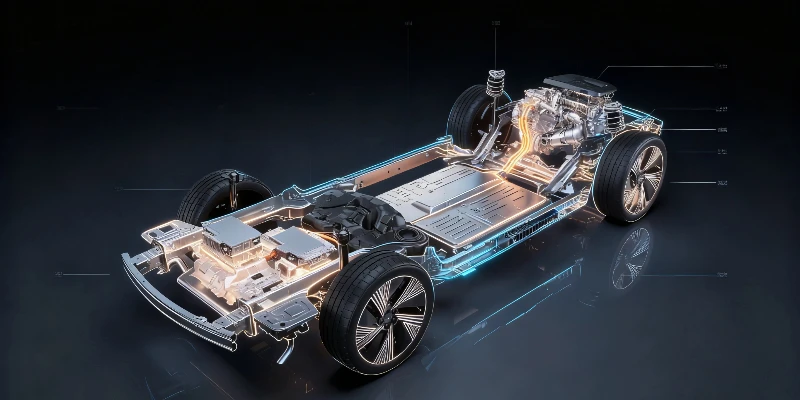
An Electronic Control System is the central nervous system of a modern vehicle, connecting all critical components.
What is an Electronic Control System?
At its core, an Electronic Control System is an interconnected set of electronic devices designed to manage, command, and regulate the behavior of another system. The main goal is to achieve a desired output with precision and efficiency. The system operates on a simple yet powerful three-step loop:
- Input (Sensing): The system gathers data using sensors. These sensors detect physical conditions like temperature, speed, oxygen levels, or wheel rotation and convert this information into electrical signals.
- Process (Control): A central Electronic Control Unit (ECU), or controller, receives these signals. This microprocessor analyzes the data based on pre-programmed algorithms and logic, instantly deciding what action needs to be taken.
- Output (Action): The ECU sends a command to an actuator. The actuator is the "muscle" that performs a physical task, such as adjusting the fuel-to-air mixture, applying braking pressure, or changing the transmission gear.
This entire process happens thousands of times per second, creating a responsive and dynamically adjusting system.
The Heart of the System: The Electronic Control Unit (ECU)
In the automotive context, the ECU is the most critical part of the electronic control system. Modern cars can have over 100 ECUs, each dedicated to a specific function:
- Engine Control Unit (ECU): The main "brain" of the engine, optimizing fuel injection, ignition timing, and valve timing for maximum power and efficiency while minimizing emissions.
- Transmission Control Unit (TCU): Manages automatic gear shifts for a smooth and fuel-efficient ride.
- Braking Control Module (BCM): Governs the Anti-lock Braking System (ABS) and Electronic Stability Control (ESC) to ensure vehicle safety during hard braking and cornering.
- Body Control Module (BCM): Controls interior functions like power windows, lighting, security systems, and climate control.
Why Robust Housing is Critical for ECUs
These powerful processors operate in one of the harshest environments imaginable: a moving vehicle. They are subjected to extreme heat, constant vibration, moisture, and electromagnetic interference (EMI). This is where the physical housing becomes paramount.
High-quality aluminum die-cast housings are the industry standard for protecting ECUs. Their benefits include:
- Superior Heat Dissipation: Aluminum naturally draws heat away from sensitive electronics, preventing overheating and ensuring long-term reliability.
- EMI Shielding: The metal casing acts as a Faraday cage, protecting the internal components from electromagnetic interference that could disrupt their function.
- Durability and Protection: Die-cast aluminum provides exceptional strength and rigidity, protecting the ECU from physical shock, vibration, and moisture.
Without a robust, precision-engineered housing, even the most advanced ECU would quickly fail.
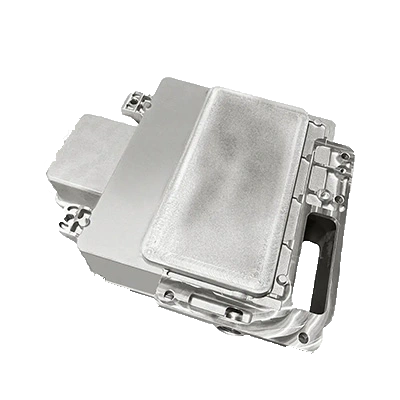
A high-pressure aluminum die-cast housing protects critical ECUs from heat, vibration, and electromagnetic interference.
Types of Control Systems in Automotive Applications
Electronic control systems in cars primarily use a closed-loop approach for critical functions.
- Open-Loop System: A simpler system that performs an action without checking the result. An example would be an old-fashioned car heater where you turn the fan on, but the system doesn’t adjust itself to maintain a specific temperature.
- Closed-Loop System (Feedback System): This is the standard for almost all modern automotive controls. The system constantly monitors the output via sensors and adjusts its actions to maintain a desired state. For example, the ECU uses oxygen sensors in the exhaust to continuously adjust the fuel mixture for optimal combustion. This feedback loop is what makes modern engines so efficient and clean.
The Future of Automotive Electronic Controls
The role of electronic control systems is only expanding. The drive towards electric vehicles (EVs) and autonomous driving is placing even greater demands on these systems.
- EVs: Battery Management Systems (BMS) are complex ECUs that monitor the health, temperature, and charge of every cell in a battery pack, which is critical for safety and range.
- Autonomous Driving: Self-driving cars rely on a powerful central computer that processes massive amounts of data from cameras, LiDAR, and radar in real-time to make life-or-death decisions. These systems require even more advanced processing power and, consequently, more robust thermal management and physical protection.
As vehicles become more like "computers on wheels," the demand for reliable, powerful, and impeccably protected electronic control systems will continue to soar. This makes the partnership between advanced electronics and high-performance mechanical components, like aluminum die-castings, more crucial than ever before.


