

Are your current manufacturing strategies falling short in delivering the precision, lightweighting, and durability demanded by next-gen automotive and other advanced industries? Traditional approaches often struggle with evolving performance requirements.
Mastering High-Pressure Die Casting (HPDC) involves integrating advanced alloy development, precise process control, innovative mold design, and meticulous defect management to meet the stringent demands of modern automotive and lightweighting applications.
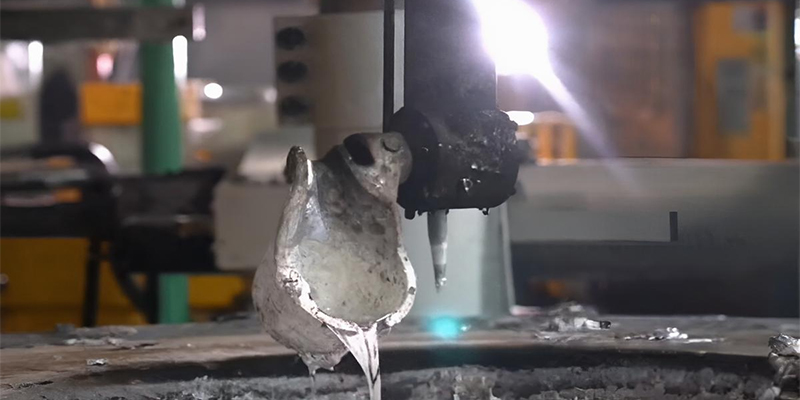
For over two decades, I have lived and breathed aluminum alloy die casting, moving from the shop floor to an engineering consultant. In that time, I’ve seen the industry transform, driven by an insatiable demand for lighter, stronger, and more complex parts. The challenges from our Tier 2 automotive customers—from places like Germany, Italy, and Canada—have pushed us to constantly innovate. They need components that not only meet rigid specifications for strength and lightweighting but also deliver exceptional performance in the harsh environments of electric vehicles. Mastering HPDC isn’t just about pouring metal; it’s about anticipating future needs, understanding material science at a microscopic level, and optimizing every fractional second of the casting process. It’s about turning complex requirements into manufacturable realities that power the next generation of solutions.
How does precision HPDC meet the demands of Electric Vehicle manufacturing?
Are you struggling to adapt your manufacturing processes to the unique and stringent demands of Electric Vehicle (EV) components? The exacting requirements for EVs often expose weaknesses in conventional casting methods.
Precision HPDC meets EV manufacturing demands by consistently producing lightweight, high-strength, and dimensionally accurate components, enabling the integration of complex features essential for thermal management, EMI shielding, and structural integrity.
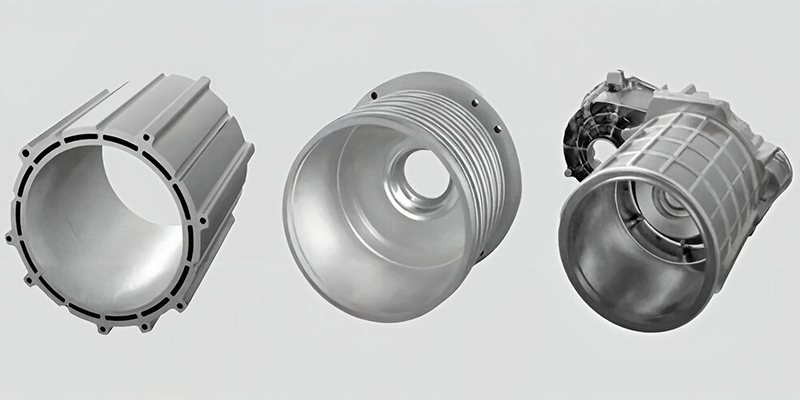
The electric vehicle revolution has fundamentally reshaped the requirements for automotive components. EVs demand parts that are not just strong but also exceptionally light to maximize range, highly efficient at dissipating heat, effective at shielding electromagnetic interference (EMI), and capable of incredible functional integration. This is where precision HPDC shines. For motor housings, for example, we are asked to cast parts with extremely thin walls (as low as 2-3mm) for weight savings, while simultaneously integrating complex cooling channels and fin structures for thermal management. This requires not only highly optimized mold designs but also advanced process control to ensure consistent fill and defect-free parts. Furthermore, the inherent ability of aluminum die castings to provide EMI shielding is invaluable for protecting sensitive EV electronics. I’ve personally overseen projects for motor controller housings and OBC (On-Board Charger) housings where the precision and repeatability of HPDC were absolutely critical to achieving both the demanding performance specifications and the high production volumes required by our global Tier 2 customers.
How do advanced alloys and process control elevate die casting performance?
Are you finding your current die casting performance limited by conventional alloys or inconsistent process parameters? Without innovation in materials and control, achieving peak component durability and functionality is a significant challenge.
Advanced alloy development and precise process control elevate die casting performance by enabling superior mechanical properties and improved part integrity, allowing for thinner walls, higher strength, and better surface finishes crucial for demanding applications.
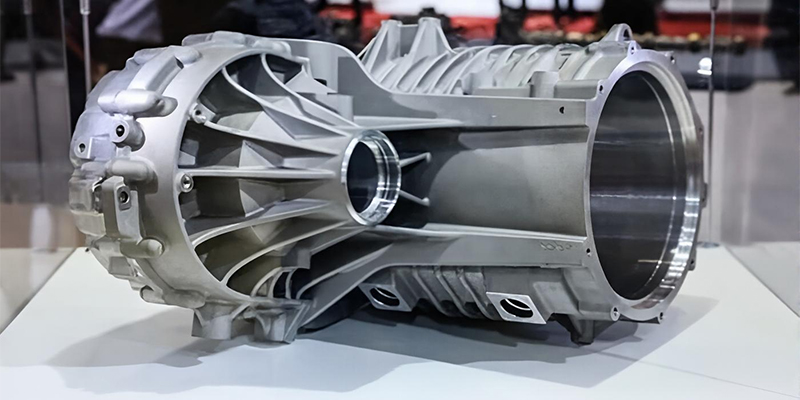
Elevating die casting performance goes beyond simply "making it work"; it’s about pushing the boundaries of what’s possible with aluminum. This involves a dual focus: innovative materials and meticulous process control.
Leveraging Advanced Alloys
| Feature | Conventional Alloys (e.g., A380) | Advanced Alloys (e.g., A356, A357, Aural 2, new high-ductility alloys) | Impact on Performance |
|---|---|---|---|
| Heat Treatability | Limited | Excellent (e.g., T5, T6) | Enables mechanical property enhancement post-casting, achieving higher tensile strength, yield strength, and hardness, crucial for structural parts. |
| Ductility/Elongation | Moderate | Improved | Provides better crash performance and fatigue resistance, allowing parts to deform rather than fracture, which is vital for safety-critical components and energy absorption. |
| Weldability | Challenging due to porosity | Often improved, especially with vacuum die casting. | Facilitates joining of die-cast components to other structures or to each other, expanding design possibilities and simplifying assembly. |
| Porosity Limits | Often higher acceptance for internal porosity | Stringent requirements, often paired with vacuum casting. | Leads to denser, more homogeneous material, reducing stress concentrators and improving overall part integrity. |
Meticulous Process Control
| Aspect | Traditional Approach | Optimized Approach (e.g., with EMP Tech) | Benefit |
|---|---|---|---|
| Material Feeding | Batch melting, manual alloy additions | Automated melt analysis, precise alloy composition control, continuous feeding. | Ensures consistent molten metal quality, minimizing variations in mechanical properties and preventing issues like dross or inclusions. |
| Injection Profile | Fixed speeds/pressures | Multi-stage, programmable injection profiles with real-time feedback. | Optimizes mold filling, reduces turbulence, minimizes air entrapment, and controls solidification, leading to fewer defects like cold shuts, porosity, and flow lines, especially in complex geometries. |
| Thermal Management | Basic mold heating/cooling systems | Conformal cooling channels, precise temperature mapping, active mold heating. | Maintains optimal mold temperatures, crucial for consistent part fill, rapid solidification, reduced cycle times, improved dimensional accuracy, and extended mold life. |
| Lubrication | Manual spray or less precise automation | Robotic, optimized spray patterns, water-based lubricants for specific areas. | Ensures proper die release, prevents sticking, minimizes tool wear, and contributes to better surface finish, critical for highly functional and aesthetic parts. |
How do we optimize HPDC for cost-efficiency and expedited production cycles?
Are you finding the HPDC process for your critical parts too expensive or too slow to meet market demands and production targets? Inefficient practices can quickly erode profit margins and delay product launches.
Optimizing HPDC for cost-efficiency and expedited production cycles uses lean manufacturing principles, advanced mold design for reduced cycle times, effective defect prevention, and robust DFM analysis to streamline the entire process from concept to delivery.
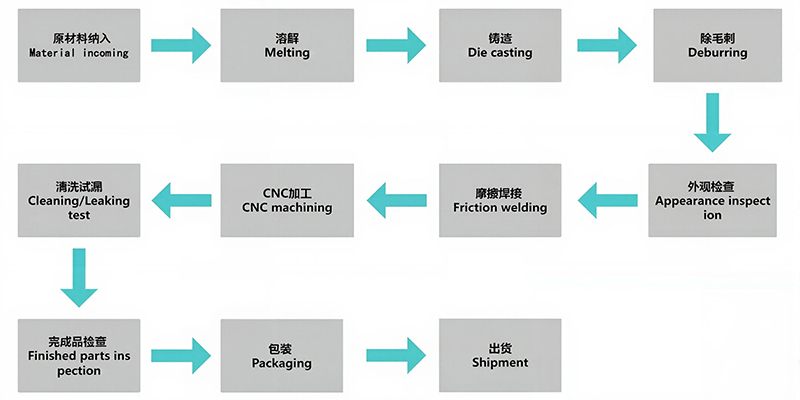
Optimizing HPDC for both cost-efficiency and speed is a direct outcome of the careful planning and execution that begins long before the first shot is cast. In my work with diverse clients, including the US and Czech Republic, I have found that a proactive, integrated approach is paramount.
Strategies for Efficiency and Speed
| Strategy | Description | Benefit |
|---|---|---|
| Comprehensive DFM Analysis | Early-stage collaboration with customers to evaluate product design for manufacturability, identifying potential casting issues, optimizing part geometry for HPDC, and suggesting design improvements that reduce complexity and material usage. | Prevents costly redesigns downstream, minimizes tooling adjustments, ensures castability from the outset, leading to faster design freezing and mold construction, and optimizes material use for cost savings. |
| Advanced Mold Design & Simulation | Utilizing sophisticated mold flow simulation software to predict metal flow, solidification patterns, potential defects (e.g., porosity, cold shuts), and thermal behavior of the mold. Includes designing for optimized gate/runner systems and conformal cooling. | Reduces the need for costly physical mold trials and iterative adjustments, shortens mold development time, improves first-time-right success rate, and significantly optimizes cycle times through efficient cooling, boosting overall throughput. |
| Defect Prevention at Source | Implementing robust process controls (as discussed previously), employing vacuum die casting, and utilizing real-time monitoring and feedback systems to detect and correct deviations preventing defect formation immediately. | Minimizes scrap rates, reduces the need for expensive post-casting rework or inspection, ensures consistent part quality, and eliminates delays associated with defect analysis and rectification. |
| Automation & Robotics | Integrating automation for part extraction, trimming, deburring, and inspection. This can include robotic pouring, spraying, and part handling. | Increases production speed and consistency, reduces labor costs, minimizes human error, improves workplace safety, and allows for lights-out manufacturing where feasible, leading to significantly expedited production cycles. |
| Lean Production Principles | Applying lean methodologies to the entire HPDC workflow, from material procurement to final packaging, focusing on eliminating waste (overproduction, waiting, unnecessary motion, etc.) and optimizing flow. | Streamlines the entire supply chain, reduces inventory holding costs, shortens lead times, improves responsiveness to demand fluctuations, and drives continuous process improvement for sustained efficiency gains. |
Beyond Automotive: Where else can HPDC innovations make an impact?
Are you limiting your view of HPDC to just the automotive sector, potentially missing out on lucrative opportunities in other high-growth industries? HPDC’s capabilities extend far beyond traditional applications.
Beyond automotive, HPDC innovations are making significant impacts in aerospace for lightweight components, electronics for intricate heat sinks and enclosures, and medical devices for precision, sterilization-compatible parts.
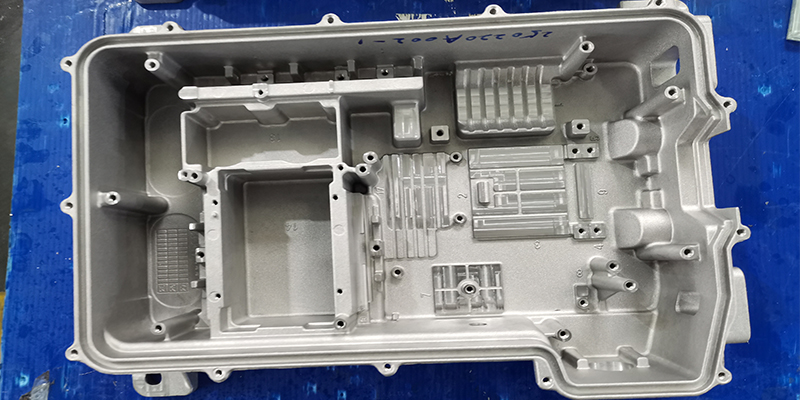
While automotive has historically been the primary driver for HPDC innovation, the core strengths of the process – high precision, excellent surface finish, lightweighting potential, and ability to cast intricate geometries – make it incredibly valuable across a multitude of other advanced industries.
Expanding Applications of HPDC
| Industry | Key HPDC Requirements | Typical Components | Impact of HPDC Innovation |
|---|---|---|---|
| Aerospace & Defense | Extreme lightweighting, high strength-to-weight ratio, structural integrity, fatigue resistance, dimensional stability, often with specific alloy requirements. | Brackets, housings for avionics, structural components, unmanned aerial vehicle (UAV) frames, thermal management parts. | Enables lighter aircraft and spacecraft, leading to increased fuel efficiency, extended range, and greater payload capacity; intricate designs for complex systems. |
| Electronics (5G, Data Centers) | Superior thermal management, EMI/RFI shielding, complex internal geometries for component integration, precise fit for sealing, aesthetics. | Heat sinks, server chassis, telecommunications equipment housings, smartphone/tablet frames (e.g., Apple’s use of die-cast aluminum for rigidity). | Facilitates efficient cooling of powerful processors, protects sensitive electronics from interference, allows for highly compact designs in consumer devices and telecom infrastructure, contributing to device longevity. |
| Medical Devices | High precision, smooth surface finishes for hygiene, corrosion resistance (e.g., sterilization), biocompatibility (for some parts), strength for instruments. | Surgical instrument housings, diagnostic equipment components, patient monitoring device enclosures, parts for mobility aids. | Provides sterile-compatible, robust, and aesthetically pleasing enclosures; enables complex internal structures for miniature devices, and contributes to the reliability and durability of critical medical equipment. |
| Industrial / Robotics | High strength, wear resistance, dimensional accuracy for assembly, vibration damping, ability to withstand harsh operating environments. | Robotic arm components, gearboxes, sensor housings, machine tool parts, pump housings, motor frames. | Enhances performance and lifespan of industrial machinery, reduces maintenance, allows for lighter and more capable robots, improving automation and efficiency in manufacturing. |
Conclusion
Mastering HPDC for next-gen solutions is key for automotive and lightweighting applications. It demands advanced alloys, precise process control, efficiency optimization, and expanded applications in aerospace, electronics, and medicine.


