

Are you wondering how Electric Vehicles (EVs) are pushing the boundaries of performance, safety, and efficiency? The answer often lies in the advanced manufacturing techniques and materials used, particularly High-Pressure Die Casting (HPDC) aluminum alloys.
High-Pressure Die Casting aluminum alloys offer game-changing benefits for EVs by enabling superior structural integrity and crash safety, excellent thermal management for powertrain and battery systems, significant lightweighting for extended range, and cost-effective production of complex, high-performance components.
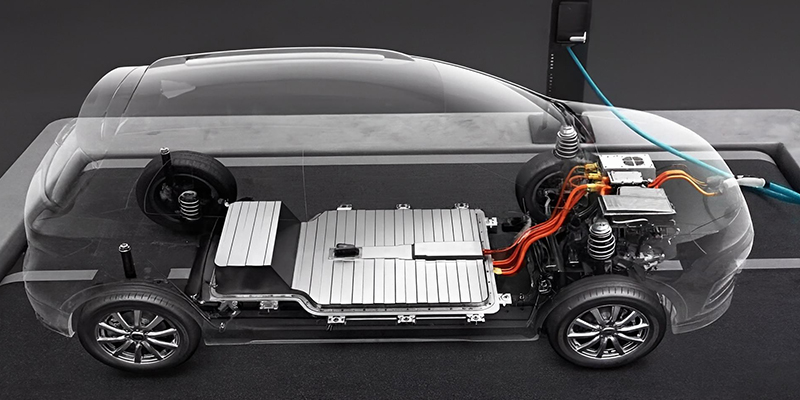
My journey in the aluminum alloy die casting world has given me a front-row seat to the automotive industry’s transformation, especially with the rise of Electric Vehicles. Early on, the challenge was always balancing strength with weight. I vividly recall a project for a critical battery tray for an EV from a Canadian Tier 1 supplier. They needed a part not only lightweight but also incredibly rigid to protect the battery cells, and it had to incorporate intricate cooling channels. Their previous supplier struggled with porosity and warpage in such a large, complex casting. At EMP Tech, my team and I applied our deep expertise in HPDC, meticulously optimizing alloy chemistry, gate design, and critical process parameters after extensive mold flow simulation. We delivered a part that exceeded their structural requirements, provided efficient thermal management through integrated channels, and came in significantly under weight targets. This instance, among many, showed me that HPDC aluminum alloys are not just an alternative but a truly game-changing technology for the electric vehicle industry.
How does High-Pressure Die Casting enhance structural integrity in Electric Vehicles?
Are you concerned about the ability of EV components to withstand impact, heavy loads, and vibrations, thereby compromising vehicle safety and durability? Traditional manufacturing methods can often introduce weaknesses that undermine structural performance.
High-Pressure Die Casting enhances structural integrity in Electric Vehicles by producing components with high material density, superior dimensional stability, and the ability to integrate complex, load-bearing geometries into single, robust parts that improve crash energy absorption and overall chassis rigidity.
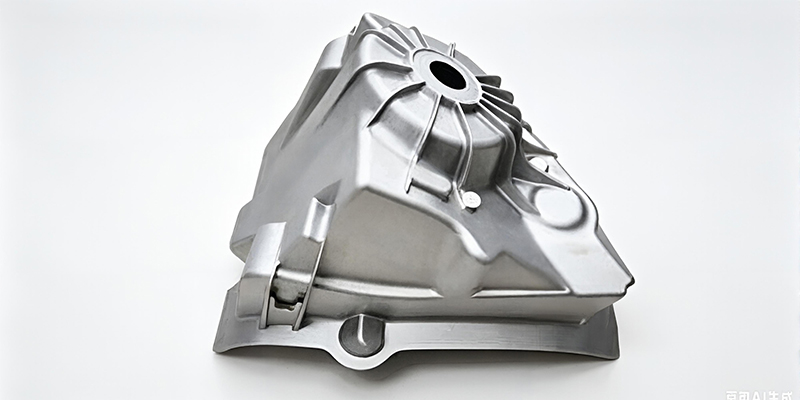
In an Electric Vehicle, structural integrity is paramount – not just for passive safety during a collision, but also for active safety by ensuring precise handling and long-term durability. The heavy battery pack demands an extremely rigid structure around it, and other components must also contribute to the overall vehicle stiffness. This is where High-Pressure Die Casting truly shines. The very process of HPDC involves injecting molten aluminum into a steel mold at high speed and pressure. This force ensures that the metal fully penetrates every cavity, resulting in parts with extremely uniform material density and minimal internal porosity. For example, a single HPDC part can replace an assembly of several stamped or extruded steel pieces, eliminating multiple weld points or fasteners that could be potential failure sites. This consolidation leads to a "monolithic" structure that is inherently stronger and more rigid. My team has engaged in projects where we designed large structural nodes for EV chassis, integrating mounting points for suspension components and energy absorption features into a single casting. The ability to precisely control the wall thickness, add reinforcing ribs in strategic areas, and maintain tight dimensional tolerances means we can create components that provide superior torsional stiffness and bending strength, crucial for protecting the battery and occupants in an impact.
How do aluminum alloys provide superior thermal management in EV battery systems?
Are your EV battery systems experiencing performance degradation, reduced lifespan, or safety concerns due to inadequate thermal management? Inefficient heat dissipation is a critical challenge in high-power EV applications.
Aluminum alloys provide superior thermal management in EV battery systems due to their excellent thermal conductivity, enabling the efficient integration of cooling channels and heat sinks within battery enclosures through High-Pressure Die Casting, thus maintaining optimal battery operating temperatures.
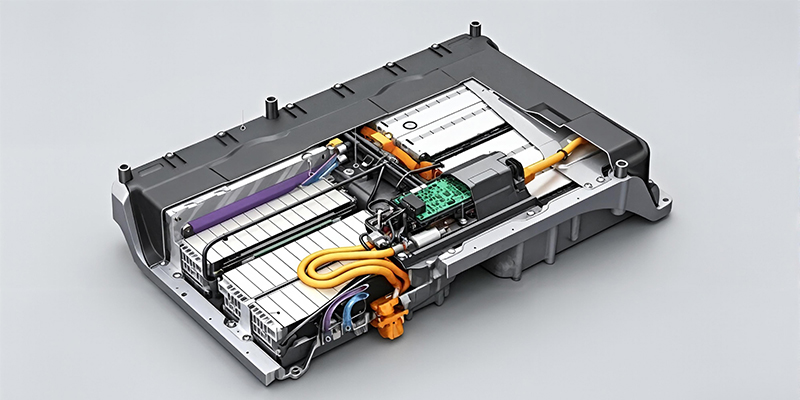
Battery systems are the heart of an Electric Vehicle, and their performance, lifespan, and safety are critically dependent on maintaining an optimal temperature range. Both extreme cold and, more significantly, extreme heat can severely degrade battery cells and even lead to thermal runaway events. Aluminum alloys are perfectly suited to tackle this challenge, and HPDC enables the most effective utilization of their thermal properties.
Key Aspects of Aluminum Thermal Management in EV Batteries
| Aspect | Description | Impact on EV Battery System Performance and Lifespan |
|---|---|---|
| High Thermal Conductivity of Aluminum | Aluminum is an excellent conductor of heat. Compared to other structural materials like steel or plastics, it can transfer thermal energy much more efficiently away from heat sources. | Rapidly draws heat away from individual battery cells and modules. This prevents localized hot spots that can degrade cell performance, shorten battery life, and increase the risk of thermal runaway, thereby ensuring consistent power delivery and extended battery longevity. |
| Integrated Cooling Channels via HPDC | High-Pressure Die Casting allows for the precise, complex integration of fluid cooling channels, internal fins, and heat exchange structures directly into the aluminum battery tray or module housing. These channels can be strategically positioned to maximize contact with heat-generating components. | Optimizes the flow of coolant (liquid or air) directly where it’s needed most, achieving highly efficient heat dissipation. This eliminates the need for separate cooling plates or complex brazed assemblies, reducing part count, weight, and failure points, while improving overall thermal control responsiveness. |
| Effective Heat Spreading | Even without active cooling channels, a well-designed aluminum die-cast battery housing can act as a large, efficient heat sink. The high thermal conductivity ensures that heat generated at any point is quickly distributed across the entire structure. | Helps to equalize temperatures across the entire battery pack, ensuring all cells operate uniformly. More uniform temperatures lead to better overall battery performance, more consistent energy transfer, and significantly contribute to accurate State of Charge (SoC) and State of Health (SoH) estimations. |
| Structural & Thermal Integration | HPDC allows for the combination of structural integrity (protecting the battery) and thermal management within a single, lightweight component, reducing the need for additional thermal interface materials or components. | Simplifies battery pack design and assembly, reduces total weight, and frees up space, potentially allowing for a larger battery capacity or a more compact vehicle design. This integrated approach enhances both the performance and safety aspects of the EV battery system. |
What are the cost and performance advantages of aluminum die casting for NEV components?
Are you looking for manufacturing solutions that offer both exceptional performance characteristics and cost-efficiency for New Energy Vehicle components? Balancing these two factors is often a significant challenge in the rapidly evolving NEV market.
Aluminum die casting provides significant cost and performance advantages for NEV components by enabling lightweight, high-strength parts with complex geometries, reducing assembly steps, optimizing thermal management, and facilitating high-volume, repeatable production.
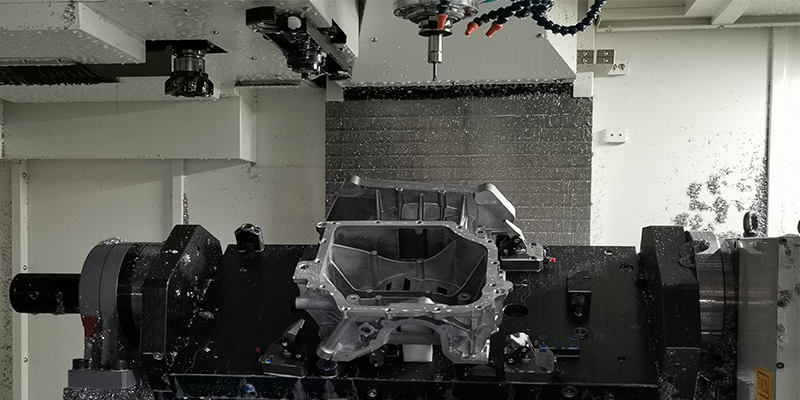
In the highly competitive New Energy Vehicle market, manufacturers are constantly striving to reduce costs while simultaneously improving performance. Aluminum die casting, particularly the high-pressure method, offers a sweet spot where these two critical objectives converge.
Cost Advantages of HPDC for NEVs
| Advantage | Description | Impact on Overall NEV Component Cost |
|---|---|---|
| Part Consolidation & Complexity | HPDC allows for the creation of intricate, near-net-shape components that can integrate multiple features (e.g., mounting points, cooling channels, stiffening ribs) into a single casting. This replaces assemblies of several individual parts. | Dramatically reduces the number of parts in an assembly, lowering material handling costs, inventory complexities, and eliminating expensive joining processes like welding or fastening. This directly translates to significant savings in unit cost and assembly time. |
| Reduced Machining & Post-Processing | Due to the inherent precision and excellent surface finish achieved with HPDC, many components require minimal or no secondary machining operations. Complex features can be directly cast into the part. | Lowers manufacturing costs by reducing labor, tooling, and cycle times associated with post-casting operations. This also improves overall production efficiency and throughput, which is crucial for mass production. |
| High Production Rates & Repeatability | HPDC offers very fast cycle times compared to other metal forming processes. A single die casting machine can produce thousands of complex parts per day, with high consistency from shot to shot. | Maximizes economies of scale, making it highly cost-effective for the high volumes required by the NEV industry. The excellent repeatability minimizes scrap rates and ensures uniform quality across large batches, reducing quality control costs. |
| Material Efficiency | The HPDC process is highly efficient in material utilization. Any excess material (like runners and flash) can often be re-melted and reused, contributing to sustainability and minimizing material waste. | Reduces raw material costs and environmental impact, which aligns with modern automotive sustainability goals and can improve a company’s overall carbon footprint. |
Performance Advantages of HPDC for NEVs (Beyond Cost)
| Advantage | Description | Impact on Overall NEV Performance |
|---|---|---|
| Lightweighting | As discussed, aluminum’s low density combined with HPDC’s ability to create thin-walled, strong structures reduces overall vehicle weight. | Extends EV driving range, improves energy efficiency, enhances acceleration, reduces braking distances, and improves vehicle handling and dynamics, all contributing to a superior driving experience and lower running costs. |
| Structural Integrity & Safety | HPDC creates dense, strong components that integrate crash-absorbing features and stiffening elements, crucial for protecting occupants and battery systems. | Enhances passenger safety, protects critical high-voltage components in a collision, and contributes to the overall durability and reliability of the vehicle over its lifecycle. |
| Thermal Management | Integrates complex cooling channels and heat sinks directly into parts like motor housings, inverter casings, and battery trays, leveraging aluminum’s high thermal conductivity. | Optimizes the operating temperatures of sensitive electronics and batteries, prolonging component lifespan, preventing performance degradation due to overheating, and ensuring consistent power output. |
| EMI Shielding | Aluminum castings, being conductive, provide natural electromagnetic shielding for sensitive electronic components. | Protects critical control units from electromagnetic interference, preventing malfunctions and ensuring reliable operation of the vehicle’s complex electronic systems, crucial for compliance with global standards. |
Why does EMP Tech offer advanced High-Pressure Die Casting solutions for Electric Vehicles?
Are you seeking a die casting partner who not only understands the complexities of NEV component design but also consistently delivers innovative, high-quality, and reliable solutions? A true partner can accelerate your NEV development.
EMP Tech offers advanced High-Pressure Die Casting solutions for Electric Vehicles because of our deep engineering expertise, state-of-the-art DFM and simulation capabilities, rigorous process control, and a proven track record of collaborating with leading global Tier 1 & 2 suppliers to meet the unique demands of NEV manufacturing.
At EMP Tech, our dedication to the New Energy Vehicle sector goes beyond simply manufacturing parts; it involves deeply understanding the specific performance and regulatory demands of these cutting-edge vehicles. I’ve spent over two decades in this field, transitioning from hands-on workshop experience to an engineering consultant, and I’ve seen how our integrated approach consistently delivers superior results for our clients.
EMP Tech’s Pillars of Advanced HPDC for EVs
| Pillar of Excellence | EMP Tech’s Specific Contributions | How This Benefits NEV Manufacturers |
|---|---|---|
| Deep Engineering & Technical Expertise | My team and I possess over 20 years of specialized experience in aluminum alloy die casting, covering product structure design, advanced metallurgical knowledge, mold development, and process optimization. We understand the nuances of lightweighting, airtightness, and complex geometries required for NEV components. | Clients receive expert guidance from concept to mass production, allowing for optimized designs that inherently perform better and cost less to produce, tailored specifically for demanding NEV applications like motor housings, OBCs, and structural parts. Less trial-and-error, faster market entry. |
| Advanced DFM & Simulation Capabilities | We employ sophisticated DFM (Design for Manufacturability) analysis in the early stages of design, combined with cutting-edge mold flow simulation software. This allows us to predict metal flow, solidification patterns, and potential defects virtually, before any mold is cut. | Significantly reduces development cycles and avoids costly retooling due to design flaws. This predictive power ensures that complex NEV parts, with features like integrated cooling and intricate rib structures, are manufacturable to high standards from the outset. |
| Process Implementation & Optimization | Our unique blend of front-line workshop experience and extensive engineering knowledge allows us to precisely control every variable in the HPDC process – from alloy selection and melt quality to injection parameters and post-casting treatments. We manage nuances like gate design, venting, and critical thermal control of the mold. | Guarantees highly consistent material properties, superior mechanical performance (e.g., high fatigue strength), tight dimensional tolerances, and high yields. This reliability is crucial for mass-produced NEV components that must meet stringent quality standards like IATF 16949. |
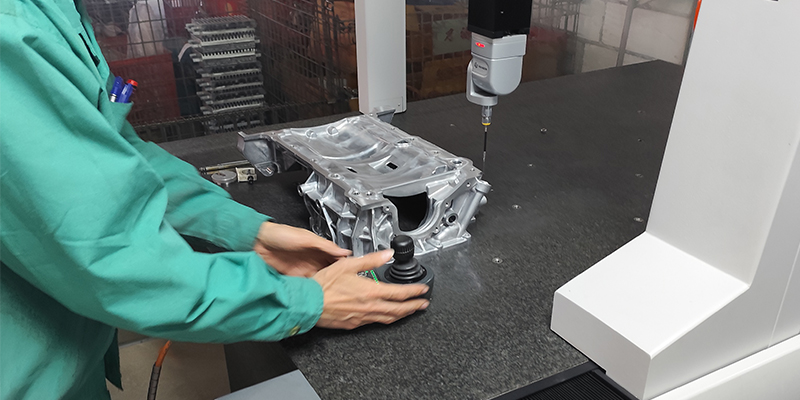
| Rigorous Quality Control & Inspection | Quality is non-negotiable. Our team implements comprehensive quality control protocols, including material analysis, in-process monitoring, and final inspection using advanced metrology (e.g., CMM, X-ray inspection, pressure testing for airtightness). We ensure compliance with global automotive standards. | Provides customers with confidence in every component’s integrity and performance. Our systematic quality approach helps avoid costly recalls, enhances vehicle safety, and protects brand reputation in the highly sensitive NEV market. |
| Problem-Solving & Customer-Centric Approach | We are not just a supplier; we are a problem-solving partner. Our ability to think critically and adapt to unique customer challenges – whether it’s achieving extreme lightweighting, ensuring complex airtightness for inverter housings, or facilitating rapid prototyping for new electric propulsion systems – sets us apart. | Clients benefit from a responsive and flexible partner who helps them overcome engineering roadblocks and meet aggressive timelines. This collaborative spirit ensures that EMP Tech’s solutions are always aligned with the evolving needs and innovative spirit of the NEV industry. |
Conclusion
HPDC aluminum alloys revolutionize EVs with superior structural integrity, excellent thermal management, and cost benefits. EMP Tech leverages our deep expertise and advanced solutions to deliver high-quality die-cast parts, enhancing NEV performance and competitiveness.


