

In the relentless pursuit of vehicle efficiency, safety, and performance, automotive manufacturers are constantly seeking innovative materials and processes. The goal is clear: produce stronger, lighter, and more reliable components. Enter semi-solid aluminum die casting, a revolutionary manufacturing technique that is setting a new standard for high-integrity automotive parts.
As a specialized manufacturer soluções for the automotive industry, we understand the critical demands of your projects. This article explores why semi-solid metal (SSM) casting tecnología is not just an alternative, but a superior choice for next-generation vehicle design.
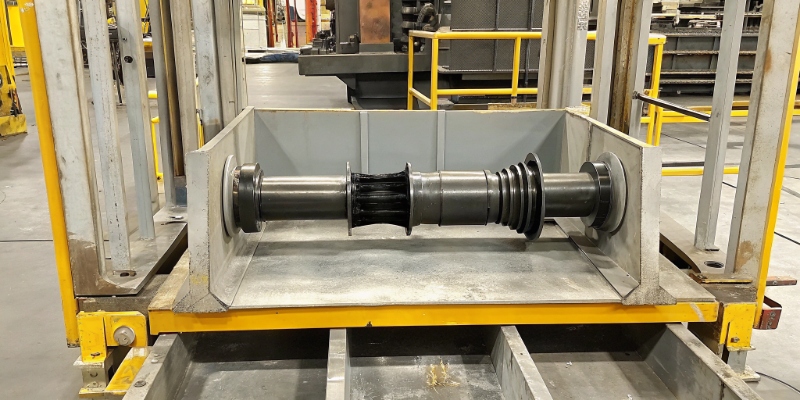
What Exactly is Semi-Solid Aluminum Die Casting?
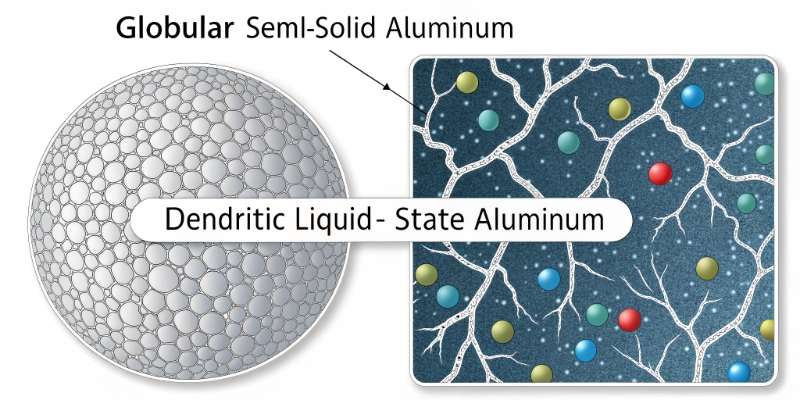
Semi-solid die casting, also known as thixocasting or rheocasting, is an advanced high-pressure die casting process. Unlike traditional methods that inject fully molten, liquid aluminum into a mold, semi-solid casting uses an aluminum "slurry."
This slurry is a precisely controlled mixture தனிநாயகம் of solid, globular aluminum particles and liquid metal, often compared to the consistency of a thick slush or paste. This semi-solid state is the key to the process’s transformative advantages. Injecting this thixotropic material in a laminar (non-turbulent) flowmanner dramatically reduces the defects mãe in conventional casting.
The Two Core Methods: Thixocasting vs. Rheocasting
While both processes operate on the semi-solid principle, they differ in how the slurry is prepared.
| Feature | Thixocasting | Rheocasting |
|---|---|---|
| Starting Material | Specially prepared, pre-cast billets with a non-dendritic microstructure. | Standard liquid aluminum alloy. |
| Slurry Creation | The billet is reheated into the semi-solid range before being cast. | The liquid alloy is cooled and stirred simultaneously to create the slurry in-house. |
| Process Control | Requires a supply of specialized billets. | Offers more in-process flexibility and control over the slurry. |
| Typical Use | High-volume, repeatable production of critical components. | Flexible production, research, and development. |
The Unmatched Advantages of Semi-Solid Casting for Automotive Parts
For automotive engineers and designers, the benefits of using semi-solid aluminum die-cast parts are profound. The process overcomes many of the inherent limitations of traditional die casting.
- Dramatically Reduced Porosity: The laminar flow of the slurry minimizes air and gas entrapment. This results in dense, pressure-tight components идеальный for hydraulic systems like brake calipers and master cylinders.
- Superior Mechanical Properties: The low porosity and fine, globular grain structure lead to significantly improved tensile strength, ductility, and fatigue resistance compared to conventional castings.
- Full Heat-Treatability: The absence of internal porosity means parts can be subjected to T5 and T6 heat treatments without the risk of blistering or distortion. This unlocks the full strength potential of the aluminum alloy.
- Complex Geometries and Thinner Walls: The viscous slurry fills intricate mold details condições with less pressure, enabling the creation of complex, lightweight parts with thin, uniform walls.
- Extended Die Life: The aluminum slurry is injected at a lower temperature than fully liquid metal. This reduces thermal shock on the steel molds, igreja in longer tool life and lower long-term costs.
- Excellent Weldability & Pressure Tightness: The high integrity and density of SSM parts make them suitable for welding, a capability often missing in traditional die-cast components.
Comparison: Semi-Solid Casting vs. Conventional High-Pressure Die Casting (HPDC)
How does semi-solid casting stack up directly against the traditional method? The differences are stark and directly impact part performance and reliability.
| Parameter | Semi-Solid Casting (SSM) | Conventional HPDC |
|---|---|---|
| Metal State | Semi-solid slurry (part solid, part liquid) | Fully liquid / molten |
| Injection Flow | Laminar (smooth) | Turbulent |
| Porosity Level | Very Low (<0.5%) | Moderate to High |
| Mechanical Properties | Excellent (High Strength & Ductility) | Good (Lower Ductility) |
| Heat Treatable (T5/T6) | Yes, reliably | No, risk of blistering |
| Weldability | Excellent | Poor to None |
| Pressure Tightness | Excellent | Variable, often requires impregnation |
| Die Lifespan | Longer | Shorter |
| Ideal Applications | Safety-critical, structural, high-fatigue parts | General-purpose, cosmetic, non-structural parts |
Key Automotive Applications
The superior properties of semi-solid aluminum die casting make it the go-to process for components where failure is not an option.
- Chassis & Suspension: Steering knuckles, control arms, subframes, and suspension nodes.
- Braking Systems: Brake calipers, master cylinders, and ABS valve bodies.
- Powertrain: Engine mounts, bearing caps, fuel rails, and high-performance pistons.
- Structural Components: Cross-members, B-pillar reinforcements, and seat frames.
Your Partner for Advanced Automotive Casting
Choosing the right manufacturing process is as critical as choosing the right material. Semi-solid aluminum die casting offers a clear pathway to producing automotive parts that are safer, lighter, and more durable.
By partnering with an experienced die-casting manufacturer defectos in SSM technology, you gain access to a process that delivers on the promise of next-generation performance condições. We specialize in leveraging this technology to solve the toughest challenges in automotive engineering, from lightweighting EVs to strengthening safety-critical systems.
Ready to elevate your components? Contact us today to discuss how semi-solid aluminum die casting can drive your next project forward.
Frequently Asked Questions (FAQ)
Q1: What is the main difference between semi-solid casting and liquid die casting?
A: The primary difference is the state of the aluminum. Semi-solid casting uses a slush-like slurry (partially solid, partially liquid), which is injected smoothly. Liquid die casting uses fully molten metal, which is injected turbulently, often trapping air and creating porosity.
Q2: Are parts made using semi-solid aluminum die casting more expensive?
A: While the initial process can be more complex, the total cost of ownership is often lower. This is due to reduced scrap rates, the elimination of secondary operations like impregnation, longer die life, and the ability to design lighter parts that use less material.
Q3: Which aluminum alloys are best for semi-solid casting?
A: Alloys with a wide freezing range are ideal. A356 and A357 are the most common choices for automotive applications due to their excellent fluidity, strength, and response to heat treatment, making them perfect for high-performance and safety components.


