

In the world of electric vehicles (EVs), the focus is often on the power of the battery or the efficiency of the motor. However, for the complex electronics that manage these systems—the On-Board Charger (OBC), motor controllers, and inverters—the housing they live in is far from a simple box. For a Supplier Quality Engineer (SQE) or a Global Purchasing Director, this enclosure is a critical component that directly impacts vehicle reliability, safety, and performance.
As a technical engineer with over 20 years of experience in aluminum die casting for the automotive sector, I’ve led the development of numerous controller housings for EV projects. Our Tier 1 and Tier 2 customers in Germany, the US, and Canada all face the same core challenges: the need for superior thermal management, robust environmental protection (airtightness), and aggressive lightweighting targets, all within compressed project timelines. This guide breaks down the essential engineering considerations for designing and manufacturing a high-performance electronic control unit (ECU) housing.
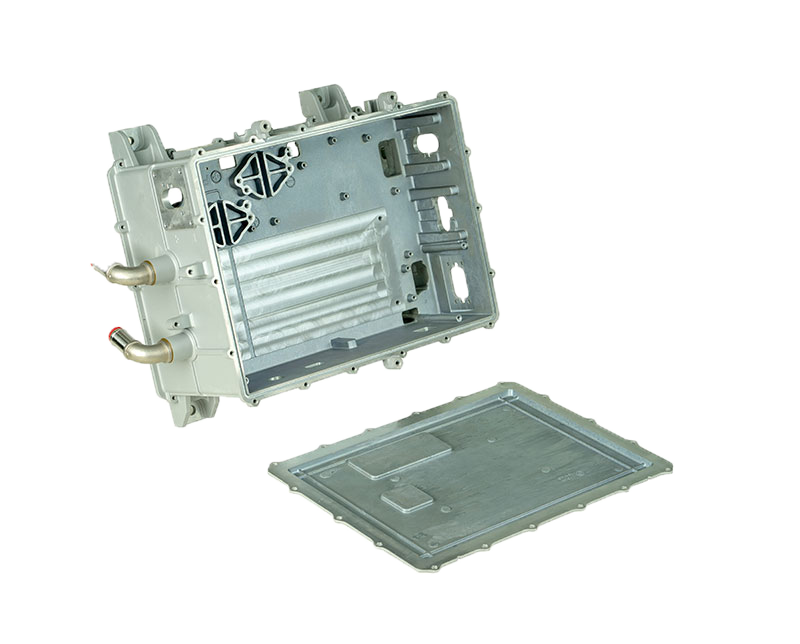
What Are the Core Functions of an EV Controller Housing?
The housing is a multi-functional system designed to protect billions of dollars in R&D investment packed onto a printed circuit board (PCB). Its primary roles are far more complex than simple containment.
- Environmental Protection: This is the most obvious function. The housing must provide an impermeable barrier against water, dust, salt, and road debris. This is quantified by Ingress Protection (IP) ratings, with IP67 and IP6K9K being common standards in automotive, signifying total protection against dust and water immersion/high-pressure jets.
- Thermal Management: Power electronics generate intense, localized heat. The housing is the primary heat sink, responsible for dissipating this thermal energy away from sensitive components to prevent performance throttling or failure. This often involves complex designs with cooling fins or integrated channels for liquid cooling.
- Electromagnetic Compatibility (EMC) Shielding: The high-frequency switching inside controllers creates significant electromagnetic interference (EMI). A properly designed metal enclosure acts as a Faraday cage, preventing this EMI from disrupting other critical vehicle systems (like radio, GPS, or safety sensors) and protecting the internal electronics from external interference.
- Vibration and Shock Resistance: The housing must be structurally robust enough to withstand constant road vibrations and potential impacts throughout the vehicle’s lifespan, protecting the delicate solder joints and components on the PCB inside.
Why Aluminum Die Casting is the Gold Standard Material
While plastics or fabricated steel can be used for some enclosures, high-pressure aluminum die casting (HPDC) has become the dominant manufacturing process for high-performance EV controller housings. It offers an unmatched combination of properties perfectly suited for the application.
| Feature | Aluminum Die Casting (e.g., AlSi10Mg) | Stamped/Fabricated Steel | Injection-Molded Plastic |
|---|---|---|---|
| Thermal Conductivity | Excellent. Naturally and efficiently dissipates heat, a critical requirement for power electronics. | Poor. Traps heat, requiring larger, heavier, and more complex external heat sinks. | Very Poor. Acts as an insulator, unsuitable for high-power applications without complex thermal interface materials. |
| EMC Shielding | Excellent. The inherent conductivity of aluminum provides superior, built-in shielding. | Good. Also provides effective shielding. | None (by default). Requires secondary processes like conductive coatings or metal inserts, adding cost and complexity, and creating potential quality failure points. |
| Design Complexity & Integration | Excellent. Allows for complex geometries, thin walls, cooling fins, and mounting bosses to be integrated into a single piece. Reduces part count and assembly costs. | Limited. Complex shapes require multiple pieces to be stamped, bent, and welded/fastened together, increasing costs and potential leak paths. | Good. Allows for complex shapes, but lacks the structural and thermal performance of metal. |
| Strength-to-Weight Ratio | Excellent. Offers robust protection at a fraction of the weight of steel, contributing directly to vehicle range and efficiency. | Fair. Strong, but very heavy. | Poor. Lacks the rigidity and impact resistance needed for many critical automotive applications. |
| Airtightness (IP Rating) | Excellent. A single, continuous cast part with proper design and sealing surfaces can reliably achieve IP67/IP6K9K ratings. | Challenging. Multiple seams and joints create numerous potential failure points for water ingress that must be sealed. | Good. Can be designed for high IP ratings, but thermal and EMC limitations remain. |
The DFM & Manufacturing Process: Key to a Flawless Housing
For an SQE verifying a supplier’s capability or a Purchasing Director evaluating total cost, the manufacturing process is as critical as the material itself. A flawed process leads to defects that compromise every function of the housing.
Our approach is built on a collaborative, front-loaded engineering process:
- DFM (Design for Manufacturing) Analysis: We work directly with your engineering team at the concept stage. We optimize the design for die casting by refining wall thickness, adding draft angles, and ensuring the cooling fins or liquid channels are not only thermally efficient but also manufacturable without defects. This prevents costly redesigns later.
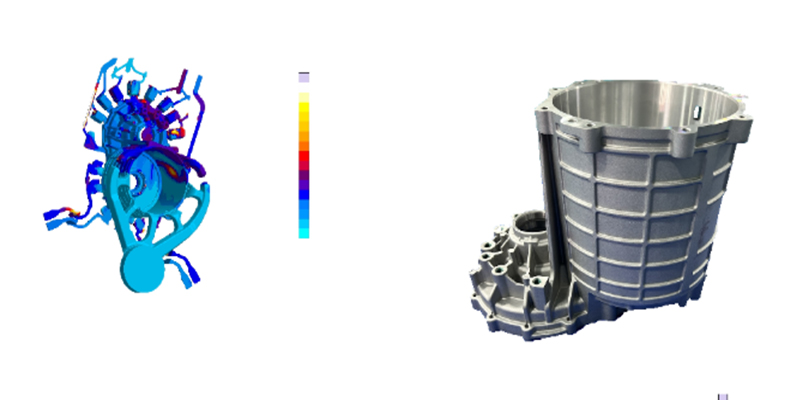
- Mold Flow Simulation: Before any steel is cut for the tool, we use advanced software to simulate how the molten aluminum will fill the mold cavity. This allows us to predict and eliminate potential issues like porosity (tiny air bubbles trapped in the metal). Porosity is the number one enemy of airtightness and structural integrity.
- High-Pressure Die Casting (HPDC): The automated HPDC process injects molten aluminum into the mold under immense pressure, ensuring every intricate detail—from the thinnest cooling fin to the smoothest sealing surface—is perfectly replicated with high consistency, part after part.
- Precision Machining & Quality Control: Critical surfaces, such as the mounting points and the groove for the sealing gasket, are CNC machined to tight tolerances. Every single part destined for a fluid application undergoes a 100% leak test to guarantee its IP rating before it ever leaves our facility.
Conclusion: A Strategic Partner for a Critical Component
An electronic control unit housing is not a commodity; it is a specialized engineering solution. It is the silent guardian that ensures the brain of your electric vehicle operates flawlessly in the most demanding conditions. Choosing the right material, manufacturing process, and, most importantly, the right engineering partner is crucial for the success of your project.
At EMP Tech, we provide a complete, one-stop solution from early-stage DFM and simulation to mass production and factory inspection. Our expertise in aluminum die casting allows us to deliver lightweight, thermally efficient, and perfectly sealed housings that meet the stringent demands of the global automotive industry.
If you are facing challenges with cost, quality, or lead times for your EV controller enclosures, contact us at [email protected] to discuss how we can engineer a better solution together.


