

Choosing the wrong process breaks your launch. Cracked parts, leaks, and missed PPAPs hit you at once. I help you choose with clear rules and shop-floor facts.
Choose A356 gravity casting for thicker, heat‑treated, weldable parts that need high ductility or leak‑tightness. Choose die casting for thin walls, tight tolerances, high volume, and fast cycles. I explain how properties, costs, and design rules change.
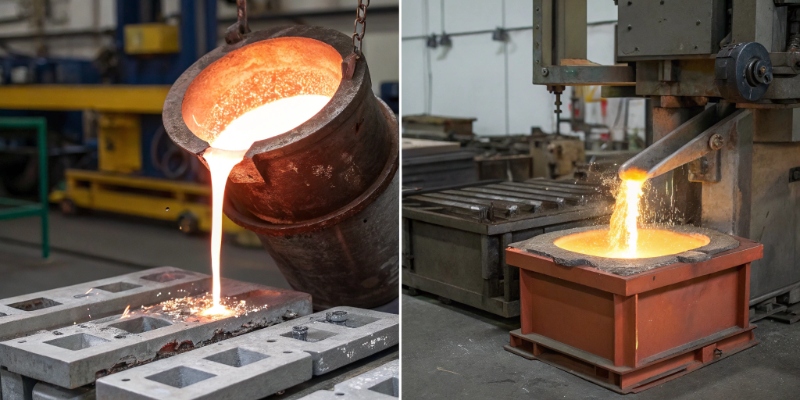
Many teams compare quotes without seeing the hidden risks. I show where porosity, heat treatment limits, and tooling costs sit. I also share fixes that saved my customers. Read on before you lock your process. You will avoid rework, delays, and painful change notices.
When should I pick A356 gravity casting instead of die casting?
Unclear rules cause late failures. Welds pop. Leak rates drift during validation. I set a simple gate so you avoid risky process swaps after DV and PV.
Pick A356 gravity casting when wall thickness exceeds 3 mm, when T6 or T7 is mandatory, when laser welding must be robust, or when very low leak rates are required. Use die casting for thin walls, high speed, and tight tolerance needs.
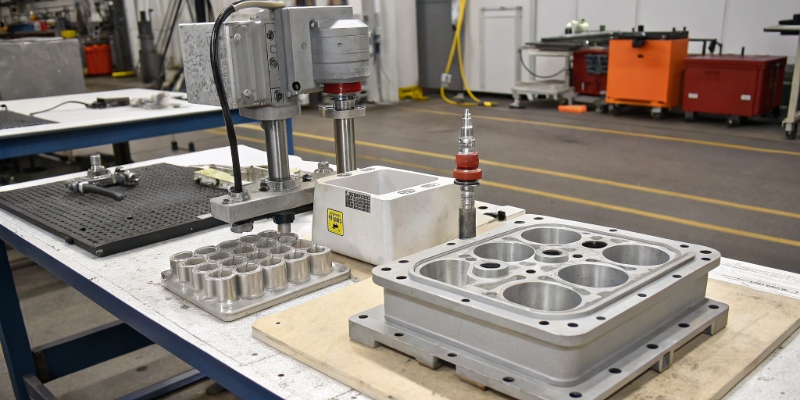
Why A356 gravity casting often fits safety‑critical structures
I spent years fixing launch issues on structural housings and brackets. Many parts failed because the process did not match the function. A356 in gravity, permanent mold, low‑pressure die casting (LPDC), or squeeze casting gives clean metal, low turbulence, and less gas. It accepts full T6 heat treatment and gives high elongation. It also welds well. In contrast, standard high pressure die casting traps gas. It often limits heat treatment or welding unless you add vacuum and strict control. Magnesium in A356 can solder to a steel die in high pressure die casting. That brings sticking and tool wear. I avoid this by using gravity or LPDC for A356, or I switch to HPDC‑grade alloys when I must use high pressure die casting.
| Requirement | A356 Gravity/LPDC | HPDC (e.g., AlSi10Mg/AlSi9Cu3) |
|---|---|---|
| Heat treatment | Full T6/T7 feasible | Limited; vacuum needed; often T5/T7 only |
| Weldability | Very good | Good to poor; depends on porosity and Cu |
| Leak‑tightness | Strong after machining or impregnation | Needs vacuum + good gating |
How do mechanical properties really compare?
Numbers get cherry‑picked in slides. Real test bars tell the truth. I give typical ranges you can defend during PPAP and audits.
A356‑T6 from gravity/LPDC delivers high elongation and stable yield. Vacuum die cast AlSi10Mg gives thin walls and decent strength, with proper ductility only if porosity is controlled. Property spread shrinks when process windows are tight.
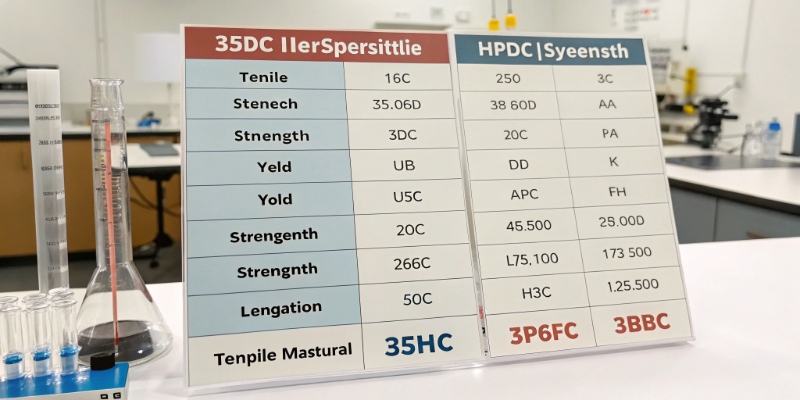
Typical property windows I use in programs
I report realistic windows because I dislike surprises in crash or vibration tests. These values assume good melt practice, degassing, and clean gating. For A356 gravity/LPDC with T6, I plan for yield strength around 200–240 MPa, ultimate strength around 260–320 MPa, and elongation 6–12%. For squeeze casting, elongation can go higher. For vacuum HPDC AlSi10Mg with optimized T7, I expect yield around 120–160 MPa, ultimate strength around 230–270 MPa, and elongation 6–12% in controlled sections. If vacuum is weak, elongation collapses. If copper is high, corrosion and weld issues rise. I align test locations to worst‑case wall transitions. I also track porosity histogram data, not just averages. This approach keeps the safety margin real.
| Alloy + Process | Heat treatment | YS (MPa) | UTS (MPa) | Elongation (%) |
|---|---|---|---|---|
| A356 Gravity/LPDC | T6 | 200–240 | 260–320 | 6–12 |
| A356 Squeeze cast | T6 | 230–280 | 300–340 | 8–14 |
| AlSi10Mg Vacuum HPDC | T7 | 120–160 | 230–270 | 6–12 |
| AlSi9Cu3 HPDC (non‑vacuum) | As‑cast/T5 | 130–170 | 240–280 | 1–4 |
How do cost and lead time compare in real programs?
Purchase price per piece hides the system cost. Rework, scrap, and delays ruin savings. I break the picture into tools, cycle time, and volume.
Use gravity/LPDC for low to medium volume, thicker walls, or long programs with stable tools. Use HPDC for very high annual volume, thin walls, and fast takt. Balance tooling spend against scrap and secondary operations.

What I budget during sourcing and APQP
I give buyers and SQEs a clear map. Gravity permanent‑mold tools cost less than HPDC dies. They change faster and last long for moderate runs. LPDC adds fixtures and a closed furnace but keeps porosity low. Cycle time is minutes, not seconds, so piece price is higher at high volume. HPDC needs expensive multi‑slide dies, vacuum blocks, and high‑tonnage presses. Cycle time is fast, so piece price drops at volume, but rejects rise if controls slip. Machining time is lower for HPDC due to near‑net shapes and tighter tolerance, while gravity often needs more stock for cleanup.
| Factor | Gravity/LPDC | HPDC |
|---|---|---|
| Tooling cost | Low–Medium | High |
| Tool lead time | 6–12 weeks | 12–20+ weeks |
| Cycle time | 1–5 min | 20–60 s |
| Economic volume | <30k–50k/year | >50k–100k+/year |
| Machining | More stock | Less stock |
| Scrap sensitivity | Low–Medium | High without vacuum |
What design rules change between the two processes?
I see many prints copy‑pasted across processes. That causes warpage, misruns, and leaks. I list the simple rules that prevent trouble.
Gravity needs thicker, smoother sections and generous radii. HPDC allows thin walls, fast ribs, and fine details. Draft, fillets, and gate locations must fit metal flow and solidification needs.
Practical geometry shifts that save launches
I adjust geometry early with DFM workshops. For gravity or LPDC, I ask for walls of 3–6 mm, fillets ≥1.5–3 mm, and uniform sections. I keep ribs modest and avoid sudden thickness changes. I place feeders to feed hot spots. I allow larger draft angles, often 1.5–2°. For HPDC, I can run walls near 1.5–2.5 mm with strong ribs to maintain stiffness. I use 0.5–1° draft on die pull faces. I avoid heavy bosses without local cooling. I split the parting line to shorten flow length. For both, I limit isolated mass. I place machining datums on stable, well‑fed areas. I bring welding zones away from predicted porosity clusters. These rules keep properties consistent.
| Feature | Gravity/LPDC Guideline | HPDC Guideline |
|---|---|---|
| Wall thickness | 3–6 mm | 1.5–2.5 mm |
| Draft (pull faces) | 1.5–2° | 0.5–1° |
| Fillets | ≥1.5–3 mm | ≥0.8–1.5 mm |
| Ribs | Fewer, thicker | More, thin and frequent |
| Bosses | Feeders, chills | Local cooling, short flow |
| Welding zones | Away from feeders | Away from predicted porosity |
How do weldability, heat treatment, and leak‑tightness differ?
Weld failures and porosity drive costly rework. Post‑heat treatment also shifts dimensions. I plan the process so these risks shrink from day one.
A356 gravity/LPDC welds well and takes full T6/T7. HPDC needs vacuum for welds and may use modified heat cycles to reduce blistering. Leak‑tightness requires machining, impregnation, or strict vacuum control.
The controls that gave me stable PPAPs
Years ago, a battery housing failed leak tests at a European plant. The root cause was gas porosity in a non‑vacuum die casting. I switched to LPDC A356 with T6 and added a final face machining step. Leak rate dropped below 1×10⁻³ mbar·L/s. Welds passed after we moved the weld seam 8 mm away from a former hot spot. In HPDC, I now specify vacuum levels below 30 mbar, fast vent response, and gate designs that reduce air entrapment. For heat treatment, I use test coupons that track real section thickness. I run trials to watch for blisters before I sign off T7 on HPDC. For critical parts, I qualify impregnation and 100% pressure test. These steps protect field performance.
| Topic | A356 Gravity/LPDC | HPDC (Vacuum) |
|---|---|---|
| Welding | Strong, consistent | Good if porosity is low |
| Heat treatment | Full T6/T7 | T7 or T5; blister risk |
| Leak‑tightness | Good with machining/impregnation | Needs vacuum + robust gating |
Conclusion
I choose A356 gravity/LPDC for ductility, welding, and sealing. I choose HPDC for thin walls and volume. I lock controls early. This avoids late failures and delays.


