

Are you getting inconsistent colors or seeing premature corrosion on your anodized aluminum parts? These finish failures can derail your projects and lead to costly rejections from your customers.
Achieving a perfect finish requires five key stages: meticulous surface preparation, controlled anodizing to build the oxide layer, uniform coloring, proper sealing to lock in protection, and rigorous quality control at every step.
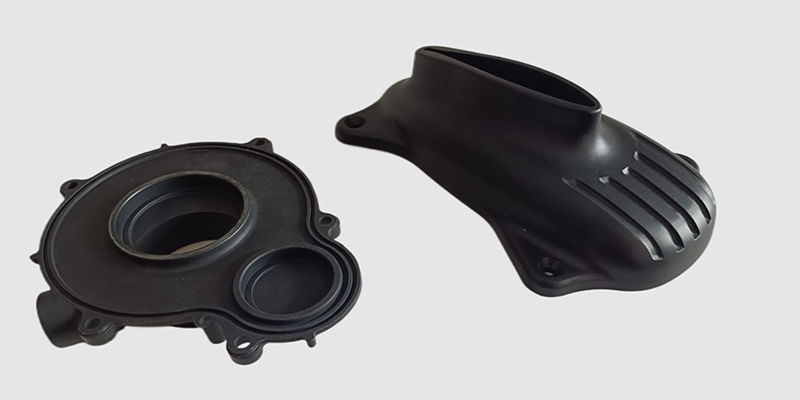
Over my 20 years in this industry, I have learned that the finish is just as important as the casting itself. A beautiful part that fails a salt spray test1 is a useless part. I once worked with a customer making high-end electronics enclosures. Their previous supplier’s parts looked great out of the box, but the black anodized finish would fade and turn a blotchy purple after a few months in the field. The problem wasn’t the coloring; it was a poorly controlled sealing process. This taught me that you cannot skip a single step. Each of these five points is a link in a chain, and the final quality is only as strong as the weakest link.
Why is surface preparation so critical for optimal anodizing?
Is your anodized finish coming out patchy, blotchy, or with poor adhesion? These defects often point back to one overlooked area: a surface that was never truly clean before coating.
Surface preparation is critical because it removes all oils, greases, and the inconsistent natural oxide layer. This creates a perfectly uniform surface, ensuring the anodized layer builds evenly for a flawless, durable finish.
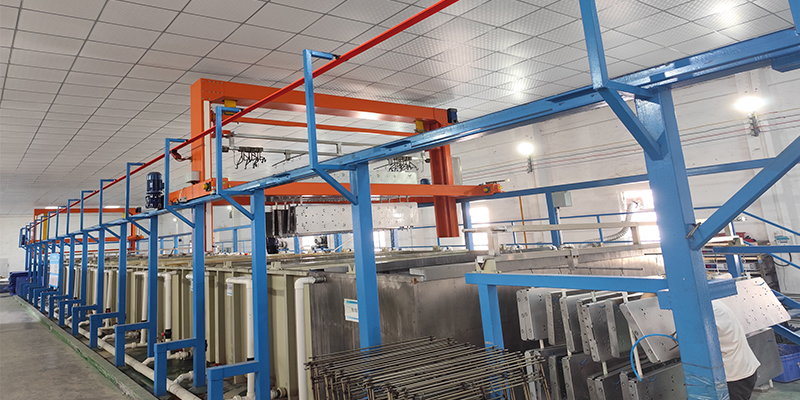
You can think of surface preparation as laying the foundation for a house. If the foundation is not perfect, everything you build on top of it will have problems. The same is true for anodizing. Molten aluminum in a die casting tool cools at different rates, creating a complex "casting skin" that is rich in silicon and other elements. This skin, along with residual die lubricants and machining oils, must be completely removed. If it is not, the electrochemical anodizing process2 will not work evenly across the surface. This is why we have a multi-step chemical cleaning process.
The Two Pillars of Preparation
- Degreasing: The first step is to remove all organic contaminants. We use a hot alkaline cleaning bath that saponifies the oils and greases, turning them into a soap that can be easily rinsed away. For some parts, we may use a solvent-based vapor degreaser.
- Deoxidizing & Etching: After degreasing, we use a chemical etch, often an acid bath, to remove the natural aluminum oxide and the silicon-rich casting skin. This step is carefully controlled to create a clean, active, and uniform aluminum surface that is ready to be anodized.
How does the anodizing process enhance durability?
Are your aluminum parts scratching or wearing out too quickly in the field? A standard aluminum surface is soft and offers very little protection against abrasion or environmental factors.
Anodizing electrochemically grows a hard, uniform layer of aluminum oxide—a ceramic—on the surface. This controlled layer is much thicker and harder than the natural oxide, providing excellent resistance to wear, scratches, and corrosion.
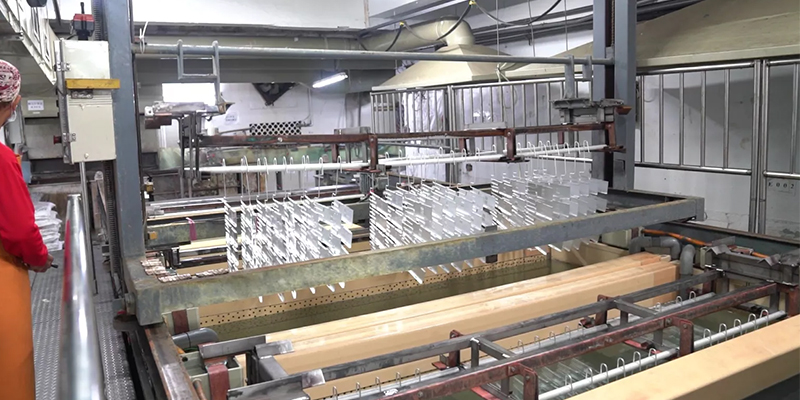
This is where the magic happens. After cleaning, the parts are loaded onto racks and submerged in an electrolyte bath, usually sulfuric acid. We then pass a controlled electrical current through the parts. The aluminum part becomes the anode (the positive electrode), and this causes the surface to oxidize in a highly structured way. Instead of a thin, random natural oxide layer, we are growing a thick layer of aluminum oxide3 with a very specific, porous structure. It is like a honeycomb with millions of microscopic, deep pores. The thickness of this layer is what determines its durability. For a standard decorative finish (Type II), we might grow a layer that is 8-25 micrometers thick. This is more than enough to improve scratch resistance and provide a base for coloring. It turns a soft metal surface into a hard, ceramic-like protective shell.
What are the best coloring techniques for aesthetic appeal?
Are you struggling to get a deep, rich, and consistent color on your anodized parts? Achieving a beautiful and lasting color is a precise science that goes beyond just dipping parts into a dye.
The best technique for die castings is electrolytic coloring, which deposits metallic salts into the pores of the anodized layer. This method provides UV-stable, durable colors like bronze, black, and gray.
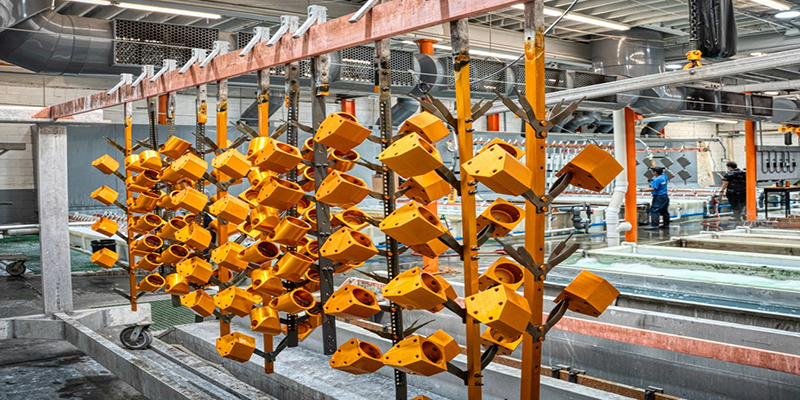
The porous structure created during anodizing is the key to coloring. Those microscopic pores are perfect for holding colorants. There are two main ways we can color the parts.
Common Anodizing Coloring Methods
| Method | Description | Pros | Cons |
|---|---|---|---|
| Organic Dyes | The anodized part is submerged in a tank of hot, water-based organic dye. The dye is absorbed into the pores. | Wide range of vibrant colors available (reds, blues, greens). | Can fade over time with UV exposure (sunlight). Not ideal for outdoor use. |
| Electrolytic Coloring | After anodizing, the part is placed in a second bath containing metallic salts. An AC current deposits these salts into the bottom of the pores. | Extremely durable and lightfast (will not fade). Perfect for architectural or automotive parts. | Color palette is limited to shades of bronze, black, and gray. |
For most of the automotive and industrial customers I work with, electrolytic coloring is the preferred method because of its superior durability and UV stability. The color is literally locked into the hard oxide layer.
How does sealing provide long-lasting protection?
Is the color on your parts fading, or are they failing corrosion tests even after being anodized? This often means the final, most critical step—sealing—was done incorrectly or skipped entirely.
Sealing closes the microscopic pores of the anodized layer, locking the color in and creating a non-porous barrier. This critical step prevents corrosion, staining, and color fading for a truly long-lasting finish.
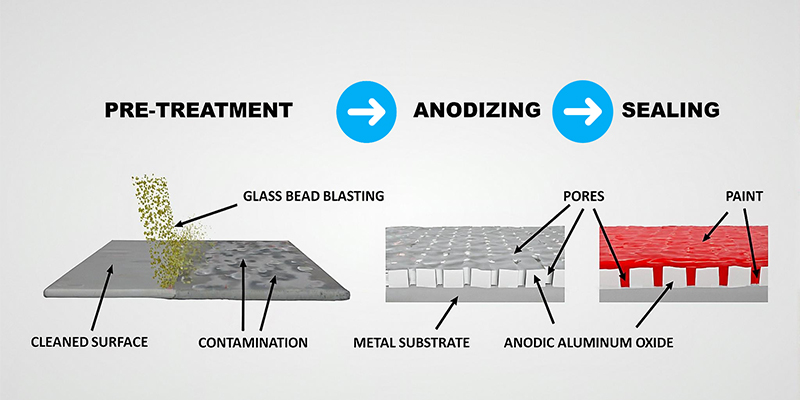
Anodizing and coloring are useless if you do not seal the part correctly. An unsealed anodized coating is like a sponge—it will absorb any oil, dirt, or moisture it comes into contact with, leading to stains and corrosion. Sealing is the process of hydrating the aluminum oxide in the pores, which causes it to swell and close off the openings. This creates a smooth, impervious surface. The most common method is a hot deionized water seal. The parts are submerged in high-purity water at near-boiling temperatures for a specific amount of time. The combination of heat and pure water causes the hydrated oxide to form and plug the pores. For even higher corrosion resistance, we can use a mid-temperature seal with chemical additives like nickel acetate. A proper seal is the final guarantee of the coating’s protective qualities.
Why is quality control essential in anodizing and sealing?
Are you receiving batches of parts with inconsistent finishes, forcing you to inspect 100% of the shipment? A lack of process control at your supplier’s facility translates directly into wasted time and money for you.
Quality control is essential to verify that every step, from cleaning to sealing, was done correctly. It involves measuring coating thickness, testing seal quality, and checking color consistency to guarantee a perfect finish on every single part.
For a Supplier Quality Engineer, repeatable results are everything. That is why we do not just rely on visual checks. We use a documented quality control plan with quantifiable measurements to ensure our process is stable and our output is consistent.
Key Quality Control Checks
Here are some of the tests we perform:
- Coating Thickness Measurement: We use an eddy current thickness gauge to verify that the anodic film meets the required specification (e.g., 18 µm minimum for Class I). This is a non-destructive test we can perform on many parts in a batch.
- Color Matching: We check the color of the finished parts against a master sample under controlled lighting conditions using a spectrophotometer to ensure there is no deviation.
- Seal Quality Test: This is critical. A common method is the dye stain test (ASTM B136). We apply a specific dye to the surface; if the seal is poor, the dye will be absorbed and leave a visible stain.
- Corrosion Resistance: For new projects, we often validate the process with a salt spray test (ASTM B117) to confirm the finish will stand up to the harshest environments.
Conclusion
A durable and beautiful anodized finish comes from a disciplined 5-step process. Meticulous control over preparation, anodizing, coloring, sealing, and quality checks ensures every part meets the highest standards.
Learn about the salt spray test and its importance in validating the corrosion resistance of anodized finishes. ↩
Explore the anodizing process to learn how it transforms aluminum into a durable, scratch-resistant material. ↩
Learn about aluminum oxide’s role in anodizing and how it contributes to the durability of the finish. ↩


