

You’re designing a new component and face a tough choice. You need precision, strength, and lightweight properties, but you also need to manage costs for mass production. It feels like a compromise is unavoidable.
Aluminum die casting delivers a unique combination of high dimensional accuracy, excellent strength-to-weight ratio, superior thermal conductivity, and remarkable cost-efficiency in high-volume production. This balance makes it the ideal choice for complex automotive and industrial parts.
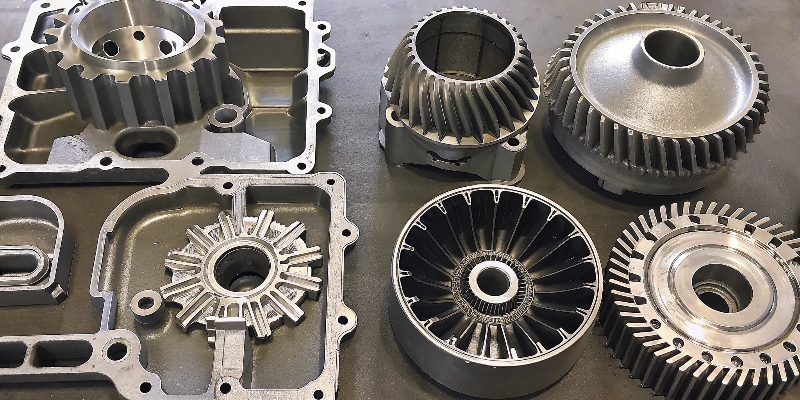
When I talk to new customers, whether they are seasoned purchasing directors or supplier quality engineers, they are often trying to solve the same puzzle: how to get a high-performance part that also makes business sense. For over 20 years, my answer has often been aluminum die casting. It’s not just a manufacturing process; it’s a solution. It allows engineers to design complex parts that are simply not possible or affordable with other methods. Let’s break down the specific advantages that make this process so valuable for the demanding projects my team and I work on every day.
Can Die Casting Really Achieve High Precision and Complex Shapes?
Your design includes thin walls, intricate ribs, and tight tolerances. You worry that a casting process won’t be able to produce the part accurately, forcing you into expensive secondary machining operations.
Yes, high-pressure die casting is renowned for its ability to produce parts with exceptional dimensional accuracy and complex net-shape geometries. This process consistently holds tight tolerances, minimizing the need for post-production machining and reducing overall costs.
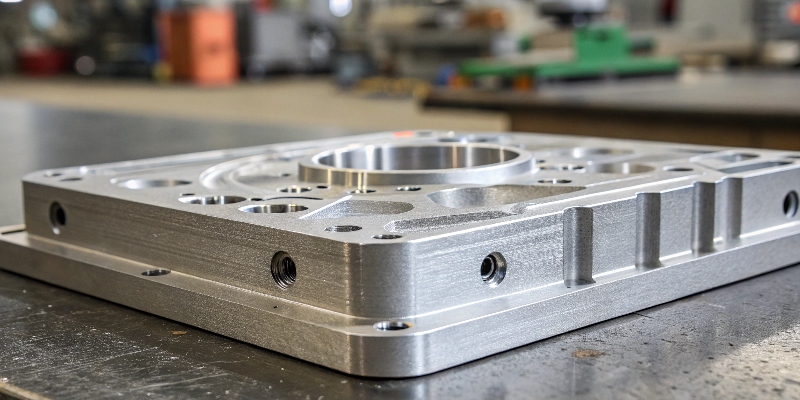
This is one of the biggest "wow" factors for engineers new to die casting. The process involves injecting molten aluminum into a hardened steel mold under immense pressure. This forces the metal into every tiny crevice of the tool, replicating the design with incredible fidelity. On a recent project for an EV controller housing1, the customer’s design had multiple connector ports, thin cooling fins, and threaded holes that needed to be in precise locations. Using die casting, we were able to produce these features directly in the part. This "net-shape" capability is a game-changer. It means the part comes out of the mold very close to its final form. For my customer, this eliminated several CNC machining steps, which saved them time, money, and simplified their supply chain. It’s this combination of complexity and repeatable accuracy that makes the process so powerful.
Typical Tolerances
Here’s a look at the kind of precision we can expect from a well-designed part and tool.
| Feature | Standard Tolerance | Precision Tolerance |
|---|---|---|
| Linear Dimensions | ±0.1 mm per 25 mm | ±0.05 mm per 25 mm |
| Wall Thickness | Down to 2.0 mm | Down to 1.5 mm |
| Flatness | 0.25 mm per 100 mm | 0.15 mm per 100 mm |
Why is the Strength-to-Weight Ratio So Important?
Your product needs to be strong and durable, but adding weight increases energy consumption and cost. For industries like automotive, every gram matters, and traditional materials like steel often feel too heavy.
Aluminum offers a fantastic strength-to-weight ratio. Die-cast aluminum parts provide the structural integrity of stronger metals but at a fraction of the weight. This is critical for improving fuel efficiency in traditional cars and extending the range of electric vehicles.
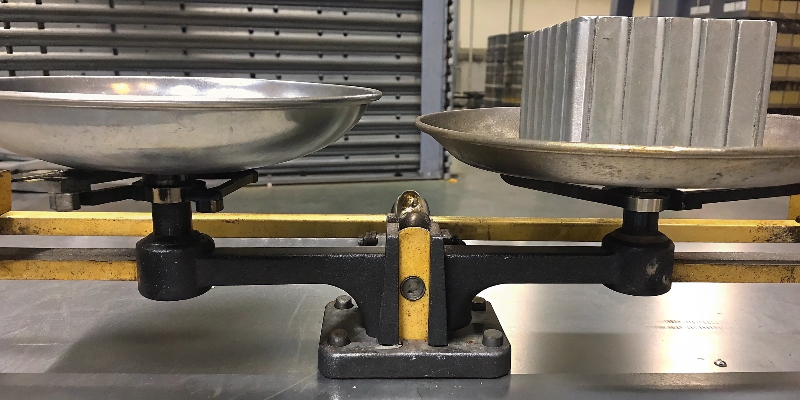
Nearly every project my team works on is driven by the need for lightweighting. For our Tier 1 customers in the EV space, reducing vehicle weight is their top priority to combat range anxiety. A die-cast aluminum part is typically about one-third the weight of an identical steel part and can be designed to provide similar or even better performance in specific applications. We use advanced alloys and design techniques like adding ribs and gussets to place strength exactly where it’s needed without adding unnecessary mass elsewhere. I remember a project involving a large structural component for a German automaker. The original design was a multi-piece steel weldment. By converting it to a single aluminum die casting, we helped them cut the part’s weight by almost 40%. This single change contributed directly to the vehicle meeting its ambitious energy efficiency targets. It’s a perfect example of how the material and the process work together to solve a critical engineering challenge.
How Does Aluminum Die Casting Help Manage Heat?
Your component, like an electronics housing or an engine part, generates a lot of heat. If this heat isn’t dissipated effectively, it can lead to poor performance, reduced lifespan, and even complete failure.
Aluminum has excellent thermal conductivity, making it an ideal material for heat dissipation. The die casting process allows us to create complex shapes, such as cooling fins or liquid cooling channels, directly into the part to maximize an assembly’s thermal performance.
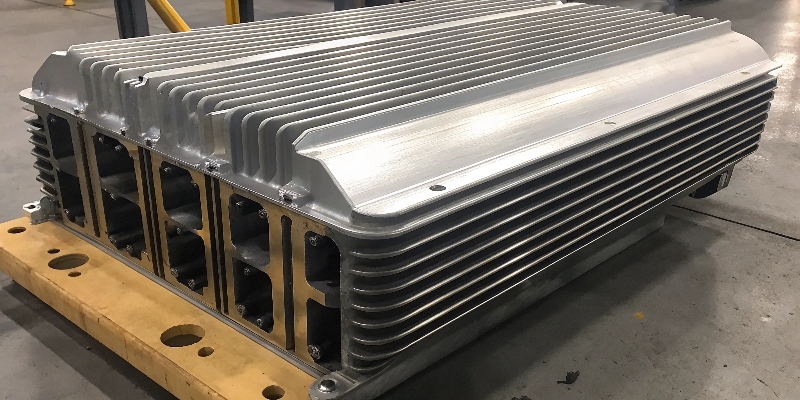
Heat is the enemy of electronics and high-performance motors. This is where aluminum’s natural properties give it a huge advantage. It conducts heat far better than steel. The real magic happens when you combine this property with the design freedom of die casting. I’ve spent much of my career helping develop housings for EV motor controllers and on-board chargers. These parts are not just enclosures; they are active thermal management systems. We work with our customers’ engineering teams to design intricate cooling fins on the exterior of the housing. These fins dramatically increase the surface area to transfer heat to the air. For more demanding applications, we can even cast complex, leak-proof liquid cooling channels2 directly into the walls of the part. This allows coolant to flow through the housing, pulling heat away from critical components. This level of thermal integration is only possible because of the die casting process.
Is Die Casting Actually Cost-Effective for Large Production Runs?
You need to produce thousands of parts, and tooling costs seem high. It’s hard to justify a large upfront investment without being sure that the final price per part will be competitive.
Yes, while the initial tooling investment is significant, the extremely fast cycle times and low labor costs of die casting make it exceptionally cost-effective for high-volume production. The cost per part drops dramatically as production volumes increase.
This is a conversation I have frequently with purchasing directors. They see the quote for a new die casting tool, which can be a significant investment, and they get concerned. My job is to walk them through the total cost of ownership3. A high-pressure die casting tool is a marvel of engineering, built from hardened steel to withstand extreme temperatures and pressures for hundreds of thousands of cycles. Once that tool is on our machine, we can produce a finished part every 60 to 120 seconds. The process is highly automated, so labor costs are minimal. When you compare this to a process like CNC machining, which might take 30 minutes or more per part, the savings add up quickly. The upfront tooling cost is spread over the entire production run. For any project with volumes of 10,000 parts or more per year, die casting almost always offers the lowest final part price.
What Finishing Options Are Available for Die-Cast Parts?
Your part needs to look good and withstand a harsh environment. You need to know if die-cast aluminum can be easily coated or finished to meet both your aesthetic and functional requirements.
Aluminum die castings are compatible with a wide variety of surface treatments. Common options include powder coating for durability and color, chromate conversion coating for corrosion resistance, and various machining or polishing steps for specific functional or aesthetic needs.
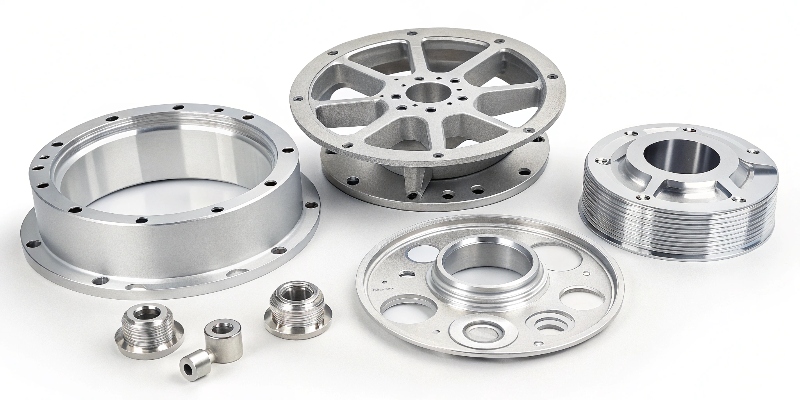
A raw aluminum casting is just the beginning. The final step is often a surface finish that provides corrosion protection and the desired appearance. My customers’ parts are used in harsh under-vehicle environments, so a robust coating is not optional—it’s a requirement. The most common and effective finish we apply is powder coating4. It creates a tough, durable, and uniform layer that seals the aluminum from moisture and road salt. For parts that need to remain electrically conductive, we often use chromate conversion coatings. It’s also very common to perform targeted machining operations after casting to create ultra-precise mating surfaces or threaded holes. The versatility is a key advantage. We can deliver a part that is painted, plated, polished, or machined. We work with the customer to define the exact requirements and manage the entire finishing process to ensure the final part that arrives at their assembly line is ready for use.
Conclusion
Aluminum die casting offers a powerful mix of precision, lightweight strength, and mass-production efficiency. This makes it an indispensable process for creating the high-performance components that modern industries demand.
Understand the unique design requirements for EV controller housings. ↩
Discover how liquid cooling channels enhance thermal management in components. ↩
Learn about total cost of ownership and its importance in manufacturing decisions. ↩
Discover how powder coating improves the durability and appearance of aluminum parts. ↩


