

Defective parts lead to production delays, quality holds1, and costly recalls. A single bad batch can jeopardize your project timeline, damage your brand’s reputation, and frustrate your entire team.
The most common defects are porosity, cold shuts, hot tears, and dimensional warpage. These are not random flaws; they are symptoms of controllable issues in the part design, mold tooling, or die casting process parameters like temperature, pressure, and speed.
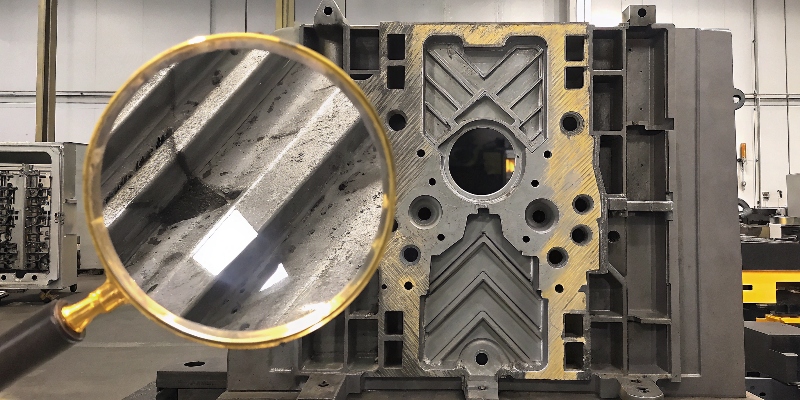
In my 20-plus years in this industry, I have seen every defect imaginable. As a young technician, I learned to spot them on the shop floor. Now, as an engineering consultant, I help my Tier 1 customers diagnose why these defects are happening. There is nothing more frustrating for a Supplier Quality Engineer than receiving a shipment of parts you have to quarantine. The key is to move past simply rejecting bad parts and get to the root cause. It’s not about guesswork; it’s a systematic process of tracing the defect back to its origin. Let’s walk through the main culprits.
What Causes Those Tiny Holes (Porosity) Inside Your Castings?
You receive a part that looks perfect on the outside, but an X-ray reveals hidden internal voids. This porosity2 can compromise structural integrity and cause leaks, leading to catastrophic failure in the field.
Porosity is caused by either trapped gas during injection (gas porosity) or insufficient molten metal to compensate for volume loss during cooling (shrinkage porosity). Controlling injection speed, pressure, and mold temperature is crucial to prevent these internal voids.
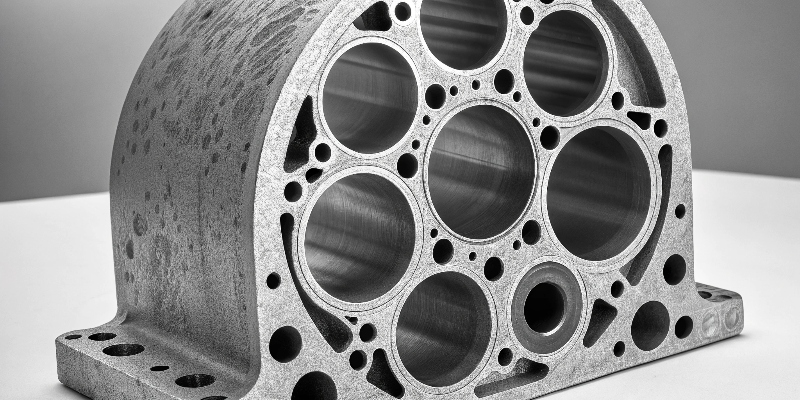
Porosity is the most common and challenging defect in die casting, especially for parts requiring high airtightness like EV controller housings. It comes in two main flavors: gas and shrinkage. Gas porosity looks like small, smooth, spherical bubbles. It happens when air in the mold cavity, steam from lubricants, or hydrogen in the aluminum itself gets trapped during the high-speed injection. Shrinkage porosity is different. It’s a jagged, sponge-like void caused when a thick section of the part cools and shrinks, and there isn’t enough molten metal to fill the void. This often happens in areas far from the gate. I worked on a part that was failing a leak test at a rate of 15%. Our X-rays showed shrinkage porosity right next to a thick boss. The solution was a collaborative redesign: we added a generous fillet to smooth the transition from a thin wall to the thick boss and redesigned the gating to feed that specific area more effectively. The reject rate dropped to almost zero.
Porosity: Cause and Solution
| Defect Type | Root Cause (Process) | Root Cause (Design) | Solution |
|---|---|---|---|
| Gas Porosity | Turbulent metal flow, poor venting, excessive lubricant | Features that trap air | Optimize injection profile, improve vents, use vacuum |
| Shrinkage Porosity | Insufficient intensification pressure, low melt temp | Abrupt changes in wall thickness | Redesign for uniform thickness, add chill vents, improve gating |
Why Do Your Parts Look Like They Have Cracks or Seams?
You see a fine line on the surface of your part that looks like a crack. This defect, called a cold shut, creates a structural weak point in the casting, making it instantly unusable.
A cold shut occurs when two fronts of molten metal meet but are too cool to fuse together properly. It is typically caused by low molten metal temperature, slow injection speed, or a mold that is too cold.
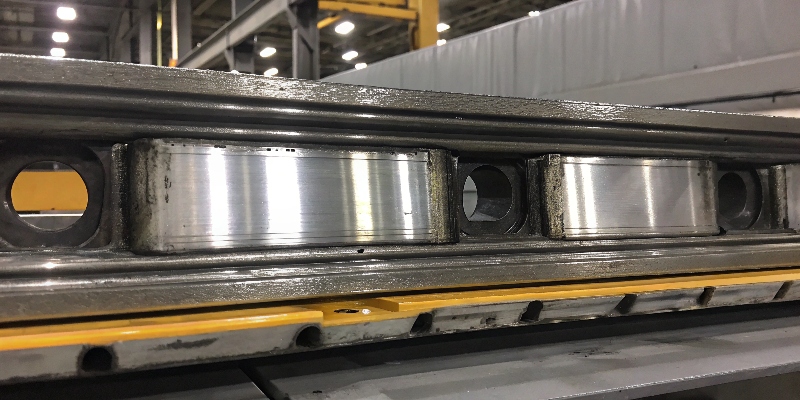
A cold shut (or cold lap) is a clear sign that the metal wasn’t fluid enough to form a homogenous part. Imagine two waves of water meeting; they blend perfectly. Now imagine two waves of thick slush meeting; they just push against each other, leaving a seam. That’s what happens with molten aluminum. The "skin" of the flowing metal solidifies too quickly before the cavity is completely full. When two of these semi-solid fronts meet, they don’t merge. The main culprits are process parameters3 that are too "cold"—low melt temperature or a cold tool—or an injection speed4 that is too slow to fill the part quickly. Part design also plays a huge role. Long, thin sections that are far from the gate are very prone to cold shuts5. This is where mold flow simulation is invaluable. Before we even cut steel for a tool, we can simulate the metal flow and predict if and where cold shuts will form. It allows us to prove to the customer that moving a gate or slightly increasing a wall thickness will solve the problem before it ever happens.
What Causes Those Jagged Cracks in Your Castings?
You pull a brand-new part from the box, only to find a jagged, irregular crack. These "hot tears6" make the part completely useless and point to a serious issue in the casting process or design.
Hot tears are cracks that form while the casting is still hot and weak, just after solidification. They are caused by internal stresses as the part shrinks and is constrained by the mold, especially around sharp corners or thick sections.
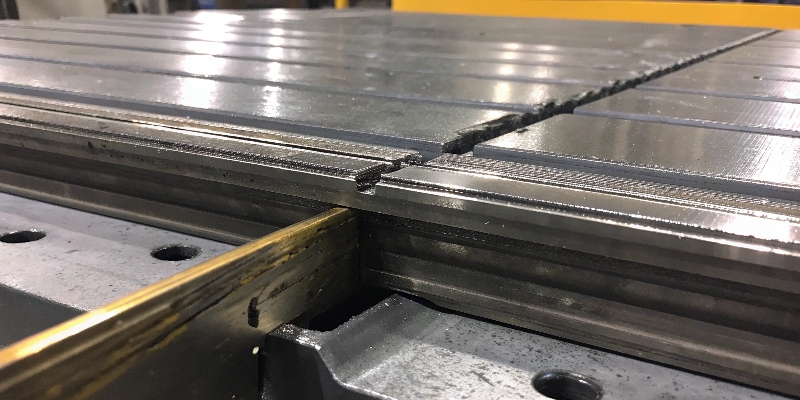
While a cold shut is a failure of fusion, a hot tear is the part literally tearing itself apart. As the aluminum cools from a liquid to a solid, it shrinks. If part of the casting is constrained by the die—for example, by a core pin or a sharp internal corner—it can’t shrink freely. This builds up immense internal stress. The part is weakest right after it solidifies, so if the stress is too high, it will crack. These tears are usually jagged and appear at stress concentration points. I once had a project with a complex housing that had a high scrap rate due to hot tearing around a set of mounting bosses. Through analysis, we found two root causes. First, the sharp 90-degree corners at the base of the bosses were creating stress risers. Second, the ejection timing was slightly too early, meaning we were trying to push the part out of the mold while it was still too hot and weak. The solution was two-fold: we worked with the customer to add generous fillets in their CAD model, and we optimized the process by increasing the cooling time by just two seconds before ejection.
Why Do Your Parts Have Excess Material and Mismatched Halves?
You notice thin, unwanted fins of material (flash) along the edges of your part, or see a visible step where the two halves of the mold meet. These parting line defects create extra cleanup work and can indicate serious process problems.
Flash is caused by molten aluminum being forced into the gap between the two mold halves. It results from insufficient clamp force, worn-out tooling, or excessively high injection pressure, creating extra labor costs and potential mold damage.
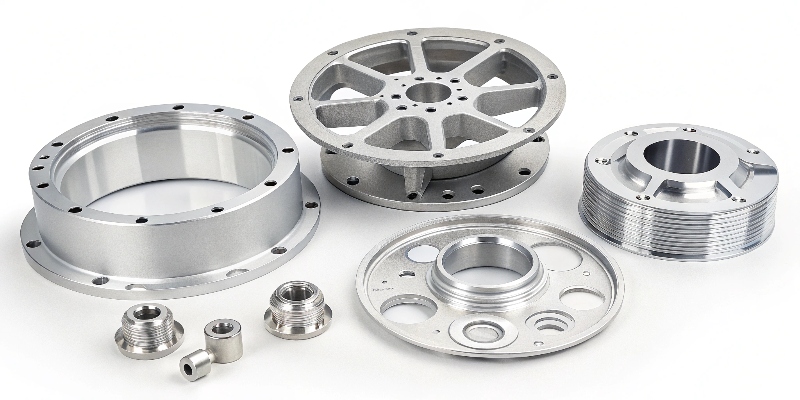
Flash is one of the most visible defects. It’s that paper-thin sheet of metal that squeezes out of the mold’s parting line. While some minimal flash is expected and removed in a trim die, excessive flash is a bad sign. It means something is preventing the two massive halves of the steel mold from closing perfectly. The most common cause is simply not enough clamp force from the die casting machine to counteract the immense injection pressure. It can also mean the tool itself is worn or damaged, preventing a tight seal. Another cause can be a process that is running "too hot" or "too fast," with injection pressures that exceed what the machine can handle. For our customers, excessive flash is more than just a cosmetic issue. It means higher labor costs for manual de-flashing and can signify an unstable process that could lead to more severe dimensional problems or porosity. Regular tool maintenance is the number one preventative measure here.
What Are Those Blemishes on the Surface of Your Part?
You see blisters, swirl patterns, or an unusually rough texture on the surface of your castings. These surface defects ruin the cosmetic appearance and can compromise the effectiveness of post-treatments like powder coating.
Surface defects like blistering, flow lines, and oxide inclusions are typically caused by trapped gas near the surface, incorrect mold or melt temperatures, or poor melt quality. They directly affect the part’s appearance and can cause paint to fail.
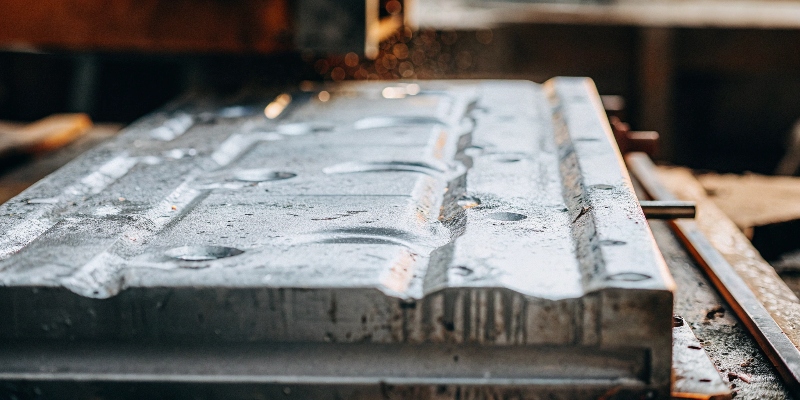
The final appearance of a part is critical, especially for visible components or parts that need a perfect seal for painting. Blisters are raised bumps on the surface caused by expanding gas trapped just under the part’s skin, which becomes obvious after heat treatment or powder coating. Flow lines or "swirls" are visible patterns left by the cooling metal, often a sign that the mold temperature was too low. Oxide inclusions occur when the "skin" of oxide that forms on molten aluminum gets folded into the melt and ends up on the part’s surface, creating a dull, streaky patch. As a supplier, delivering a clean, uniform surface is part of our quality promise. Cleanliness of the molten metal is key—we regularly skim the furnaces to remove oxides. We also carefully control the mold temperature and the application of lubricant to prevent surface imperfections.
Why Do Your Parts Not Fit and Seem Bent?
You try to install a die-cast part in your assembly, but the mounting holes don’t line up, or the part is visibly warped. These dimensional inaccuracies can halt an entire assembly line.
Warpage and dimensional inaccuracy are caused by uneven cooling and internal stresses within the part. This often results from a poor part design with non-uniform wall thicknesses or an incorrect cooling channel layout in the mold.
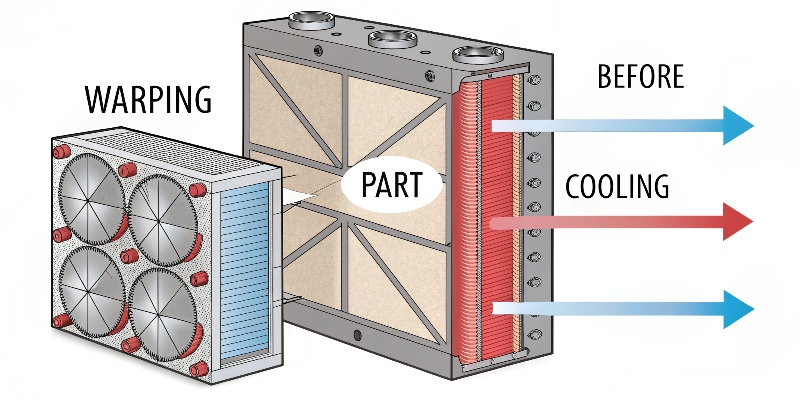
This is an engineer’s nightmare. A part that is dimensionally out of spec is completely useless. Warpage happens when one part of the casting cools and shrinks much faster than another. The thick sections hold heat longer and shrink later, pulling on the already-solid thin sections and causing the part to bend or twist. Good part design is the best prevention. My team and I spend a lot of time with customers during the DFM (Design for Manufacturability) phase, advising them to design walls with as uniform a thickness as possible. Where thick sections are unavoidable, we use our mold design expertise to place cooling channels strategically in the tool. By flowing water through these channels, we can pull heat out of the thick areas faster, forcing the entire part to cool and shrink at a more uniform rate. This proactive approach during the design phase is far more effective than trying to bend parts straight after they’ve been cast.
What Happens When the Process Parameters are Wrong?
Many defects—like gas porosity, cold shuts, and surface issues—don’t just have one cause. Often, the root of the problem lies in the fundamental setup of the die casting machine and mold.
Failures in mold venting, lubrication, or the vacuum system are root causes for many other defects. Blocked vents trap air causing porosity, while improper lubrication can cause surface defects and parts to stick, damaging both the part and the expensive tool.
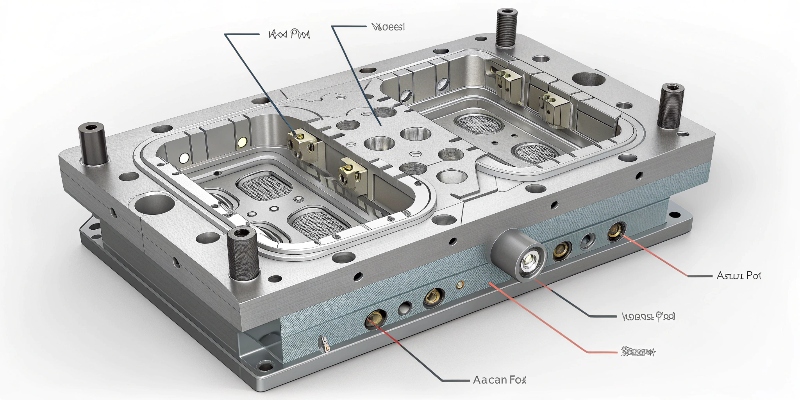
This final category is about the "unseen" systems that are critical to a stable process. The air inside the mold cavity has to go somewhere when 30 kilograms of molten aluminum is injected in 100 milliseconds. That’s the job of vents and overflows. If they are blocked or poorly designed, you get gas porosity. For parts with very high airtightness requirements, like OBC housings, we use a vacuum system to actively suck the air out of the mold just before injection. If that vacuum system fails, an entire batch of parts can be scrap. Similarly, mold lubricant is a delicate balance. Too little, and the part can weld itself to the tool, causing a catastrophic failure. Too much, and the lubricant turns to gas, causing—you guessed it—porosity. As a technical team, our job is to master these systems. We use a combination of simulation, preventative maintenance, and rigorous process control to ensure they work perfectly on every single shot.
Conclusion
Understanding and preventing casting defects is not magic. It is a science that involves tracing an issue back to its root cause in the design, material, or process and applying targeted controls.
Avoiding quality holds is essential for maintaining production efficiency and customer satisfaction. ↩
Understanding porosity is crucial for improving casting quality and preventing structural failures. ↩
Mastering process parameters is crucial for achieving consistent and high-quality castings. ↩
Understanding injection speed can help you fine-tune your process for better results. ↩
Learn about cold shuts to enhance your die casting process and ensure stronger, more reliable parts. ↩
Discover how to prevent hot tears to maintain the integrity of your cast parts. ↩


