

Are you exploring manufacturing solutions for New Energy Vehicles (NEVs) but unsure which process offers the most compelling advantages for performance, safety, and efficiency? Overlooking the benefits of High-Pressure Die Casting (HPDC) could put your NEV designs at a disadvantage.
The top 5 benefits of High-Pressure Die Casting for NEVs are significant lightweighting for extended range, enhanced structural strength and safety, superior thermal management capabilities, efficient production cycles for cost reduction, and the ability to integrate complex functionalities into single parts.
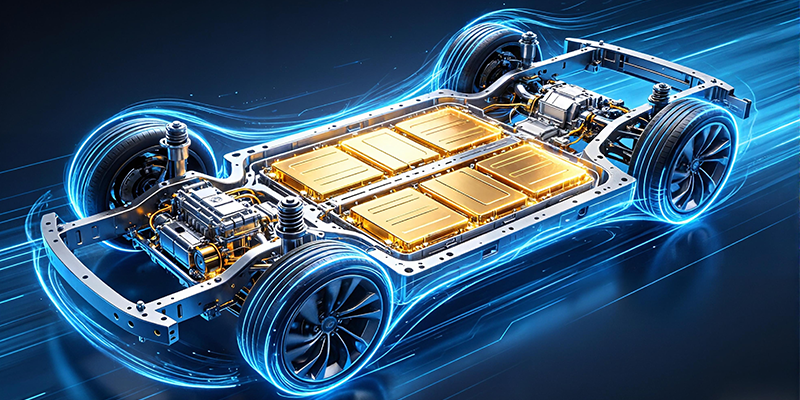
Throughout my two decades in aluminum alloy die casting, I’ve seen firsthand how crucial material and process selection are, especially with the rapid evolution of New Energy Vehicles. When it comes to NEVs, the benefits of High-Pressure Die Casting (HPDC) are truly game-changing. I recall working on an early EV project where the customer, a leading Tier 1 supplier, was struggling to meet stringent weight targets for a critical motor housing while also needing integrated cooling channels. Their previous supplier couldn’t deliver. My team at EMP Tech leveraged HPDC’s unique capabilities, from advanced alloy selection to precise mold flow simulation, to create a solution that not only hit their weight and thermal performance goals but also integrated features that simplified their final assembly. This experience solidified my belief in HPDC as an indispensable technology for powering the future of NEVs.
What are the lightweight design advantages of aluminum die casting in EVs?
Are your current EV components too heavy, thereby limiting vehicle range and overall efficiency? Failure to prioritize lightweight design can severely impact an EV’s performance and market competitiveness.
Aluminum die casting offers significant lightweight design advantages in EVs due to aluminum’s high strength-to-weight ratio, allowing for the creation of thinner-walled, structurally sound components that directly extend range and improve energy efficiency.
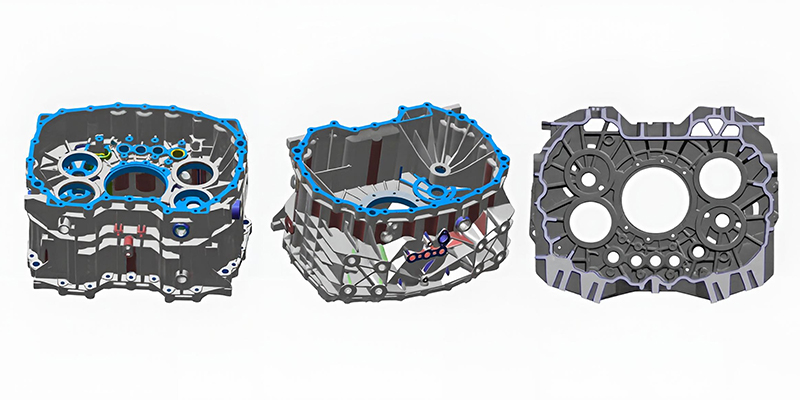
In the world of Electric Vehicles, every kilogram counts. The battery pack is inherently heavy, so every other component must contribute to overall weight reduction without compromising safety or performance. This is where aluminum die casting provides unparalleled advantages. Aluminum is naturally significantly lighter than steel, yet can achieve comparable strength when properly engineered. With HPDC, we can achieve extremely thin wall sections, often down to 2.5mm or even 2mm in places, while maintaining structural integrity through strategic ribbing and design optimization. For example, a single, large aluminum die-cast battery tray can replace an assembly of multiple steel stampings and welded parts, resulting in substantial weight savings. This direct reduction in curb weight translates directly to increased driving range, improved acceleration, and enhanced energy efficiency for the EV. I’ve personally seen how this commitment to lightweighting through HPDC has enabled our Tier 2 customers, often struggling with this challenge, to significantly improve their NEV designs and meet strict OEM requirements for vehicle performance.
How does High-Pressure Die Casting improve structural strength and safety?
Are you concerned about the structural integrity and crash safety of your NEV components, especially with the increasing demands for occupant protection and battery security? Insufficient strength can compromise both safety and regulatory compliance.
High-Pressure Die Casting significantly improves structural strength and safety in NEVs by producing components with superior material density, excellent dimensional stability, and the ability to integrate complex load-bearing geometries for enhanced crash energy absorption.
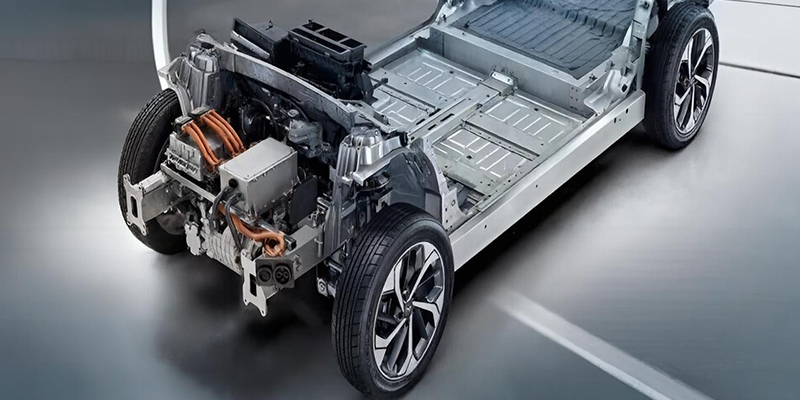
Electric vehicle safety standards are incredibly rigorous, requiring components that can withstand significant impact forces and protect both occupants and the high-voltage battery system. HPDC excels in delivering this crucial structural performance.
Structural Benefits of HPDC for NEVs
| Benefit | Description | Impact on NEV Safety and Performance |
|---|---|---|
| High Material Density | The high pressure used in HPDC forces molten aluminum into every corner of the mold, creating components with very low internal porosity and a dense, fine-grain microstructure. | This results in higher tensile strength, yield strength, and fatigue resistance compared to other casting methods, making parts more resilient to sustained loads and vibrations, and improving overall longevity. |
| Integrated Structural Elements | HPDC allows for the creation of complex, multi-functional single-piece components that consolidate numerous smaller parts. Features like reinforcing ribs, mounting bosses, and connection points can be integrated directly into the casting. | Reduces weak points associated with traditional assemblies (welds, fasteners), leading to a stronger and more rigid overall structure. This is critical for chassis components, battery enclosures, and suspension mounts that bear heavy dynamic loads. |
| Excellent Dimensional Stability | The rigid molds and controlled cooling in HPDC result in parts with extremely tight dimensional tolerances and consistent repeatability from shot to shot. | Ensures precise fit and alignment in complex assemblies, reducing stresses caused by misaligned parts. This directly contributes to predictable crash performance and helps maintain optimal vehicle dynamics over the vehicle’s lifespan. |
| Optimized Energy Absorption | With advanced simulation and design, HPDC parts can be engineered to deform in a controlled manner during a collision, absorbing and dissipating crash energy effectively. | Protects occupants by managing impact forces, and crucially helps to preserve the integrity of the battery pack, preventing damage that could lead to thermal runaway or other hazards. |
How do die cast parts achieve superior thermal management?
Are your current NEV components struggling with heat dissipation, leading to reduced battery life, compromised electronics, or inefficient motor operation? Ineffective thermal management is a critical bottleneck for NEV performance.
Die cast parts achieve superior thermal management by enabling the precise integration of complex cooling channels, internal fins, and heat sinks directly into the component’s structure, leveraging aluminum’s excellent thermal conductivity to dissipate heat efficiently.
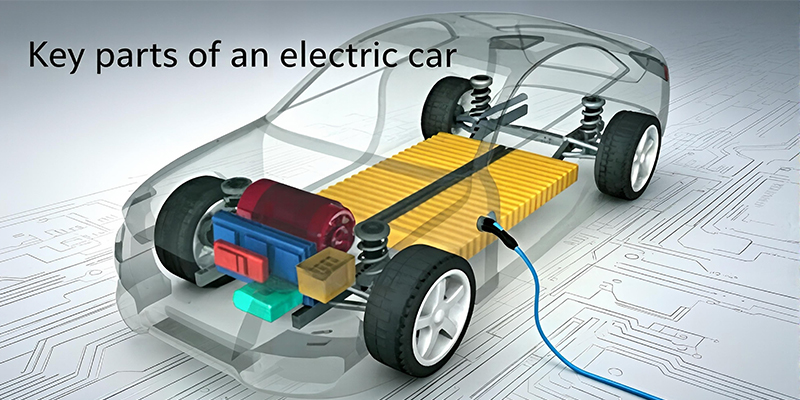
Thermal management is one of the most critical challenges in New Energy Vehicles. Batteries, electric motors, power electronics, and inverters all generate significant heat, and this heat must be efficiently managed to optimize performance, extend lifespan, and ensure safety. Aluminum, by its very nature, is an excellent thermal conductor, making it an ideal material for these applications. What HPDC adds to this equation is the ability to integrate incredibly complex thermal management features directly into the component’s design. My team and I have worked on numerous projects where this was key. For instance, we’ve designed and produced motor housings with intricate fluid cooling channels molded directly into the casting, or inverter housings that incorporate internal fins and webs to quickly draw heat away from sensitive power modules. This "design for cooling" approach eliminates the need for separate heat sinks or complex brazed assemblies, reducing part count, weight, and assembly complexity. The precise control over wall thickness and internal geometry that HPDC offers allows us to optimize heat flow, ensuring that vital NEV components operate within their ideal temperature ranges, even under high load. This directly translates to better battery health, increased motor efficiency, and enhanced reliability for the entire vehicle.
Why do leading EV manufacturers choose EMP Tech for die casting solutions?
Are you looking for a die casting partner who can truly understand and meet the complex, evolving needs of NEV manufacturing, ensuring quality, innovation, and timely delivery? The right technical partner is crucial for success.
Leading EV manufacturers choose EMP Tech for die casting solutions due to our deep expertise in DFM analysis, advanced mold flow simulation, precise process control, and proven track record in delivering high-quality, lightweight, and complex components for demanding NEV applications.
When it comes to New Energy Vehicles, the stakes are incredibly high. Our customers, who are Tier 2 suppliers to major OEMs in Europe, North America, and beyond, face immense pressure to deliver innovative, high-quality components for extremely tight project cycles. They choose EMP Tech because we offer a comprehensive, one-stop solution grounded in over two decades of specialized experience.
EMP Tech’s Differentiators for NEV Die Casting
| Aspect | EMP Tech’s Approach | Customer Benefit |
|---|---|---|
| Early-Stage DFM Analysis | We engage with customers from the very initial design phase, meticulously analyzing product structures to identify potential manufacturability issues, optimize part geometry for HPDC, and suggest design improvements. | Prevents costly redesigns and delays down the line, ensures that parts are designed for optimal castability, lightweighting, and performance from the outset, significantly shortening the overall development cycle. |
| Advanced Mold Collaborative Development | Utilizing state-of-the-art CAD/CAE software and mold flow simulation to design and refine molds, ensuring efficient metal flow, minimal defects, and superior part quality, often integrating intricate features like cooling channels. | Reduces the need for expensive physical mold trials, accelerates mold development, and ensures the mold produces high-quality parts consistently, translating to faster time-to-market for our customers’ NEV components. |
| Optimized Die Casting Process | Our expertise in die casting process optimization includes precise control over alloy selection, injection parameters, thermal management, and lubrication, leveraging real-time monitoring and feedback systems. | Delivers components with consistent mechanical properties, superior surface finish, and minimal defects, meeting stringent NEV quality standards like IATF 16949, and ensuring reliable performance throughout the vehicle’s lifespan. |
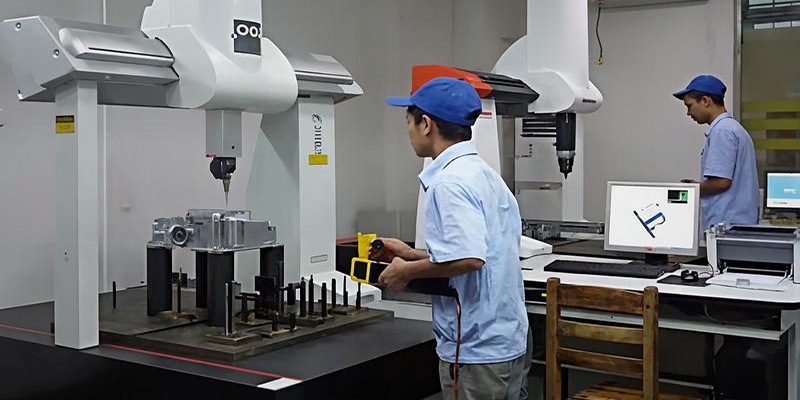
| Robust Quality Control | Implementing comprehensive quality checks, from material incoming inspection to final part verification using advanced metrology, ensuring adherence to tight dimensional tolerances and performance specifications. | Provides absolute confidence in the quality and reliability of every component, reducing the risk of costly recalls or warranty claims, which is critical for safety-sensitive NEV applications. |
| Dedicated Engineering Support | Our team of seasoned technical engineers and consultants serves as an extension of our customers’ R&D and engineering departments, solving complex challenges and adapting quickly to evolving requirements. | Offers unparalleled technical support, enabling customers to overcome complex design and manufacturing hurdles, and fostering long-term partnerships built on trust and shared expertise, crucial for navigating the fast-paced NEV industry. |
Conclusion
High-Pressure Die Casting delivers unmatched benefits for NEVs: lightweighting, structural strength, superior thermal management, efficient production, and functional integration. At EMP Tech, we leverage these advantages to provide leading EV manufacturers with the advanced die-cast solutions they need to power the future.


