

At EMP Tech, a leading aluminum die-casting manufacturer with over 30 years of experience, we specialize in providing one-stop OEM solutions for high-precision, lightweight components. Our expertise in high-pressure die casting, combined with advanced technologies like friction stir welding and precision CNC machining, enables us to deliver superior products for industries such as new energy vehicles (NEV), telecom & 5G, and industrial automation. Aluminum die-casting materials form the foundation of our manufacturing processes, allowing for the creation of complex, durable parts that meet stringent quality standards like IATF 16949. In this article, we explore four key aluminum die-casting alloys—ADC12, ENAC43400 (AlSi9Cu3), A380, and A360—highlighting their properties, benefits, and applications to help you select the ideal material for your project.
Overview of Key Aluminum Die-Casting Alloys
Each aluminum alloy is formulated with precise elemental compositions to optimize mechanical, physical, and casting properties. At EMP Tech, we leverage these alloys in our state-of-the-art facilities, equipped with 13 die-casting machines ranging from 350T to 3050T, to produce high-volume, high-quality components. The alloys discussed below are among the most versatile in the industry, offering advantages in castability, strength, and corrosion resistance for demanding applications.
Detailed Alloy Analysis
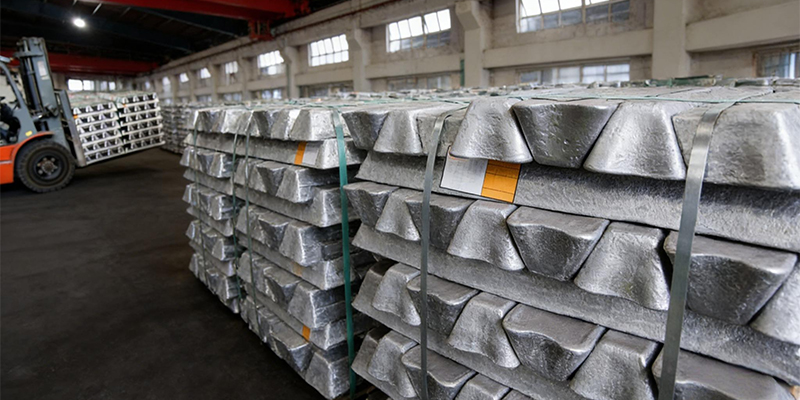
ADC12
ADC12, widely utilized in Asia and equivalent to the American A383 standard, features a high silicon content (9.6% to 12.0%) for exceptional fluidity, making it perfect for intricate, thin-walled designs. It also includes 1.5% to 3.5% copper for enhanced strength. At EMP Tech, we appreciate ADC12 for its improved corrosion resistance over alternatives like A380 and its ability to maintain strength at high temperatures. With tensile strength around 310 MPa and yield strength of 150 MPa, this alloy excels in high-volume production. Common uses include electronics housings, automotive brackets, sensor brackets, motor covers, and telecom equipment enclosures—areas where our in-house tooling and surface finishing ensure precision and durability.
ENAC43400 (AlSi9Cu3)
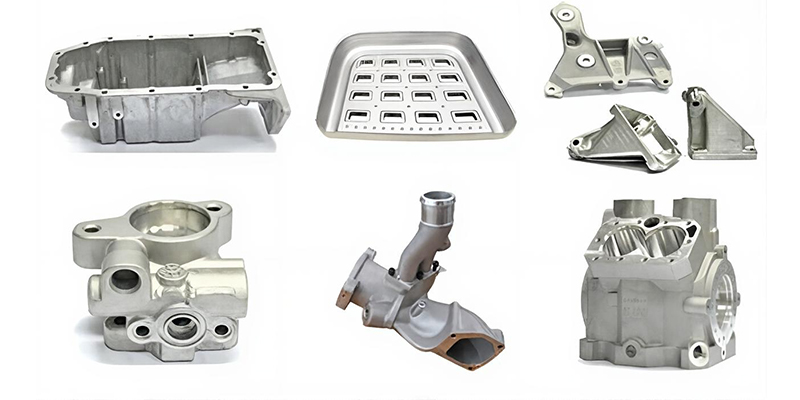
Known in Europe as ENAC-AlSi9Cu3(Fe) with material number 3.2163, this alloy contains 8% to 11% silicon and 2% to 4% copper. It stands out for its high strength and machinability, ideal for parts under mechanical stress. While its corrosion resistance is lower without coatings, the silicon content supports excellent casting performance. Offering tensile strength of about 240 MPa and hardness around 80 HB, ENAC43400 is a go-to for complex applications at EMP Tech, such as cylinder heads, engine blocks, and hydraulic components in NEV and industrial automation. Our zero-defect philosophy and advanced testing (e.g., X-Ray flaw detection and air tightness checks) ensure these parts meet the highest standards for pressure tightness and reliability.
A380
As the "industry standard" in North America, A380 balances 7.5% to 9.5% silicon and 3.0% to 4.0% copper for optimal mechanical properties, castability, and affordability. It provides strong thermal and electrical conductivity, along with decent corrosion resistance. At EMP Tech, A380’s high fluidity enables us to cast complex shapes with thin walls, extending die life and boosting efficiency in large-scale projects. This alloy is ideal for automotive transmission housings, power tools, appliance components, electronic enclosures, and industrial housings—applications where our 150+ CNC centers deliver micron-level precision and our surface treatments (like powder coating and plating) enhance performance.
A360
For environments demanding superior resistance, A360—with 9.0% to 10.0% silicon and up to 0.6% copper—offers enhanced corrosion protection and ductility, reducing cracking risks. Though slightly more costly than A380, its lower impurity levels make it reliable in harsh conditions like marine or humid settings. At EMP Tech, we select A360 for its excellent castability and strength in applications requiring long-term durability, such as marine hardware, aerospace brackets, precision equipment, and NEV components like battery pack shells. Our in-house laboratory ensures compliance with cleanliness standards (VDA 19) and electromagnetic shielding requirements.
Conclusion
Mastering aluminum die-casting materials is essential for achieving optimal design, efficiency, and performance in manufacturing. Whether leveraging the fluidity of ADC12 for electronics, the strength of ENAC43400 for automotive engines, the versatility of A380 for industrial applications, or the corrosion resistance of A360 for challenging environments, EMP Tech tailors these alloys to your needs. As a trusted Tier 2 supplier to global leaders in the EU and North America, we provide end-to-end solutions from mold design to final assembly. Contact us today to discuss how our expertise can elevate your next project with high-quality, lightweight aluminum die-cast components.


