

Electric vehicle (EV) control units—often called the “brains” of the powertrain—house sensitive electronics that manage battery distribution, inverters, and motors. Unlike traditional automotive components, these enclosures must survive constant vibration, extreme thermal cycling, and exposure to moisture without any degradation over the vehicle’s lifetime.
Traditional sealing methods often fall short. Silicone gaskets and liquid sealants degrade over time, while conventional fusion welding introduces high heat that distorts thin‑wall aluminum castings and creates porosity. Friction Stir Welding (FSW) eliminates these weaknesses, providing a reliable, solid‑state joining process that is now the industry standard for EV control unit enclosures.
What Makes FSW Different?
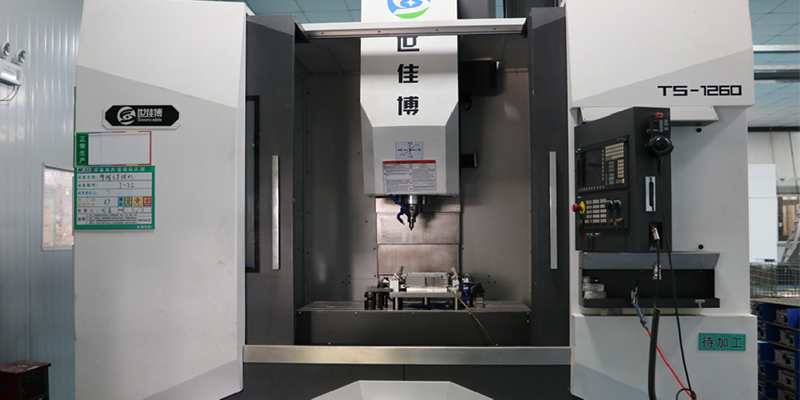
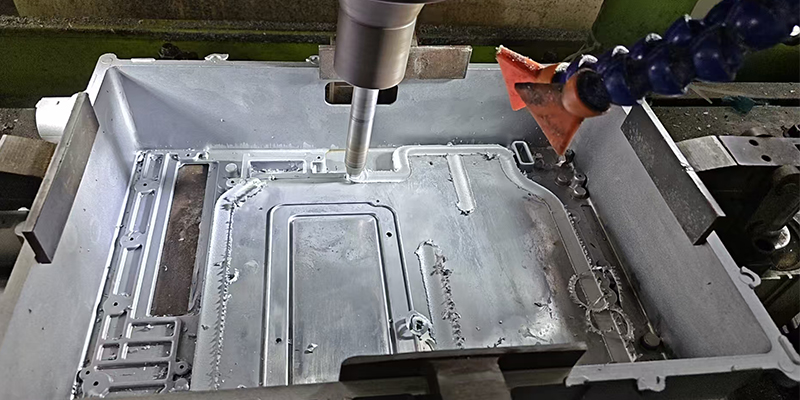
FSW is a solid‑state process. A rotating, non‑consumable tool traverses the seam between two aluminum components—typically the base and lid of a housing. Friction heats the metal until it becomes plastic without melting; the tool then mechanically stirs the materials together, forging a homogeneous joint.
Because the metal never melts, FSW avoids the defects common in fusion welding: no porosity, no spatter, and minimal thermal distortion. The result is a consistently leak‑proof enclosure that maintains the tight tolerances required for automated assembly.
Superior Sealing for Critical Electronics
The most immediate benefit of FSW is hermetic sealing. The welded joint becomes part of the parent material, eliminating aging gaskets, curing sealants, or loosening fasteners. At EMP Tech, welded enclosures undergo helium leak testing, achieving rates below 1×10⁻³ mbar·L/s—ensuring IP67 and IP69K protection against moisture, salt spray, and high‑pressure water jets.
Additionally, the absence of heat‑induced warpage preserves connector interfaces and mounting bosses within micron‑level tolerances, critical for automated assembly lines.
Thermal Management and Durability
EV control units face extreme temperature swings—from -40°C to over 105°C during fast charging in cold climates. These cycles cause materials to expand and contract. A housing assembled with gaskets and fasteners experiences differential expansion between aluminum, steel, and polymer seals, leading to “gasket creep” and eventual leakage.
FSW creates a unibody‑style enclosure where thermal expansion is uniform across the entire structure. This eliminates the mechanical interfaces where stress concentrates, dramatically improving fatigue life over the vehicle’s 15‑year lifespan.
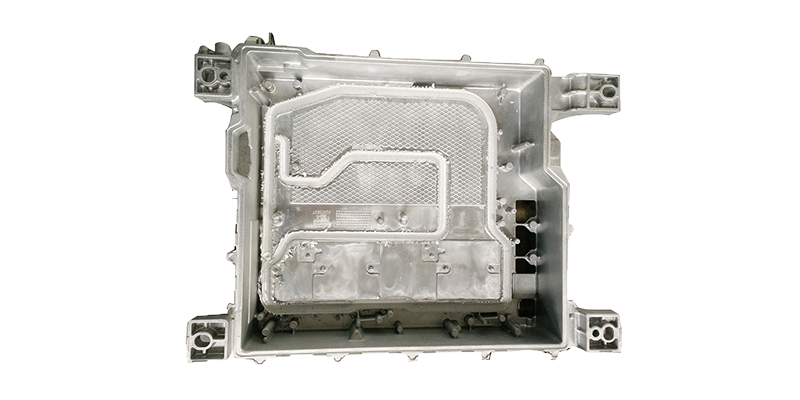
For control units with integrated liquid cooling channels—increasingly common in high‑performance EVs—FSW is the only method that can seal complex cooling jackets without introducing internal flash or debris that could block coolant flow.
Lightweighting Without Compromise
Every kilogram saved in an EV extends range. Aluminum die casting enables lightweight structures, but reducing wall thickness makes conventional welding difficult due to burn‑through risk. Because FSW is a low‑heat‑input process, it allows the use of thinner‑wall castings without distortion. EMP Tech combines high‑pressure die casting (HPDC) with FSW in a streamlined workflow to produce enclosures that are both lightweight and exceptionally rigid.
EMI Shielding and Structural Integrity
Modern EV control units operate at high frequencies and currents, generating electromagnetic interference (EMI) that can affect nearby sensors. A fully sealed aluminum enclosure acts as a Faraday cage, but only if the joint maintains electrical continuity. FSW provides a continuous, conductive bond with no gaps, ensuring consistent EMI protection.
Structurally, the FSW joint matches the base material’s strength. In a crash or high‑vibration scenario, a welded enclosure behaves as a single, integral component rather than an assembly of parts that could separate upon impact.
Quality Assurance in High‑Volume Production
For Tier 1 suppliers and OEMs, process consistency is critical. FSW is highly repeatable and easily automated, making it ideal for EV production volumes. At EMP Tech, every weld is monitored for tool rotation speed, traverse rate, and downward force within an IATF 16949‑certified environment. In‑line X‑ray and CMM verification guarantee that every control unit enclosure meets the stringent cleanliness and geometric standards required by European and North American automotive customers.
Conclusion
As EVs evolve toward higher power densities and longer service lives, protecting sensitive electronics demands more than traditional gaskets or fusion welding. Friction Stir Welding delivers enclosures that are airtight, thermally stable, and structurally durable.
By integrating high‑pressure die casting with friction stir welding under one roof, EMP Tech provides EV manufacturers a seamless path from design to production—delivering enclosures built to last the lifetime of the vehicle. For engineering teams looking to eliminate the risks of leakage and thermal fatigue, FSW is no longer an option—it is a necessity.


