

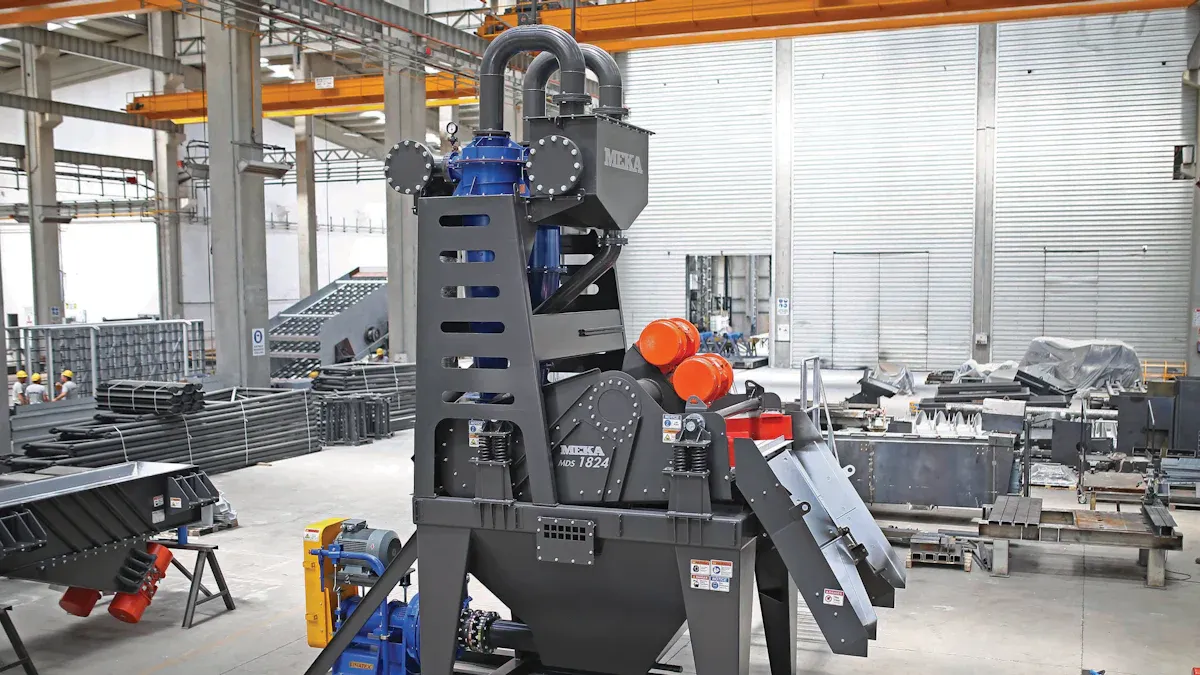
Die casting parts help lower production costs. They make manufacturing faster and use less material. You get many parts that look the same. There is less need for people to do the work by hand. For example, high-pressure die casting can finish a cycle in 20 to 60 seconds. This is much faster than sand casting.
Process Type | Cycle Time (seconds) | Cycle Time (minutes) | Throughput Comparison |
|---|---|---|---|
High-Pressure Die Casting | 20–60 | N/A | 5–10 times higher |
Traditional Sand Casting | N/A | 30–60 | N/A |
Automotive companies use this process to join many parts into one. This saves time and money.
Key Takeaways
Die casting parts help make things faster. They let companies make many pieces at once. This saves time and helps lower costs.
Using die casting means less material is wasted. The method shapes metal very well. There is less scrap than with older ways.
Die casting gives steady quality. The process makes parts that look the same. This helps stop mistakes and means fewer repairs are needed.
Die Casting Parts: Efficiency
Fast Production
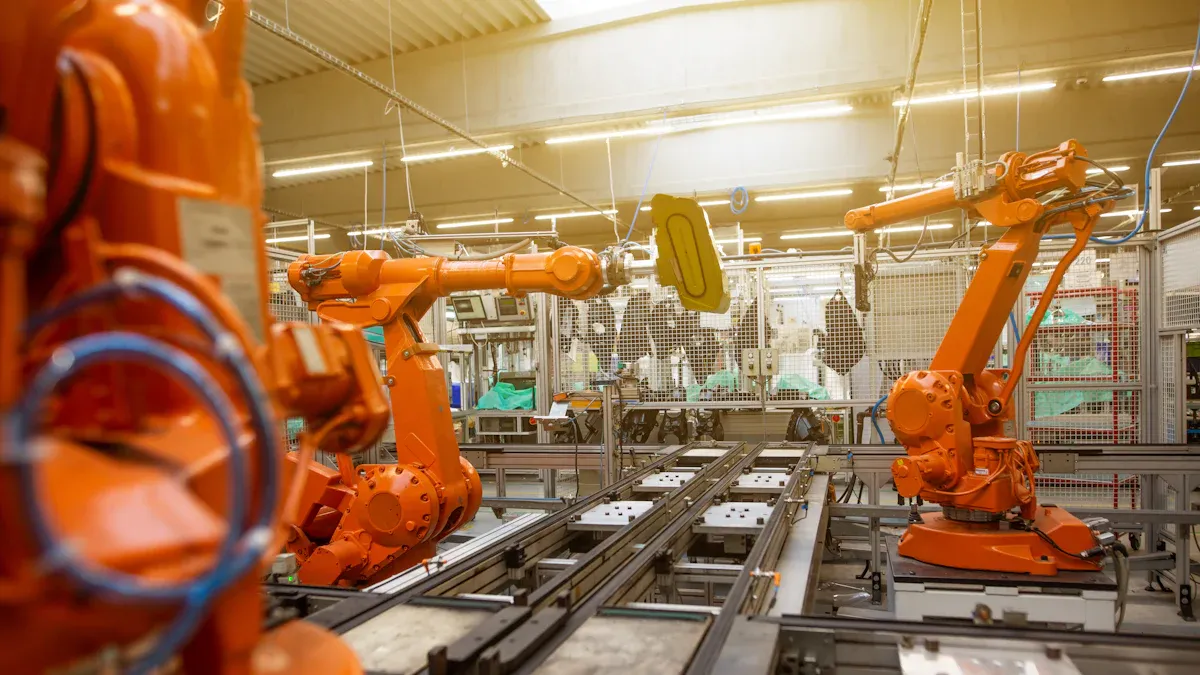
You can speed up your manufacturing process with die casting parts. This method lets you make many identical pieces in a single mold cycle. Unlike machining, which shapes each part one by one, die casting produces several parts at once. This approach works best when you need high volumes and want to keep costs low as you make more parts.
Once you set up the mold, you can run automated machines that turn out large batches quickly. For example, high-pressure die casting machines can produce between 200 and 300 castings per hour. If you use a single cavity die, you might get up to 900 parts per hour. With a four cavity die, you can reach 3,600 parts per hour.
Die Type | Castings per Hour |
|---|---|
Single Cavity Die | 900 |
Four Cavity Die | 3,600 |
High-pressure die casting also helps you create complex shapes with speed and accuracy. You can form thin ribs, undercuts, and other detailed features that are hard to make with other methods. This process gives you near-net-shape parts, so you spend less time on extra machining.
You see these benefits in industries like automotive and hardware. Car makers use die casting to produce engine parts, sensor housings, and transmission components. Hardware companies rely on this method for items like electronic covers and heat sinks. These parts often need to be lightweight, strong, and made in large numbers.
Tip: Die casting parts help you respond faster to market changes because you can produce and deliver large orders in less time.
Consistent Quality
Die casting parts give you reliable results every time. The process uses hardened steel molds and high pressure, which means each part comes out with the same shape and size. This consistency is important when you need tight tolerances and smooth finishes.
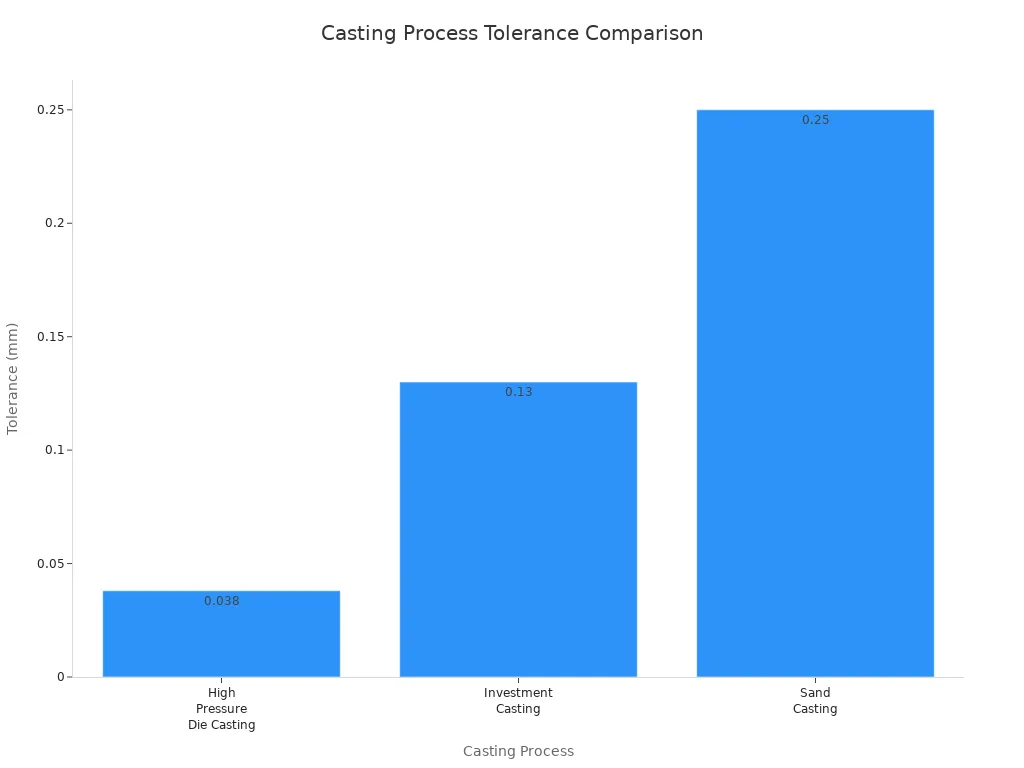
You can see how die casting compares to other methods in the table below:
Process | Typical Linear Tolerance |
|---|---|
±0.0015–0.004 in (±0.038–0.10 mm) | |
Investment Casting | ±0.005 in (±0.13 mm) |
Sand Casting | ±0.010 in (±0.25 mm) or greater |
You can trust die casting parts to meet strict standards. Many factories follow ISO 9001:2015 rules, which means they check every batch and keep careful records. They also test materials and inspect critical features to make sure each part matches the design. This level of control helps you avoid defects and reduces the need for extra work after casting.
When you use die casting, you also get parts that last longer and fit better. The process keeps dimensions stable, even when you make thousands of pieces. This reliability saves you time and money because you do not have to fix or replace parts as often.
Note: Automation and in-house testing in die casting help you maintain high quality and meet customer demands with confidence.
Material and Labor Savings
Less Waste
Die casting parts help you use less material. The process shapes metal very accurately. You only use the amount you need. Machining cuts away a lot of metal. This creates more waste. The table below shows how much waste you can avoid:
Manufacturing Process | Material Waste Percentage |
|---|---|
CNC Machining | 30–70% |
Die Casting | 5–15% |
Die casting parts have less scrap than other methods.
The yearly scrap rate for all manufacturing is 11.2%.
Die casting gives you smooth surfaces and accurate sizes. You do not need much extra finishing work. The process makes parts with low porosity. This means they are strong and reliable. Aluminum and zinc are common choices. They do not rust easily and can be recycled. Using recycled metals helps the planet and saves money.
Tip: Recycling aluminum and Zamak alloys saves energy. It also reduces waste and makes your production greener.
Lower Labor Costs
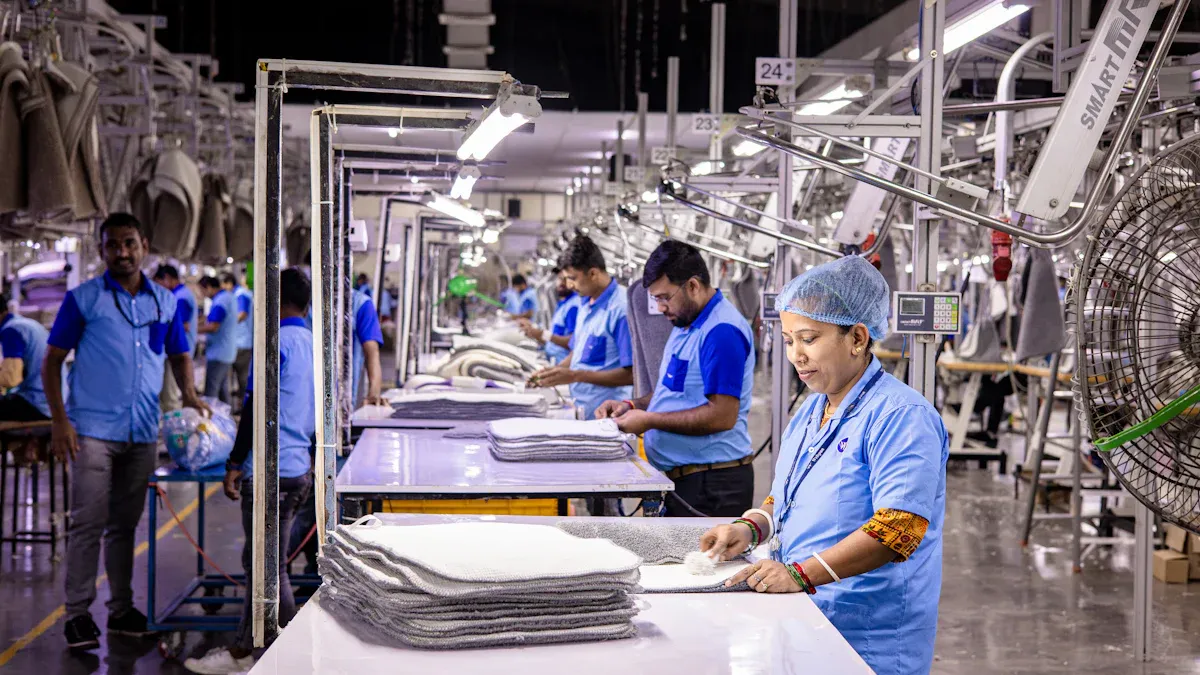
Automation in die casting lowers labor costs. Machines do most of the work. You need fewer people for simple jobs. Robots and sensors check quality and make things faster. Here are ways automation helps you save:
Automation makes production faster. You can react quickly to changes.
It helps you make more products in less time. There are fewer mistakes.
Robots and sensors keep quality high and lower errors.
It leads to fewer product mistakes, so you spend less fixing them.
Better maintenance and less downtime save money over time.
You get fewer mistakes, less fixing, and lower payroll costs. Die casting parts help your factory run smoothly and save money.
Design and Durability
Fewer Assemblies
Die casting helps make products simpler. You can put many functions into one part. This means you do not need to connect lots of pieces. It saves time and makes assembly faster. The table below shows how design flexibility helps you use fewer assemblies:
Benefit | How It Helps You |
|---|---|
Combine functions in one part | Fewer separate parts to assemble |
Test and refine designs in low volumes | Use less material and improve function |
Tighter tolerances | Easier and more precise assembly |
You can see this in real products. For example, robots can have the motor housing and joint as one part. Cars can use complex parts that do many jobs. You can also make one strong part instead of several weak ones.
Tip: Using fewer assemblies means there are fewer chances for mistakes. It also helps lower costs.
Long-Lasting Parts
You want your products to last a long time. Die casting makes strong and light parts. Aluminum parts are tough but not heavy. They do not rust and work well in rough places. These parts also handle heat, which is good for electronics.
Aluminum is strong for its weight.
It does not rust because of its natural coating.
It moves heat away from important parts.
Picking the right materials helps parts last longer. Metals that do not rust keep products safe and reliable. Taking care of tools, like cleaning and checking molds, keeps them working well. This lowers repair costs and keeps your factory running.
Note: Buying good tools and taking care of them saves money. It also helps you make more products without stopping for repairs.
You can save money and make better parts with die casting. This process helps you waste less material. It also saves on labor costs. Your production stays fast and smooth. Manufacturers use smart ways to work better, like making more parts at once and keeping the process steady:
Strategy | Benefit |
|---|---|
Volume and Filling Rate Optimization | Uses less material |
Solidification Rhythm Optimization | Makes production faster and cheaper |
Think about using die casting for your next project. It helps you save money and get parts you can trust.
FAQ
What materials can you use in die casting?
You can use metals like aluminum, zinc, and magnesium. These metals give you strong, lightweight, and corrosion-resistant parts.
How does die casting save you money?
Die casting uses less material and needs less manual work. You get more parts faster, which lowers your total production costs.
Can you recycle die casting parts?
Yes, you can recycle most die casting metals. Recycling helps you save energy and reduce waste in your factory.


