

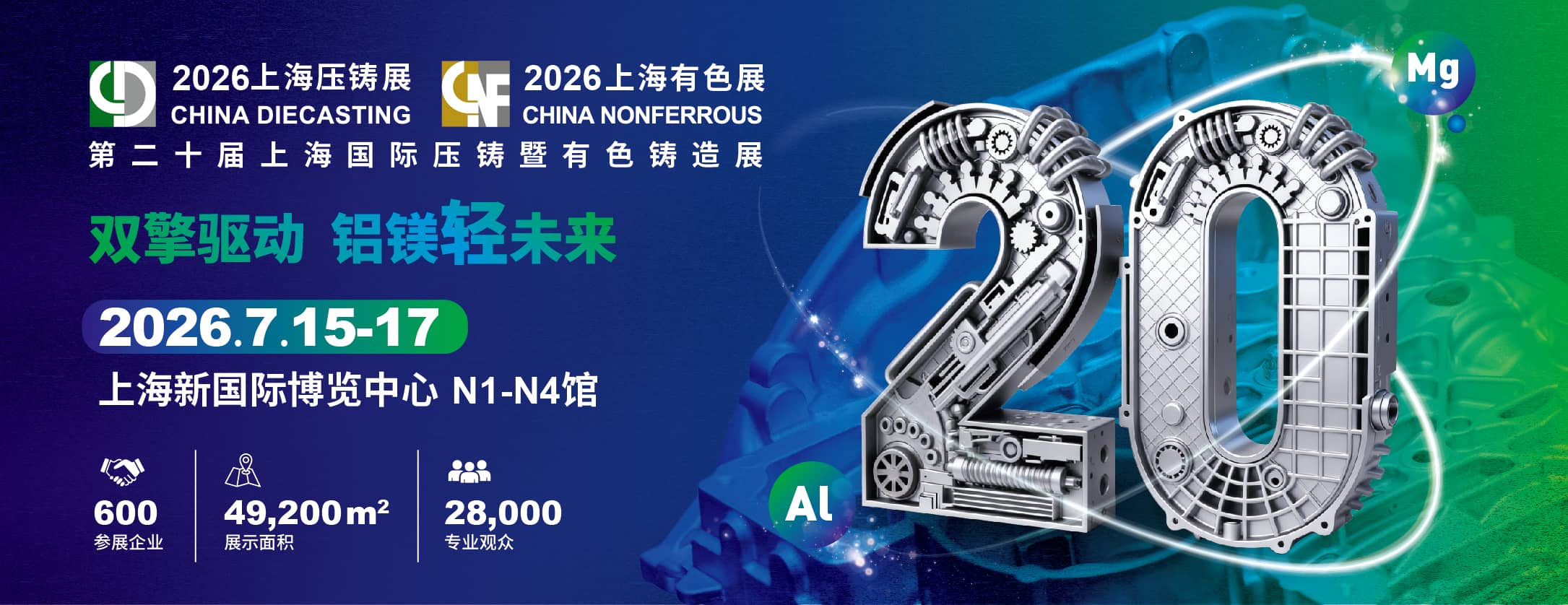
At the 2026 CHINA DIECASTING exhibition in Shanghai, equipment builders and material suppliers demonstrated incremental but meaningful advances in high-pressure die casting tailored to EV demands. For Tier 2 suppliers balancing OEM timelines, cost targets, and stringent PPAP requirements, the real value lay in details around vacuum control, alloy consistency, and machining integration for EV motor housing and battery housing aluminum.
Large Integrated Castings and Vacuum HPDC Refinements
The push toward gigacast-style components was evident in 4,000–6,000 ton machines producing near-complete battery enclosures and multi-functional motor housings in one shot. This approach cuts sub-component count and associated joining operations, which often introduce distortion or sealing weaknesses under vibration and thermal loads.
Vacuum levels in the 50–150 mbar range, combined with precise shot profile control, proved central to achieving low porosity in thicker ribs and boss areas. In practice, this means fewer rejected parts during helium or pressure decay leak testing — critical when Tier 1 auditors review PPAP documentation.
Process Parameters for Structural EV Aluminum Die Castings
| Parameter | Baseline HPDC | Enhanced Vacuum Setup | Benefit for Motor/Battery Housing |
|---|---|---|---|
| Vacuum Pressure | Ambient | 50-150 mbar | Lower gas porosity in seal zones |
| Alloy (AlSi10MnMg family) | Standard chemistry | Optimized Mn/Fe ratio | Better elongation post heat treat |
| Intensification Pressure | 600-800 bar | Sustained higher hold | Improved feeding, reduced shrinkage |
| Surface Finish (grooves) | As-cast Ra 3-6 μm | CNC to Ra ≤ 0.8 μm | Reliable O-ring sealing |
| Typical Wall Thickness | 4-8 mm | 2.5-5 mm optimized | 15-30% weight reduction potential |
Material and Metallurgical Focus Areas
AlSi10MnMg alloys received significant attention for their castability in complex geometries and mechanical properties after solution treatment and aging. Lower iron variants minimize brittle intermetallics, supporting ductility requirements in crash-relevant battery structures. Exhibitors also discussed rheocasting extensions for select high-integrity sections, offering semi-solid flow advantages without full process overhaul.
Thermal management in battery housings drove interest in alloys maintaining higher conductivity while resisting corrosion from glycol-based coolants. For motor housings, creep resistance at elevated stator temperatures remains a key material selection criterion.
Machining, Metrology, and Process Stability
Large castings shift the burden to 5-axis CNC cells for features like bearing seats, coolant passages, and mounting interfaces. Consistent as-cast datums — achieved through uniform die cooling and ejection timing — allow minimal stock removal and tighter overall tolerances per ISO 2768-m.
In-line metrology using CMM systems, paired with statistical process control on key dimensions, helps generate the data packages Tier 1 customers demand. Vacuum system reliability and spray automation further reduce variation shot-to-shot.
Details on our PPAP and inspection capabilities1.
Supporting standards include:
- NADCA specifications for die casting tolerances and high-integrity processes.2
- IATF 16949 requirements that govern automotive supply chain quality.3
Defect Reduction and Production Realities
Common challenges in EV parts include localized porosity affecting leak tightness and warpage impacting CNC setup. Solutions demonstrated centered on:
- Strategic overflow and vent placement informed by both simulation and physical validation.
- Real-time monitoring of plunger kinematics and die temperatures.
- Post-cast heat treatment protocols calibrated to alloy batch chemistry.
Typical Challenges vs. Countermeasures in EV HPDC
| Challenge | Effect on Part Performance | Shop-Floor Approach |
|---|---|---|
| Entrapped Gas Porosity | Leak test failures | Vacuum + extended vent design |
| Shrinkage in Heavy Sections | Weak spots under load | Optimized gate feeding & pressure curve |
| Sealing Surface Roughness | O-ring ineffectiveness | Precision 5-axis finishing |
| Thermal Distortion | Assembly fit issues | Controlled cooling + machining fixtures |
Broader Implications for Tier 2 Supply Chains
The exhibition underscored that winning programs combine capable large-scale HPDC equipment with rigorous secondary operations and complete documentation. Reduced part counts from integration help control costs, but only when upstream process stability supports downstream PPAP success.
EMP Tech continues to refine these capabilities to support Tier 2 partners facing compressed development cycles and rising performance expectations in the EV space.
If your current or upcoming programs involve aluminum die casting for motor or battery housings, the practical insights from Shanghai 2026 highlight actionable areas for process improvement.
References & Footnotes
EMP Tech. Automotive-Grade Quality Control & Inspection. ↩
North American Die Casting Association. Die Casting Standards & Specifications. ↩
IATF Global Oversight. IATF 16949 Automotive Quality Standard. ↩


