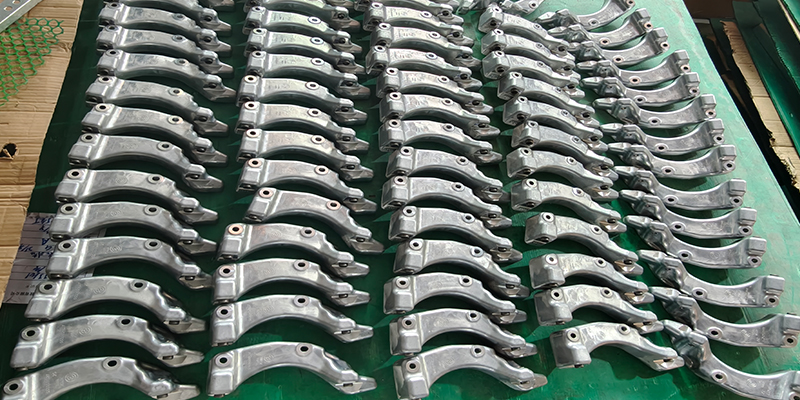

While the spotlight often shines on automotive innovations, the industrial sector presents its own demanding and evolving landscape for aluminum die casting. For applications in robotics, power equipment, heavy machinery, and telecommunications, the trends are geared towards achieving extreme durability, precision, and functional integration under challenging operational conditions.
A primary driver is the need for components that offer high mechanical strength and superior corrosion resistance. Industrial environments subject parts to significant stress, vibration, and exposure to harsh elements. This necessitates the use of specialized, high-performance aluminum alloys that can withstand these rigors without succumbing to fatigue or corrosion. The focus is on producing robust control housings, heavy-duty frames, and structural components for automation and power systems, where failure is not an option. The casting process must ensure consistent material properties and density throughout the part to guarantee this long-term reliability.
Industrial design also increasingly calls for complex, thin-wall geometries with integrated functionality. A prime example is found in the telecom and 5G sector, which requires high-frequency aluminum shells with intricate heat dissipation fins. These parts must provide electromagnetic shielding while managing the thermal load of sensitive electronics, all within a lightweight, often complex enclosure. Successfully casting these thin walls and fine details without defects requires expert engineering and precise control over the entire die casting process, from alloy temperature to injection parameters.
To meet the exacting assembly and performance standards of industrial machinery, high-precision secondary machining is non-negotiable. Most industrial die-cast parts require subsequent CNC machining to achieve critical geometric dimensions, tight tolerances (often to micron levels), and perfect mating surfaces. Leading manufacturers support this with extensive in-house CNC capabilities—150 or more machining centers—to ensure quality control and production efficiency. Furthermore, specialized surface finishing like powder coating or plating is applied not just for aesthetics, but to provide an extra layer of protection against wear, chemicals, and environmental exposure, ensuring the component’s longevity in the field. The future of industrial die casting is thus a comprehensive package: designing and casting a durable, complex part, and finishing it with precision machining to become a perfectly integrated component in a larger, more powerful system.