

Are you struggling with machined aluminum castings that fail to meet tight tolerances? These inconsistencies can cause assembly line failures, customer rejections, and completely derail your project timelines.
Achieving precision requires a systematic approach, starting with robust CNC processes like milling and turning, then controlling key variables like workholding and tooling, and finally using advanced techniques for a perfect surface finish.
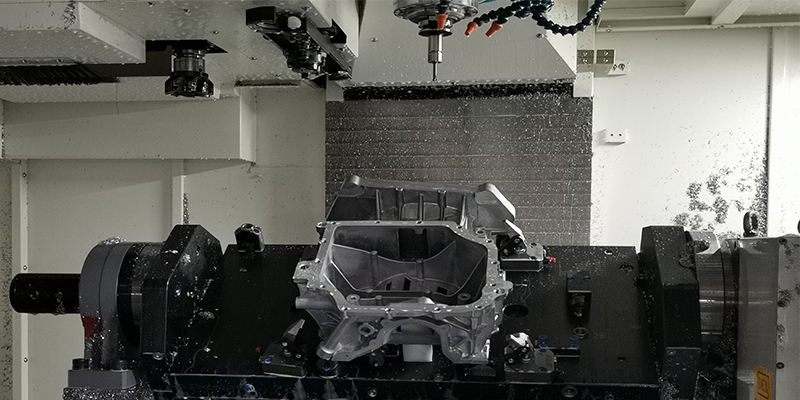
The journey of a precision aluminum part doesn’t end when it comes out of the die-casting machine. In fact, that’s often just the beginning. I remember a challenging project for a German Tier 1 supplier making a motor controller housing. The casting was complex, but the real difficulty was in the machining. The part required multiple sealing surfaces to be perfectly flat (within 0.05mm) and a series of precisely located tapped holes for assembly. Their initial supplier treated it like a simple hog-out job, resulting in warped surfaces and misaligned holes. This is because they failed to understand that a casting is not a uniform block of metal. We had to develop a multi-stage machining process with custom fixtures and stress-relieving steps to get it right. It taught me that precision comes from mastering the entire process, not just the final cut.
What are the most common machining processes for aluminum castings?
Are you unsure which machining operation is the most efficient and effective for your specific part features? Choosing the wrong process can lead to higher costs, slower cycle times, and poor quality.
The most common and versatile processes are Computer Numerical Control (CNC) milling and turning. Milling is used for flat surfaces and complex features, while turning is ideal for cylindrical features.
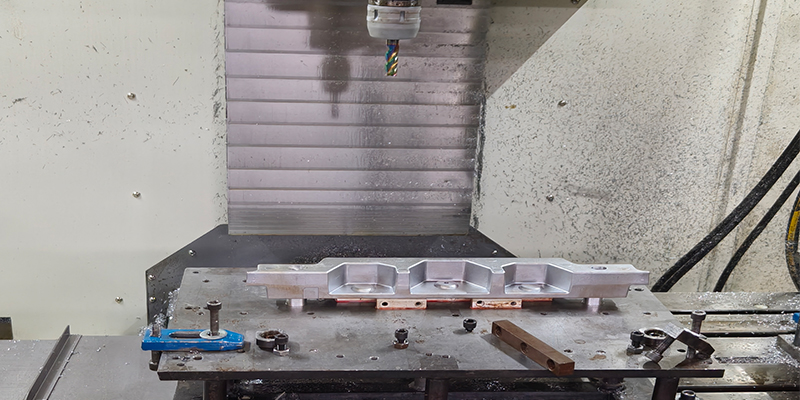
After a part is cast, it has the basic shape but lacks the fine details and tight tolerances needed for modern applications. The goal of post-casting machining is to remove excess material and create these precise features. For the vast majority of aluminum die castings, this work is done on CNC machines, which offer incredible repeatability and accuracy. The two main workhorses are milling and turning. CNC milling uses rotating cutters to remove material and can create everything from simple flat surfaces to complex 3D contours. CNC turning, on the other hand, rotates the part itself against a stationary cutting tool, which is perfect for creating perfectly round features like bearing bores or shafts. For most of the components I work on, like EV motor housings or OBC enclosures, we use a combination of both processes to achieve the final geometry.
Milling vs. Turning for Die Castings
| Process | Description | Common Applications on Castings |
|---|---|---|
| CNC Milling | A rotating tool moves along multiple axes to cut a stationary workpiece. | Creating flat sealing surfaces, drilling and tapping holes, milling pockets and slots, contouring complex external shapes. |
| CNC Turning | The workpiece rotates at high speed while a cutting tool is fed into it. | Machining precise internal and external diameters, creating bearing bores, cutting O-ring grooves, facing off bosses. |
What are the key considerations for achieving precision in post-casting operations?
Is your machine shop producing parts that are dimensionally accurate one day but out of spec the next? This frustrating inconsistency often points to a lack of control over fundamental process variables.
Achieving consistent precision depends on three key factors: robust workholding designed for castings, sharp tooling specific to aluminum, and diligent management of thermal expansion throughout the process.
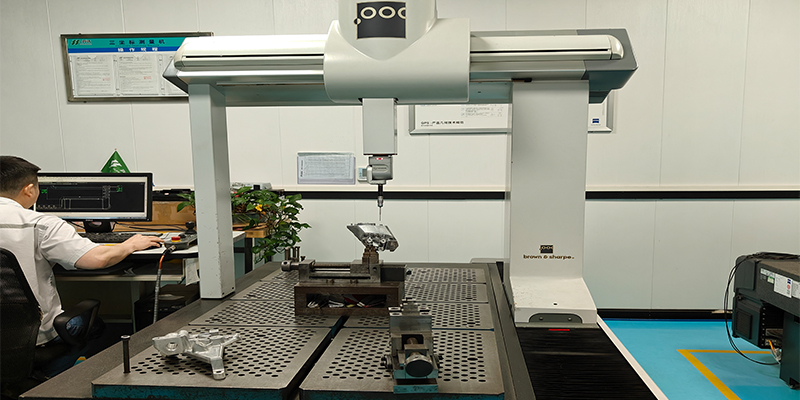
Simply putting a casting into a standard vise and hitting "go" is a recipe for failure. Unlike a solid block of billet stock, a die casting has draft angles, parting lines, and slight variations from shot to shot. If you don’t account for these, you’ll never achieve repeatable precision. As an engineer focused on the entire manufacturing process, I stress three areas with my team.
The Pillars of Precision
- Workholding (Fixturing): This is the most critical element. We design custom hydraulic or pneumatic fixtures for every high-volume part. These fixtures locate the casting on specific datum points, clamping it securely in the exact same orientation every single time. This removes the operator variability and ensures every feature is machined in the correct relationship to the others.
- Tool Selection: Aluminum is soft and "gummy," which means it can stick to the cutting tool, a problem called "built-up edge" (BUE). BUE ruins the surface finish and destroys accuracy. We prevent this by using extremely sharp cutting tools made from carbide with special coatings (like Diamond-Like Carbon) and geometries designed to cut cleanly and eject the chip efficiently.
- Thermal Management: Aluminum expands and contracts with temperature changes much more than steel. The heat generated during machining can cause the part to grow. If you machine a critical feature while the part is hot, it will be undersized once the part cools down. We manage this with high-pressure coolant and by programming our machining cycles with roughing and finishing passes, allowing the part to stabilize before the final, precise cut is made.
What advanced techniques and tools can enhance surface finish?
Are your parts dimensionally correct but fail inspection because of a rough surface finish? A poor finish can compromise sealing, increase wear, or simply look unprofessional to the end customer.
Advanced techniques like high-speed machining with specialized cutters create a superior "as-machined" finish. For even smoother surfaces, post-machining processes like abrasive flow machining or bead blasting can be used.
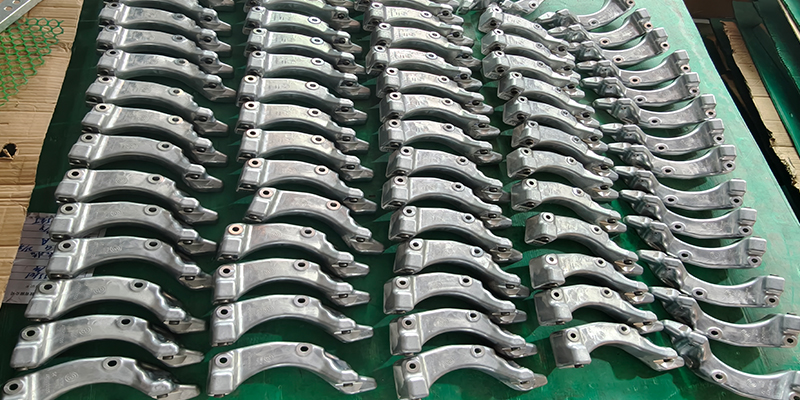
Sometimes, standard machining is not enough to meet the surface finish requirements, which are often measured in Ra (Roughness average). For example, a hydraulic piston bore or a high-pressure sealing face requires an exceptionally smooth surface to function correctly. While we can achieve very good finishes directly on the CNC machine, we sometimes need to go a step further.
Pushing Beyond Standard Machining
- High-Speed Machining (HSM): This isn’t just about going faster. HSM uses very high spindle speeds combined with specific tool paths to take lighter, quicker cuts. This reduces cutting forces, minimizes heat input, and can produce a near-mirror finish directly off the machine, often eliminating the need for secondary polishing operations.
- Abrasive Flow Machining (AFM): This is an excellent process for polishing internal channels and hard-to-reach areas. An abrasive-laden polymer is forced through the part, acting like a flexible file that smooths surfaces and rounds sharp edges. It’s perfect for deburring complex internal cross-drilled holes.
- Bead Blasting: While often seen as a cleaning process, using very fine media (like glass beads) at a controlled pressure can create a beautiful, uniform, non-directional matte finish. This is an excellent way to improve the cosmetic appearance and hide minor machining marks.
Conclusion
Achieving precision in machined aluminum castings is a science. It relies on selecting the right core processes, rigorously controlling the fixturing and tooling, and applying advanced techniques for a flawless final finish.


