

For Tier 1 and Tier 2 automotive sourcing managers, 2026 presents a brutal landscape. The aggressive rollout of new Electric Vehicle (EV) architectures demands highly complex, tightly toleranced aluminum components at massive volumes. At the same time, procurement teams are being relentlessly squeezed by OEMs to cut costs.
This leads to the inevitable boardroom debate: Do we source locally from European foundries to minimize shipping risks, or do we source from China to hit aggressive cost-reduction targets?
As an engineering-driven automotive die casting1 partner operating in China, but supplying the DACH region, North America, and Mexico, we bypass the sales rhetoric. Having navigated rigorous VDA 6.3 process audit standards2 mandated by European OEMs, we present an objective, engineer-to-engineer breakdown of the realities regarding cost, quality, and lead time when comparing European and top-tier Chinese foundries.
1. Quality and Compliance: The "European Standard" Myth
There is a persistent, outdated assumption that European foundries inherently produce higher-quality castings. Ten years ago, this may have held truth. Today, the physics of metallurgy and the brands of the machinery are globally democratized.
A Buhler or LK high-pressure die casting (HPDC) machine injecting AlSi10MnMg operates under the exact same thermodynamic laws in Guangdong as it does in Munich. The true differentiator is not geography; it is the Quality Management System (QMS) and metrology discipline.
The Engineering Reality:
If you source from a basic Chinese "metal pourer" that relies on visual inspections, you will face catastrophic scrap rates. However, elite Chinese foundries have adopted the exact same compliance frameworks as their European counterparts.
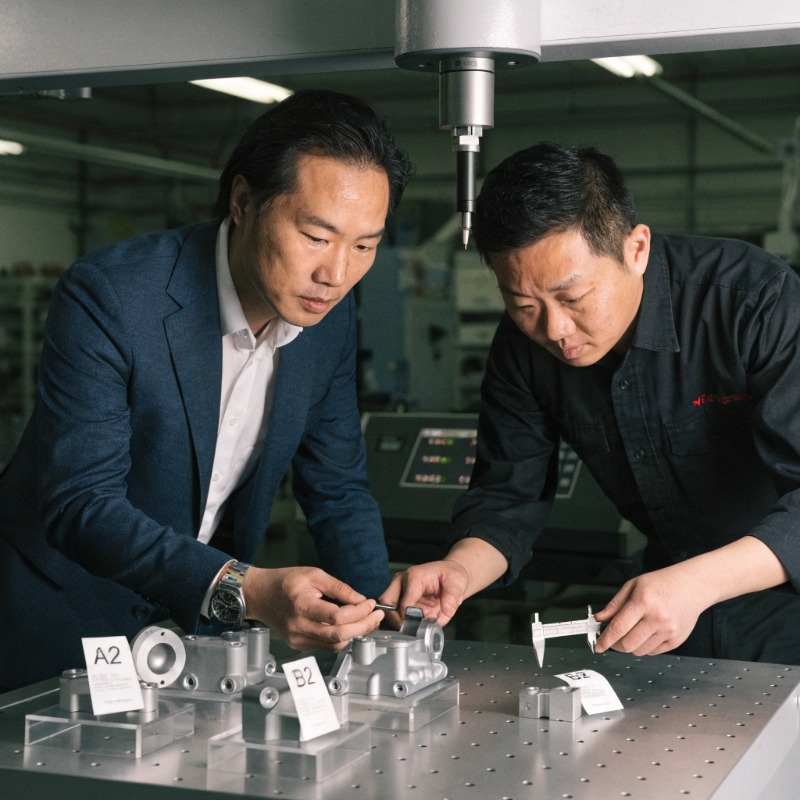
For example, to manufacture high-voltage EV motor controller housings3, EMP Tech operates under strict IATF 16949 guidelines and maintains a VDA 6.3 "A" rating. We do not guess; we measure. We utilize Zeiss Coordinate Measuring Machines (CMM), in-house X-Ray flaw detection, and 100% inline air-decay leak testing—providing the exact same PPAP Level 3 raw data a German supplier would.
2. Lead Time: Tooling Speed vs. Shipping Distance
When evaluating lead time, you must separate Tooling Lead Time (getting to Start of Production) from Logistics Lead Time (shipping mass production).
European Foundries:
Europe wins on logistics. Shipping a truckload of parts from Italy to Germany takes two days. However, European toolmakers are notoriously slow. Designing, cutting, and hardening an H13 steel mold in Europe often takes 10 to 14 weeks due to labor constraints and outsourced machining processes.
Chinese Foundries:
China loses on ocean freight (shipping to Europe or Mexico takes 4 to 6 weeks). But China dominates on tooling speed. Because we maintain an in-house tooling division running 24/7, EMP Tech routinely delivers T1 samples in 4 to 6 weeks.
If an OEM makes a late-stage design change to a cooling channel, a European toolmaker might take weeks to implement the engineering change order (ECO). We can modify the tool and shoot a new sample in days. For aggressive EV launch schedules, tooling speed often dictates the success of the entire program.
Lead Time & Cost Matrix
| Sourcing Metric | European Foundry | Top-Tier Chinese Foundry (e.g., EMP Tech) |
|---|---|---|
| Tooling (H13 Steel) Cost | Extremely High | Low to Moderate (Highly economical) |
| T1 Sample Lead Time | 10 – 14 Weeks | 4 – 6 Weeks |
| Mass Production Piece Price | High (Driven by energy & labor overhead) | Low (Economies of scale) |
| Logistics Lead Time to EU/NA | 2 – 5 Days (Truck) | 4 – 6 Weeks (Ocean Freight) |
| DFM & Engineering Support | High | High (If partnering with an engineering-driven Tier 2) |
3. The Cost Breakdown: The CNC Machining Bottleneck
Die casting is a near-net-shape process. The raw casting is relatively cheap. The true cost of a complex structural component or thermal management enclosure is hidden in the secondary CNC machining.
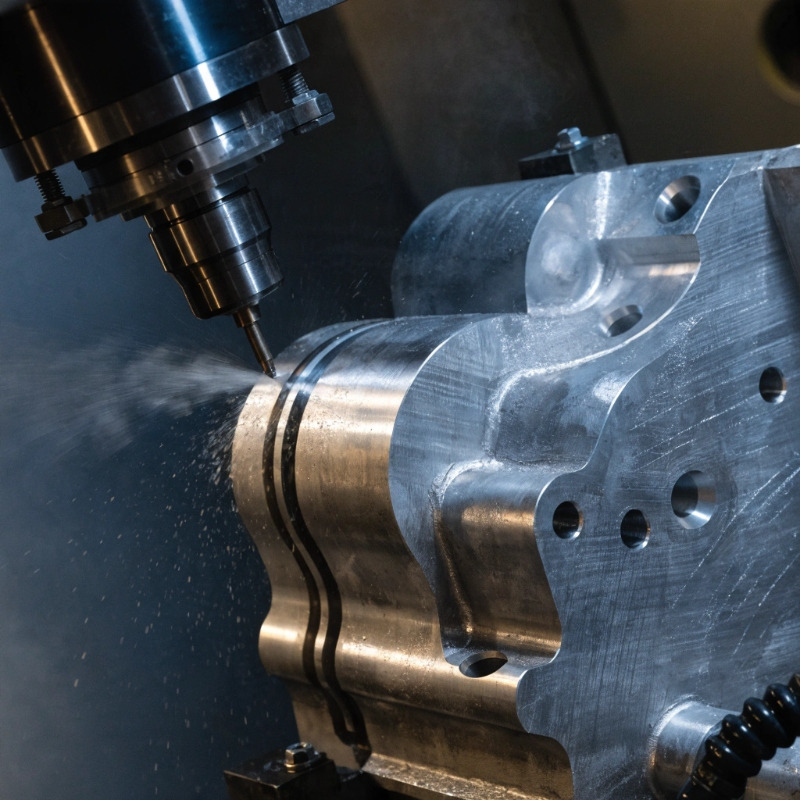
If a transmission housing requires strict coaxiality between opposing bearing bores, it must be machined in a single-setup on a 5-axis CNC center. In Europe, the hourly rate for 5-axis machining is astronomical, driven by skilled labor shortages and high energy costs.
In China, the scale of manufacturing infrastructure changes the math. By housing over 150 4-axis and 5-axis CNC centers under one roof, we absorb the machining bottleneck. We design custom, low-distortion fixturing and optimize cutting paths to maintain strict surface roughness (Ra) in O-ring grooves—achieving European-level dimensional tolerances at a fraction of the machining cost.
4. Technical Cleanliness: The New Baseline
European OEMs have spearheaded the requirement for technical cleanliness to protect sensitive EV electronics from conductive metallic debris. Traditionally, European suppliers led this charge.
However, strict adherence to automotive-grade quality control4 is now standard practice for top-tier Chinese exporters. Knowing that a single trapped aluminum burr inside a blind hole can short-circuit a high-voltage PCB, we deploy dedicated ultrasonic washing and vacuum drying lines. We extract and weigh particles to verify compliance strictly against VDA 19 / ISO 16232 standards, ensuring components arrive at your assembly line truly assembly-ready.
The Sourcing Verdict
Sourcing from China is only a risk if you choose a supplier based purely on the lowest price-per-kilogram of aluminum. When you partner with a foundry that lacks thermodynamic control, you will pay the difference in assembly line scrap, missed delivery windows, and failed OEM audits.
To leverage the cost and tooling speed of China without sacrificing the rigorous quality expected in Europe or North America, you must audit a supplier’s engineering depth. Do they run predictive Moldflow in accordance with NADCA engineering guidelines5? Do they have the metrology lab to prove their capabilities?
At EMP Tech, we bridge this gap. We provide global Tier 1 and Tier 2 integrators with single-source accountability—from predictive DFM to Vacuum HPDC and 5-axis CNC machining.
Are you evaluating suppliers for a new high-voltage enclosure or structural component?
Upload your 3D CAD (STEP/IGES) via our contact form today. Our engineering team will conduct a ruthless, objective DFM review, highlight potential shrinkage risks, and deliver a pragmatic manufacturing quote within 24 hours.
References & Footnotes
EMP Tech. Automotive Aluminum Die Casting Solutions & Capabilities. ↩
Verband der Automobilindustrie (VDA). VDA 6.3 Process Audit. ↩
EMP Tech. EV Motor Controller Housing Engineering Specifications. ↩
EMP Tech. Automotive-Grade Quality Control & Inspection Laboratory. ↩
North American Die Casting Association (NADCA). Engineering & Design Standards. ↩


