

The shift from stamped steel to cast aluminum in automotive components is not a marketing trend — it is an engineering and economic inevitability driven by EV electrification, emissions regulations, and system-level cost optimization. For Tier 2 suppliers caught between OEM lightweighting mandates and Tier 1 audit requirements, the transition is rarely straightforward: many teams treat it as a direct material swap, only to run into porosity failures, leak test rejects, and PPAP non-conformances that erase projected cost savings.
The reality is that aluminum high-pressure die casting (HPDC) wins on a per-function basis, not per-kilogram material cost. Below is a breakdown of the technical drivers, hard performance limits, and supply chain considerations that Tier 2 engineering and quality teams should evaluate before switching a program from steel to aluminum.
The Four Engineering Drivers Behind the Material Shift
Aluminum adoption is not driven by weight reduction alone. It is the combination of structural efficiency, integration capability, thermal performance, and total cost of ownership that makes HPDC aluminum the default choice for an expanding list of automotive systems.
1. Lightweighting with structural parity
At 2.7 g/cm³, aluminum is roughly one-third the density of steel. When designed for casting with optimized rib structures and cross-sections, it delivers equivalent or better stiffness at 30–40% lower mass. For battery electric vehicles, this performance is not just about efficiency — it directly reduces bill-of-materials cost. According to SAE International research1, a 10% reduction in vehicle mass cuts EV energy consumption by 8.7%, allowing OEMs to downsize battery packs while retaining target range. For structural components like shock towers, subframes, and battery tray brackets, the weight savings compound across the entire platform.
2. Part consolidation and lower total assembly cost
Stamped steel assemblies rely on multiple blanked parts joined by welding, riveting, or fastening. Each joint adds tooling cost, labor, and a potential failure point. High-pressure die casting eliminates this overhead by consolidating 5–20+ steel components into a single casting.
A well-documented example is the Tesla Model Y rear underbody: 70+ stamped and welded steel parts were reduced to two large aluminum castings, cutting factory footprint by 30% and reducing assembly time from hours to minutes per unit. For fluid housings and coolant manifolds, consolidation also eliminates weld-related leak paths — the single largest source of warranty claims for Tier 2 thermal management suppliers.
3. Superior thermal management performance
Thermal conductivity is where steel cannot compete on a functional level. Automotive aluminum alloys such as AlSi10MnMg deliver roughly three times the thermal conductivity of carbon steel (155 W/m·K vs. ~50 W/m·K). For e-motor housings, inverter cooling plates, and battery thermal management components, this is not a lightweighting benefit — it is a functional requirement. Steel simply cannot dissipate fast enough to meet modern EV duty cycle temperatures, forcing designers into thicker walls and heavier, more complex cooling circuits.
4. Corrosion resistance and reduced secondary processing
Aluminum naturally forms a self-passivating oxide layer that protects against road salt and moisture. Stamped steel parts require galvanizing, e-coating, or additional corrosion protection treatments, each adding cost, process time, and environmental compliance overhead. For underbody and chassis components exposed to harsh operating conditions, cast aluminum delivers more predictable long-term corrosion performance with fewer production steps.
Material Comparison: Cast Aluminum vs. Stamped Steel — By the Numbers
The table below compares a standard structural die cast alloy against a common deep-draw steel grade, with engineering implications relevant to automotive component design.
| Property | AlSi10MnMg (T6 Temper) | DC04 Deep-Draw Carbon Steel | Engineering Implication |
|---|---|---|---|
| Density | 2.70 g/cm³ | 7.85 g/cm³ | Aluminum is 65% lighter by volume |
| Ultimate tensile strength | ~310 MPa | ~370 MPa | Steel has higher absolute strength |
| Specific tensile strength | ~115 MPa·cm³/g | ~47 MPa·cm³/g | Aluminum delivers 2.4x strength per unit mass |
| Thermal conductivity | ~155 W/m·K | ~50 W/m·K | Aluminum dissipates heat ~3x faster |
| Production material utilization | ~90% (HPDC) | 60–70% (stamping) | Far less scrap per part with die casting |
| Typical minimum wall thickness | 1.5 mm | 0.8 mm | Steel achieves thinner walls for simple geometries |
| Part integration potential | High (single-piece casting) | Low (multi-part welding required) | Fewer assembly steps and leak points |
| Corrosion protection | Native passivation layer | Requires galvanizing / e-coating | Fewer secondary processing steps |
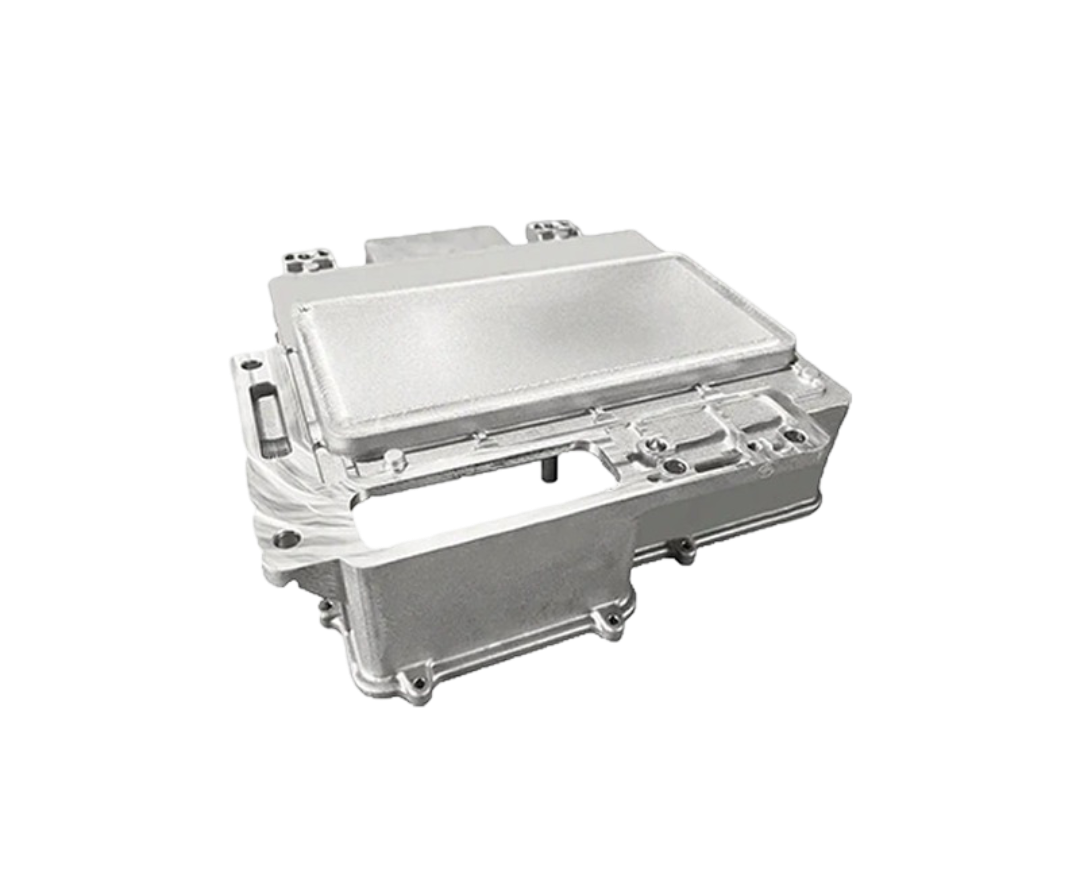
Why High-Pressure Die Casting Makes Aluminum Scalable for Automotive Volume
Aluminum sand and permanent mold casting have existed for decades, but they never replaced steel at scale due to high cost and slow cycle times. Modern cold-chamber HPDC changed that by delivering production speeds and dimensional repeatability that match or exceed stamping for complex geometries.
Key scalability advantages include:
- Consistent cycle times: 30–90 second cycles for medium-sized components, supporting annual volumes from 5,000 to 100,000+ parts per tool.
- Micron-level repeatability: Closed-loop process control delivers consistent GD&T results batch after batch, without the springback variation inherent to steel stamping.
- Alloy tunability: Adjustments to silicon, magnesium, and manganese content allow foundries to tune castability, strength, and thermal performance to match specific application requirements.
For Tier 2 suppliers scaling from prototype to production, high-pressure automotive die casting2 provides a predictable path from DFM to serial production without the tooling iterations common in stamped steel assemblies.
The Hard Limits: Where Steel Still Outperforms Cast Aluminum
No material replacement is universal, and framing aluminum as a universal steel replacement leads to costly design failures. There are clear applications where steel — particularly hot-stamped and high-strength grades — remains the superior engineering choice:
Ultra-high-strength crash load paths
Hot-stamped boron steels reach 1,500+ MPa tensile strength, far beyond the capability of standard cast aluminum alloys. A-pillar reinforcements, B-pillar rings, and side sill intrusion beams designed for occupant protection still rely on steel for maximum energy absorption at minimum section size.High-temperature exhaust components
With a melting point around 660°C, aluminum cannot survive the operating temperatures of exhaust manifolds, downpipes, and aftertreatment housings. Stainless and alloyed steels remain the only viable option here.Extreme high-cycle fatigue applications
Certain chassis and suspension components subject to millions of load cycles over vehicle lifetime still favor steel for its higher fatigue limit, especially under elevated operating temperatures.Very low-volume niche programs
HPDC tooling carries higher upfront cost. For annual volumes below 3,000 units, fabricated steel assemblies typically deliver a lower total program cost.
Critical Pitfalls for Tier 2 Suppliers Switching From Steel to Aluminum
Most Tier 2 quality failures in steel-to-aluminum transitions are not material failures — they are process and supply chain failures. Based on foundry engineering experience, these are the most common and most costly mistakes:
1. Direct geometry translation
Taking a steel stamping geometry and casting it as-is almost guarantees porosity, shrinkage, and dimensional warpage. Cast aluminum requires DFM optimization: uniform wall thickness transitions, proper draft angles, and engineered gating and overflow systems. Reputable foundries run Moldflow simulations at the APQP stage to identify and resolve these risks before tool steel is cut.
2. Underestimating PPAP requirements
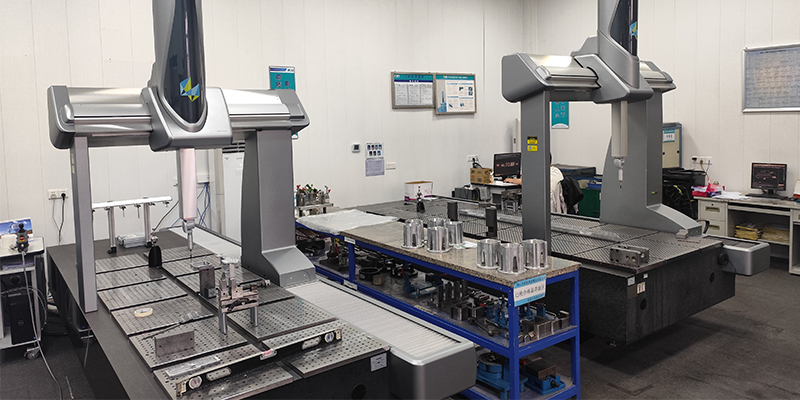
PPAP for die castings is substantially more rigorous than for stamped parts. Tier 1 auditors expect melt chemistry certificates, NDT X-ray reports, process capability studies (Cpk/Ppk), and dimensional data across every critical feature. Many low-cost foundries claim PPAP capability but deliver incomplete packages that fail first-round audits. Always audit a supplier’s automotive-grade quality control3 systems and review a redacted sample PPAP Level 3 package before awarding a program.
3. Ignoring melt-to-part traceability
Alloy chemistry variation directly impacts mechanical properties and leak performance. Per NADCA die casting specifications4, every production melt must be verified via optical emission spectrometry and traceable back to raw ingot certificates. Suppliers without laser-marked batch traceability cannot resolve field quality issues quickly, exposing Tier 2 suppliers to costly line-stop penalties.
4. Overlooking thermal expansion mismatch
Aluminum has roughly twice the coefficient of thermal expansion of steel. When assembling aluminum castings to steel brackets or mating surfaces, designers must account for differential expansion — otherwise fasteners can loosen, sealing surfaces can distort, and fatigue cracks can initiate at joint interfaces.
Aluminum die casting will not replace steel entirely in automotive manufacturing, but it will continue displacing steel in every system where weight, thermal performance, and integration deliver measurable system value. For EV thermal management, e-motor structures, and chassis secondary structures, the economic and technical case is already unambiguous.
The biggest risk for Tier 2 suppliers is not the material itself — it is selecting a die casting partner that treats automotive quality as an afterthought. Transitioning from steel to aluminum requires a foundry that can support DFM optimization, deliver audit-ready PPAP documentation, and maintain full batch traceability, not just the lowest per-piece quote.
References & Footnotes
SAE International. Costs, Benefits and Range: Application of Lightweight Technology in Electric Vehicles. Technical Paper 2019-01-0724. https://www.sae.org/publications/technical-papers/content/2019-01-0724/ ↩
EMP Tech. Automotive High-Pressure Die Casting Services. https://empcasting.com/automotive-die-casting ↩
EMP Tech. Automotive-Grade Quality Control & Inspection. https://empcasting.com/quality-control ↩
North American Die Casting Association (NADCA). HPDC Material Properties & Process Specifications for Automotive Applications. https://www.diecasting.org/ ↩


