

Are you struggling with surface peeling on your ADC12 aluminum die casting products after shot blasting, jeopardizing both aesthetics and functionality? This common problem can lead to significant rework, scrap, and delayed production.
Shot blasting peeling on ADC12 aluminum die casting products is primarily caused by subsurface defects like porosity, cold shuts, or inclusions, improper die casting process parameters, or uncontrolled shot blasting intensity; effective solutions involve optimizing mold design, refining casting parameters, and precise control of the shot blasting operation.
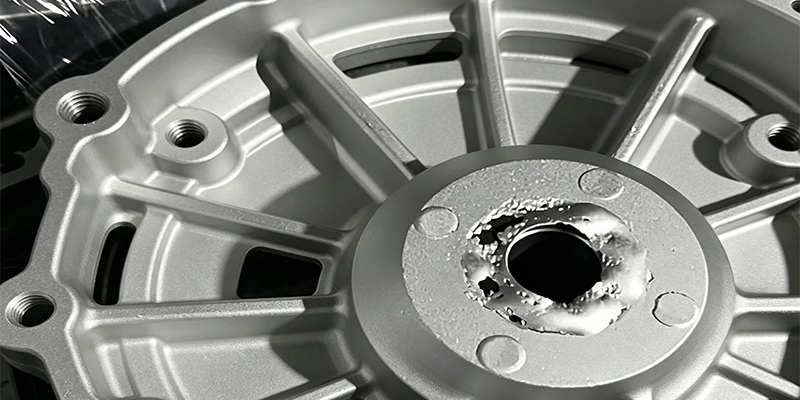
In my twenty years of working with aluminum alloy die castings, especially ADC12, I’ve encountered numerous surface finish challenges, and shot blasting peeling is certainly one of the most frustrating. It’s a problem that often hides deeper issues within the casting or the earlier production stages. I remember a specific case with a newly developed motor controller housing for an EV client. After shot blasting, which was a critical step for preparing the surface for e-coating, we observed widespread peeling, revealing subsurface imperfections. It was a race against time to understand the root cause. My team systematically investigated every stage, from the mold design to the casting parameters and even the shot blasting media. We eventually traced a significant part of the problem to localized porosity caused by insufficient venting in a specific area of the mold. After redesigning the venting strategy and fine-tuning the injection parameters, the peeling disappeared, and the parts achieved a flawless surface after blasting. This experience taught me the critical interconnectedness of every step in the die casting process chain when aiming for perfect surface quality.
What are the common causes of surface peeling after shot blasting on ADC12 parts?
Are you consistently observing surface peeling on your ADC12 die castings post-shot blasting and struggling to pinpoint the exact reason? Understanding these underlying causes is the first step toward effective remediation.
Common causes of surface peeling after shot blasting on ADC12 parts include subsurface defects like gas porosity or shrinkage porosity, cold shuts, non-metallic inclusions, high residual stresses in the casting, improper gate design, or inadequate shot blasting process control leading to surface damage.
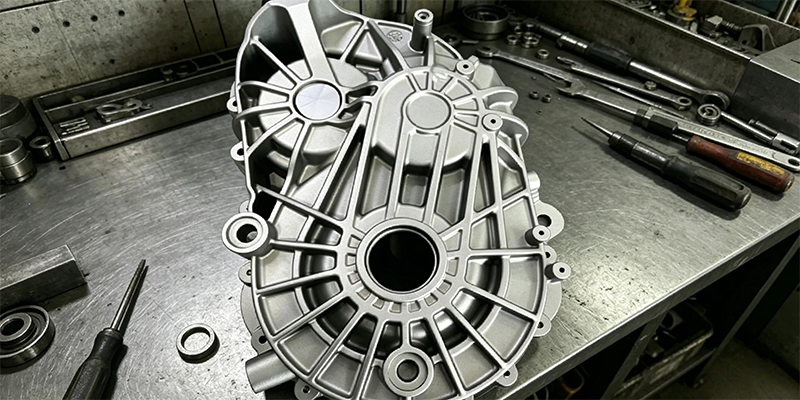
Surface peeling after shot blasting is rarely a direct result of the blasting itself. More often, it uncovers pre-existing weaknesses in the casting. Based on my experience, the issues typically fall into two main categories: internal casting defects and issues related to the casting process.
Common Causes of Surface Peeling:
| Category | Specific Cause | Manifestation of Peeling |
|---|---|---|
| Internal Casting Defects | Gas Porosity: Trapped air or gases (from lubricants, moisture, or dissolved hydrogen in the molten metal) form tiny, often subsurface, spherical voids. When shot blasting impacts the surface, these fragile layers above the pores can flake off, exposing the void. | Appears as small, circular or irregular delaminations, often exposing a shiny, smooth-walled cavity underneath. The peeling is typically localized around these subsurface gas bubbles. |
| Shrinkage Porosity: Occurs when molten metal in thicker sections of the casting solidifies and shrinks, but there isn’t enough liquid metal feed to compensate, leading to irregular, jagged voids, often located near thermal centers or under thicker sections. These areas are inherently weaker. | Peeling in these areas often exposes a rough, dendritic internal structure. It can be more widespread and affect load-bearing sections, signifying a failure of the surface layer under impact, revealing the brittle porous sub-surface. | |
| Cold Shuts/Flow Lines: Occur when two streams of molten metal meet but do not completely fuse due to insufficient temperature or pressure. This creates a weak boundary or seam within the casting. These weak fusion lines are easily separated by the impact of shot blasting. | Peeling occurs along distinct linear or curvilinear patterns, following the cold shut line. The peeled material often shows a clean break where the two metal fronts failed to fuse, resembling a thin, lifted skin along the flow pattern. | |
| Non-Metallic Inclusions: Impurities like oxides, dross, or lubricant residues get trapped within the molten metal and solidify as part of the casting. These inclusions create discontinuities and weak points in the metal matrix. | Peeling often occurs around these inclusions, as the surrounding metal matrix detaches from the foreign particle, causing flakes to lift off. The exposed area might show a discolored or rough inclusion material. | |
| Process-Related Issues | Excessive Ejector Pin Pressure or Misalignment: If ejector pins exert too much localized pressure or are misaligned during part ejection from the mold, they can create micro-cracks or internal stresses beneath the surface of the ADC12 part. Shot blasting can then exploit these pre-existing weaknesses. | Peeling patterns might correspond to the locations of ejector pins, showing localized detachment around these points, or linear peeling if the internal stress from ejection caused a crack. |
| High Residual Stresses: Uneven cooling rates during solidification can lead to significant residual stresses within the cast part. When the shot blasting process impacts the surface, it can relieve these stresses abruptly, causing the surface layer to delaminate or peel off, especially if underlying micro-cracks exist. | Peeling can appear generalized across broad stressed areas, not necessarily localized to a specific defect, but rather a larger detachment of the stressed surface layer from the bulk material, often without revealing a distinct defect underneath. | |
| Unoptimized Shot Blasting Parameters: If the shot blasting intensity (pressure, media size, shot velocity) is too high for the ADC12 alloy, or if the exposure time is excessive, the mechanical impact can be overly aggressive. While not causing inherent defects, it can exacerbate existing minor subsurface flaws or even induce peeling on an otherwise sound but sensitive surface. | Peeling might be more uniform and widespread across the blasted surface. The texture underneath the peeled area might appear overly rough or abraded, indicating aggressive media impact rather than a specific casting defect. It may appear as a "tearing" of the surface. | |
| Poor Grain Structure/Interdendritic Shrinkage: Rapid cooling can lead to a fine, but sometimes brittle, surface layer. If the interdendritic feeding is poor, micro-porosity at the grain boundaries just below the surface can be present. | Peeling may occur along grain boundaries, exposing a fine, somewhat crystalline structure beneath. The delamination is typically very thin and brittle, often revealing regions of slightly poorer metallurgical bond. |
What are the key process factors affecting ADC12 die casting surface quality?
Are you aware that numerous critical process factors during ADC12 die casting directly influence the final surface quality, including its susceptibility to peeling after shot blasting? A lack of control over these variables can lead to consistent quality issues.
Key process factors affecting ADC12 die casting surface quality include molten metal temperature and composition, mold temperature, injection parameters (speed, pressure, intensification), venting and overflow design, and the use of release agents, as these elements collectively determine the casting’s microstructure and integrity.
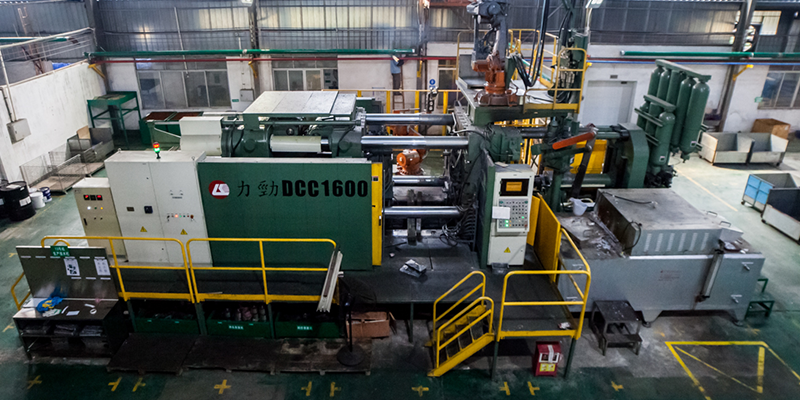
Achieving a high-quality surface on ADC12 die castings is not just about having a good mold; it is fundamentally about controlling the entire die casting process. Based on my experience, even the best mold can produce defective parts if the process parameters are not precisely managed.
Key Process Factors Affecting ADC12 Die Casting Surface Quality
| Process Factor | How It Affects Surface Quality and Peeling Susceptibility | How EMP Tech Controls This Factor |
|---|---|---|
| Molten Metal Temperature & Purity | Temperature: An incorrect melt temperature (too low or too high) can lead to cold shuts (if too low) or excessive dissolved gases and mold erosion (if too high). Both can cause subsurface defects easily revealed by shot blasting. Purity: Impurities like oxides, dross, or excessive hydrogen gas in the melt create inclusions or gas porosity within the casting. | We use precisely controlled melting furnaces with strict temperature regulation systems. Our standard operating procedures include regular degassing (e.g., using inert gases like argon or nitrogen fluxing) and skimming of the melt surface to remove oxides and dross. Spectrometric analysis ensures the correct alloy composition of the ADC12. |
| Mold Temperature & Control | Temperature: An optimized, consistent mold temperature (typically 180-250°C for ADC12) is crucial. Too low, and the metal can solidify prematurely, leading to cold shuts, incomplete fills, and poor surface finish. Too high, and it can cause soldering (metal sticking to the mold), increased cycle time, and potential hot tearing. Uneven mold temperature also creates thermal stresses. | We design molds with sophisticated, often conformal, cooling channels and employ multi-zone temperature control units. Thermocouples embedded in critical areas of the mold provide real-time feedback, allowing for active temperature adjustment and ensuring uniformity, preventing the root causes of many surface and subsurface defects. |
| Injection Parameters (Speed, Pressure, Intensification) | Fill Speed: The velocity at which the molten metal enters the cavity. Too slow causes cold shuts and misruns; too fast can cause severe turbulence, air entrapment, and premature mold erosion at gates. Pressure: Insufficient pressure during solidification can lead to shrinkage porosity. Intensification Pressure: The final, high pressure applied after fill, critical for compacting the metal and feeding shrinkage. Improper application leads to porosity. | My team meticulously optimizes injection speed profiles (often multi-stage) based on DFM and mold flow simulation. We precisely control the transition from slow to fast fill and the application of intensification pressure. Our machines are equipped with real-time process monitoring that tracks injection curves, ensuring repeatability and defect-free filling and solidification to prevent porosity. |
| Venting and Overflow Design | Inadequate venting or poorly designed overflows prevent trapped air and gases from escaping the mold cavity during injection. This leads directly to gas porosity, which is a prime cause of peeling, as these subsurface voids become exposed after shot blasting. | We apply advanced DFM analysis to design optimal vent locations and sizes, ensuring efficient air evacuation. We integrate adequate overflow wells to collect the first, cooler, oxide-rich metal, allowing only fresh, hot metal into the main cavity. For critical parts, we utilize vacuum die casting, which actively evacuates air from the entire cavity, dramatically reducing gas porosity. |
| Release Agent Application | Release agents facilitate part ejection and protect the mold. However, improper application (too much, too little, or uneven coating, or using an agent that generates too much gas) can contribute to gas porosity, poor surface finish, or cause the casting to stick, potentially creating surface damage during ejection. | We use high-quality, water-based release agents applied with precise spray systems (often robotic) to ensure a thin, uniform coating. We strictly control the concentration, volume, and dwell time, ensuring that the agent performs its function without causing gas generation or leaving residues that lead to surface defects. |
| Gate Design & Runner System | The design of the gate (where molten metal enters the cavity) and the runner system directly impacts how the metal flows and fills the cavity. Poor gate design can cause excessive turbulence, premature solidification at the gate, or poor feeding of critical sections, leading to cold shuts, porosity, or high residual stress. | Through extensive mold flow simulations, we optimize gate size, shape, and location (e.g., multi-gates, fan gates) to achieve a balanced, laminar fill pattern. The runner system is designed to maintain metal temperature and minimize turbulence, ensuring complete filling and efficient feeding to minimize shrinkage and localized stress. |
What are the effective solutions to prevent peeling in ADC12 aluminum die castings?
Are you seeking actionable, proven strategies to eliminate surface peeling on your ADC12 aluminum die castings after shot blasting? Implementing comprehensive solutions across mold design, casting process, and post-processing is key to achieving consistent quality.
Effective solutions to prevent peeling in ADC12 aluminum die castings involve redesigning molds for optimal venting and gate locations, precisely optimizing die casting parameters (temperatures, pressures, speeds), rigorously controlling shot blasting intensity and media, and implementing vacuum die casting for critical applications.
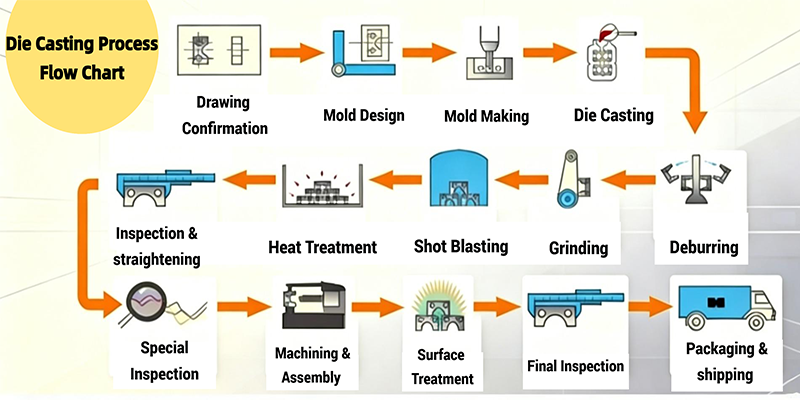
Preventing shot blasting peeling on ADC12 parts requires a holistic approach, addressing potential problems at every stage of the manufacturing process. From my perspective, it’s about anticipating defects before they occur and having robust controls in place.
Effective Solutions to Prevent Peeling:
| Solution Category | Specific Actions and EMP Tech’s Implementation | Expected Outcome and Benefit to ADC12 Parts |
|---|---|---|
| Mold Design Optimization | Enhanced Venting: Redesign mold vents with increased surface area (wider and thinner where possible) and strategically place them at the last points to fill, ensuring efficient evacuation of air and gases. This often involves detailed mold flow simulation to predict air traps. Optimized Gate and Runner System: Apply DFM analysis to redesign gates for optimal metal flow velocity and pattern, preventing turbulence and cold shuts. Ensure runner systems deliver molten metal smoothly and effectively to all areas, especially critical sections. Adequate Overflow Design: Incorporate robust overflow wells to capture cold, oxide-laden metal fronts away from the main casting. | Reduction of Gas Porosity & Cold Shuts: By allowing gases to escape effectively and ensuring smooth, complete filling, subsurface defects are significantly minimized. This eliminates the weak spots where peeling typically originates, resulting in a more uniform and robust surface layer on the ADC12 part, capable of withstanding the shot blasting impact without delamination. |
| Die Casting Process Parameter Optimization | Precise Melt Temperature Control: Maintain molten ADC12 within the optimal temperature range to ensure good fluidity without excessive gas absorption or mold erosion. Optimized Injection Profile: Fine-tune injection speeds (slow-fast-slow profile) to achieve laminar flow, minimize air entrapment, and ensure complete cavity fill. Adequate Intensification Pressure: Apply sufficient intensification pressure during solidification to feed shrinkage and compact the metal, eliminating shrinkage porosity. Uniform Mold Temperature Control: Implement multi-zone heating/cooling and conformal cooling (where beneficial) to achieve a consistent mold surface temperature, preventing hot spots and cold areas. | Elimination of Shrinkage Porosity & Internal Stresses: Precise control over pressures and temperatures ensures that the casting solidifies with minimal internal voids and reduced residual stresses. This creates a denser, more metallurgically sound component. The improved internal integrity means the surface layer adheres better to the bulk material, making it far less susceptible to delamination or peeling when subjected to the mechanical impact of shot blasting. |
| Vacuum Die Casting (for Critical Applications) | For highly critical ADC12 motor housings requiring superior surface quality (e.g., for direct plating) and mechanical properties, implement vacuum assistance during the die casting cycle. This involves sealing the mold cavity and evacuating air and gases before injection. | Dramatically Reduces Gas Porosity: Vacuum die casting virtually eliminates internal gas porosity, leading to castings with near-net theoretical density. This leaves very few, if any, subsurface weak points for shot blasting to exploit, ensuring an exceptionally clean and robust surface that is highly resistant to peeling. |
| Optimized Shot Blasting Process Control | Selection of Appropriate Media: Choose shot blasting media (type, size, hardness) that is suitable for ADC12 aluminum. Fine, round media for gentler peening, coarser for more aggressive cleaning. Control of Parameters: Precisely control blasting pressure, distance, angle, and exposure time. Avoid excessive intensity or prolonged blasting that can overstress the surface. Regular Equipment Maintenance: Ensure blasting equipment (nozzles, media separators) is well-maintained to provide consistent and uniform blasting. | Prevents Induced Surface Damage: By ensuring the shot blasting process itself is not overly aggressive, the risk of the process mechanically inducing peeling in an otherwise sound casting is minimized. The surface is cleaned and prepared without generating micro-cracks or excessive surface stress, allowing the ADC12 part to achieve its desired finish without compromising integrity. |
| Raw Material Quality Control | Implement strict quality control for incoming ADC12 ingots and any returned process scrap. This includes verifying chemical composition and minimizing oxide content in the molten bath. | Minimizes Non-Metallic Inclusions: By ensuring the purity of the molten metal, the formation of non-metallic inclusions is reduced. These inclusions are often starting points for peeling, so eliminating them results in a more homogeneous and peel-resistant surface. |
Conclusion
Shot blasting peeling on ADC12 die castings stems primarily from subsurface defects and process flaws. EMP Tech tackles this through advanced mold design, precise process parameter optimization, and rigorous shot blasting control, guaranteeing high-quality, defect-free ADC12 surfaces essential for demanding applications.


