

Are you wondering how electric vehicles (EVs) are achieving their impressive performance, range, and safety standards? The secret often lies in the materials and manufacturing processes used.
High-Pressure Die Casting (HPDC) aluminum alloys are transforming electric vehicles by enabling the production of lighter, stronger, and more efficient components, which are crucial for extending battery range, enhancing safety, and improving overall vehicle dynamics.
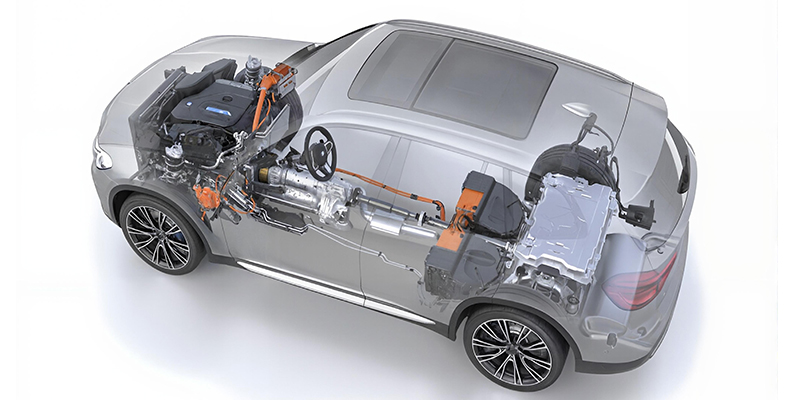
My journey in aluminum alloy die casting spans over two decades, and in that time, I’ve witnessed a monumental shift – especially with the advent of electric vehicles. Initially, lightweighting was a goal, but with EVs, it became an absolute necessity. Battery packs are heavy, and to offset that weight and maximize range, every other component needs to be as light as possible without sacrificing strength or safety. I remember an early project for a German Tier 2 supplier who needed a complex aluminum housing for a new EV motor controller. Their initial design was too heavy for their specification. By applying advanced HPDC techniques – from selecting the right heat-treatable alloy to optimizing mold design for thin-wall casting and integrating cooling fins – my team and I not only met their aggressive weight targets but also delivered a part with superior thermal performance. This experience showcased to me, and to our client, how HPDC aluminum alloys are not just useful, but truly transformative for electric vehicles.
What is the role of High-Pressure Die Casting in modern EV manufacturing?
Are you questioning how modern EV manufacturing achieves its strict requirements for component integration, lightweighting, and high-volume production? Traditional methods often fall short of meeting these evolving demands.
High-Pressure Die Casting plays a pivotal role in modern EV manufacturing by producing complex, near-net-shape components with high precision, excellent surface finish, and rapid cycle times, which are essential for integrated designs, weight reduction, and scalable production.
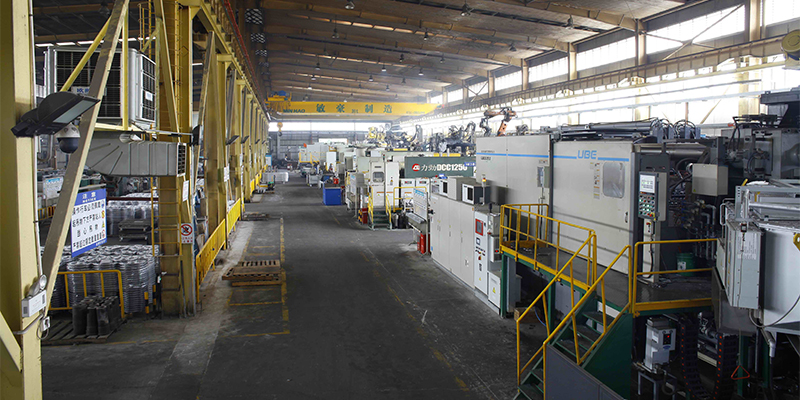
In the fast-paced world of electric vehicle manufacturing, efficiency, precision, and scalability are non-negotiable. HPDC embodies these requirements perfectly. EVs, by their very nature, demand components that are not only lighter and stronger but also often highly integrated and capable of managing complex functions within a confined space. This is where HPDC’s ability to create intricate, near-net-shape parts in a single shot becomes invaluable. Think about an electric motor housing: it needs to be lightweight, dissipate heat efficiently, provide structural support for the motor, and often include mounting points for other components. HPDC allows us to cast all these features – complex internal cooling channels, thin-walled sections, precise mounting flanges – as one monolithic unit. This significantly reduces the need for secondary machining and assembly, streamlining the manufacturing process and reducing costs. Furthermore, the high production rates achievable with HPDC are critical for meeting the ever-growing demand for EVs. My team frequently works with customers who need millions of highly consistent parts annually, and HPDC is often the only viable method to achieve these volumes without compromising quality.
What are the key advantages of aluminum alloys for electric vehicle lightweighting?
Are you looking for ways to reduce the overall weight of your electric vehicles, but are unsure which materials offer the best balance of strength, performance, and manufacturability? Material selection is paramount for EV efficiency.
Aluminum alloys offer key advantages for electric vehicle lightweighting due to their impressive strength-to-weight ratio, excellent castability into complex geometries, and recyclability, all of which directly contribute to extended range and improved energy efficiency.
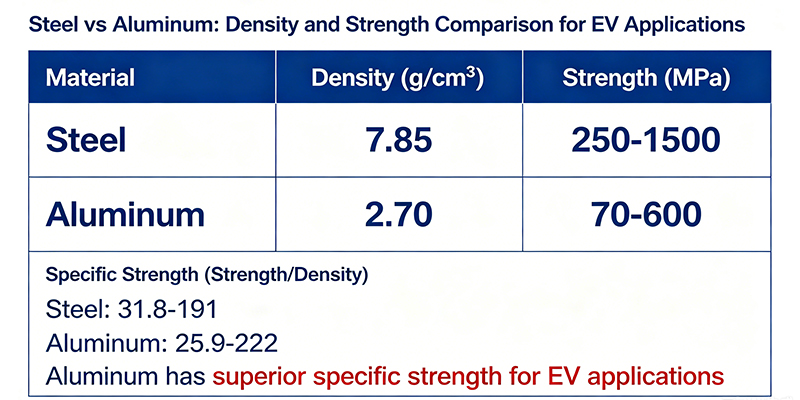
When we talk about lightweighting in EVs, aluminum alloys are often the first choice. They represent a fundamental shift from traditional heavy steel components, significantly impacting vehicle performance. This isn’t just about making the car lighter; it’s about a domino effect of improvements:
Advantages of Aluminum Alloys in EV Lightweighting
| Advantage | Description | Impact on EV Performance and Design |
|---|---|---|
| High Strength-to-Weight Ratio | Aluminum is inherently less dense than steel, yet when alloyed and processed correctly (especially with HPDC), it can achieve high tensile and yield strengths. | Enables significant weight reduction without compromising structural integrity or crash safety. This directly translates to longer battery range and improved energy consumption because less energy is needed to move the vehicle’s mass. |
| Excellent Castability | Aluminum alloys flow well into complex mold geometries, allowing for highly intricate designs with features like thin walls, integrated ribs for stiffness, and complex internal channels. | Facilitates the production of highly integrated components that consolidate multiple functions into a single part, reducing the need for assembly processes and simplifying the overall Bill of Materials (BOM), further contributing to lightweighting. |
| Corrosion Resistance | Aluminum naturally forms a protective oxide layer, providing good resistance to corrosion without extensive coatings, unlike many steel components which require robust protective measures. | Ensures long-term durability and reliability of EV components, particularly in exposed underbody areas or for battery enclosures, reducing maintenance costs and enhancing vehicle lifespan. |
| Recyclability | Aluminum is 100% recyclable without loss of properties, making it a highly sustainable material choice. | Aligns with the automotive industry’s sustainability goals, reducing the environmental footprint of EV production and supporting a circular economy. It enables manufacturers to meet environmental regulations and appeal to eco-conscious consumers. |
| Thermal Conductivity | Aluminum alloys possess excellent thermal conductivity, efficiently transferring heat away from critical components. | Essential for managing heat generated by EV batteries, motors, and power electronics, contributing to extended component lifespan, sustained performance, and enhanced safety by preventing overheating. |
How does High-Pressure Die Casting improve EV battery range and efficiency?
Are you wondering how the production method of a component can directly influence an EV’s range and efficiency? These factors are often interconnected in ways that impact the vehicle’s entire performance profile.
High-Pressure Die Casting improves EV battery range and efficiency by enabling the production of highly lightweight components, optimizing thermal management for battery health, and creating dimensionally precise parts that reduce vehicle drag and assembly issues.
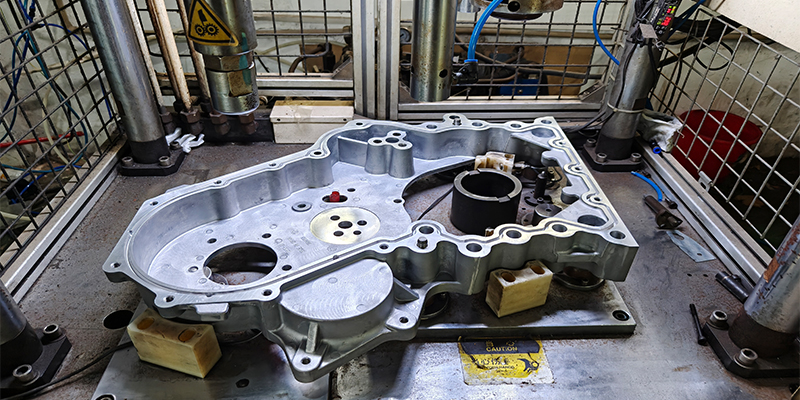
The connection between High-Pressure Die Casting and improved EV battery range and efficiency is direct and multifaceted. From my experience with numerous EV projects, I can confidently say that HPDC impacts these critical metrics in several key ways.
Impact of HPDC on EV Range and Efficiency
| Factor | HPDC Contribution | Direct Impact on Range and Efficiency |
|---|---|---|
| Vehicle Lightweighting | HPDC’s ability to create complex, thin-walled aluminum components with high strength-to-weight ratios allows for significant overall vehicle weight reduction. This includes structural components, battery housings, motor housings, and suspension parts. | Every kilogram reduced in an EV directly translates to less energy required for propulsion. This extends the driving range on a single charge and reduces the overall energy consumption per kilometer, making the EV more efficient and eco-friendly. |
| Optimized Thermal Management | HPDC enables the integration of intricate cooling channels, heat sinks, and fins directly into components like motor housings, inverter casings, and battery trays. Aluminum’s excellent thermal conductivity further enhances heat dissipation. | Keeping batteries, motors, and power electronics within their optimal operating temperature ranges prevents overheating, which can degrade battery life, reduce motor efficiency, and limit power output. Efficient cooling helps maintain peak performance and extends component lifespan. |
| Aerodynamic Efficiency | The excellent surface finish and dimensional precision achievable with HPDC allow for the production of aerodynamic components with minimal gaps and flush fitments, such as underbody panels or integrated fairings. | Reduced aerodynamic drag means less energy is wasted fighting air resistance, especially at higher speeds. This contributes significantly to extending the EV’s range and improving overall efficiency. |
| Reduced NVH (Noise, Vibration, Harshness) | HPDC components can be designed for optimal stiffness and damping characteristics, and their precise fit reduces assembly rattles and vibrations. | While not a direct contributor to range, reduced NVH improves occupant comfort, which is a key factor in perceived vehicle quality and efficiency for the user. A smoother ride can also indirectly reduce wear on other components, improving longevity. |
| Functional Integration | By consolidating multiple functions into a single die-cast part, HPDC simplifies assembly, reduces the number of fasteners and interfaces, and allows for more compact packaging of components, freeing up space for larger battery packs or other features. | Streamlined assembly processes lead to cost savings in manufacturing. More compact designs can contribute to better use of vehicle space, potentially allowing for larger battery packs for even greater range, or improving interior ergonomics. |
Why do leading NEV manufacturers choose EMP Tech for aluminum die casting?
Are you searching for a reliable, innovative, and experienced partner capable of delivering high-quality aluminum die-cast components for your New Energy Vehicles? Choosing the right supplier is crucial for your project’s success.
Leading NEV manufacturers choose EMP Tech for aluminum die casting because of our unparalleled expertise in DFM analysis, advanced mold development, precision process optimization, and a proven track record of consistently delivering complex, high-performance components.
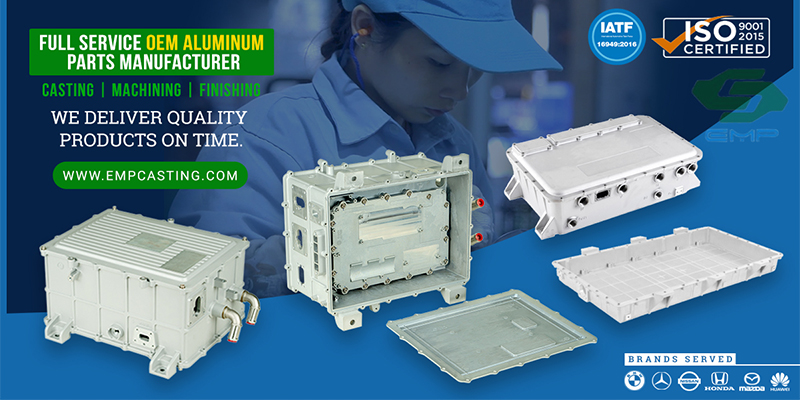
When I think about why major NEV manufacturers, particularly Tier 2 suppliers from demanding markets like Germany, the United States, and Canada, choose EMP Tech, it ultimately boils down to trust and demonstrated capability. They’re not just looking for a vendor; they’re looking for a partner who can navigate the complexities of EV component manufacturing.
EMP Tech’s Value Proposition for NEV Manufacturers
| EMP Tech’s Offering | Direct Benefit to NEV Manufacturers | |
|---|---|---|
| 20+ Years of Deep Expertise | Our long history in aluminum alloy die casting, encompassing product design, mold development, process optimization, and quality control, means we bring a wealth of practical and technical knowledge to every project. | Customers gain a trusted engineering consultant who understands their challenges intimately and can proactively identify solutions, significantly de-risking their complex NEV projects. |
| One-Stop Solution from DFM to Inspection | We provide end-to-end services, starting with comprehensive DFM (Design for Manufacturability) analysis, through mold flow simulation, process implementation, and rigorous factory inspection. | Manufacturers get a streamlined and efficient process, reducing coordination overhead with multiple vendors, ensuring consistent quality, and accelerating time-to-market for their critical NEV components. |
| Specialization in Demanding EV Components | Our expertise is specifically honed on complex new energy vehicle parts, such as motor controller housings, OBC (On-Board Charger) housings, and structural castings that require lightweighting, high airtightness, and tight tolerances. | We consistently deliver components that meet the stringent performance, safety, and durability requirements of NEVs, helping clients achieve their ambitious weight reduction and thermal management goals without compromise. |
| Proven Track Record with Global Tier 2s | We have successfully developed and mass-produced multiple new energy vehicle projects for Tier 2 suppliers serving OEMs globally, handling critical requirements like IATF 16949 and PPAP compliance. | Our commitment to quality and ability to meet international standards provide peace of mind, ensuring that components will perform reliably and pass all necessary certifications, crucial for market entry and customer satisfaction. |
| Agile Problem-Solving & Innovation | Our team is adept at critical thinking and problem-solving, leveraging advanced techniques and continuous innovation to address unique challenges like integrating dissimilar materials or achieving specific NVH characteristics. | Clients benefit from a partner who can adapt to new challenges, continuously improve processes, and leverage cutting-edge technologies to give their NEV products a competitive edge in a rapidly evolving market. |
Conclusion
HPDC aluminum alloys are revolutionizing EVs by enabling lighter, stronger, and more efficient components, crucial for range, safety, and performance. At EMP Tech, our comprehensive expertise ensures NEV manufacturers achieve superior solutions from design to delivery.


