

Automotive Powertrain & Structural Die Casting
High-precision aluminum components engineered for extreme durability, optimal thermal dynamics, and strict oil/gas sealing requirements. Supplying reliable engine, transmission, and structural parts to the global automotive supply chain.
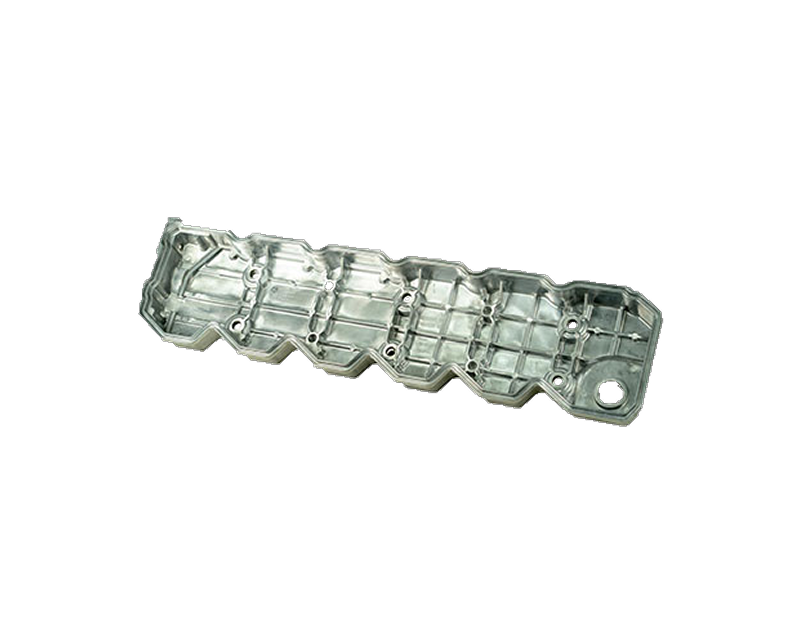
Cylinder Head Cover
Material: A380 / ADC12
Core Feature: Oil Sealing Groove Precision
Inspection: 100% Inline Leak Tested

Transmission Housing
Material: ADC12 / A380
Core Feature: Complex Internal Coring
Machining: 5-Axis CNC (±0.01mm)
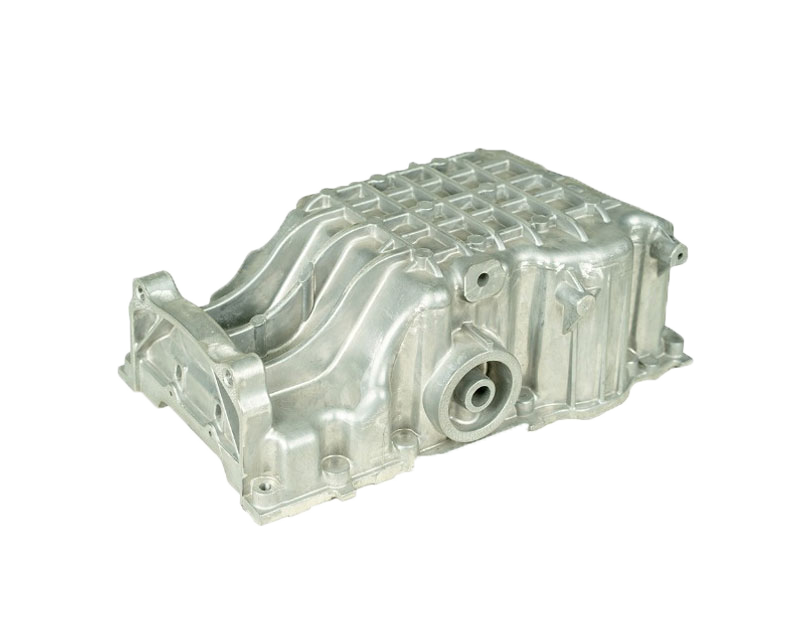
Engine Oil Pan
Material: A380 / A383
Core Feature: Baffle Integration & Flatness
Testing: X-Ray Porosity Control
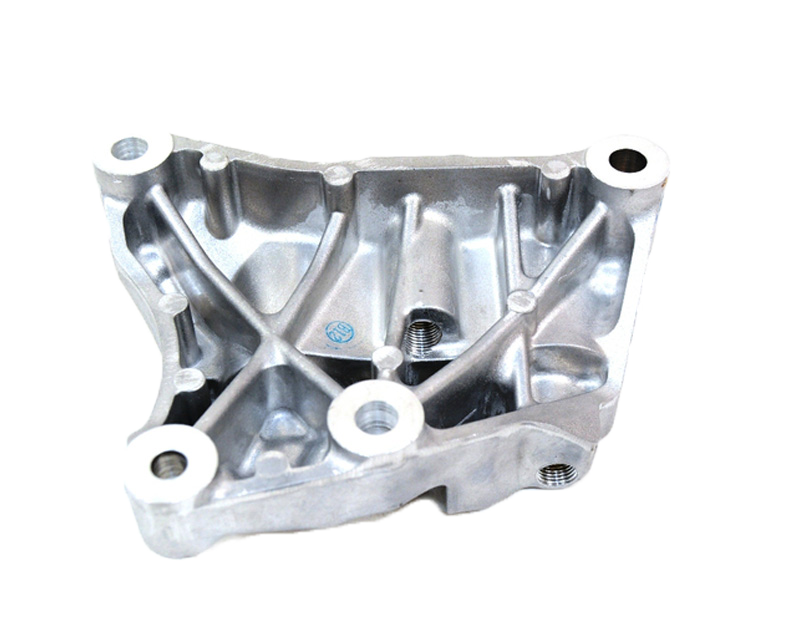
Engine Mount Bracket
Material: A356 / AlSi10Mg
Core Feature: Vibration Dampening Strength
Process: Vacuum HPDC

Auto Starter Housing
Material: ADC12
Core Feature: Bearing Press-Fit Precision
Tolerance: Strict Coaxiality Control
The part families we quote most often
Almost every aluminium die casting enquiry lands in one of five families. Knowing which one you are in tells you what the supplier will actually be judged on, and it tells you where the cost will sit before any drawing is quoted.
| Part family | What the purchase is really about | Typical annual volume band |
|---|---|---|
| Brackets and mounts | Fatigue life at the radii and thread pull-out, not appearance | 10,000 to 200,000 pieces |
| Housings (transmission, motor, inverter) | Leak tightness and bore geometry after machining | 20,000 to 300,000 pieces |
| Covers and end plates | Flatness across the seal path and hole position | 50,000 to 500,000 pieces |
| Structural nodes and pillars | X-ray acceptance class and elongation in the load path | 5,000 to 60,000 pieces |
| Heat sinks and thermal housings | Fin fill, flatness at the interface, and thermal contact | 10,000 to 150,000 pieces |
The volume band matters more than the part weight. Below roughly 5,000 pieces a year, tooling dominates the total cost and the honest conversation is about how many cavities you can justify. Above 100,000 pieces, the conversation moves to cycle time and yield, because a one percent scrap difference is worth more than a ten percent tooling discount.
Tolerance class is not the same across those families, and it is not negotiable in the abstract: ISO 8062-3 defines the general casting tolerance grades and machining allowances, while the NADCA Product Specification Standards set what die casting can actually hold on standard features. Knowing which family a part belongs to tells you which of the two you are really arguing about.
What actually drives the piece price
A quotation that arrives as a single number per part hides four separate decisions. These are the ones that move the price, in the order they usually move it.
| Lever | What it changes | How much it typically moves |
|---|---|---|
| Cavity count and slides | Tooling cost per shot versus tooling cost once | One cavity versus two can halve the piece price at high volume and double the tool |
| Wall thickness and dwell | Cycle time, and therefore machine hours per part | A 2.5 mm wall rather than 3.5 mm can take several seconds out of every shot |
| Porosity-related scrap | Yield, and the cost of the parts nobody invoices | A process running at 5 percent scrap costs more than one running at 1 percent, whatever the piece price says |
| Machining operations | Fixtures, handling, spindle time, and the number of setups | Every extra setup adds both cost and a new tolerance stack |
| Leak testing and finishing | Test time per part and any secondary process | Testing every part rather than sampling changes the price line, not the casting |
The point of the table is that only the first row is a purchasing decision. The other four are engineering decisions that get made whether or not anyone discusses them, and they show up later as scrap, rework or a price increase that nobody can explain.
Frequently asked questions
What is the minimum order quantity for a die casting project?
There is no fixed minimum, because the constraint is economic rather than technical. Below about 5,000 pieces a year, tooling dominates the total cost and a simple gravity or sand option may be cheaper overall. Above that, die casting usually wins on piece price and repeatability.
Can one supplier cast and machine the part?
Yes, and for anything with a seal face or a bore it is usually the better arrangement. When casting and machining sit in different companies, porosity problems and tolerance stacks get argued across a purchase order instead of being solved in one process window.
How should the price be quoted, per kilogram or per part?
Per part, with the tooling and the machining listed separately. A per-kilogram price hides yield and machining content, which are exactly the two things a buyer needs to see in order to compare two suppliers honestly.
What do you need in order to quote?
The drawing with tolerances and datum scheme, the alloy if it is fixed, annual and monthly volume, which features are machined, the surface finish, and the inspection or leak-test requirement. If the drawing is not final, the volume and the critical features are enough to give a range.
Who owns the tooling?
The customer pays for it and the customer owns it. Drawings, electrode data and the tool itself remain the customer’s property, and the tool can be moved to another supplier at the end of a programme. That is the arrangement we work under, and it is worth asking any supplier to state it in writing.
Need a custom powertrain component?
Send us your STEP/IGES files. Our engineering team provides a strict DFM review for porosity mitigation, CNC optimization, and cost reduction—before you invest in tooling.
- Email: [email protected]
- Tel: +86-190-9844-7703
- Address: NO.38 Duanzhou 3rd Road, Zhaoqing, Guangdong, China